A Free Press through Blogging

June 15, 2010

Keith B. Richburg reports in The Washington Post that labor unrest is spreading in China as more workers demand higher wages. He writes, “Various economists, labor experts and activists said there were many more strikes and work stoppages rolling across China…”

Blogging has become the free press of China. The Chinese have more Blogs than any nation on the earth.

On the river in Guilin, China (photo by Lloyd Lofthouse)

Resonance China, a China Social Media Agency, reports, “The numbers of bloggers…saw a huge jump in 2008. This is likely due to China’s internet hitting a critical point, combining social networks, with blog networks with portals, and politically charged events… The drive to express online is a central motivation for the Chinese. Due to China’s strong censorship and control of traditional media, the internet becomes a major destination to receive balanced views, see how others think and react to events…”

iLook China posts demonstrating how the Internet has given a voice to the Chinese appeared in Traveling to Xiamen, China and The Power of Public Debate in China. China may never have a Western/American political system but freedom of expression has arrived.

_______________________

Lloyd Lofthouse is the author of the award winning My Splendid Concubine and writes The Soulful Veteran and Crazy Normal.

Sign up for an RSS Feed for iLook China


China: The Roots of Madness – Parts 7 & 8 of 8

June 12, 2010

In Part 7, it is 1948 and Mao attacks. His army leaves the caves and captures Manchuria. When Chiang Kai-shek’s northern army surrenders, modern American weapons and equipment fall into Mao’s hands. Mao demands total surrender, but Chiang’s army boards ships for Taiwan taking China’s wealth and historical treasures. In fear, western businessmen and missionaries flee China.

By 1967, when this documentary was produced, Mao had ruled China for 18 years. Protected by America, Chiang was still in Taiwan serving as president for life. He also had six-hundred thousand Kuomintang troops, and the island people lived under martial law.

Theodore H. White says America does not understand Communist China. America could not predict the “Great Leap Forward” or the purges that followed. He says the quality of life for the peasants had not improved. They still worked like beasts as they always had.

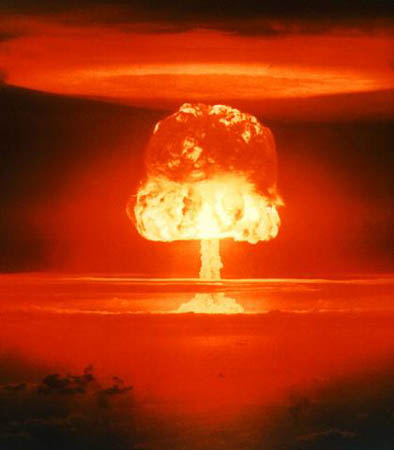
Part 7 ends with words of fear for the world’s future because China has nuclear weapons. There is no mention that America has enough nuclear weapons to destroy the earth a hundred times over. In Part 8, White concludes the documentary in about two minutes.

Return to Part 6, The Roots of Madness or start with The Roots of Madness-Part 1

View as Single Page

______________

Lloyd Lofthouse is the award-winning author of the concubine saga, My Splendid Concubine & Our Hart. When you love a Chinese woman, you marry her family and culture too.

If you want to subscribe to iLook China, there is a “Subscribe” button at the top of the screen in the menu bar.


China: The Roots of Madness – Part 6/8

June 11, 2010

In Part 6, Theodore H. White tells of an incident with Chiang Kai-shek’s troops when an officer tells peasants they were Mao’s men.  When White asks why lie, he’s told the peasants wouldn’t help if they knew the truth. In fact, regardless of the suffering from Mao’s Great Leap Forward and the Cultural Revolution, this loyalty never wavers.

Joseph Stilwell, the commanding US general in China, is not happy with Chiang since he is not fighting Japan. Chiang says he needs his troops to fight the Communists. In 1945, America invites representatives from Chiang’s government  to take part in Japan’s surrender on the battleship Missouri and ignores the Communists.

USS Missouri

An American ambassador urges Mao to join Chiang in a unified government. To bring this about, America offers Mao protection and there are face-to-face negotiations between Mao and Chiang.  Meanwhile, in secret, Chiang moves his troops to launch an assault in Manchuria.

America urges Chiang to win the people by implementing Sun Yat-sen’s promised reforms.  Instead, Chiang’s war causes run-away inflation. Essential good become too expensive. The people want peace, and Mao offers the peasants what they want—land.

Continued in Part 7 & 8, The Roots of Madness or return to Part 5, The Roots of Madness

View as Single Page

______________

Lloyd Lofthouse is the award-winning author of the concubine saga, My Splendid Concubine & Our Hart. When you love a Chinese woman, you marry her family and culture too.

If you want to subscribe to iLook China, there is a “Subscribe” button at the top of the screen in the menu bar.


China: The Roots of Madness – Part 5/8

June 11, 2010

In Part 5, Mao’s troops in the hills of Yunnan grows food. His army, dressed in shabby clothing wearing straw sandals, doesn’t look like a fighting force. Mao says the people are the sea and guerrillas are like fish that swim in the sea. Within a year, Mao’s army grows to 200,000.

Meanwhile Chiang Kai-shek’s army loses battles and cities to the Japanese. To continue fighting, his government and army moves to the deep mountain city of Chongqing in Sichuan province. In 1939, the Japanese start bombing Chongqing 24/7. When asked about the Japanese threat, Chiang says that the Japanese are a disease of the skin, but the communists are a disease of the heart.

Then on December 7, 1941, Japan bombs Pearl Harbor and America enters the war. War supplies start to trickle to China through India and across the Himalayas to Chiang Kai-shek’s four-million-man army. However, his government is corrupt, his troops are poorly fed and moral is low.

Chiang Kai-shek is accepted as an equal among the West’s leaders while Mao works to keep up the moral of his Communist troops through political training—something Western leaders don’t understand and criticize.

Continued in Part 6, The Roots of Madness or return to Part 4, The Roots of Madness

View as Single Page

______________

Lloyd Lofthouse is the award-winning author of the concubine saga, My Splendid Concubine & Our Hart. When you love a Chinese woman, you marry her family and culture too.

If you want to subscribe to iLook China, there is a “Subscribe” button at the top of the screen in the menu bar.


Circular Thinking and Arrows

June 10, 2010

The school where I taught had students from more than a dozen nationalities. For that reason, I attended in-services to become aware of cultural differences.  I learned that Westerners think as an arrow flies—straight.  However, those from the Middle East and Asia think in circles as in figurative language with possibly more than one meaning.

This means that when someone from the Middle East or Asia says or does one thing, he or she may mean something different.

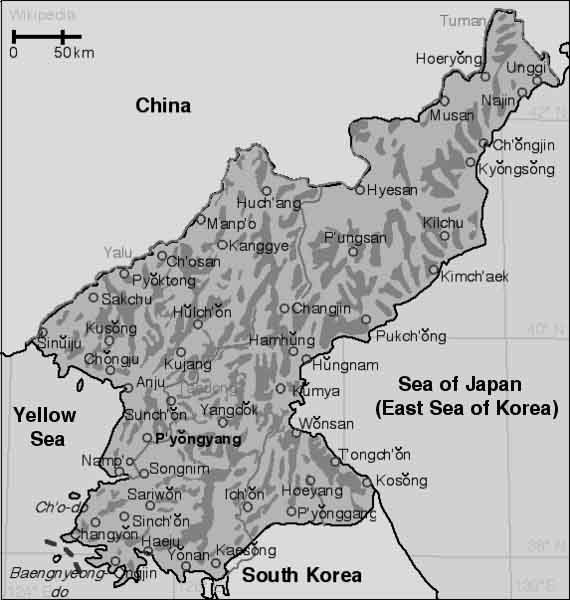
North Korea Map

Recently, China has been under global pressure to condemn North Korea for the sinking of a South Korean warship on March 26 that killed 46 sailors. The Christian Science Monitor reported on June 8 that China has  blamed North Korea for killing three of its citizens and arrested a North Korean government official for drug trafficking—something unheard of before.

Could this be China’s circular way to pressure North Korea to admit sinking the South Korean ship or to stop threatening war and return to the peace table? North Korea relies on China for food and financial aid and if China has a reason to limit or stop that support, the stability of Kim Jon-il’s government would be threatened.

See China and North Korea

_____________________

Lloyd Lofthouse is the author of the award winning novels My Splendid Concubine and Our Hart. He also Blogs at The Soulful Veteran and Crazy Normal.

Sign up for an RSS Feed for iLook China