China’s Great Leap Forward (1958 to 1961) – Part 4 of 6

June 23, 2010

Steel production had to double in one year.  Instead of producing steel from industry, Mao wanted the peasants to build small furnaces. Again, there was competition between teams of peasants.  Forests were cut down to fuel the crude peasant furnaces.

All over China, people were neglecting their other jobs to produce steel because the people had to obey Mao. All metal was melted—including cooking woks. The steel produced was useless.

While the peasants were producing steel, the crops rotted in the fields. In 1960, there was a drought and food production fell more than 25%. Twenty million or more died from the resulting famine.
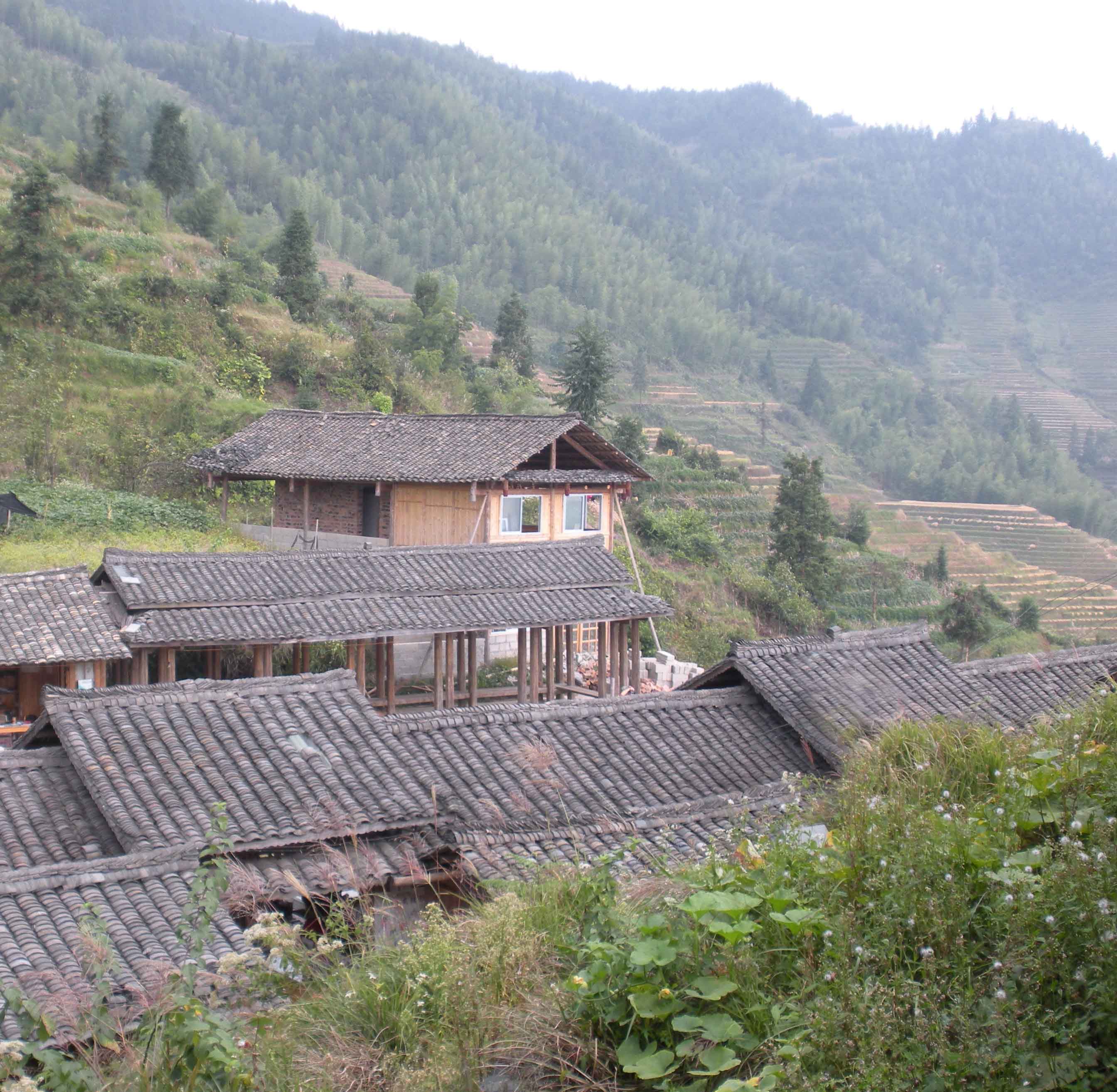
Village in Southeast China

Having failed, Mao stepped aside to let someone else run the nation. The large communes were abandoned. The peasants returned to their villages and were given land again.

Fearing the return of capitalism, Mao’s supporters printed a book with his slogans. Mao wanted to break the thinking and attitudes of old China. Using film, a propaganda campaign was launched so Mao could regain power. Then in 1966, he launched the Cultural Revolution.

Return to Part 3, China’s Great Leap Forward or go to Part 5

______________

Lloyd Lofthouse is the award-winning author of the concubine saga, My Splendid Concubine & Our Hart. When you love a Chinese woman, you marry her family and culture too.

If you want to subscribe to iLook China, there is a “Subscribe” button at the top of the screen in the menu bar.


China’s Next Step

June 22, 2010

In 1950, Mao promised his people that China would stand equal to the world’s major powers. That day is close.  After the Soviet Empire collapsed, the United States treated the world as if it were America’s back yard.  What did that get the US?  9/11, deep debt and three conflicts: Iraq, Afghanistan, and fundamentalist Islamic terrorists whose goal is to destroy America—not China—yet.

I read what Dr. Michael Economides had to say at Forbes.com, and he writes as if we must not allow China to develop into a modern nation that benefits all Chinese.

Dr. Economides is wrong. America should encourage China to globalize and modernize.  Let them drink at the fountain of oil. We need China to be our equal and our ally.  By encouraging China to depend on oil reserves from around the globe, they will have no choice but to be America’s partner and help police the world.

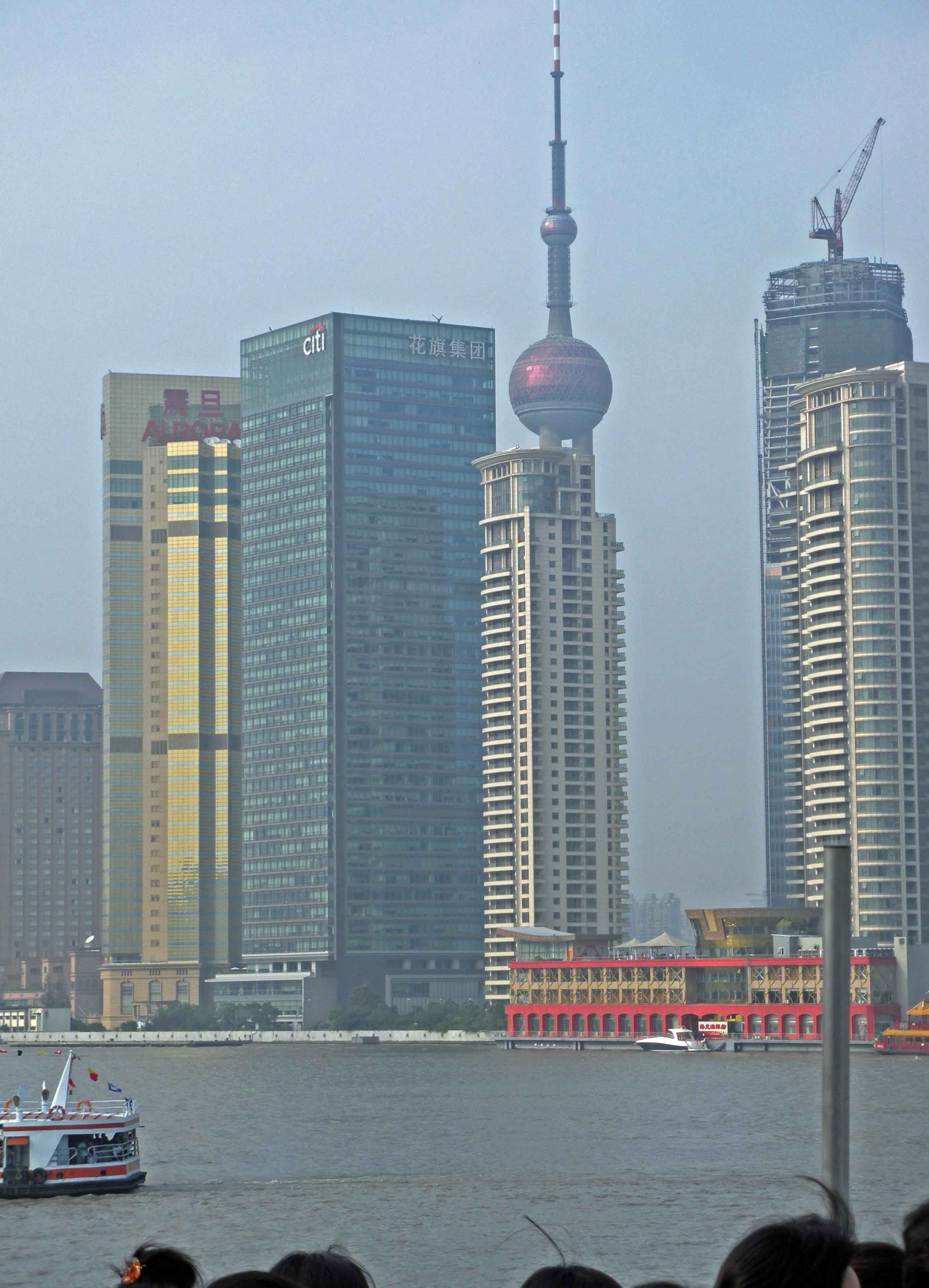
Shanghai

The challenge Americans face is to keep what we already have. What America must do is switch to green energy and break our addiction to oil as soon as possible. In fact, India has the same goals that China has—to have what America has had for decades.  Since China and India have more than 2 billion people, let them share the wealth, and the responsibility that comes with it should be larger too.

See Volting all of China into the 21st Century

________________________

Lloyd Lofthouse is the author of the award winning My Splendid Concubine and writes The Soulful Veteran and Crazy Normal.

Sign up for an RSS Feed for iLook China


China’s Great Leap Forward (1958 to 1961) – Part 1 of 6

June 21, 2010

Before reading this series about Mao’s Great Leap Forward, I recommend you first read China, The Roots of Madness to understand what led to Mao’s era as the leader of Communist China (1949 – 1976). This link will take you to that post.  When you finish, return to China’s Great Leap Forward.

_____________________________

Mao’s era begins in October 1949 with victory celebrations in Beijing, as the country with the largest population in the world sees a Communist government come to power.

(when the advertisement appears, advance the video scroll bar to 2:00 minutes to avoid it)


Mao says, “The People’s Republic of China is founded today. China will be free of inequality, poverty and foreign domination.”  In 1950, most Chinese live as they have for centuries. The video shows what this life was like.  Before Mao, most lived in poverty and were in debt to landowners.

Hu Benxu, a peasant farmer in Sichuan says that in the past, there was justice for the rich but nothing for the poor.

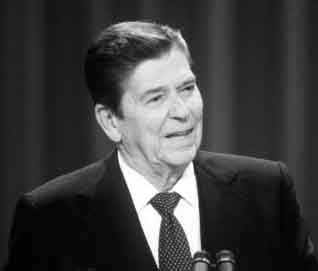
President Ronald Reagan

Chiang Kai-shek believed that improvements would spread through the country (sort of like President Reagan’s trickledown theory, which didn’t work) as foreign investments poured into China. But the opposite happened. As the country industrialized, the gap between the rich and the poor grew wider. The rich held on to money and wanted more. Protests about working condition in the factories were met with death from Chiang Kai-shek’s troops.

Meanwhile, Mao promised land reforms, and his troops treated the peasants with respect. When Mao won China, he said, “We Chinese should work hard. The country is poor. Our people are uneducated.  We must make China a modern industrialized state.”

However, there would be many mistakes and much suffering during the next 27 years. After two thousand years of an Imperial system of government, China was embarking on a journey of reinventing a country and a culture without any foreign influence.

Go to Part 2, China’s Great Leap Forward

______________

Lloyd Lofthouse is the award-winning author of the concubine saga, My Splendid Concubine & Our Hart. When you love a Chinese woman, you marry her family and culture too.

If you want to subscribe to iLook China, there is a “Subscribe” button at the top of the screen in the menu bar.


Belching about China

June 20, 2010

I sometimes read opinions about China from individuals who should stay quiet.  Leo Hindery wrote one for The Huffington Post, which  is an example of an American castigating China from a Western cultural point-of-view.

These biased voices bother me and probably bother many Chinese too. Of course, Hindery has a right to voice his opinions, but most Chinese don’t understand that the American government has no control (at least we like to think so) of what appears in the American media.

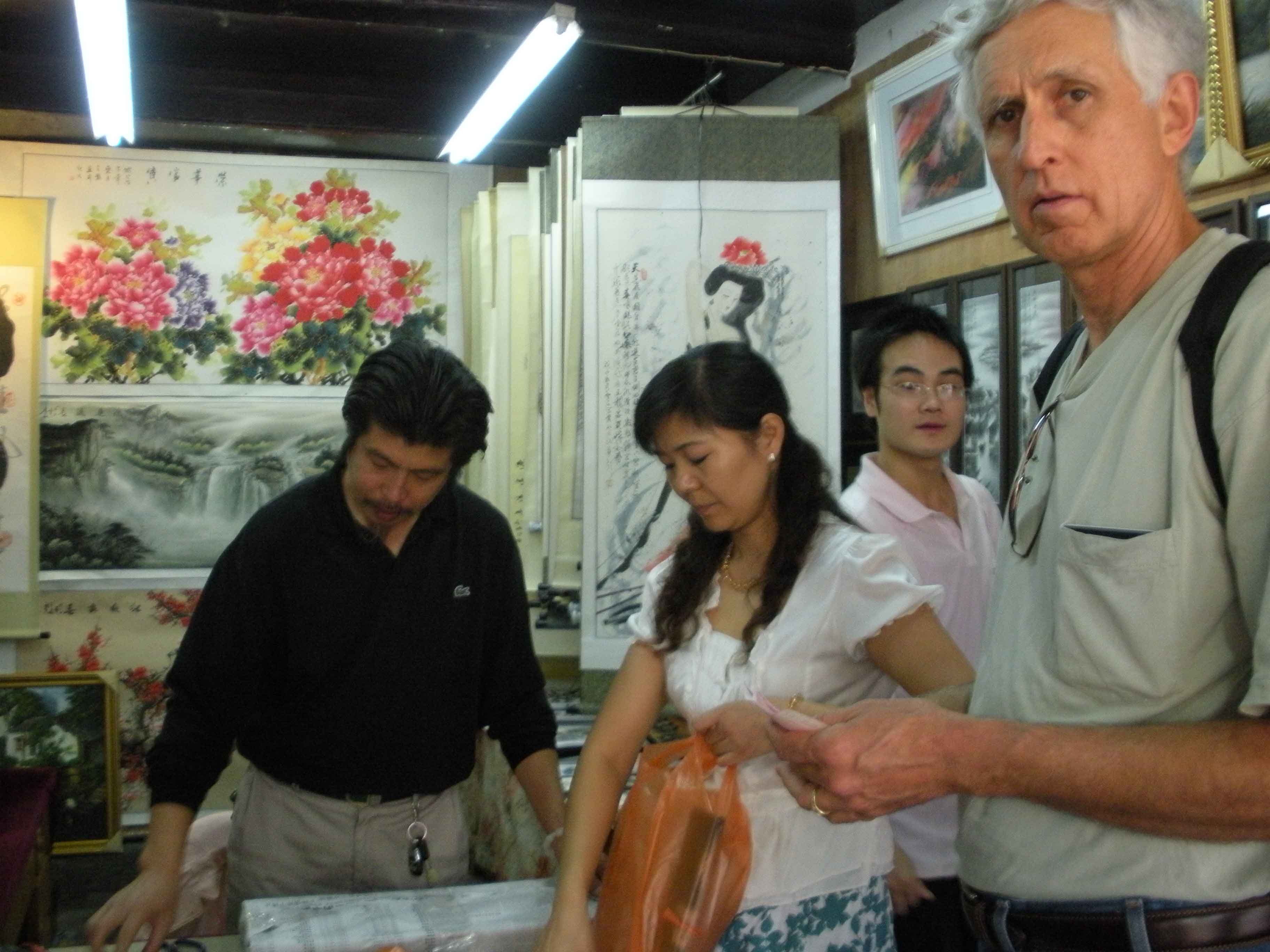
Xu Xiao-dong, in Zhouzhuang, China, an artist in his shop earning a living without help from the American labor movement.

Since the media in China is the official voice of the government, many in China see the Western media the same way. Hindery says he is eager to see the “American labor movement smartly and creatively provide all the help to China’s workers that it can responsibly offer” to help Chinese workers earn more money along with better benefits. Considering what the American labor movement did for the US auto industry, that is a bad idea.

Due to Western meddling in China  during the 19th century, there were two Opium Wars  forcing British, French and American opium into the country along with Christian missionaries, which led to the Taiping Rebellion started by a Christian convert ending in 20 to 100 million killed. Then there was the Boxer Rebellion, a peasant uprising caused by meddling Christian missionaries, greedy Western businessmen and pompous politicians.

In fact, due to the West forcing China to open its doors, more than two-thousand years of Imperial rule ended leading to four decades of chaos and anarchy between 1913 and 1950 where millions more were killed.

My opinion is to let the Chinese fix China and leave the American labor movement out of it.

See China’s Labor Laws

______________

Lloyd Lofthouse is the award-winning author of the concubine saga, My Splendid Concubine & Our Hart. When you love a Chinese woman, you marry her family and culture too. 

If you want to subscribe to iLook China, there is a “Subscribe” button at the top of the screen in the menu bar.


Danwei TV Interviews Veteran China Journalist Paul Mooney

June 16, 2010

Danwei TV interviewed Paul Mooney, who first went to Asia while in the US Army in 1968 where he served in Vietnam. When he left the war, his interest in Asia followed. During the 10 minute (click the above link to watch) interview on Danwei TV, Mooney said he did not think the negative press in the US comes from editorial decisions. 

He felt that the Western media does not have a bias toward China and that Barack Obama has more problems with the media than Hu Jintao does. Instead, what’s written in the West is due to people reading negative stories more than positive ones—proving, in my opinion, that Yellow Journalism is alive and mentally ill in the US.

by Paul Mooney

Mooney has a BA in East Asian Studies, an M.I.A. in International Affairs, speaks Chinese and Vietnamese and has written for National Geographic Traveler, Knight-Ridder Financial News, Far Eastern Economic Review, Kyodo News Service, Asiaweek, Newsweek, Asian Wall Street Journal, US News and World Report, Daily Beast, San Francisco Chronicle, Boston Globe, Washington Post, etc. You may find some of Paul Mooney’s work here.

Peter Hessler, another China expert, has different opinions about China. See what he has to say.

_______________________

Lloyd Lofthouse is the author of the award winning My Splendid Concubine and writes The Soulful Veteran and Crazy Normal.

Sign up for an RSS Feed for iLook China