Censorship

September 22, 2010

After writing the post Global Censorship and Corruption, I did more research and discovered that Reporters Without Borders ranked the United States 20th in their 2009 Press Freedom Index. 

In 2008, when G. W. Bush was president, that rank was 36 of the 175 countries listed.

The People’s Republic of China was ranked 168. 

Saudi Arabia, a staunch ally to the US and an important source of foreign oil, was ranked 163 not far from China, yet we seldom hear or read complaints about censorship in Saudi Arabia.

James E. Hanson, who worked for NASA, appeared on 60 minutes and said that the G. W. Bush White House censored climate-related press releases reported by federal agencies to make global warming seem less threatening

Does the U.S. Constitution allow freedom of press and expression for government employees?  It doesn’t look like it.

In addition, if an employee for an American corporation speaks to the media without permission, he or she may be fired.

The September 2010 AARP Bulletin had a piece about books banned in America. 

Did you know that the Harry Potter series was burned in New Mexico and challenged in 19 states and the Autobiography of Benjamin Franklin was frequently censored from 1789 to the early 20th century? Source: AARP Bulletin

I do not agree with what President Bush’s White House did to James Hanson’s report about climate change.

However, if the U.S. government can censor government employees, why can’t China’s government do the same to their employees?

To learn about China’s Constitution see Dictatorship Defined

______________

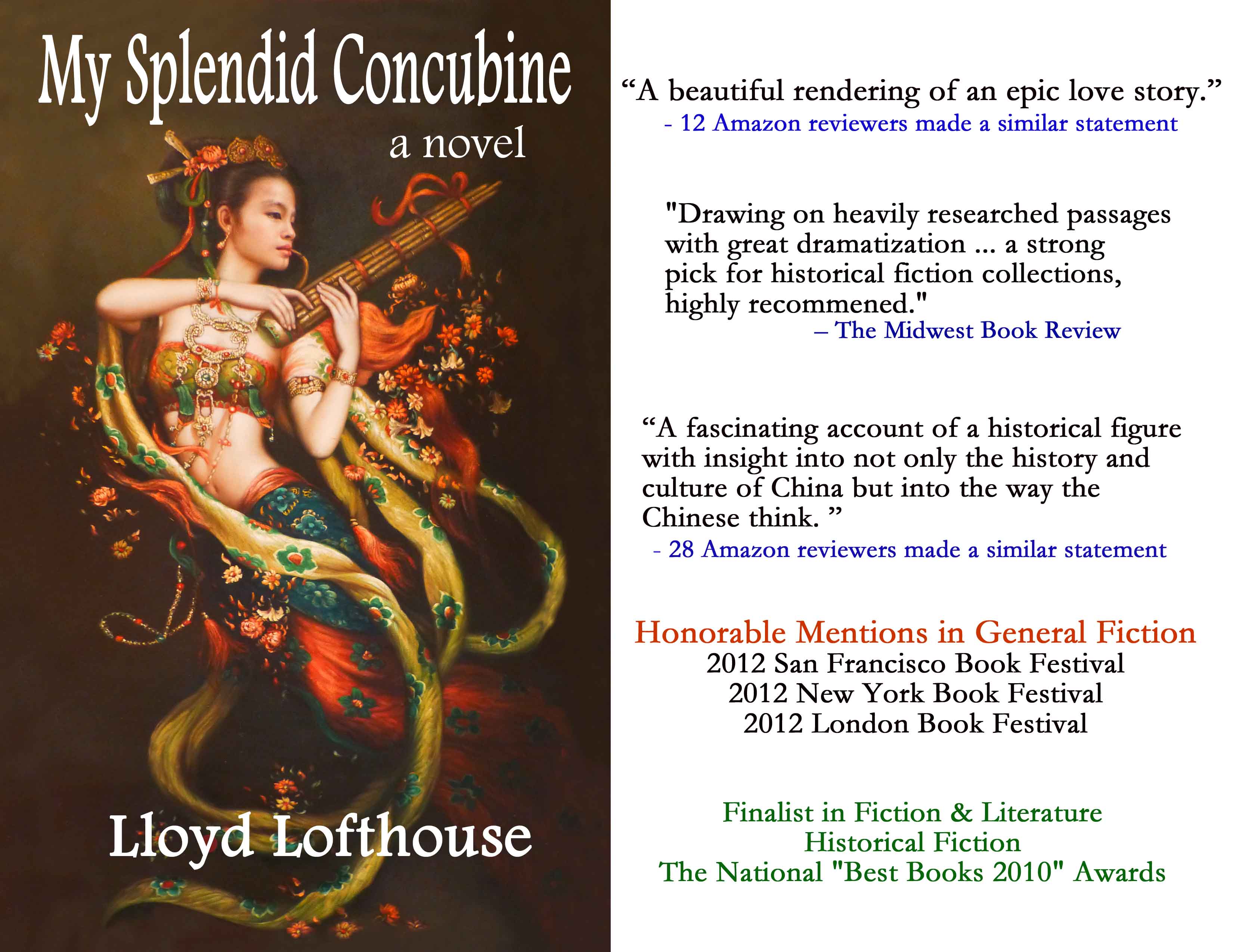
Lloyd Lofthouse is the award-winning author of the concubine saga, My Splendid Concubine & Our Hart. When you love a Chinese woman, you marry her family and culture too. 

If you want to subscribe to iLook China, there is a “Subscribe” button at the top of the screen in the menu bar.


Some Rules are Meant to be Broken

September 21, 2010

Global warming, fossil fuels with an expiration date, oceans turning acidic threatening life as we know it, polluted air and water, and the U.S. slogs along burdened with rules, regulations and red tape when it comes to the environment and green energy, which is necessary if we want our civilization to survive.

In China, that challenge doesn’t exist and Western countries and the World Trade Organization burdened with bureaucratic red tape are complaining.

The New York Times with Reuters writes a piece about Global Business and headlines it On Clean Energy, China Skirts Rules.

Who cares?  If China is getting the job done and that leads to cleaner air, water and energy, I say go for it.

In fact, the U.S. and other countries should look to China as a role model in this area. 

However, considering partisan politics in the U.S. and the GOP of “NO”, America may have already lost the race.

What does that mean in a century or two?

The New York Times piece I’m talking about was written by Keith Bradsher, and it was educational. 

By the time, I finished reading the long piece, I knew why the West isn’t weaning itself off oil any time soon, while China appears to be moving fast in that direction.

Why can’t the West play the game by China’s rules?

After all, according to Sun Tzu and the Art of War, which applies to business, you do what you must to win. 

If Western countries are so rigid they can’t adapt, that means another expiration date.

Also see China’s Going Green Challenge

______________

Lloyd Lofthouse is the award-winning author of the concubine saga, My Splendid Concubine & Our Hart. When you love a Chinese woman, you marry her family and culture too. 

If you want to subscribe to iLook China, there is a “Subscribe” button at the top of the screen in the menu bar.


Different Results for Different Propaganda Campaigns

September 20, 2010

The concept for this post came from an exchange of ideas with A Modern Lei Feng.

On January 20, 1961, President John F. Kennedy said, “And so, my fellow Americans, ask not what your country can do for you; ask what you can do for your country.”

Then in March of that year, President Kennedy signed an executive order that authorized the Peace Corp Act, which resulted in some controversy. (A Peace Corps History)

If history is any sign, many of the laws passed after Kennedy’s premature death did the opposite. Instead of Americans helping the country, the country ended up helping Americans.

LBJ’s Great Society program to aid urban renewal and a wide-scale fight against poverty turned millions into wards of the government and added billions to America’s current deficit. (two views of LBJ’s programs may be found at Free Republic.com and a New York Times Opinion Piece)

Then in 1963, a public relations campaign – similar to what Kennedy called for in his 1961 speech – was launched in China.

It was called the “Learn from Comrade Lei Feng” campaign.

Lei became the symbol of nationwide propaganda; the youth of the country were encouraged to follow his example. Source: Wikipedia.org

In essence, the campaign to learn from Lei Feng was to read Chairman Mao’s books, obey Chairman Mao’s words, and be Chairman Mao’s good soldier.

Maybe Mao borrowed the idea from Kennedy.

See China’s Great Leap Forward

______________

Lloyd Lofthouse is the award-winning author of the concubine saga, My Splendid Concubine & Our Hart. When you love a Chinese woman, you marry her family and culture too. 

If you want to subscribe to iLook China, there is a “Subscribe” button at the top of the screen in the menu bar.


China’s Bloody History with Japan

September 19, 2010

For the second day in a row, I’ve read about the captain of a Chinese boat that collided with a Japanese patrol ship in waters both China and Japan claim they control. Source: Guardian.co.uk

Poor relations with Japan started as far back as 1840, when Japan joined the British, French and Americans during the Opium Wars to gain concessions from China.

In 1843, under the agreement of the Nanjing Treaty, Shanghai became one of five treaty ports to be turned into a colonial city that would be under control of foreign countries—Great Britain, France, America and Japan. Source: McGill.ca

Until 1871, the Japanese had never had much contact with the Chinese. Getting to know the Chinese led to a Japanese opinion that the Chinese were ethnically inferior since they were different from the Japanese and most Japanese haven’t changed their minds to this day.

In 1884, Japanese and Chinese troops faced off in Korea, which ended in a lopsided stalemate in Japan’s favor.

In 1894, Japan and China fought their first war over Korea. Like Tibet, Korea had been a tributary state of China for centuries.

China was defeated in 1895 losing Korea as a tributary and a large portion of Eastern Manchuria.

Then in 1870, Japan annexed the islands of the Ryukyu Kingdom, which had also been a tributary to China.

A Ryukyuan envoy even begged England for help but the British ruled that the islands should belong to Japan instead of China.

On July 7, 1937, Japan launched a war to conquer China. Over the next 8 years, Japan would occupy most of China.

In fact, Japan has never apologized for The Rape of Nanking and other atrocities during World War II that resulted in millions of Chinese deaths.

“The Chinese have resented the Japanese ever since Japan conquered and occupied China in the 1930s and 40s. The Japanese prime minister’s yearly visits to a Tokyo shrine for war veterans has always played in China as a reminder of Japan’s wartime brutality and continued lack of remorse.” Source: U.S. News & World Report

Long memoires and hard feelings still smolder and sometimes ignite into flames. Since China has risen from the ashes, Japan should walk softly around the mighty reborn dragon.

______________________________

Lloyd Lofthouse is the award-winning author of My Splendid Concubine [3rd edition]. When you love a Chinese woman, you marry her family and culture too. This is the lusty love story Sir Robert Hart did not want the world to discover.

2015 Promotion Image for My Splendid Concubine

Subscribe to “iLook China”!
Sign up for an E-mail Subscription at the top of this page, or click on the “Following” tab in the WordPress toolbar at the top of the screen.

About iLook China

China’s Holistic Historical Timeline


China and India’s Mutual Collectivism and History – Part 2/2

September 10, 2010

Unlike India, China’s one party political system allows for quick decisions that often benefit the country.

Another important factor to remember is that China is still a collectivist nation as India is.

Due to this fact, China and India have more in common than India and America.

It does not matter that India is considered the world’s largest democracy, because to counter that, India also has a large bureaucracy that makes it difficult to get things done.

However, in India, the bureaucracy has a reputation for being tremendously arrogant. It is a truism that Indian bureaucrats are generally smug and supercilious… source: Open India

Indian bureaucracy has often been criticized for being cumbersome and stretching procedures to sanction projects. Source: Meri News

Unlike India, China’s one party political system allows for quick decisions that often benefit the country.

Another important factor to remember is that China is still a collectivist nation as India is.

Due to this fact, China and India have more in common than India and America.

It does not matter that India is considered the world’s largest democracy, because to counter that, India also has a large bureaucracy that makes it difficult to get things done.

However, in India, the bureaucracy has a reputation for being tremendously arrogant. It is a truism that Indian bureaucrats are generally smug and supercilious… source: Open India

Indian bureaucracy has often been criticized for being cumbersome and stretching procedures to sanction projects. Source: Meri News

A friend, Tom Carter, while shooting his next book in India, discovered that it was easier to travel and stay in China than India.

A study of Individualist and collectivist orientations across occupational groups in India by Anjali Ghosh where he refers to a study by Sinha & Verma (1994) … that master’s-level students express more idiocentric (individualist) orientations than allocentric (collectivist) due to Western influence, immediate life concerns and exposure to mass media.

However, Verma & Triandis (1999) observed that Indian students were more vertical collectivist than U.S. students were.

Another fact is that China and India both have ancient civilizations more than 5,000 years old and they are next-door neighbors as Canada and the US are.

See The Collective Culture versus Individualism or return to China and India’s Mutual Collectivism and Shared History – Part 1

A friend, Tom Carter, while shooting his next book in India, discovered that it was easier to travel and stay in China than India.

A study of Individualist and collectivist orientations across occupational groups in India by Anjali Ghosh where he refers to a study by Sinha & Verma (1994) … that master’s-level students express more idiocentric (individualist) orientations than allocentric (collectivist) due to Western influence, immediate life concerns and exposure to mass media.

However, Verma & Triandis (1999) observed that Indian students were more vertical collectivist than U.S. students were.

Another fact is that China and India both have ancient civilizations more than 5,000 years old and they are next-door neighbors as Canada and the US are.

See The Collective Culture versus Individualism or return to China and India’s Mutual Collectivism and Shared History – Part 1

______________

Lloyd Lofthouse is the award-winning author of The Concubine Saga. When you love a Chinese woman, you marry her family and culture too. This is the love story Sir Robert Hart did not want the world to discover.

Subscribe to “iLook China”
Sign up for an E-mail Subscription at the top of this page.

About iLook China