Propaganda Masquerading as a Movie Review

June 7, 2010

I found another example of media propaganda in a movie review. In June 1989, the Tiananmen Square incident took place in China and “hundreds” of demonstrators died in what started as peaceful demonstrations “demanding” changes in China.

A few months later, a New York Times review made comparisons between the first emperor and China’s modern government. “The depiction of Qin’s bonfire and of his soldiers pushing his flailing enemies (they weren’t the emperor’s enemies) into a ditch caused the American Museum of Natural History to cancel its planned opening of ”The First Emperor of China” last July, when the news was still full of the Chinese Government’s violent suppression of student protests.… This re-enactment of the faraway Qin’s often despotic and often enlightened rule becomes more believable and complex in view of the parallels with recent events.”

The New York Times made a comparison with an event that took place more than two millennia ago but made no mention of the 2/28 Massacre in Taiwan by a US ally where almost thirty thousand noncombatants were killed by Kuomintang troops. There was also no mention of the almost 70,000 U.S. troops in the Philippians, who slaughtered hundreds of thousands of Filipino freedom fighters and non-combatants between 1898 and World War II.
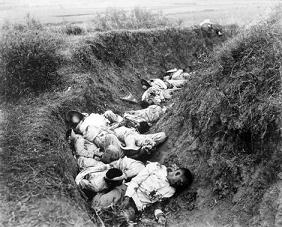
Filipinos killed by US troops before World War II

The New York Times does not review every movie or documentary produced so it is questionable why they would review this lackluster 38-minute documentary about China’s first emperor. Was there another motive behind this review—to remind Americans of the Tiananmen Square incident? After all, let’s not forget anything bad that Communist China does while forgetting worse historical sins committed by American troops and its allies.

See What is the Truth about Tiananmen Square?

_____________________

Lloyd Lofthouse is the author of the award winning novels My Splendid Concubine and Our Hart. He also Blogs at The Soulful Veteran and Crazy Normal.

Sign up for an RSS Feed for iLook China


When the News becomes Propaganda

June 5, 2010

As a teen in China, my wife saw news film showing American solders using spoons to dig eyeballs out of Vietnamese children—blinding them. This is one example of how easy it is to use lies to demonize an enemy.

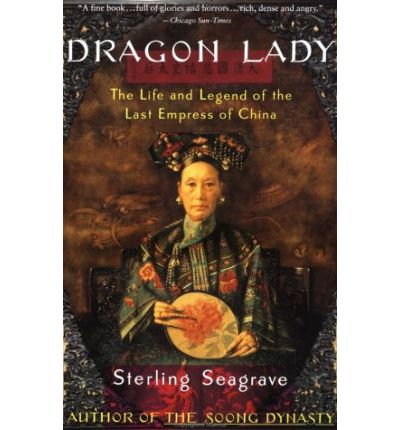
During the 19th century, to justify the Opium Wars and the brutal suppression of the Boxer Rebellion, the Western media demonized China and the Dowager Empress Tzu Hsi. Then, about a century later in “Dragon Lady”, Sterling Seagrave revealed that radicals and reformers who were in exile at the time spread lies saying the empress was an evil hag, and the Western media gobbled those lies up as if they were sweet chocolate.

In fact, a Western journalist, Dr. George Ernest Morrison was responsible for many of the slanders and half-truths about China that persist to this day.

In the June Smithsonian, one of those half- truths surfaced in 110 Years Ago, Sobby Boxers. The piece said the empress ordered the peasant’s known as the “Righteous and Harmonious Fists”, called Boxers by the Western Media, to kill all foreigners.

What it didn’t say was that the empress also told her military to make sure no foreigners died and water and food was carried to the legations through tunnels while the “Boxers” thought the empress was on their side.

The politics were complex. The Empress had nothing to do with the uprising. It was a popular peasant uprising against Christianity and the foreign powers. If she hadn’t supported the “Boxers”, the peasants might have turned on her.

Also see Media Slugfest Using Taiwan

_____________________

Lloyd Lofthouse is the author of the award winning novels My Splendid Concubine and Our Hart. He also Blogs at The Soulful Veteran and Crazy Normal.

Sign up for an RSS Feed for iLook China


2-28 Massacre in Taiwan

June 1, 2010

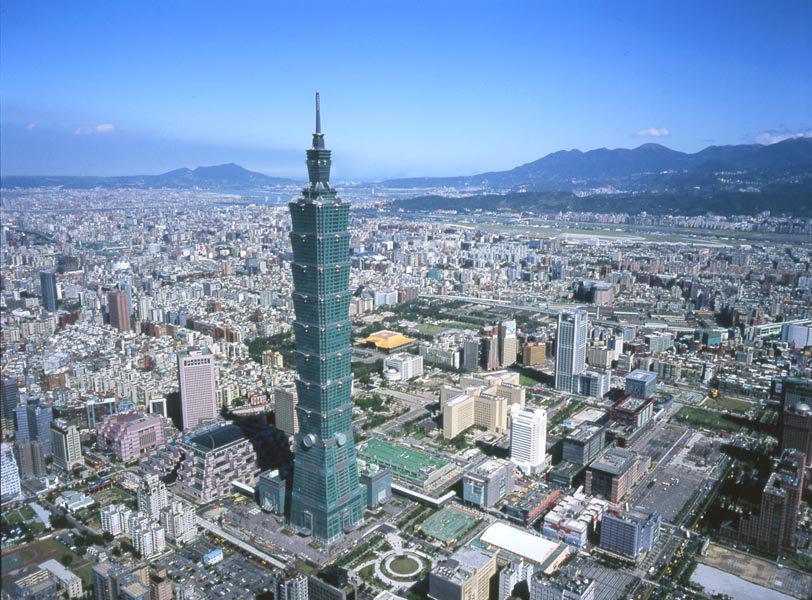
By accident, I stumbled on a Blog about the “2-28 Massacre” in Taiwan in 1947 when Kuomintang soldiers under orders from Cheng Kai-shek, an American ally, slaughtered about 30,000 Taiwanese citizens. It was the first time I’d heard of this incident. Source Blog: Patrick Cowsill

Taipei, Taiwan

When I typed into Google “Tiananmen Square protest”, 1 million 260 thousand (1,260,000) hits came back condemning the 1989 Massacre in Tiananmen Square. “Several hundred civilians have been shot dead by the Chinese army during a bloody military operation to crush a democratic protest in Peking’s (Beijing) Tiananmen Square. Source: BBC

Then I typed a similar question about the massacre in Taiwan by an American ally and 21,200 hits came back.

Here’s what the BBC had to say about the Taiwan incident, “The event was an uprising sparked by the beating of a female vendor by authorities for selling untaxed cigarettes. Between 18,000 and 28,000 people are said to have been killed in riots and a subsequent crackdown.” Source: BBC

Compare the language.  When it was about the Communists, it was a “bloody military operation to crush a democratic protest” but when the killings were committed by an American ally, it was “an uprising…sparked by the beating of a female vendor by authorities….”

Of course, we will always remember the man standing in front of the tanks in Tiananmen Square. Have you forgotten what happened in Taiwan yet?

______________________________

Lloyd Lofthouse is the award-winning author of My Splendid Concubine [3rd edition]. When you love a Chinese woman, you marry her family and culture too. This is the lusty love story Sir Robert Hart did not want the world to discover.

IMAGE with Blurbs and Awards to use on Twitter

Where to Buy

Subscribe to “iLook China”!
Sign up for an E-mail Subscription at the top of this page, or click on the “Following” tab in the WordPress toolbar at the top of the screen.

About iLook China

China’s Holistic Historical Timeline


Politically Correct Outside Tibet but Historically Wrong

May 31, 2010

In the “Contra Costa Times” this morning, I read Tibetan leaders seek East Bay help by Doug  Oakley, a politically correct news piece that’s partially accurate because Oakley only shares part of the history between China and Tibet—the part that favors Tibet’s so-called government in exile, which represents about 1% of all Tibetans—the rest still live in China.

Oakley writes that, “Tibet was invaded by the Chinese army in 1950. After the Tibetan army was defeated, both sides signed a 17-point agreement in 1951 recognizing China’s sovereignty over Tibet.” These facts are correct, but they do not tell the whole story.

Tibet, China

Any historian who checks primary sources that exist outside of Communist China will discover that Tibet was ruled by three Chinese dynasties: The Yuan, Ming and Qing Dynasties from 1277 – 1911.  Even after Sun Yat-Sen’s so-called Republic replaced the Qing Dynasty in 1911, Tibet was considered part of China.

Primary sources like the October 1912 issue of The National Geographic Magazine and more than fifty letters written by Sir Robert Hart during the 19th century support the fact that Tibet was part of China for more than six centuries prior to 1913 when the British Empire convinced Tibet to break free for political reasons.

The so-called Tibetan government in exile says they are seeking autonomy within China. In fact, China does offer a form of autonomy to the 56 minorities that live in China, but this isn’t the level of autonomy that the Dalai Lama demands, which is a return to the old Tibetan ways described in that 1912 issue of National Geographic, which is unacceptable to China.

Discover more about today’s Tibet by reading Chinese Gold from Dead Tibetan Caterpillars, Buddhism in China, The Tea Horse Road, Water – Two Countries Tell a Tale and About Tibet.

_____________________

Lloyd Lofthouse is the author of the award winning novels My Splendid Concubine and Our Hart. He also Blogs at The Soulful Veteran and Crazy Normal.

Sign up for an RSS Feed for iLook China


When Islamic Fundamentalists become Activists

May 31, 2010

I’ve never seen the Western Media mention that Xinjiang is in Central Asia when reporting violence in that region of China.

Why are Islamic fundamentalists in Pakistan, Afghanistan and Tajikistan called terrorists and militants, but Islamic fundamentalists in China’s Xingjian province, just across the border from the Afghan war and the fighting in Pakistan, are referred to as activists in the Western media?

The Uighur people are Islamic and native to Xinjiang province in China. They are also culturally tied to Central Asia. Rebiya Kadeer, an “Uighur activist”, lives in exile in Washington D.C.   The walls of her small office are covered with photographs of meetings with former President G.W. Bush and Laura Bush.

I have never seen any mention of the fact that China has a history going back hundreds of years when the Ch’ing Dynasty (the Manchu) put down several rebellions by Islamic Uighur rebels in Xinjiang province. I wonder if Rebiya Kadeer is aware of this history.

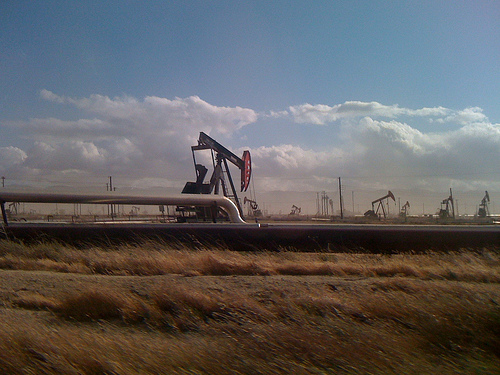
In fact, with an estimated 74 billion barrels of oil in Xingjian province (three times the proven reserves in the US), China isn’t going anywhere for some time.

See China’s Oil Hunger Grows

_________________________

Lloyd Lofthouse is the author of the award winning novels My Splendid Concubine and Our Hart. He also Blogs at The Soulful Veteran and Crazy Normal.

Sign up for an RSS Feed for iLook China