China is Leading the World in Alternative Energy

August 23, 2017

The United States Congress passed the Clean Air Act in 1970 because of polluted rivers, lakes, and dense, visible smog in many U.S. cities and industrial centers.  I grew up in the Los Angeles basin in the 1950s – 60s and was a witness and victim of that air pollution.

A 2016 Report of the Trends in Global CO2 Emissions said, “top emitters China (1st place) and the United States (2nd place) set an example by effectively reducing their CO2 emissions over 2015 by 0.7% and 2.6%, respectively, compared to 2014 levels. … The largest decreases in coal consumption were seen in the United States and China.”

But all of the gains made by the United States since the 1970s are being reversed by #FakePresident Donald Trump and his extremist administration.

Yes, the United States is listed as the second largest producer of carbon dioxide emissions in the world, but if the U.S. had China’s population, the pollution generated would dwarf China. In 2015, China’s global share of emissions was 29 percent vs 14-percent in the United States, but if both countries had equal populations, the U.S. share would be almost twice China’s.

China’s first Clean Air Act was signed into law in 1987. In 2006, Greenpeace was consulted by China’s CCP on an early draft of a renewable energy law by China’s National People’s Congress. Now China is the world’s leader in the production of renewable energy. DW.com reports, “China is one of the driving forces behind the solar power boom. Last year, around 45 percent of the world’s new solar installations were built there. The United States, Japan and India were also top adopters of the technology, albeit significantly behind China.”

China’s one-party system has demonstrated the ability to get things done quickly and, yes, mistakes are made but so are course corrections.  For instance, I witnessed China’s ability to get things done in Shanghai. At the time, we were staying in what was once the French concession. The stately mansions that once housed wealthy French families and their Chinese servants had been converted to communal multi-family homes still surrounded by high walls.  When we went to sleep one night, the walls were there. In the morning, the walls were gone.

An army of workers arrived at night, took down the walls and trucked out the debris without making enough noise to wake people.

History already shows us that when China’s leaders set a goal to achieve something, they get it done even if it takes centuries.

Need proof? China is responsible for two of the largest engineering projects of all time: The Great Wall and the Grand Canal.

China Highlights reveals that “Over 2,000 years, many imperial dynasties and kingdoms built, rebuilt, and extended walls many times that subsequently eroded. The latest imperial construction was performed by the Ming Dynasty (1368–1644), and the length was then over 6,000 kilometers (3,700 miles). This is the wall often referred to when we talk about the Great Wall.”

Britannica.com says, “The Grand Canal was built to enable successive Chinese regimes to transport surplus grain from the agriculturally rich Yangtze (Chang) and Huai river valleys to feed the capital cities and large standing armies in northern China.”

Global Securtiy.org says, “The Grand Canal is composed of the Beijing-Hangzhou Canal, Sui-Tang Canal and Zhedong Canal, and is over two thousand years old. It starts in Beijing and passes through Tianjin and the provinces of Hebei, Shandong, Zhejiang, Henan, Anhui and Jiangsu. It is 21 times longer than the Panama Canal, and surpasses the Suze Canal by 10 times … the Grand Canal of China is the longest waterway in existence and one of the most ancient.”

When someone thinks China can’t replace coal with renewable green energy sources, remind them of The Great Wall and the Grand Canal. All China needs is time to get the work done. Want another example?  About thirty years ago, China decided to seriously deal with poverty and led the world by reducing global poverty by 90-percent but only in China. The rest of the world was only responsible for 10-percent of that reduction.

Discover China’s First Emperor Qin Shi Huangdi, the man that unified China more than 2,000 years ago.

Lloyd Lofthouse is the award-winning author of My Splendid Concubine, Crazy is Normal, Running with the Enemy, and The Redemption of Don Juan Casanova.
Where to Buy

Subscribe to my newsletter to hear about new releases and get a free copy of my award-winning, historical fiction short story “A Night at the Well of Purity”.

About iLook China

China’s Holistic Historical Timeline


To Get Around, take the Bullet Trains and Use the Subways in China

July 26, 2017

Believe me when I suggest avoiding driving or taking a taxi in Beijing unless it is midnight and the city is sort-of sleeping. Beijing is one of the worst cities in the world to drive in. This is probably true for most of China’s crowded cities.

To give you an idea of what I mean by crowded, New York City has a population of about 8.5 million and is ranked #1 in the United States with Los Angeles #2 with less than 4 million people. There are 160 cities in China with a population of over 1 million vs only 10 in the United States.

Here are China’s top five cities ranked by population.

Shanghai – 22 million

Beijing – 10 million

Guangzhou – 11 million

Tianjin – 11 million

Shenzhen – 10 million

I have been to Shanghai and Beijing several times between 1999 – 2008, and have been stuck in Beijing traffic breathing toxic fumes and watching the taxi’s meter adding numbers to the cost of the trip when we could have walked faster for free.

The other choice is Beijing’s subway system built for the 2008 Beijing Olympics (and it’s still expanding), which I prefer using. It’s fast and efficient, but wear a money belt because it can become sardine-can crowded creating a perfect environment for pickpockets. I didn’t even wear my backpack on my back. I put it on my chest where I could keep an eye on it. To be fair, Smarter Travel.com warns us of the dangers of pickpockets in New York City. The same advice will help in any major city you visit.


This video was filmed in 2013 when only one subway line was open. Today, Xian has three subway lines with sixty-six stations and an average of 1.5 million people riding the subway daily. Last time I was in Xian in 2008, the subway system was still under construction.

Then there is China’s high-speed rail. It didn’t exist in 2008, and I haven’t been back to China since. Why fly when you can see China from a bullet train moving at 120 – 160 mph (or faster). The Economist reports, “Less than a decade ago China had yet to connect any of its cities by bullet train. Today, it has 20,000km (12,500 miles) of high-speed rail lines, more than the rest of the world combined. It is planning to lay another 15,000km by 2025.”


“China’s high speed trains make travelling the country easy and quick but there are certain things you should know that’ll make using the high speed trains in China a painless process!” – Learn how to ride high-speed rail in China from The Adventurer

Then Manufacturing.net asks, “Why is There No High-Speed Rail Network in America?”

Here is the simple answer. Since World War II, the U.S. has spent about $33-Trillion on its military budgets and fighting endless wars in Korea, Vietnam, Iraq, and Afghanistan causing millions to be killed and/or maimed. Without those wars, there would probably be no ISIS. Then there is the fact that since President Reagan in the 1980s, the focus in the United States has been on cutting taxes mostly for corporations and the wealthiest Americans. That has led to about $20 trillion in debt for the federal government. During this time, the U.S. has not kept its infrastructure up-to-date – improvements that would have provided millions of new jobs and benefited the American people.

If the United States had avoided starting so many wars and had a military budget equal to China (ranked #2 in the world), it would have saved about $32-Trillion since World War II. There would be no national debt and the U.S. might even have its own bullet trains speeding from coast to coast.

Lloyd Lofthouse is the award-winning author of My Splendid Concubine, Crazy is Normal, Running with the Enemy, and The Redemption of Don Juan Casanova.

Where to Buy

Subscribe to my newsletter to hear about new releases and get a free copy of my award-winning, historical fiction short story “A Night at the Well of Purity”.

About iLook China

China’s Holistic Historical Timeline


The Evolution of the Three Teachings of China

July 25, 2017

China may be the only ancient culture that survived the spread of Islam and Christianity and managed to keep its unique identity. The following passage comes from My Splendid Concubine, my first published novel was historical fiction based on a real life story and it earned fifteen literary awards. In the novel, Guan-jiah is Robert Hart’s servant.


– the following scene is from CH-4 of My Splendid Concubine

“Guan-jiah,” Robert said, “before I came to China I read The Travels of Marco Polo. Do you know who he was?”

“No, Master,” Guan-jiah replied.

“He came to China from Europe more than six hundred years ago and served Kublai Khan during the Yuan Dynasty. Polo wrote that Hangzhou was the finest and noblest city in the world.”

“Hangzhou was the capital of the Southern Sung Dynasty, Master,” Guan-jiah said. “I’ve heard it is beautiful. Sung philosophy says that we have the power in our minds to overcome our emotions.”

“Marco Polo believed it was God’s will that he came back from China so others in the West might know what he’d seen.” Robert turned to his servant, who was the last in line. “Do you believe in this Sung philosophy, Guan-jiah?”

“The Sung said that if you know yourself and others, you would be able to adjust to the most unfavorable circumstances and prevail over them.”

“That’s admirable, Guan-jiah. You never mentioned you were a scholar. If the Sung Dynasty was that wise, I want to see Hangzhou one day.”

“I am no scholar, Master, but I must believe in the Sung philosophy to survive. I have read and contemplated much literature. However, I am like a peasant and have never mastered calligraphy. It is a skill that has eluded me.”

“How old were you when you studied this philosophy?”

“I was eleven, Master, two years after I was sent to Peking.”

The 3 teachings of Taoism, Buddhism, and Confucianism have been the backbone of Chinese culture since the bronze age, and are still intertwined strongly with today’s China. They are different interpretations to China’s core philosophies of life. Over time, different dynasties favored different ideas, if only to define themselves against their predecessor. Ultimately though, it’s all about the philosophy of combining spirituality with the reality of everyday life.

Discover The Return of Confucious

Lloyd Lofthouse is the award-winning author of My Splendid Concubine, Crazy is Normal, Running with the Enemy, and The Redemption of Don Juan Casanova.

Where to Buy

Subscribe to my newsletter to hear about new releases and get a free copy of my award-winning, historical fiction short story “A Night at the Well of Purity”.

About iLook China

China’s Holistic Historical Timeline


Should the Chinese Communist Party be concerned about the Mandate of Heaven?

July 19, 2017

Due to the Mandate of Heaven, many of China’s people see rebellion as a birthright under the right circumstances. The Mandate of Heaven has been traced back to 1753 B.C. or earlier.

With the Mandate of Heaven, the right to rule from divine legitimization to one based on ‘evenhanded’ rule was born. Whenever a dynasty fell, the reason offered by China’s wise men was the loss of the moral right to rule given by Heaven alone, because, for a good government, Heaven sends down all blessings, but on the evildoer, Heaven sends down all miseries.

However, China’s leaders, like leaders all over the world, were free to rule unjustly and could harm the people they ruled but the thinking was that their rule would come to a swift end as Heaven passed its mandate to another family or group. It’s thought that Heaven blessed the authority of a just ruler, but would be displeased with a despotic ruler and would withdraw its mandate. In addition, severe floods or famines might be considered evidence of divine repeal of the Mandate of Heaven.

As long as the ruling family or political party rules fairly and justly, the majority of Chinese people will see no need to call for change or rebel.

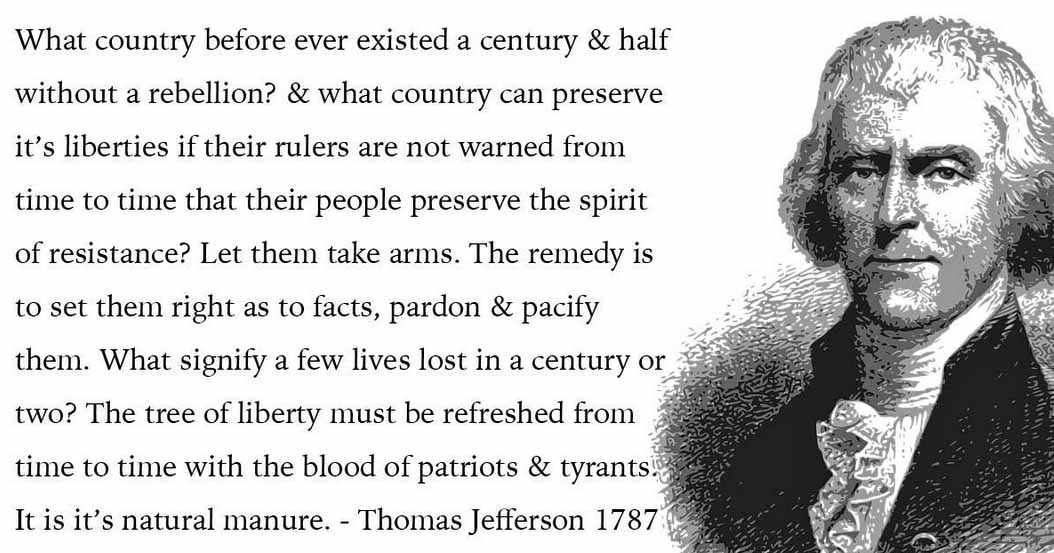
What is the closest thinking to the Mandate of Heaven in the West? Here’s my choice for the United States. Thomas Jefferson, one of the Founding Fathers of the United States, said, “The tree of liberty must be refreshed from time to time with the blood of patriots and tyrants.”?

Since I started this post with a question, I’ll end with one. Should the 45th President of the United States be concerned about the Mandate of Heaven and Thomas Jefferson’s advice? Please let me know what you think in the comment section.

Discover China’s First Emperor Qin Shi Huangdi, the man that unified China more than 2,000 years ago.

Lloyd Lofthouse is the award-winning author of My Splendid Concubine, Crazy is Normal, Running with the Enemy, and The Redemption of Don Juan Casanova.

Where to Buy

Subscribe to my newsletter to hear about new releases and get a free copy of my award-winning, historical fiction short story “A Night at the Well of Purity”.

About iLook China

China’s Holistic Historical Timeline


The Supreme Art of War is to subdue the Enemy without Fighting

July 11, 2017

Teddy Roosevelt said, “Speak softly and carry a big stick.” Compare what this American President said to China’s Sun Tzu, who wrote the Art of War (recommended reading at West Point) more than 500-years before the birth of Jesus Christ. Sun Tzu said, “The supreme art of war is to subdue the enemy without fighting.”

I’m not sure that America speaks all that softly and that stick has been around the world several times in too many countries and using that stick as a huge club has been costly.  I did a bit of internet sleuthing and the military budgets approved by the Congress from 1946 to 2009 cost the American tax-payer about 23-Trillion dollars, and that’s not counting the years from 2009 – 2017. These figures also do not include the cost of wars since World War II.

In today’s dollars:

  • the Korean War cost the U.S. taxpayer more than $340 billion
  • the Vietnam War cost $740 Billion
  • By 2013, the cost of war in Iraq had cost more than $2 Trillion, and that was four years ago
  • And, also in 2013, Afghanistan has cost between $4 – $6 Trillion

China intervened in the Korean War and sent hundreds-of-thousands of troops to fight with North Korea against the United States and NATO. To understand why the Chinese got involved, Mao said,”Vietnam (and Korea) is the gums to our teeth. What happens when the gums are gone?” At the time, China was surrounded by Communist-hating enemies except for the USSR.

In addition, between 1965 and 1970, over 320,000 Chinese soldiers served in North Vietnam.

The Guardian reports China increased its defense spending by 7-8 percent in 2016 to about $150 billion vs. almost $600 billion for the United States.

Based on Sun Tzu’s “subdue the enemy without fighting”, how is the United States doing compared to
China?

The United States had a stalemate in Korea (and North Korea is a much larger hostile threat today to world peace than it was back in the 1950s), lost in Vietnam, and can’t seem to win or end the wars the U.S. started in Iraq and Afghanistan compared to China that fought a brief war in Vietnam in 1979 a few years after the U.S. left and then pulled out a few weeks later, and fought an earlier war with India in 1962 that also lasted a few weeks, and once China’s objectives were met, that war ended.

Discover China’s First Emperor Qin Shi Huangdi, the man that unified China more than 2,000 years ago.

Lloyd Lofthouse is the award-winning author of My Splendid Concubine, Crazy is Normal, Running with the Enemy, and The Redemption of Don Juan Casanova.

Where to Buy

Subscribe to my newsletter to hear about new releases and get a free copy of my award-winning, historical fiction short story “A Night at the Well of Purity”.

About iLook China

China’s Holistic Historical Timeline