Sun Tzu’s “The Art of War” – 5/10

August 21, 2010

It is about 500 BC in China and Sun Tzu’s hit-and-run campaign against the state of Chu is working.  The Chu prime minister is starting to lose support and the moral of his troops is dropping.

Throughout the countryside of Chu, there is fear of where Sun Tzu will strike next. When the larger Chu army threatens one of Sun Tzu’s allies, Sun Tzu uses another rule of war, “To move your enemy, entice him with something he is certain to take.”

Then, when his own forces are surrounded, Sun Tzu says, “Put the army in the face of death where there is no escape and they will not flee or be afraid – there is nothing they cannot achieve.” See The Long March

What happened to Sun Tzu in China when his small army was surrounded also happened on June 6, 1944 when allied troops in World War II invaded Europe during D-day.

Sun Tzu says, “All warfare is deception. If you can deceive your enemy before battle, you are more likely to win.”

That’s what General Eisenhower did before the invasion of Normandy. To succeed, the allies used deception to convince the Germans the attack would not take place in Normandy.

Go to Sun Tzu’s “The Art of War” – Part 6 or return to Sun Tzu’s The Art of War – Part 4

Lloyd Lofthouse is the award-winning author of My Splendid Concubine [3rd edition]. When you love a Chinese woman, you marry her family and culture too. This is the unique love story Sir Robert Hart did not want the world to discover.
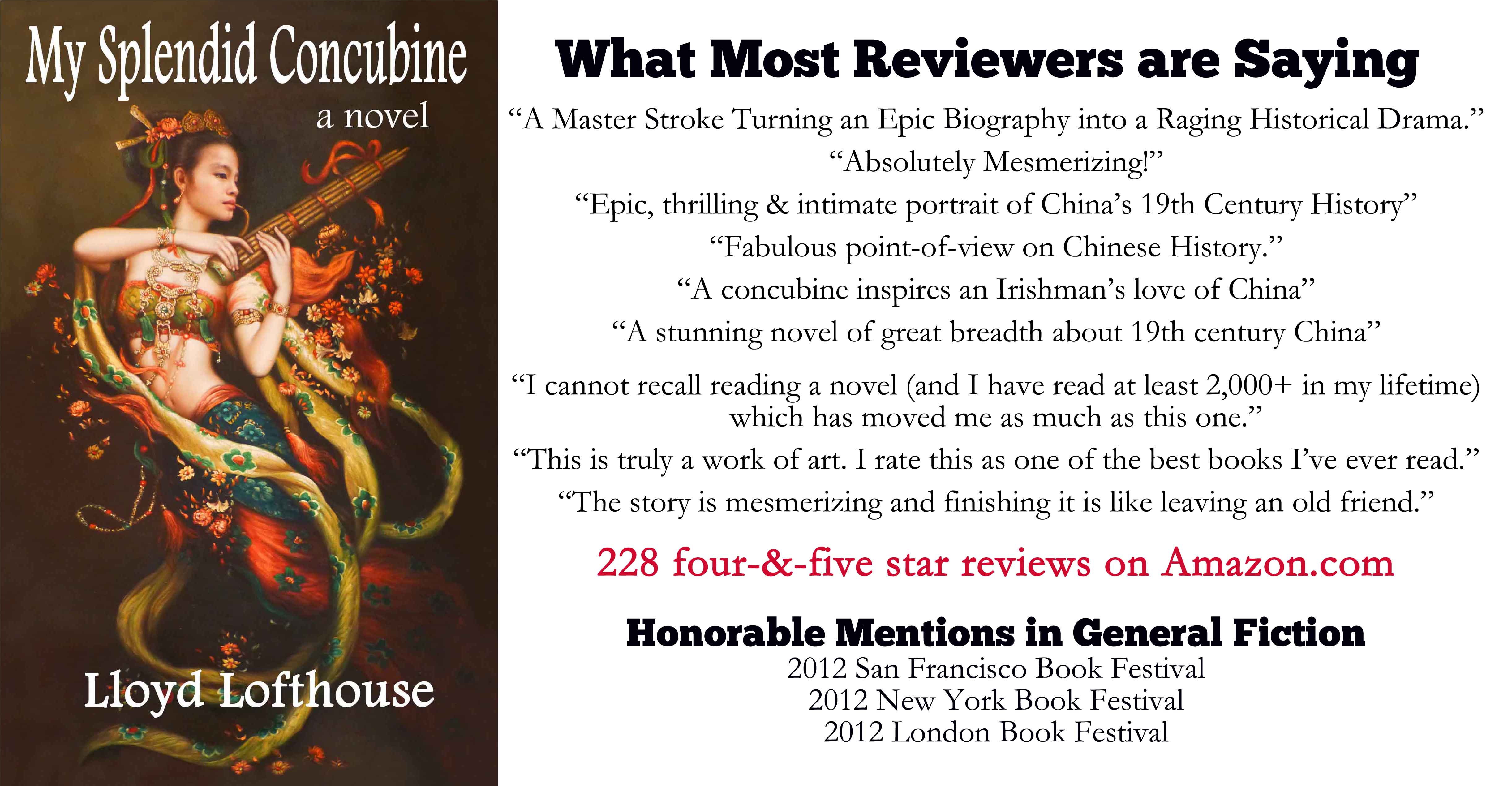
A1 on March 13 - 2016 Cover Image with BLurbs to promote novel

Where to Buy

Subscribe to “iLook China”!
Sign up for an E-mail Subscription at the top of this page, or click on the “Following” tab in the WordPress toolbar at the top of the screen.

About iLook China

China’s Holistic Historical Timeline


Sun Tzu’s “The Art of War” – 4/10

August 20, 2010

Sun Tzu said, “Keep plans as dark as night.”

The NVA (North Vietnamese Army) and Vietcong did this by moving supplies and troops through miles of tunnels built in the 1950 and 60s.

Deception was also one of Sun Tzu’s rules.

To achieve deception, the NVA and Vietcong announced they would honor a cease-fire on January 31, 1968, the Tet New-Year Holiday.

Sun Tzu said, “In battle use a direct attack to engage and an indirect attack to win,” meaning to deceive your enemy so you can win your real objective.

To achieve this goal, the NVA launched a surprise attack on Khe Sanh, a remote US base, one week before the Tet Offensive.

The South Vietnamese and American military are surprised when the NVA launches the Tet Offensive.  At first, it looks like the Vietcong will win, but the NVA ignored one of Sun Tzu’s rules—moral influence.

Moral influence means a leader must have the people behind him to win.

During the early days of the Tet, the Vietcong rounded up and brutally assassinated several-thousand South Vietnamese government workers and killed many Catholic nuns losing the support of the people.

However, in America, watching the violence of the Tet Offensive on TV turned more Americans against the war.

Eight years later, in 1975, Saigon falls to the NVA and America loses the war even though the US had military superiority.

Go to Sun Tzu’s “The Art of War” – Part 5 or return Sun Tzu’s “The Art of War” (HQ) – Part 3

Lloyd Lofthouse is the award-winning author of My Splendid Concubine [3rd edition]. When you love a Chinese woman, you marry her family and culture too. This is the unique love story Sir Robert Hart did not want the world to discover.

A1 on March 13 - 2016 Cover Image with BLurbs to promote novel

Where to Buy

Subscribe to “iLook China”!
Sign up for an E-mail Subscription at the top of this page, or click on the “Following” tab in the WordPress toolbar at the top of the screen.

About iLook China

China’s Holistic Historical Timeline


Sun Tzu’s “The Art of War” – 2/10

August 19, 2010

The state of Wu has only 33,000 troops while Chu can field a force of 300 thousand.

Outnumbered ten to one, Sun Tzu could build his defenses and wait for the attack. However, he does the unexpected. He invades Chu.

He doesn’t attack Chu’s main army. Instead, he attacks outposts and weaker targets. When Chu sends an army to fight, Sun Tzu slips away emphasizing maneuver, surprise and deception.

After every battle, Sun Tzu learns more about his enemy.

During another war more than two thousand years later, Sun Tzu’s ultimate secret becomes more evident. In the mid 1960s, the world’s largest super power is fighting in Vietnam—a country smaller than the state of Montana.

The American general sees the battlefield like a chessboard where armies stand and fight. However, Vietnam has no clear objectives to attack and destroy.

The Communist general understands Sun Tzu and uses the Viet Cong in hit and run attacks against fixed US positions.

Sun Tzu said, “It is more important to outthink your enemy than outfight him. In war, numbers alone confer no advantage. Do not advance relying on sheer military power.”

The US commander breaks these rules.

Go to Sun Tzu’s “The Art of War” – Part 3 or return to Sun Tzu’s “The Art of War” – Part 1

Lloyd Lofthouse is the award-winning author of My Splendid Concubine [3rd edition]. When you love a Chinese woman, you marry her family and culture too. This is the unique love story Sir Robert Hart did not want the world to discover.

A1 on March 13 - 2016 Cover Image with BLurbs to promote novel

Where to Buy

Subscribe to “iLook China”!
Sign up for an E-mail Subscription at the top of this page, or click on the “Following” tab in the WordPress toolbar at the top of the screen.

About iLook China

China’s Holistic Historical Timeline


The Three Key Principals of Sun Tzu’s “The Art of War”

August 19, 2010

1. Know your enemy and know yourself and in 100 battles, you will never be in peril.  In the Art of War, understanding your opponent is crucial to victory.

2. To win 100 battles is not the height of skill – to subdue the enemy without fighting is.  Fighting costs lives and money.  Sun Tzu prizes the general who can outwit instead of outfight his opponent.

3. Avoid what is strong.  Attack what is weak. Throughout history, armies battle to show their strength and courage. However, Sun Tzu does not care about glory.  His only goal is to win.

For more than a thousand years, Sun Tzu’s secrets were kept hidden and made available only to Chinese emperors and authorized scholars. The Art of War surfaced in eighth-century Japan and spread throughout the world from there.

Today, what can be learned from The Art of War also applies to sports, politics, education and business.

Continued in Sun Tzu’s The Art of War – Part 1 or discover Dictatorship Defined

______________

Lloyd Lofthouse is the award-winning author of The Concubine Saga. When you love a Chinese woman, you marry her family and culture too. This is the love story Sir Robert Hart did not want the world to discover.

Subscribe to iLook China — there is an “E-mail Subscription” link at the top of the screen.

About iLook China


Sun Tzu’s “The Art of War” – 1/10

August 18, 2010

Around 500 BC, the King of Wu summons Sun Tzu, one of the greatest military minds in history, to save his kingdom from a more powerful enemy.

Sun Tzu was a warrior, a philosopher and the author of The Art of War.

Sun Tzu is important because he had a cohesive, holistic philosophy on strategy.  Sun Tzu tells the King of Wu he can defeat the enemy with a smaller army.  Doubting him, the king challenges Sun Tzu to turn the palace concubines into a fighting force and Sun Tzu accepts.

Sun Tzu shows the concubines what to do, selects the best two students and puts them in charge of the others.  When Sun Tzu orders the exercise to begin, the woman laugh.

He tries again but the concubines laugh again.

Sun Tzu says, “If instructions are not clear and commands not explicit, it is the fault of the general.  But if the orders are clear, and my orders are clear, it is the fault of the subordinate officers.”

Without warning, Sun Tzu beheads the two concubines he had selected to lead the others.  To Sun Tzu, war is a matter of life and death. This is the key principal of his teachings.  Once understood, everyone from the general to the solider will be motivated to win.

While the bodies of the first two concubines are still warm, Sun Tzu appoints two new concubines to lead the others. This time the concubines follow his orders without hesitation. The king of Wu is convinced and  appoints Sun Tzu commander of the Wu army.

Sun Tzu now must train an army of 30 thousand troops to fight a force ten times larger.

Go to Sun Tzu’s “The Art of War” – Part 2

Lloyd Lofthouse is the award-winning author of My Splendid Concubine [3rd edition]. When you love a Chinese woman, you marry her family and culture too. This is the unique love story Sir Robert Hart did not want the world to discover.

A1 on March 13 - 2016 Cover Image with BLurbs to promote novel

Where to Buy

Subscribe to “iLook China”!
Sign up for an E-mail Subscription at the top of this page, or click on the “Following” tab in the WordPress toolbar at the top of the screen.

About iLook China

China’s Holistic Historical Timeline