In Part One, I mentioned the subway system under construction in modern Xi’an. That was in September 2008.
For an update, Travel China Guide.com says, “The Xi’an subway system is scheduled to have 6 lines, with a total length of 251.8 kilometers… While the first phase of subway Line 2 has been in use since Sep 16, 2011, the other five lines are designed to be finished in 2018 in sequence.”
When the second phase is completed, the full length of Line 2 will be 26.64 kilometers (about 16.5 miles).
The population of Xi’an has also increased since Neville Gishford hosted The Discovery Channel’s documentary of China’s Most Honourable City. Today, there are more than 8 million people living there.
Gishford’s documentary started with Archaeologist Charles Higham (born 1939), a world famous authority on ancient Asian cities. Higham is a British archaeologist most noted for his work in Southeast Asia. Among his noted contributions to archaeology are his work (including several documentaries) about the Angkor civilization in Cambodia, and his current work in Northeast Thailand. He is a Research Professor at the University of Otago in Dunedin, New Zealand.
Higham said, “A delegation of jugglers from Roman Emperor Marcus Aurelius (161-180 AD, who is regarded as one of the greatest emperors in Roman history) traveled and performed in the Han Court of Chang’an.”
More than two thousand years ago, the walls of Chang’an were made of rammed (compressed) earth and much of the city from kiln fired clay bricks, which was a revolutionary building material at the time that changed the history of architecture.
The builders of Han Chang’an used this new technology in revolutionary ways. For instance, building an underground sewer system connected to the moat that surrounded the city.
Continued on January 28, 2016 in Part 3 or Start withPart 1
______________________________
Lloyd Lofthouse is the award-winning author of My Splendid Concubine [3rd edition]. When you love a Chinese woman, you marry her family and culture too. This is the unique love story Sir Robert Hart did not want the world to discover.
Subscribe to “iLook China”!
Sign up for an E-mail Subscription at the top of this page, or click on the “Following” tab in the WordPress toolbar at the top of the screen.
Most people outside of China only know of Beijing—first known as Peking—as the capital of China. However, another city was China’s capital for more than a thousand years, and more than 4,000 historical sites and tombs have been excavated there.
That city was Chang’an and it served as the capital of China from the Han to the Tang Dynasty spanning more than eleven hundred years. It was also the cultural center of the Silk Road.
In 2008, the last time we visited Xi’an (near the original site of Chang-an), subway construction was running behind schedule due to a law that does not allow the destruction of historical sites such as the tombs of emperors. There are so many of these tombs below ground that the subway tunnels must be diverted to avoid them causing construction delays.
This is the first part of a documentary about Xian produced by the Discovery Channel. I watched the five-part series on You Tube in 2011 but only found Part 1 to share with this series of Blog post.
To learn about Chang’an and Xi’an’s also teaches us a lot about China’s civilization.
In the Discovery Channel’s documentary, Neville Gishford said, “It (Han Chang’an) was more powerful than Rome. If any Roman army had actually gone there, they would have been absolutely annihilated.”
The city of Han Chang’an was larger than Constantinople and richer than Egypt’s Alexandria.
In addition, the current massive city wall for Xi’an is more than six hundred years old and longer than 12 kilometers. Cracks are appearing and an engineering team keeps close watch and makes repairs
Soon after the Qin Dynasty capital of Xianyang was destroyed, the Han Dynasty built the second city Chang’an, which is close to the modern city of Xi’an, and the old eroding walls of Chang’an are still visible.
Covering 36 square kilometers, Han Chang’an (202 BCE – 24 CE and again in the 4th to 10th centuries AD) was more than one and a half times the size of Rome.
Lloyd Lofthouse is the award-winning author of My Splendid Concubine [3rd edition]. When you love a Chinese woman, you marry her family and culture too. This is the unique love story Sir Robert Hart did not want the world to discover.
Subscribe to “iLook China”!
Sign up for an E-mail Subscription at the top of this page, or click on the “Following” tab in the WordPress toolbar at the top of the screen.
The earliest recorded festivities in honor of a new year’s arrival date back some 4,000 years to ancient Babylon. For the Babylonians, the first new moon following the vernal equinox—a day in late March with an equal amount of sunlight and darkness—heralded the start of a new year.
If the first recorded New Year’s celebration was in March, how did it move to January 1st? The answer may be found at History.com where we discover that Emperor Julius Cesar introduced the Julian calendar, which closely resembles the more modern Gregorian calendar that most countries use today, and Cesar made January 1st the first day of the year, partly to honor the month’s namesake, Janus, the Roman god of beginnings.
Therefore, if you celebrate the New Year on January 1st, you are celebrating a pagan holiday. But all is not lost. Later, after the fall of the Roman Empire, Christian leaders in medieval Europe during the Dark Ages replaced January 1st as the first day of the year with days carrying more religious significance such as December 25, the anniversary of Jesus’s birth—until Pope Gregory XIII (Born 1502 – Died 1585) reestablished January 1st as New Year’s Day in 1582.
Countries that do NOT celebrate the New Year on the first of January
For China, the first day of the New Year falls between January 21 and February 20. The Chinese New Year is celebrated at the turn of the Chinese calendar, also known as the Spring Festival.
The Chinese New Year gained significance because of several myths and traditions. History.com says, “The ancient Chinese calendar, on which the Chinese New Year is based, functioned as a religious, dynastic and social guide. Oracle bones inscribed with astronomical records indicate that it existed as early as the 14th century BC, when the Shang Dynasty was in power.”
Traditionally, the festival was a time to honor deities (gods) as well as ancestors. The Chinese New Year is celebrated in countries and territories that have significant Chinese populations, including Mainland China, Hong Kong, Macau, Taiwan, Singapore, Thailand, Cambodia, Indonesia, Malaysia, Mauritius, and the Philippines.
In 2015, China witnessed 261 million people on the move to celebrate the Lunar New Year holiday, and they traveled by road, rail and air—all over a short period of time. The Chinese Lunar New Year for 2016 takes place on Monday, February 8, and it is a national holiday that runs from February 7 – 13.
When we visited China in 2008 during this holiday, the Lunar New Year on February 7, the Year of the Rat, and 2016 will be the Year of the Monkey. Each year is related to an animal sign according to a 12-year-cycle. Years of the Monkey include 1920, 1932, 1944, 1956, 1968, 1980, 1992, 2004, 2016, and 2028.
Back during the Year of the Rat in 2008, my sister and her youngest daughter traveled with us as we toured China—and both are evangelical Christians who did not agree with China’s one-child policy. I heard this more than once but after they arrived in China and experienced that migration, they both stopped preaching about why the one-child policy was wrong.
At times, it was so crowded that it felt as if we were swimming upriver through an ocean of people minus the water—just people packed tight like sardines in a can.
That’s when I decided that my next trip to China will not be during any of China’s national holidays—especially the Lunar New Year.
For readers who haven’t been to China, this may be your only chance to experience a taste of what it is like to live in a country with more than 1.3 billion people. By the way, 261 million people are more than 82% of the population of the United States. Imagine the gridlock if that many Americans took to the roads and air all at once.
In China, it is so crowded on trains and busses during this holiday, that it’s possible for a passenger to end up standing for a trip that might take 16 to 48 hours.
For the United States in 2014, the Automobile Club reported that 98.6 million Americans traveled during the Christmas to New Year holiday season, a four percent increase over 2013.
2014 Lunar New Year in Beijing, China
Sounds like a War!
In 9th century China during the Tang Dynasty, Chinese alchemists, searching for the elixir of immortality, because the emperor wanted to live forever, accidently created gunpowder instead and then the invention of fireworks followed in the 10th century.
______________________________
Lloyd Lofthouse is the award-winning author of My Splendid Concubine [3rd edition]. When you love a Chinese woman, you marry her family and culture too. This is the lusty love story Sir Robert Hart did not want the world to discover.
Subscribe to “iLook China”!
Sign up for an E-mail Subscription at the top of this page, or click on the “Following” tab in the WordPress toolbar at the top of the screen.
Access to electricity is the key to developing a modern country with the potential to grow a large, consumer driven middle class. Poverty reduction is also linked to access of electricity, because without electricity people live in the middle ages.
In fact, to reduce poverty, over the last 50 years China has introduced electricity access to 100% of it’s people. – World Bank.org
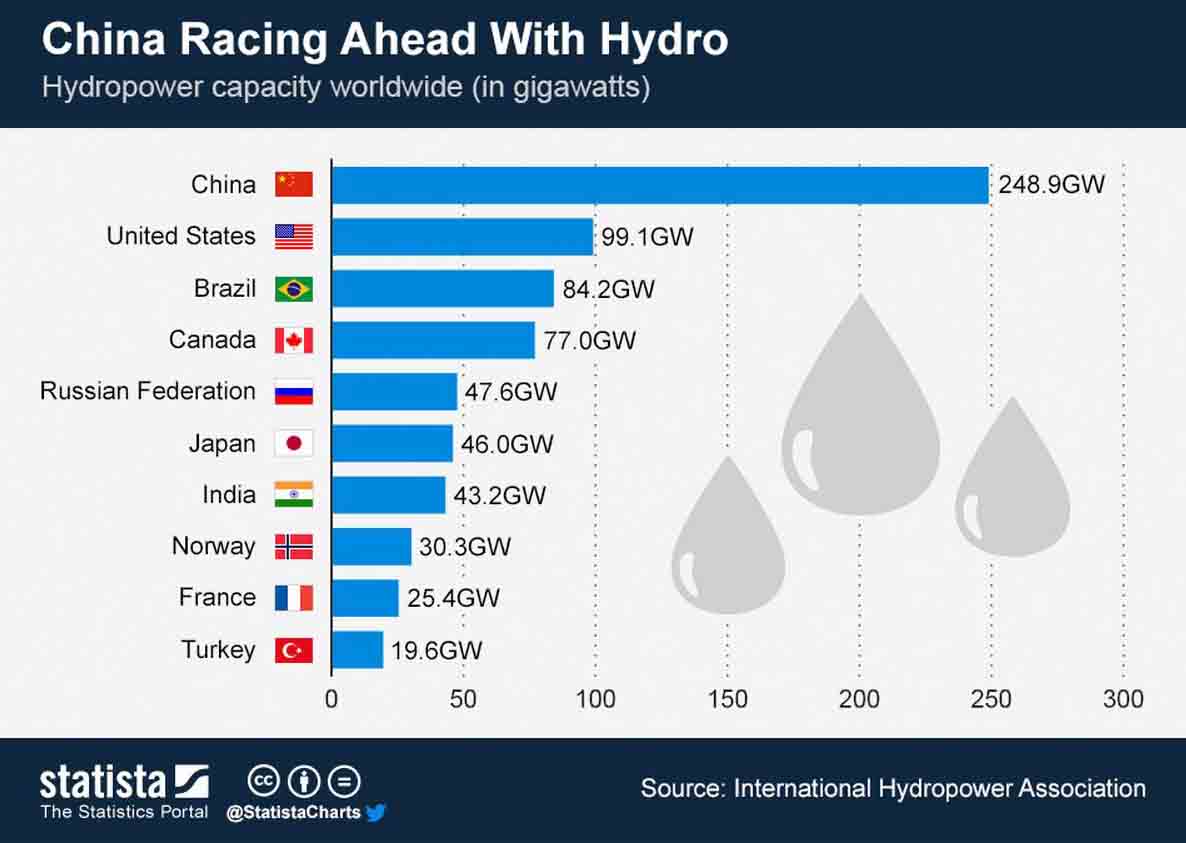
In 1949 when the People’s Republic (PRC) was founded, there were only 33 small hydropower stations in rural China, with a total installed capacity of 3.63 megawatts, and total electricity consumption in rural areas was 20 million kilowatts. Today, there are thousands of hydro-power stations, and the PRC has more than any country on the earth.
Of the world’s 65 operational hydropower stations with an installed capacity of at least 2,000 MW, China operates 20 (more than 30%).
In 1979, China’s Xinhua state run news agency reported a serious electric power shortage. The agency said China produced about 150,000 million kilowatts of electricity a year and ranked about seventh among the world’s electric energy producers. In fact, China’s output was about one-eighth that of the U.S. back then. – History of China’s electricity use
In a previous post, China’s Goals to Go Green, we discovered that China now produces more electricity than the U.S., but the U.S. still produces 17.0 metric tons of CO2 emissions for each person in the United States compared to 6.7 metric tons for each person in China.
Imagine what the CO2 pollution would be like in China if the Chinese eventually match the U.S. per capita. – CO2 emissions World Bank data
Lloyd Lofthouse is the award-winning author of My Splendid Concubine [3rd edition]. When you love a Chinese woman, you marry her family and culture too. This is the lusty love story Sir Robert Hart did not want the world to discover.
Subscribe to “iLook China”!
Sign up for an E-mail Subscription at the top of this page, or click on the “Following” tab in the WordPress toolbar at the top of the screen.
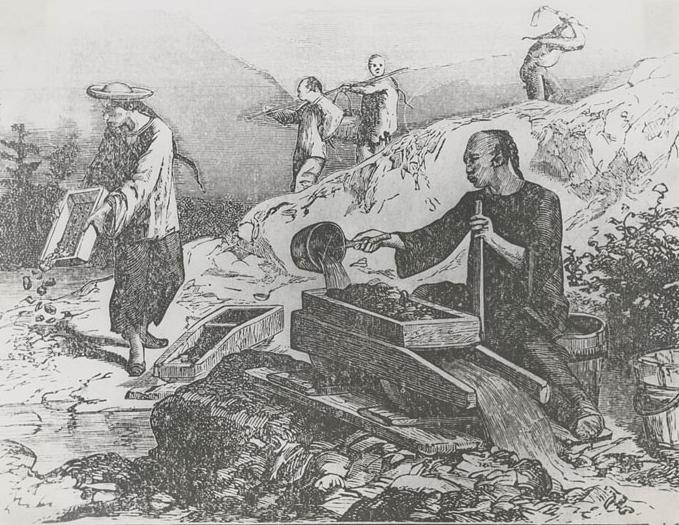
Of all the diverse peoples that poured into California after the discovery of gold, none stood out more than the Chinese. Radically different in dress, language and culture these new men were first welcomed because of their willingness to work hard for low wages at any task presented them.
John McDougall, the 2nd Governor of California, described them as “one of the most worthy of our newly adopted citizens.”
At the start of 1849 only 54 Chinese were in California. By1852 there were nearly 12,000 living here and only seven of them women. Because of turmoil in Canton another 20,000 would arrive that same year.
A community of Chinese Americans quickly grew in San Francisco. They marched in Fourth of July parades and rejoiced at California’s statehood, but celebrated their lunar new year in their traditional way.
In 1852 a Cantonese opera was performed at the American Theater and in 1854 a Chinese language newspaper began publishing.
The Kong Chow Association formed to help the new arrivals adapt to their new home. Then another, the Chew Yick, elected Norman As-sing, an English speaking owner of the Macao and Woosung Restaurant as their leader. Soon there were six associations called tongs that combined to form the Six Companies to better represent Chinese interest.


 Posted by Lloyd Lofthouse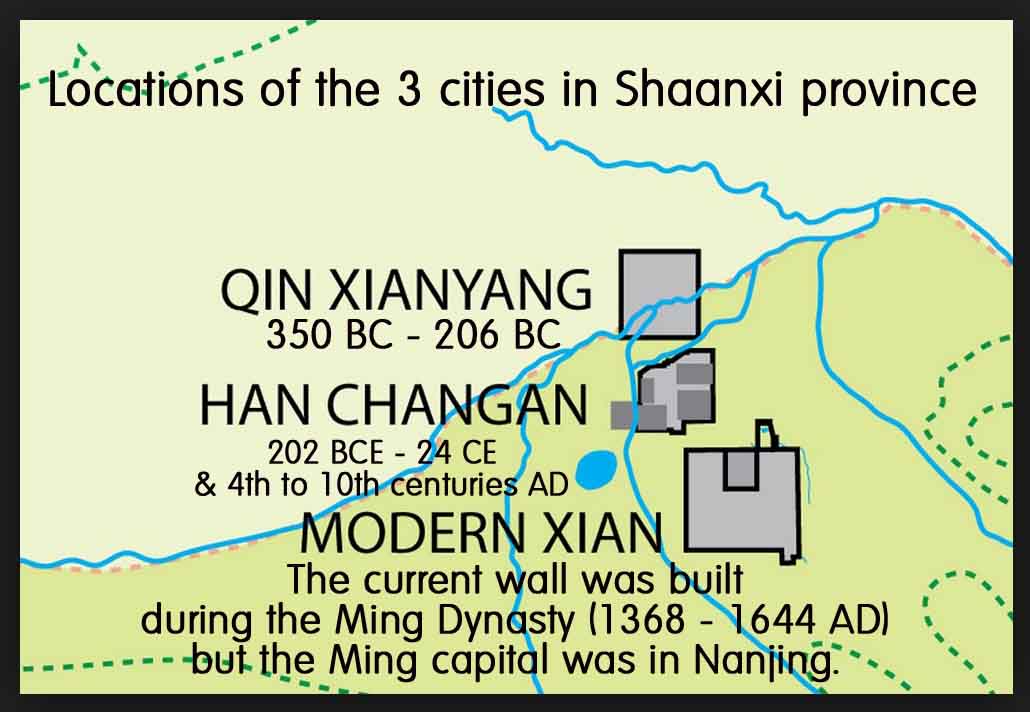



 iLook China