“For All the Tea in China” – a book review

October 23, 2012

If you are interested in a real-life collision between the West and China early in the 19th century, then I highly recommend Sarah Rose’s nonfiction work. You will discover that the British Empire and its merchants were successful, because they were more ruthless and devious than anyone else on Earth.

You may be interested in the list of wars that involved the Kingdom of Great Britain from 1701 – 2011. Be prepared for shock and a dropped jaw. The price of an empire is blood, lots of spilled blood.

At its greatest extent, the British Empire was known as the largest in history, and it covered more than thirteen-million square miles (20,921,472 square kilometers), which is about a quarter of the Earth’s total land area, and she controlled more than 500 million people—a quarter of the world’s population.

The English language, which the British Empire spread, is the second most-widely spoken language in the world today—in reality, the standard language of the world.

What financed the brutal expansion of this empire?  According to For All the Tea in China, drugs paid for the empire.  The British Empire was a thief and the largest drug cartel in human history.

Sarah Rose wrote a fascinating story of Robert Fortune (1812 – 1880) and one of, if not the largest, acts of corporate espionage and theft in history. This nonfiction book is about how the British stole tea plants and the method of producing tea from China and successfully transplanted this industry in India.

For example, if you drink Darjeeling Tea from India, you are drinking a product that was stolen from China by Robert Fortune in the early half of the 19th century.

But there is much more to this story than the theft of tea from the country that may have invented it almost five thousand years ago. In fact, China is considered to have the earliest records of tea drinking, with recorded tea use in its history dating back to the first millennium BCE.

However, first, I want to dispel a misconception I discovered from a two-star Amazon reader review that said, “I was a little skeptical about her comment in the notes ‘As this is a work of popular history, not a scholarly undertaking, I have avoided the use of footnotes and tried to steer clear of mentioning sources in the body of the text. Nevertheless, this is a work of nonfiction …’ “

That unfair review left off the rest of Sarah Rose’s quote that said, “Nevertheless, this is a work of nonfiction, and anything in quotes comes from a letter, memoir, newspaper or other contemporaneous sources.

“I have relied heavily on Robert Fortune’s four memoires (listed at the end of this post), his letters to the East India Company and other company documents housed in the British Library. Over five hundred books and documents were consulted in putting this project together.” (pg. 251, hardcover)

On page 227 of the hardcover, Rose wrote, “By the time the Chinese realized that Fortune had stolen an inestimable treasure from them, it was many years too late to remediate their loss. His theft helped spread tea to a wider world at lower prices.”

In addition, “Tea likewise revolutionized Britain’s capital and banking systems and influenced the rapid growth of trade networks in the Far East. It was instrumental in extending the reach of British colonialism as the empire expanded to include countries such as Burma, Ceylon, East Africa and others where tea could be grown …”

On page 178, we discover, “It was through drug-based commercial enterprises such as the tea and opium trade that Britain became the greatest of all hegemonic empires. The British campaign to sell opium in China was tremendously profitable. … Britain’s all-conquering naval fleet was able to be constantly improved with newly minted capital from the sugar, tea and opium trades. Without opium, the India trade would not have flourished and without India, Britain’s post-Napoleonic global ascendency could well have collapsed.”

However, these few quotes do not do justice to Robert Fortune’s adventure in China. He successfully passed himself off as a citizen of the Qing Empire dressed in mandarin robes. He even had a queue, a braid of hair worn hanging down behind the head, sewn to his scalp and had his head shaved to match the style of the time.

“He eventfully became proficient enough with speaking Mandarin that he was able to adopt the local dress and move among the populous largely unnoticed. By shaving his head and adopting a ponytail, this rather gruff Scotsman was able to effectively blend in. So well in fact, that he was able to enter the forbidden city of Souchow (now Wuhsien) unchallenged.” Source: Planet Explorers.com

Besides being nonfiction loaded with facts, this book was also an adventure and/or spy thriller based on a real person and his mission of intrigue—if caught, he would have been executed. To pull off the biggest heist of all time, Fortune traveled to areas of China that no foreigner had ever visited before, and his only companions were Chinese that he had bribed to work for him.

Today, tea is the most popular drink in the world in terms of consumption. Its consumption equals all other manufactured drinks in the world – including coffee, chocolate, soft drinks, and alcohol – put together. In fact, China is still the leading tea producer in the world: in 2010 China produced 1,467,467 tons (32.5%) compared to second place India at 991,180 tons (21.9%). Third place went to Kenya at 399,000 tons (8.83%).

In addition, consumption of tea in 2010 grew at a faster rate than global production. In the United States alone in 2011, the US tea industry gross revenue through all foodservice and retail outlets was greater than $27-billion (and twelve countries consumed more tea than the US). For a comparison, ticket sales for the US domestic movie market were only $10.28-billion in 2011.

Tea is more popular than Hollywood.

Robert Fortune’s memoirs:

1. Three Years’ Wandering in the Northern Provinces of China, A Visit to the Tea, Silk, and Cotton Countries, with an account of the Agriculture and Horticulture of the Chinese, New Plants, etc., London: John Murray  (1847)

2. A Journey To The Tea Countries Of China; Including Sung-Lo And The Bohea Hills; With A Short Notice Of The East India Company’s Tea Plantations In The Himalaya Mountains. With Map And Illustrations, London: John Murray  (1853)

3. Two visits to the tea countries of China and the British tea plantations in the Himalaya: with a narrative of adventures, and a full description of the culture of the tea plant, the agriculture, horticulture, and botany of China, London: John Murray (1853)

4. A Residence Among the Chinese; Inland, On the Coast and at Sea; being a Narrative of Scenes and Adventures During a Third Visit to China from 1853 to 1856, including Notices of Many Natural Productions and Works of Art, the Culture of Silk, &c, London: John Murray (1857)

5. Yedo and Peking; A Narrative of a Journey to the Capitals of Japan and China, with Notices of the Natural Productions, Agriculture, Horticulture and Trade of those Countries and Other Things Met with By the Way, London: John Murray  (1863)

Discover The Tea Horse Road or learn about The Magic of Puer Tea

______________

Lloyd Lofthouse is the award-winning author of The Concubine Saga. When you love a Chinese woman, you marry her family and culture too. This is the love story Sir Robert Hart did not want the world to discover.

Subscribe to “iLook China”!
Sign up for an E-mail Subscription at the top of this page, or click on the “Following” tab in the WordPress toolbar at the top of the screen.

About iLook China


The Orphan’s Life in China

October 9, 2012

More than ninety percent of babies in Chinese orphanages are girls. Prior to 1949, it was common for parents to murder girl infants. From the 1950s to the end of the 1970s, due to Mao’s leadership and a tough stance for women’s equality, the death rate went down. Then in the 1980s, with the population growing too fast, a desperate government implemented the one-child policy.

After that, many girl babies went missing or were abandoned to state-run orphanages. To end this tragedy, the government eventually allowed rural families to have two children per family—hoping for a boy.

The conditions in these rural, state-run orphanages are often not ideal. Girls, who are not adopted, usually end up being the caregivers for the younger children. Since these orphan caregivers were raised without the love of parents and siblings, they may not be loving themselves creating a cold environment to grow up in.


abandoned at birth

It isn’t as if China’s government has done nothing to stop a practice that has been around for thousands of years. During the 90s, tougher laws were passed but often ignored. Government inspectors were sent to rural areas to enforce these laws, but it isn’t easy controlling a population of 1.3 billion scattered over a mountainous country almost the size of the United States.

I will not criticize the Chinese government for these conditions. I’ve been to China and understand the challenges.

What would you do if you had inherited a medieval country in 1949 that was bankrupt due to the Kuomintang looting the banks and treasury as they fled to Taiwan under American protection?

Then there is a culture reaching back thousands of years where girls were considered worthless. That is a lot to overcome.

Learn of Gendercide in China and India, and also discover the heart-breaking story of one orphan’s journey in Saying Goodbye

______________

Lloyd Lofthouse is the award-winning author of The Concubine Saga. When you love a Chinese woman, you marry her family and culture too. This is the love story Sir Robert Hart did not want the world to discover.

Subscribe to “iLook China”!
Sign up for an E-mail Subscription at the top of this page, or click on the “Following” tab in the WordPress toolbar at the top of the screen.

About iLook China


Crazy Normal

September 28, 2012

Lloyd Lofthouse's avatarCrazy Normal - the Classroom Exposé

In 1800, most Americans (94%) worked and lived on farms. After the Civil War, many left the farms to work in factories but the pay was low for men and even lower for women and children (a situation similar to what has been happening in China for the last few decades–this evolutionary transition happened in the US first. Now it is repeating itself in other countries.).

If life was so harsh in the cities and factories, these migrants could have stayed on the farms and I’m sure most would have if life had been better on the farm, but it wasn’t. For a migration of this size to take place means those people were desperate. That many people do not walk away from a good thing to be treated as if they were slaves.

Legally, children as young as age three worked in US factories (this is illegal in China…

View original post 672 more words


A few Facts about China that may Blow Your Mind

September 17, 2012

From Business Insider, comes 15 Facts (actually 17) About China that will Blow Your Mind. Here are five of them. Visit Business Insider to see the rest and the details.

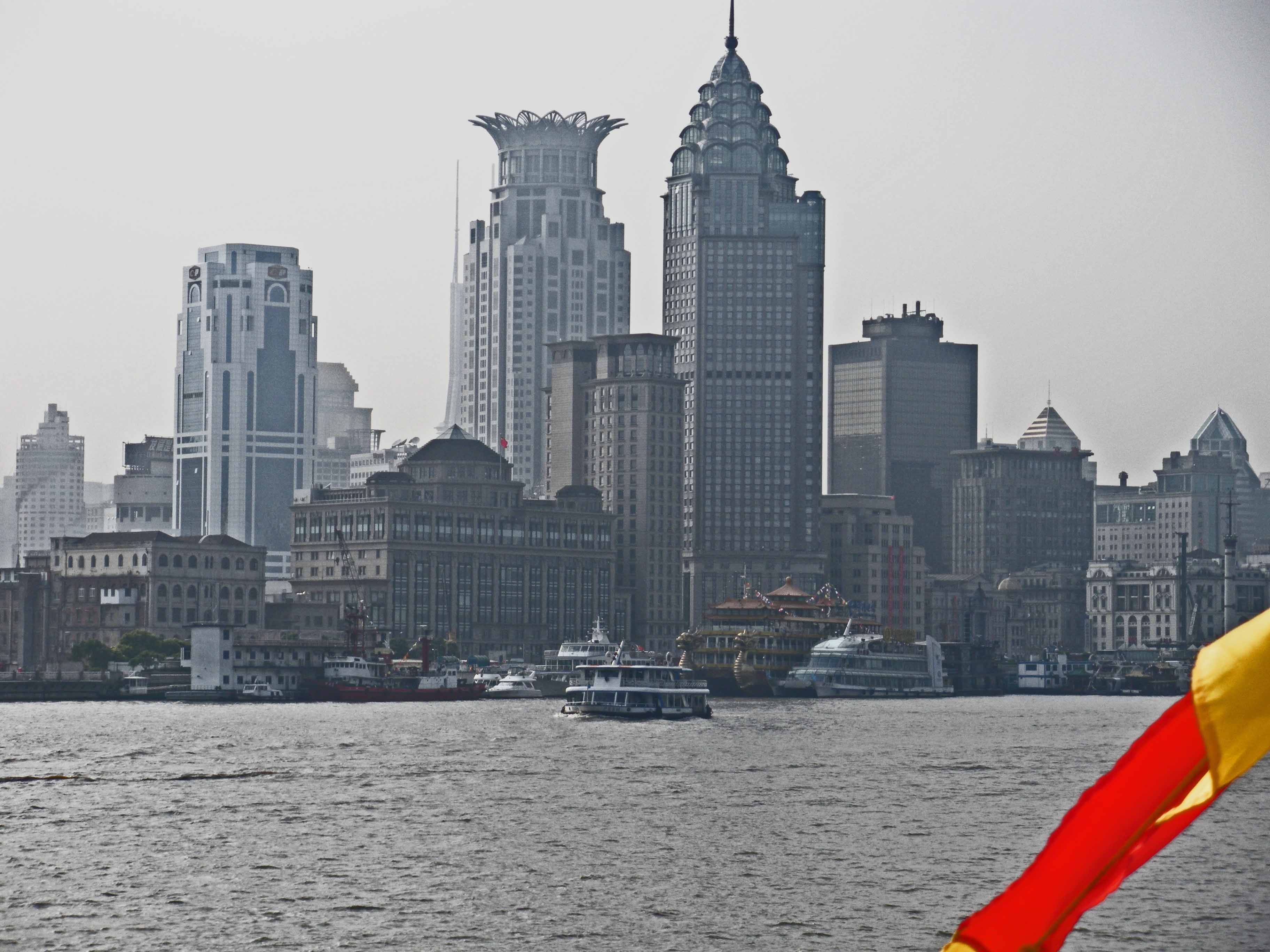
1. By 2025, China will build TEN New York-sized cities.

Shanghai river waterfront

2. China already consumes twice as much steel as the US, Europe and Japan combined.

3. If the Chinese, one day, use as much oil per person as America, then the world will need seven more Saudi Arabias to meet the demand.

Note:  Another reason why China NEEDS to go Green with their power. See my piece about this topic at China Going Green. The growing crises with industrial pollution linked to oil is another reason.

4. Chinese Internet users are five times as likely to have blogs as Americans.

5. Chinese GDP (Gross Domestic Product) could overtake the U.S. as soon as the early 2020s.

Bonus Fact: The Chinese plan to have a permanent space station before 2020, walk on the moon by 2025 and a manned mission to Mars by 2040-2060.

______________

Lloyd Lofthouse is the award-winning author of The Concubine Saga. When you love a Chinese woman, you marry her family and culture too. This is the love story Sir Robert Hart did not want the world to discover.

Subscribe to “iLook China”!
Sign up for an E-mail Subscription at the top of this page, or click on the “Following” tab in the WordPress toolbar at the top of the screen.

About iLook China


The Dog that Turned on its Master

August 27, 2012

This morning while reading a few Blog Posts on China topics, I ran into another example of manipulating the facts to influence public opinion—we could call it a white lie but I believe it is much worse than that because one day telling such half truths may lead to a war that kills millions of people and does unimaginable destruction to human civilization.

The Buffalo Hair Gazette International, claiming to be a News and Video and Resource Portal (in the worst possible way), reported that the “Free Syria Army Stocks Up  with Weapons Captured (Thank You Russia and China For Supplies).”

Besides a photo of weapons and bombs, that was it.  What that headline says may be the truth, but what was your first impression? Did you think that Russia and China were supporting the Assad government in Syria?  How about America—did you feel that America was a role model in this area and believed that it would never do the same thing as a champion of democracy in the Middle East?

If you formed an opinion that America was the good guy and Russia and China were evil, then you have been mislead by another example of how the media in the West twists facts and manipulates public opinion.

For example, America and other Western democracies have praised Egypt’s recent democratic election, which saw an Islamic fundamentalist president voted into power. Mohammed Morsi, Egypt’s new civilian president, is the leader of the Egyptian Muslim Brotherhood.

What does this mean for the West?  Who knows? We may only guess.

However, the Muslim Brotherhood’s credo was and is, “God is our objective; the Quran is our constitution, the Prophet is our leader, Jihad is our way; and death for the sake of God is the highest of our aspirations.”

Correct me if I am wrong, but the current government of Iran was voted into power through democratic elections and yet Iran is considered one of America’s most dangerous enemies second only to al Qaeda and one day soon, we may be at war with Iran.

Again, correct me if I’m wrong, there is a reason why America’s Founding Fathers despised democracy—they believed it would lead to mob rule and eventually the end of the freedoms spelled out in the US Bill of Rights.

After all, doesn’t a democratically elected mob rule Iran?

Oh, I thought you should know that Syria’s Bashar al-Assad is known as an enemy of the Muslim Brotherhood. In Syria, this Islamic fundamentalist political party has been suppressed for decades. His father, Hafiz al-Assad was ruthless with the Muslim Brotherhood too.

Sometimes it’s better to stay with the devil you know.

Anyway, back to Buffalo Hair Gazette International’s manipulation of public opinion by only telling some of the truth.

War is Business.com reported, “Between 1950 and 2009, American weapons merchants sold 47.6% of the weapons that ended up in Muslim countries. In 2009, that percent was 52.7%.”

In fact, if it weren’t for America, there would be no al Qaeda.  The US funded and trained al Qaeda to fight the Soviets in Afghanistan and when the Soviets were defeated, al Qaeda turned on America.

Have you forgotten 9/11 yet?

The Economist also ran a piece on this topic. Click on the link and read what The Economist has to say. You will discover that between 2006 – 2010, Russia sold 23% of the global share of weapons while the US sold 30%.  In fact, if we add up four of the top five weapons merchants—the United States, Germany, France and Great Britain—the total is 52% of all global weapons sales. France even sells to China as does Russia.

When we look at a ranking of the World’s largest arms exporters, China ranks sixth place while the US is first place.

1. United States

2. Russia

3. Germany

4. France

5. United Kingdom

6. China
(In fact, China sold less than one eighth of the weapons US arms manufacturers in the private sector sold to other countries with the blessing of the U.S. government.) Source: Arms industry.Wiki.org

Then we have the clincher—a story reported by Foreign Policy Magazine that fills in the rest of the blanks ignored by the Buffalo Hair Gazette International.

Foreign Policy asks, “Why is the U.S. Selling Billions in Weapons to Autocrats?” — Published Saturday, June 23, 2012

An excerpt from Foreign Policy Magazine says, “The Export of American arms to countries around the world—even those actively repressing their own citizens—is booming.

“Every May and June, different branches of the State Department paint contrasting portraits of how Washington views dozens of strategically significant countries around the world, in seemingly rivalrous reports by its Human Rights and Political-Military Affairs bureaus.

“The former routinely criticizes other nations for a lack of fealty to democratic principles, citing abuses of the right to expression, assembly, speech, and political choice. The latter tallies the government’s latest successes in the export of American weaponry, often to the same countries criticized by the former.”

Discover What is the Truth about Tiananmen Square?

______________

Lloyd Lofthouse is the award-winning author of The Concubine Saga. When you love a Chinese woman, you marry her family and culture too. This is the love story Sir Robert Hart did not want the world to discover.

Subscribe to “iLook China”!
Sign up for an E-mail Subscription at the top of this page, or click on the “Following” tab in the WordPress toolbar at the top of the screen.

About iLook China