Chen Zhou’s said, “God of Heaven took my legs, but he gave me a beautiful wife and a pair of healthy children granting me a platform where I can make my life meaningful. Everyone gets knocked down in life. The winners get up no matter how many times they get knocked down. I’ll keep fighting as long as I breathe.”
Born in 1983, Chen Zhou, age 30, lost his legs in a train accident when he was age 13. He then started singing for money on the streets.
To survive, he also shined shoes, sold newspapers and repaired electronic appliances.
Chen Zhou is more than a traveling musician. He is a mountain climber, an inspirational speaker and an advocate for the handicapped.
In fact, he has climbed China’s Five Great Mountains including Mount Tai eleven times (more than 5,000 feet above sea level—the base starts at 490 feet—an elevation gain of more than 4,500 feet). Mount Tai has been a place of worship for at least 3,000 years and has served as one of China’s most important ceremonial centers—emperors often traveled to the summit of Mount Tai to pay homage to heaven. – Viral Nova.com
The stone stairway to the summit has 7,200 steps. To give you an idea of how high that is, the stairway in a two story house usually has 14 steps. If Mount Tai were a house, it would be about 514 stories high. For a comparison, the tallest building in the world, the Burj Khalifa in the United Arab Emirates, only has 163 floors.
To walk up those steps with his arms, Chen Zhou uses a pair of home-made wooden boxes that each weighs seven pounds (watch videos to see how he does it).
Yu Lei is Chen Zhou’s wife, originally from Henan Province. They first met when she heard him singing in the streets for donations in the town of Jiu-jiang in Jiangxi Province.
She was deeply touched by his story, introduced herself and they became friends.
Chen’s positive attitude toward life and powerful will impressed Yu so much that she fell in love with him, and they married. She felt that she had found her hero.
Chen Zhou promised to have a traditional wedding ceremony on the top of Mount Tai. It took him 19 hours to complete the hike to the summit. In the ceremony both Chen Zhou and Yu Lei wore bright red Chinese traditional costumes to celebrate their marriage and happiness.
The couple has a daughter and a son.
The CCP, China’s government, promotes Chen Zhou as a hero in the media. He has traveled to hundreds of towns and cities in China and has held thousands of street concerts.
中
Lloyd Lofthouse is the award-winning author of My Splendid Concubine [3rd edition]. When you love a Chinese woman, you marry her family and culture too. This is the unique love story Sir Robert Hart did not want the world to discover.
Subscribe to “iLook China”!
Sign up for an E-mail Subscription at the top of this page, or click on the “Following” tab in the WordPress toolbar at the top of the screen.
If you enjoy watching films, you probably know who Jackie Chan is. However, outside China, many may not know he is a collector of Chinese cultural things such as rocks, old Chinese wood houses, wine, and ceramic tea cups and saucers.
Born in Hong Kong in 1954, Chan started acting in movies in 1962, and he has appeared in more than 100 films. You may remember Rush Hour 1 to 3 (1998 – 2007); The Karate Kid in 2010, and many others. For a complete list of his films, check out IMDb.
What I didn’t know until my wife Anchee Min and daughter returned from China on New Year day in 2013 was that Chan also has been collecting Chinese cultural items for decades.
In China, Anchee bought a magazine that was exclusively about Jackie Chan’s life, film career, charitable giving and his collections.
Asia One.com says, “Mr. Chan had started his collection (of older Chinese houses and wood structures) some 20 years ago. His collection currently comprises seven houses and an opera performing stage, dating from the Ming and Qing dynasties.”
Then as Chan aged, he became concerned that his collections survive after he was gone, so he is donating them to Singapore and Beijing.
Zee News.India.com reported, “Kung Fu movie legend Jackie Chan wants to donate historical Chinese houses worth more than 67 million US dollars to a university being set up in Singapore … Chan will give the campus seven wooden houses and a performing stage from his private collection …”
From Asian Fanatics.net we learn that Chan’s “collecting passion was also influenced by his late father, who loved old Chinese wooden houses. Chan’s dad, Charlie, died … at the age of 93 after battling cancer. The star’s love of all things historical can be seen in his property purchases. He owns the 105-year-old Jinriksha Station at 1 Neil Road, once the central depot for rickshaw drivers in Singapore, and the four-storey The 50s complex. Both are historic buildings within the Neil Road conservation area.”
中
Lloyd Lofthouse is the award-winning author of My Splendid Concubine [3rd edition]. When you love a Chinese woman, you marry her family and culture too. This is the unique love story Sir Robert Hart did not want the world to discover.
Subscribe to “iLook China”!
Sign up for an E-mail Subscription at the top of this page, or click on the “Following” tab in the WordPress toolbar at the top of the screen.
In the first 122 pages of Country Driving, Peter Hessler sets out to drive the entire length of the Great Wall in a rented Chinese made Jeep Cherokee, and he achieves his goal. In this section, I learned that the Wall was successful most of the time and not the failure historians claim it was. Yes, in several thousand years, the wall failed a few times but it served its purpose and did protect China’s heartland for centuries. Hessler says that there is no archaeologist in the world that has studied the history of the Great Wall but he wrote that there are amateur experts, and we meet a few in this section along with a unique view of rural China.
In Part II, Hessler takes us into a small village a few hours drive outside Beijing where he rents a house and becomes accepted by the insular-rural village community. Along the way, he makes friends and becomes involved personally with local families. The man that becomes his closest contact and friend in the village eventually joins the Chinese Communist Party (there are about 80 million CCP members in China) and uses this to his advantage as he continues to improve the quality of his family’s lifestyle.
In Part III, Hessler travels to the city of Winzhou in Southern China where he spends time developing relationships with factory bosses and workers. In this section, the Chinese people he meets are open and friendly. Hessler sees a side of China that few witness, and it is obvious that the factory workers are not victims because of low pay and long work hours. Instead, they see this new life as an opportunity.
Peter Hessler discussing his novel “Oracle Bones”
When I finished Hessler’s memoir, I walked away feeling as if I had experienced an in-depth taste of the dramatic changes that have taken place in China since Mao’s death in 1976. Since China’s critics mostly focus on the negative, which is the corruption and/or authoritarian one-party system, and never admit the good that the CCP has accomplished, most people would not understand what I discovered. To understand what I mean, one must compare China before 1949, by reading such books like those written by Hessler and his wife.
Before 1949, more than 90% of the people in China lived in severe poverty, more than 80% were illiterate, the average lifespan was 35, few people owned land, and the risk of death from famine had been an annual threat for more than two thousand years. In fact, most rural Chinese were treated as if they were beasts of burden and not humans.
Today, according to the CIA Factbook, about 6.1% of Chinese live in severe poverty (living on $400 or less annually), and they mostly live in remote, rugged, and difficult to reach areas of China. The average lifespan is now 75.4 years and Helen H. Wang writing for Forbes.com (February 2011) reported that China’s middle class is already larger than the entire population of the United States and is expected to reach 800 million in by 2026. In addition, no one has died of famine since 1959-1961.
I highly recommend Country Living for anyone that wants to learn more about today’s dramatically changing China from an unbiased and honest perspective.
Lloyd Lofthouse is the award-winning author of My Splendid Concubine [3rd edition]. When you love a Chinese woman, you marry her family and culture too. This is the unique love story Sir Robert Hart did not want the world to discover.
Subscribe to “iLook China”!
Sign up for an E-mail Subscription at the top of this page, or click on the “Following” tab in the WordPress toolbar at the top of the screen.
No, this is not about looks or Botox or face-lifting creams or hairstyles, or tanning salons, or the desire to have a rounder, paler moon face—the standard of beauty to most Chinese.
What I’m writing about is the meaning of “face” to the Chinese
Dr. Martha Lee wrote, “Nobody ever said what you do with those who have ‘disgraced’ the family name by getting divorced.” Dr. Lee was writing of the ‘hongbao’ dilemma.
In China, if you do something that is considered a disgrace, like getting divorced, that may be considered a “loss of face” for everyone in the family.
“The ‘face’ is psychological and not physiological. Interesting as the Chinese physiological face is, the psychological ‘face’ makes a still more fascinating study. It is not a face that can be washed or shaved, but a ‘face’ that can be ‘granted’ and ‘lost’ and ‘fought for’ and ‘presented as a gift’.”
For instance, when our daughter was a pre-teen, we went on weekend hikes as a family in the hills behind our home when we lived in Southern California. The end of the hike was in a large park across the street from the La Puente Mall. On one fateful day, when she was nine or ten, she was the first to discover a dead man, and she came running back with a shocked expression on her face.
It turned out the dead man was an architect from Taiwan and his company had gone bankrupt. His “loss of face” for failing had driven him to take an extension cord from his mother’s house, find a suitable tree in an isolated portion of that park, and hang himself.
He was dead when we reached him.
Do not stereotype. The meaning of “face” may vary between Chinese. It depends on the balance between Confucianism and Daoism along with factors like Buddhism or belief in the Christian, Islamic or Jewish God.
“Face” is why some Chinese mothers ride their children hard to do well in school while telling everyone they know that their kid is stupid and/or lazy and has no chance to succeed.
Chinese mothers may often tell their children the same thing. However, if the child is accepted to a prestigious university, that Chinese mother has now earned bragging rights and “gained much face” for the job she did as a mother
To get a better idea, I recommend reading Amy Tan’s The Joy Luck Club or watch the film. We had a house full of my wife’s Chinese friends and their families over for dinner. After eating, the children gathered in our downstairs TV room to watch a movie. They picked “The Joy Luck Club”, and during one scene, when the Chinese mother was acting very Chinese, all the children looked at each other, nodded ‘yes’ and laughed ironically. Since my wife is Chinese, I knew why they reacted that way. They all had Chinese mothers.
“Face” is why the Chinese businessman will take great risks or take only a few risks and if given a chance may steal another person blind—that is if they believe they can get away with it. If they are caught and it is against the law, that is a “loss of face”—one reason for suicide.
Most Chinese men will wait until they are successful before they let others know. If they fail, it’s possible no one will hear about it beyond the family unit.
“Face” is why Chinese men often work twelve to sixteen hour days, seven days a week earning small but saving large. The Chinese will do without luxuries and save to pay for their child’s university education. Chinese women will work just as hard.
Studies in today’s China show that the average family saves/spends a third of its income for a child’s education.
Regaining “face” may be one reason why Mao reoccupiedTibet for China in 1949. Look closely, and you may discover that even Taiwan claims Tibet for the same reason.
The other reason may have been tactical—to control the high ground as Israel controls the Golan Heights.
Having control over the Tibetan plateau was one of the tactical reasons Britain convinced the Dalai Lama to declare freedom from China in 1912.
“Face” may be why China’s leaders get so angry over Taiwan. As long as Taiwan is not ruled by the mainland, it may be seen as a “loss of face”.
It’s why the Chinese want to walk on the moon and reach the other planets before anyone else. In China, “face” is universal to most of the population and different for each person.
For the Chinese, taking risks is no stranger. It’s probably the reason the Chinese invented paper, the crossbow, the compass, the stirrup, developed a cure for scurvy, the printing press, gunpowder, and built multi-stage rockets using gunpowder as a propellant centuries before anyone in the West did.
China’s list of innovative inventions is longer than this sample. Many of these inventions eventually appeared in the West centuries later where Westerners took credit for them.
Now you know the truth.
In What the Chinese Want Even More than Oil or Gold, the focus was on Chinese gambling and about illegal lotteries going legal and national. Since I married into a Chinese family, I understand what the author of this piece was saying, but the topic is more complex than that.
To learn more, I suggest you read the Investoralist, “Where Curious Minds Meet”. The Investorilist piece says that gambling is China’s Achilles heel.
I disagree.
I believe it is risk taking that brought China to greatness in the past. It’s when most Chinese stopped taking risks in the 15th century that China started to lose its spot as a regional superpower. It’s all about ‘face’. Take a risk and win but make a mistake and get caught, you “lose face” and maybe your life too, which may explain many of the suicides in countries such as China, Japan and Korea.
______________________________
Lloyd Lofthouse is the award-winning author of My Splendid Concubine [3rd edition]. When you love a Chinese woman, you marry her family and culture too. This is the lusty love story Sir Robert Hart did not want the world to discover.
Subscribe to “iLook China”!
Sign up for an E-mail Subscription at the top of this page, or click on the “Following” tab in the WordPress toolbar at the top of the screen.
If you haven’t heard of it, Sexy Beijing (produced by Goldmines Film and Video Production since 2006) is an Internet TV station run by an in-house production team.
Sexy Beijing says “Our shows have also aired on NBC in Los Angeles, Hunan TV, China Educational TV, and many other stations around China as well as conferences around the world.”
I dare all Westerners that believe the Chinese are depressed and heavily censored to watch Sexy Beijing regularly to learn the truth of China.
Any censorship that exists in the media in China focuses mostly on a few topics such as the Dalai Lama and Tibetan or Islamic separatists that are considered the same to China’s leaders as Islamic terrorists are to the United States government.
In this episode of Sexy Beijing, Su Fei, Anna Sophie Loewenberg, tries to please her mother and go find one of her own kind.
Sue Fei, the Jewish host of this segment, says, “Most people are surprised to find out just how multi-cultural Beijing is. And when it comes to a husband search, I could just as easily be bringing home an African or Muslim suitor to meet my Jewish mother as I could a Chinese one.”
Sue Fei then heads for the new Chabad Jewish community center in Beijing to find out what it would be like to become an Orthodox Jew.
______________________________
Lloyd Lofthouse is the award-winning author of My Splendid Concubine [3rd edition]. When you love a Chinese woman, you marry her family and culture too. This is the lusty love story Sir Robert Hart did not want the world to discover.
Subscribe to “iLook China”!
Sign up for an E-mail Subscription at the top of this page, or click on the “Following” tab in the WordPress toolbar at the top of the screen.


 Posted by Lloyd Lofthouse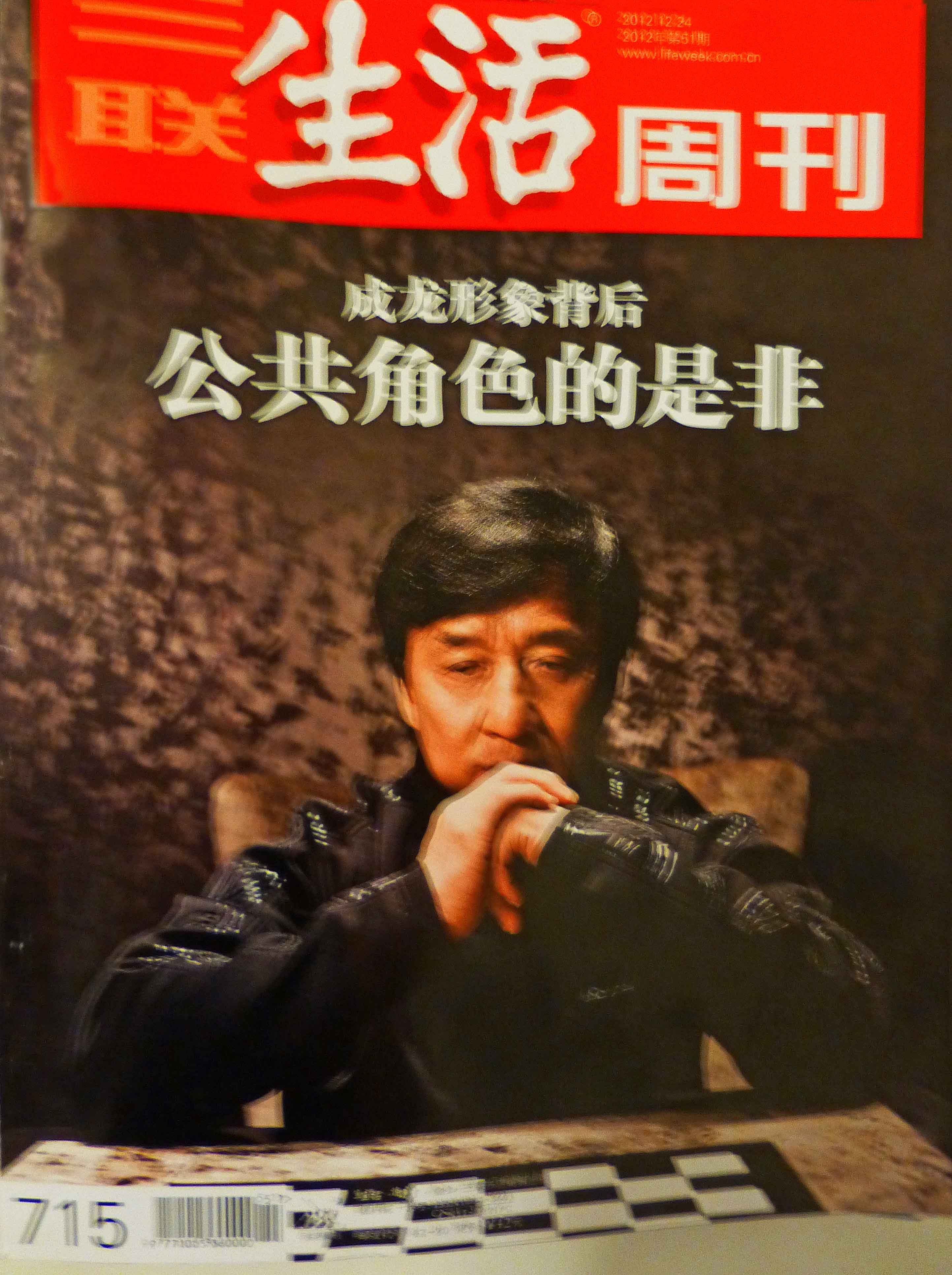



 iLook China