Blonde Lotus

October 11, 2010

Guest Post (book review) by Tom Carter

If there ever was an expat author in the Middle Kingdom whose enthusiasm and love of life was as contagious as Cecilie Gamst Berg’s, then that person has yet to be published.

Part travelogue of a directionless backpacker, part bedtime stories of a frisky European babe who enjoys seducing young Chinese guys “out of the festering prison of virginity,”

Blonde Lotus is in fact one in the same person.  Gamst Berg, via her alter-ego protagonist Kat Glasø, accidentally arrives in late-1980’s China (“all I wanted was to be on the train; I had no interest in the journey’s destination, Beijing”), back when the mighty bicycle was still king of Peking and foreign tourists were a rare sighting.

Expecting a people with “long, billowing sleeves, reciting poetry and plucking at stringed instruments,” what Kat finds in New China instead are street corners populated with shady money changers and young hipsters whose knowledge of English is limited to the words ‘Okay-la’ and ‘Sex!’  Lulled by their charming incessancy, Kat shrugs her shoulders and good-naturedly gives it to them – the money AND the sex.  “How could so many men find the women of a race attractive, and so few women find the men the same,” she ponders postcoitally over a shared Zhongnanhai cigarette.

Queen gweipo (devil woman in Cantonese) Gamst Berg is an unpretentious, fun-loving writer with nothing to prove.  She’s not out to save China as so many a self-righteous foreigner here are (“I hope this country never modernizes” Kat admits in one of her many blunt moments of sincerity), she’s not trying to force feed them Faulkner (“I loved books and he never read one”), nor is she out to land a career in journalism like the rest of us.

No, the author is clearly just looking to have a good time (“We were young, stoned and in China”), and maybe learn some Putonghua while doing it, and therefore spares us the sappy, sympathetic observations and “deep understanding” of life in China that makes most Laowai Literature such a torture to read.

Conversely, nor is Gamst Berg out to tear Communism apart, vilify Chinese people or point and laugh at the “strangeness” of their culture, a common last-resort for some western travel writers (whom I refrain from naming as a professional courtesy) who don’t want to admit that they have learned nothing about the Chinese during their stay here.

Indeed, while her fellow expats spend their time in China sitting around at bars “shouting out orders in English, and when they weren’t understood, complained loudly to each other about how stupid the Chinese were,” rather than join in, Kat moves tables, literally and figuratively, to the Chinese side of the bar.

Instead of whining about China’s infamously filthy public toilets, Kat hangs out in them (smoking dope), then laughs when there’s a line of squeaming girls waiting to use the stall. 

Rather than bitch about the People’s Republic’s chaotic queues at its railway stations, she jumps right in, elbows swinging, with the rest of the seething proletariat.

Our Blonde Lotus ain’t no saint, and she would laugh in your face if you dared suggest it.  “I wanted to experience everything and sleep with everybody…” confesses, nay, asserts the Norwegian-born Kat Glasø – and then proceeds to actually do so, from coal-and-petrol-scented industrial North China all the way down to the steamy islands of Hong Kong, her final destination.

Throughout her candid memoir, the author employs an uproarious combination of reluctant intellectualism (“learning Chinese was better than being in love because there was no danger of waking next to the Chinese language wanting to kick the f*cker out of bed”) and ribald hedonism (“I felt something push into me, shudder and expire. Was it an asparagus?”) that is sure to win Gamst Berg as many fans as frighten them away.

If Blonde Lotus is a window into China, then that window has been fogged with the sultry breathe of its occupants.  If it is a work of reportage; then the author was too distracted by eating, drinking, smoking and playing cards with the peasantry to be concerned about making the front page.  And that nonchalance, that self-depreciating humor, is exactly this novel’s charm.

Blonde Lotus is a refreshingly unserious memoir of an infectiously upbeat young woman (this reviewer’s favorite line in the whole book: “Ha ha, life was perfect and made for me!”) who, lost in China and unsure of what she wants to do with said life – as many of our kind are – inadvertently ends up making a new, better one for herself.

__________________

Travel photographer Tom Carter is the author of China: Portrait of a People (San Francisco Chronicle Book Review), a 600-page China photography book, which may be found at Amazon.com.

Discover more “Guest Posts” from Tom Carter with Is Hong Kong Any Place for a Poor American?

If you want to subscribe to iLook China, there is a “Subscribe” button at the top of the screen in the menu bar.


Idealism is Sometimes Flawed

September 10, 2010

A new comment appeared on my Blog linked to another Blog, A Modern Lei Feng, which is also about China but seems to focus mostly on what happens in modern Beijing.

I followed that link back to see whom or what had left tracks to my Blog, which I often do.

I only read the one post that complained about my Blog, so I cannot pass judgment on the rest of the content.

What I discovered was interesting—an opinion that disagreed with an opinion I wrote in Changing Names.

I clicked the “About” link to discover who the Blog master was behind A Modern Lei Feng and learned that he was a “young guy” living in Beijing who knows a little something about China and is willing to freelance on that topic but not for free.

Since I couldn’t find a name, I will call him “Lei Feng”.

I asked my father-in-law, who lived in Shanghai when the Japanese invaded China, what “A Modern Lei Feng” might mean.

My father-in-law, who is Chinese, doesn’t speak English fluently, but he did what he could to translate what “Lei Feng” might mean.

He said there were many translations but this one might refer to a young solder in the PLO that Mao praised to the nation in the 1960s. This soldier’s name was Lei Feng. Mao said everyone must learn from him because he is an excellent role model.

It seems that Lei Feng helped everyone else for free instead of helping himself.

The modern Lei Feng said in his post, “I’m no tech genius, but I’d imagine it wouldn’t be that hard to add the character to a word processor and input program, especially considering the government sent out a circular last year to strictly recognize such names, though it appears this one was left off the list.”

My response, Since I took a class in HTML, program my Websites, and know a professional programmer who made his money (he is retired now) programming for the U.S. defense department and commercial airlines, I know a little bit about what it takes to update software and it isn’t as easy as it sounds.

The programming part would probably be easier than implementing it. The difficulty comes when one program is replaced with another. To do that often means shutting down security systems, loading in the new program and rebooting the computer then turning the security back on.  Then, as sometimes happens, the new program might cause the system to crash, and I’m talking about one computer.

In China, we are talking about several hundred million computers, which might operate on different systems. Each system would need another program and a different update.

Besides government computer systems, which may not all be linked since China’s government is decentralized more than most foreigners know, there are more than four hundred million personal computers linked to the internet in China.

I suspect that the decision not to go back and add the Chinese character for this family name that represents 200 people was due to the scope of the project to fix the error and the time it would take.

If it was easy and cheap, why not do it?

However, the issue isn’t over yet. If enough people in China Blog about this and express opinions that the government should make the change, it might still happen, although I doubt it.

China’s central government doesn’t care much about what foreigners think, but they do listen carefully to the people even if they do not always do what “most” of the people want.

In China, small groups do not have as much power as a majority of the population does.


Why there shouldn’t be anAmerican with Disabilities Act”

As for the Americans with Disabilities Act, I used that as an example to show how expensive it is to cater to a small segment of the population at the tax payers’ expense.

Lei Feng mentions that new buildings in Beijing offer ease of access to people with disabilities.

That’s understandable.

In recent years, most Chinese cities were rebuilt and many new cities mushroomed across China. 

During the construction phase, it isn’t that expensive to add a ramp or a wider door but it is labor intensive and expensive to go back and fix something like that after construction ends just as fixing that Chinese language computer program for a nation of 1.3 billion might be too expensive and fraught with problems.

Although I agree with Thomas Paine about Social Security and a few other limited social safety nets that help people survive during hard times, America has a HUGE deficit threatening the nation’s economy and any expensive, unnecessary program should be examined carefully and cut or shrunk.

Idealistically, doing all we can as a nation to help as many people as possible is a good thing but realistically idealism doesn’t always work.

Lei Feng also quoted a phrase from The Declaration of Independence to support his opinion. He said, that there was a promise in the U.S. Declaration of Independence that “all men are created equally” and that we all have the right to “life, liberty, and the pursuit of happiness”.

In fact, the United States Declaration of Independence is a statement adopted by the Continental Congress on July 4th, 1776, which announced that the thirteen American Colonies were at war with Great Britain. That is all it was.

The (first) law of the United States was the Articles of Confederation. This document was so weak that in May 1787, a Constitutional Convention was held in Philadelphia to present a new Constitution that was sent to the States for ratification later that year, which is the law of the U.S. today—not the Declaration of Independence.

Nowhere in the Constitution of the United States does that document say that the government and the taxpayers are responsible to pay for the “life, liberty and pursuit of happiness” of other citizens who cannot afford to pay for his or her dreams or easy access to cross a street in a wheelchair.

Adding more ramps to make it easier for people in wheel chairs to cross intersections might be a nice thing to do, and I wonder of Lei Feng would like to chip in and donate enough money to build a few and help reduce the U.S. deficit.

I’m sorry to say, I cannot afford to do that. My taxes are too high.

______________

Lloyd Lofthouse is the award-winning author of the concubine saga, My Splendid Concubine & Our Hart. When you love a Chinese woman, you marry her family and culture too. 

Sign up for an RSS Feed for iLook China


“Summer Palace” Sucks

August 24, 2010

A Guest Post Movie Review by Hannah in China

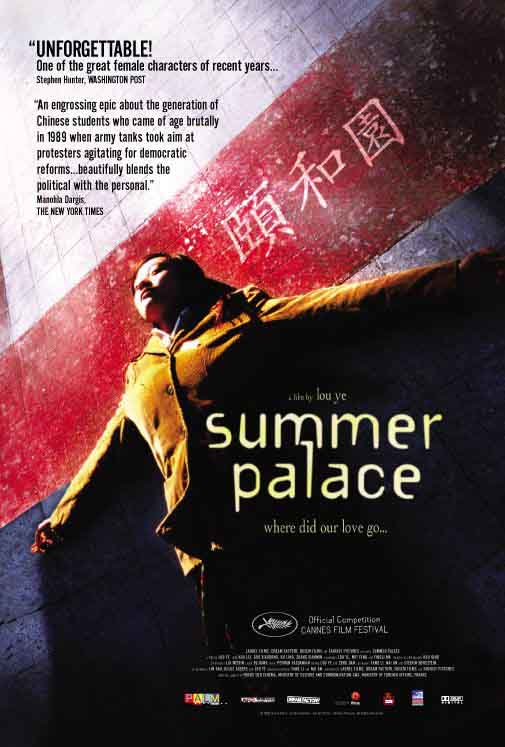
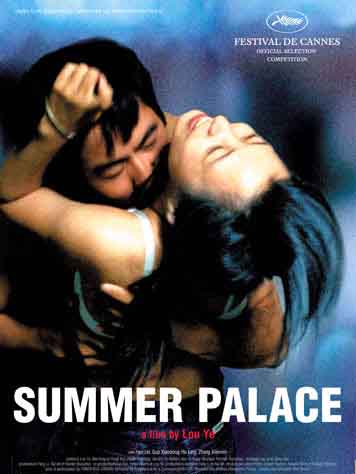
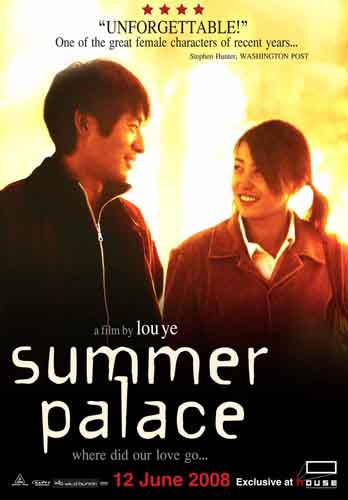
The “banned” 2005 Chinese movie Summer Palace (颐和园, Yíhé Yuán) directed by Lou Ye, has become popular movie among Westerners.

Every expat website that discusses this movie says, “It’s the kind of movie that really shows and expresses the real China and its people.”

This flattering talk kept me wondering what movie was like.

Was it great?

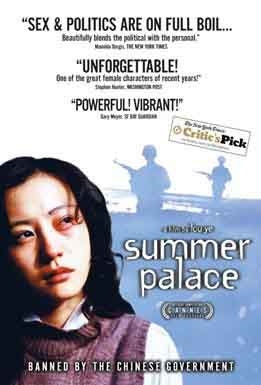
Does it tell some secret things about the Tiananmen Square incident of 1989 like the movie’s poster suggest?


I recently had an opportunity to finally watch Summer Palace, but after sitting for 140 minutes, the  question was still there—what was movie good for?

The character Yu Hong says during the movie, “My college years were the most confused time in my life.” 

However, for me, watching this movie was most confused time.

The story begins with the leading girl, Yu Hong (played by Hao Lei), having sex with her first lover at home in a North China village. Then she abruptly leaves for school at Beijing University.

We don’t know what she studies or if she is smart enough to get into “Beida,”, which is top university in China.

At school, a new girlfriend Li Ti takes her to bars and introduces her to boy named Zhou Wei, which turns into stormy relationship with constant love, sex and fighting. 

In one scene, they are having naked sex and next scene are slapping and screaming then making love again.

Never does story tell why they act like this. Their love should be deeply hurt and touched inside.

However, all I saw was their cold, wild sex with different people. There was too much unnecessary nudity, like Yu Hong having a lesbian relationship in her dorm room, which cheapened  movie.

In 1989, Tiananmen Square incident took place.

Movie poster for Summer Palace shows soldiers with guns and advertises that this story tells something about politics saying, it is “a powerful recreation of the Tiananmen events.”

However, they show few minutes of some students on campus singing songs, riding in the back of trucks and throwing bricks. That’s all.

This movie is definitely not about 1989 Tiananmen. I think director Lou Ye wanted to get commercial attention in the West by making story at the same time as 1989, an insincere marketing tactic.

Anyway, Yu Hong catches Zhou and Li in bed, so she leaves PKU without graduating.

Then she is working in some southern cities. Later, the movie say she is married, but we don’t see or know to whom. 

Meanwhile, Zhou and Li travel to Berlin together. He has job there but movie doesn’t tell what job is.

Li Ti spends her time walking naked around her apartment. Then Zhou says he wants to go back to China, so Li Ti jumps off roof in front of him and dies.

Zhou then moves to Chongqing and seems successful but we don’t know why.

Then he is driving on highway and meets Yu Hong again at gas station.

Why is she in central China?

Why is she at gas station?

We don’t know. They go to hotel and have sex, which ends the movie.

Summer Palace is a little, blue sad story.

 The director likes to show Yu Hong walking around with pouting, weepy face to get our pity or showing her having crazy sex to arouse us.

The director says it’s love story except there is no love. There’s no reason for anything that happens.  There’s nothing to hold the story together.

There is only one scene after another without explanation as if director was confused and didn’t know what to do. With more than two and half-hours of this, imagine how boring that was.

Also, director made stupid, irresponsible mistakes. He shows students in 1980’s China wearing new designer clothes, high heels and sexy lingerie—even though none of these trends had arrived in PRC yet. 

Then there are scenes at bars and nightclubs with PKU students drinking foreign liquor and listening to American pop music, which is also unreal.

None of these things came to China until the late 1990s, decade later.

It is obvious that Lou Ye just wants to make his movie cool and stylish so people will watch it. He forgets that as filmmaker, he has certain responsibility to keep story historically accurate.

What bothers me most about Summer Palace is that so many Westerners will think this movie tells some real, true things about Chinese student culture, which is mostly unreal as depicted in movie.

The New York Times review says, “remarkable for its candor.”

The Shanghaiist, a popular website for foreigners in China, says, “This is the only honest piece of Chinese filmmaking we’ve seen in a long time”

Ha! Are they serious?

On the other hand, maybe they have never watched another Chinese movie except Crouching Tiger Hidden Dragon. I know of at least twenty, sixth-generation Chinese moves better than Summer Palace.

Even director’s first movie, Suzhou River, was better than this rubbish.

Maybe this movie is popular with foreigners because there’s so much sex and nudity and because it’s “banned by government”, which really seems to make Westerners excited.

Any movie banned by Communists is automatically “cool” to Westerners, even if movie sucks.

So why was Summer Palace banned and director Lou Ye censored for next 5 years?

Actually, it’s not because of politics because this movie tells nothing about Tiananmen Square incident. And it’s not because nudity since those scenes can easily be edited out.

It’s only because Lou Ye took the movie to Cannes Film Festival in France without permission from China’s State Administration of Radio, Film and Television, which is necessary for all Chinese filmmakers.

Lou Ye did this expecting he would be censored, so he could proudly say his movie was “banned in China” on his movie poster and get instant praise from Western audiences.

However, for me, I think this movie should be banned just because it sucks.

It’s big disappointment and waste of 2.5 hours.

Sixth-Generation Chinese filmmakers are trying hard to be shocking without telling good stories, and Western audience praises these filmmakers because they think Chinese who show nudity are “brave”.

How can anyone call this trash art as confusing as it is?

See Hannah’s review of Red Mansion, a Chinese TV series, or visit her Blogs at Hannah Travel Adventure (Chinese) or Hannah China Backpacker (English)

_________________________

Lloyd Lofthouse, the host of the Blog, is the award-winning author of the concubine saga, My Splendid Concubine & Our Hart. When you love a Chinese woman, you marry her family and culture too. 

Sign up for an RSS Feed for iLook China


When in China, Buyer Beware (a first-hand experience)

July 18, 2010

If you are buying electronics or paying for a service in China, you should not expect things to work the same as in your home country.

However, a foreigner’s experience may not be the same, since many Chinese treat foreigners differently than another Chinese, whom they may treat “very” rudely, and if you have a Chinese face, don’t expect to be treated as if you are not Chinese.

A Chinese, American friend visiting China recently had a problem with his Sony laptop. Since he never used the laptop on the Internet in the US, he went without security protection. Then, in the hotel, he decided to use the Sony to check his Yahoo e-mail and to send e-mails, but decided to buy Norton Internet Security first.

My friend sent me this e-mail telling me his story.

“Chinese technicians don’t know how to handle a US laptop. To prevent a virus, I purchased Norton Security Software in Shanghai and had a store person install it.

“First, without asking me, he converted the entire system from English to Chinese, and that’s when things started to get really messed up. The next morning, my son discovered that the supposedly installed Norton Internet Security program wasn’t there! When we went to log onto to the Internet, a warning appeared that said we had ‘no virus protection’ on the Sony, so we had to go back to the store to find out why.

         “Then my five-year-old Chinese cell phone stopped working, so I bought a ‘new’ Nokia mobile phone, which is supposed to be a good-name brand. That Nokia cost me 1,600 yuan (about 235 American dollars). Guess what, after 24 hours, the thing quit working.

“When I returned to the story to find out why, I was told I would have to pay another company for a service plan so I could use the phone. The salesperson then turned the original receipt over and pointed at some Chinese that was so small you needed a magnifying glass to read it.  It said, ‘The customer has to take the phone to a Nokia check center at People’s Square to have it tested.’ Only with a test result that says, ‘No man-made damage by the purchaser,’ would the store consider an exchange or perhaps a refund.”

This 2008 video is almost 48 minutes long but may be worth your time.

In fact, before you visit China, I recommend you become “very” familiar with the China Law Blog. Contrary to popular Western opinions, China does have laws and courts.

See China’s Growing Legal System

_________________________

Lloyd Lofthouse is the award-winning author of the concubine saga, My Splendid Concubine & Our Hart. When you love a Chinese woman, you marry her family and culture too. 

Sign up for an RSS Feed for iLook China


Stuck on a Name

June 30, 2010

Dave left this comment for a post on the China Law Blog: “The country (China) is ruled by an organization called “The Communist Party” claiming fealty to the teachings of the German Karl Marx and organizationally based on the teachings of the Russian Lenin.” Source of comment: China Law Blog

Think again, Dave. After Mao died and Deng Xiaoping declared, “Getting rich was glorious”, Marxism and Lenin went in the trash with Maoism. In fact, China is a mixture of capitalism and socialism and the socialism is shrinking.

Check out medical care in China. Soon after Mao died, the cradle to grave socialist system of medicine went into the rubbish. It’s cash, baby, or have a nice death. Along with the state-run hospitals, a growing and very expense private medical system caters to rich expatriates and wealthy Chinese.

In fact, in 2004, there were almost 2 million privately owned enterprises in China. The number of individually owned businesses stood at more than 39 million primarily concentrated in such areas as wholesale and retail, manufacturing and industrial, transport, personal services, and lodging and restaurants. Source: Research Institute of Economy, Trade & Industry, IAA

Soon after 1976, China’s government revised the Chinese Constitution imposing term limits (2 five-year terms) for public office and an age limit (67), something we don’t have in the US. Granted, China still has a one party system but regional governments don’t always listen to Beijing. China is a “Communist” nation in word only.

See Dictatorship Defined

_________________________

Lloyd Lofthouse,
Award winning author of the concubine saga, My Splendid Concubine & Our Hart. When you love a Chinese woman, you marry her family and culture too. 

Sign up for an RSS Feed for iLook China