The Challenge to Reduce China’s Carbon Footprint

July 5, 2010

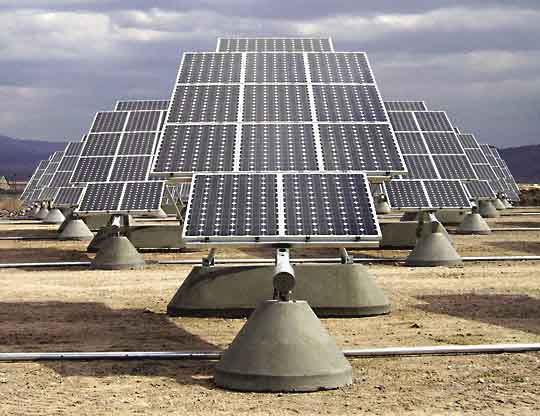
Bloomberg reported that China Datang Corp has started construction on a rooftop solar power plant in Jiangsu province as another step in China’s goals to cut carbon emssions. Plans are for this power plant to generate 6.2 gigawatt hours of power reducing the need for coal-powered generating plants.

Solar Power

This plant is not the only one under construction.  China is already the world’s leading producer of solar panels, and China is also building a 2,000-megawatt project in the Mongolian desert, which is planned for completion in 2019, and may be the largest solar power facility on the globe. Along with solar power, China plans to install 100 gigawatts of wind power by 2020. Source: World Changing

With the demand from China’s people to improve lifestyles, cutting back on carbon emissions is going to be a challenge as reported in China Juggles an Increase in Carbon Emissions and Renewable Energy Plans.

See Electricity is the Key

_________________________

Lloyd Lofthouse is the award-winning author of the concubine saga, My Splendid Concubine & Our Hart. When you love a Chinese woman, you marry her family and culture too. 

Sign up for an RSS Feed for iLook China


China’s Great Leap Forward (1958 to 1961) – Part 3 of 6

June 22, 2010

The nation goes on a cleaning spree. Posters say everyone must help exterminate pests. Songs were sung, “Pest free areas are glorious. Let’s wipe out the flies, bugs, mosquitoes and rats.”

Sparrows were considered pests since they were accused of eating crops. Whoever killed the most sparrows in each village was rewarded. However, exterminating sparrows caused insect populations to explode endangering crop yields.

Cleaning Rice in Mountain Village

Then the people were asked to watch for capitalistic or counter revolutionary behavior and to denounce suspicious people.

In 1958, the boldest program was launched. Mao wanted to out-produce industrialized nations in manufacturing and crop yields. The land given to the peasants was confiscated and 100 thousand people communes were created. Mao believed that more people meant larger projects. He said,  “Revolutionary enthusiasm will triumph over all obstacles.”

To achieve Mao’s goals, the Communist Party encouraged competition between communes. Instead, overproduction caused crops to rot in the fields and the communes hid the truth by faking records.

Huge construction projects began without proper planning leading to accidents and deaths, which were hidden by the project managers. No one wanted Mao to discover the lack of proper revolutionary enthusiasm.

Return to Part 2, China’s Great Leap Forward or go to Part 4

______________

Lloyd Lofthouse is the award-winning author of the concubine saga, My Splendid Concubine & Our Hart. When you love a Chinese woman, you marry her family and culture too.

If you want to subscribe to iLook China, there is a “Subscribe” button at the top of the screen in the menu bar.


China’s Next Step

June 22, 2010

In 1950, Mao promised his people that China would stand equal to the world’s major powers. That day is close.  After the Soviet Empire collapsed, the United States treated the world as if it were America’s back yard.  What did that get the US?  9/11, deep debt and three conflicts: Iraq, Afghanistan, and fundamentalist Islamic terrorists whose goal is to destroy America—not China—yet.

I read what Dr. Michael Economides had to say at Forbes.com, and he writes as if we must not allow China to develop into a modern nation that benefits all Chinese.

Dr. Economides is wrong. America should encourage China to globalize and modernize.  Let them drink at the fountain of oil. We need China to be our equal and our ally.  By encouraging China to depend on oil reserves from around the globe, they will have no choice but to be America’s partner and help police the world.

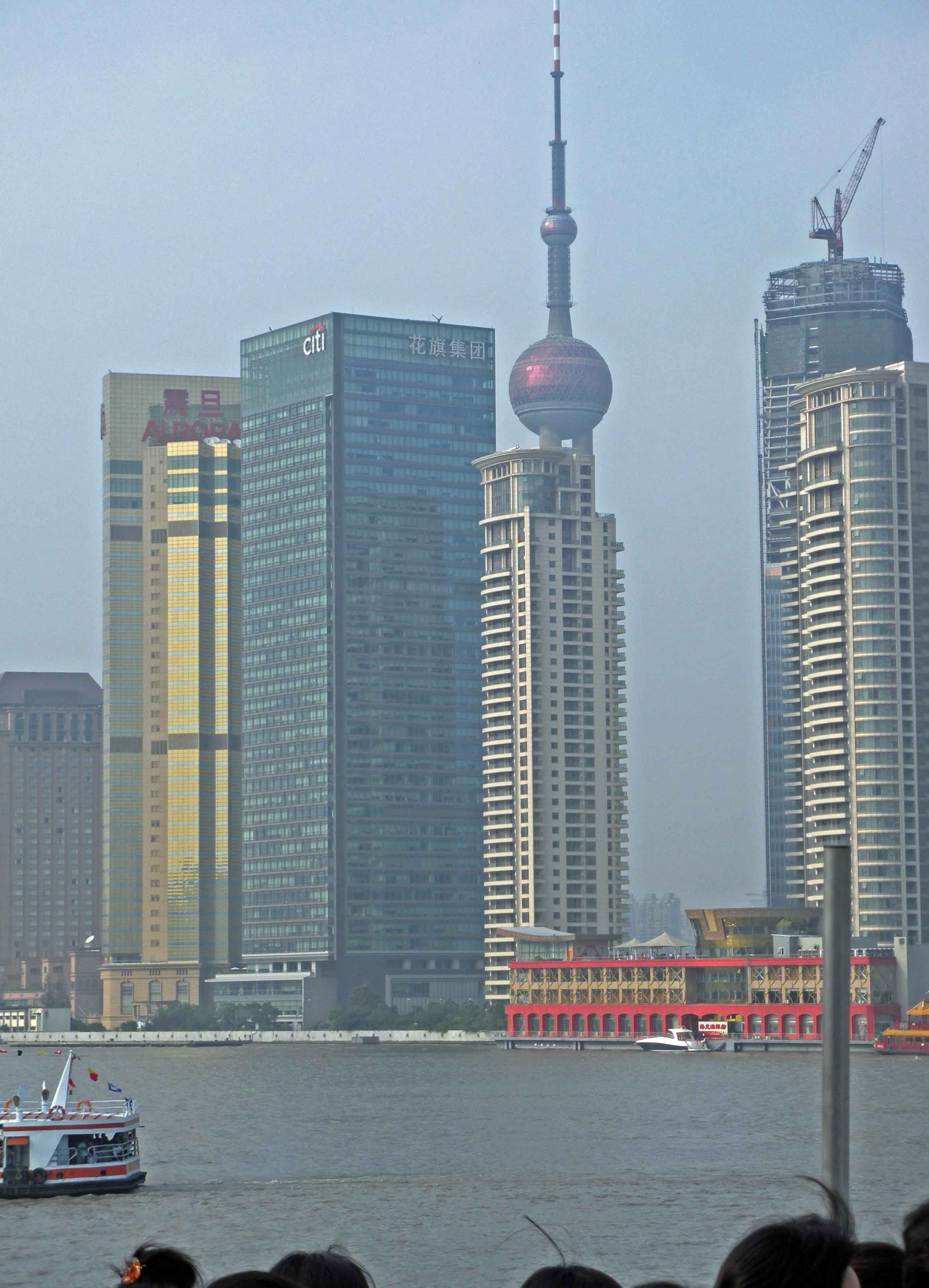
Shanghai

The challenge Americans face is to keep what we already have. What America must do is switch to green energy and break our addiction to oil as soon as possible. In fact, India has the same goals that China has—to have what America has had for decades.  Since China and India have more than 2 billion people, let them share the wealth, and the responsibility that comes with it should be larger too.

See Volting all of China into the 21st Century

________________________

Lloyd Lofthouse is the author of the award winning My Splendid Concubine and writes The Soulful Veteran and Crazy Normal.

Sign up for an RSS Feed for iLook China


Copy Cat Chinese Middle Class

June 16, 2010

The Chinese are getting fat off McDonald’s, KFC, Pizza Hut and having more heart attacks and diabetes just like Americans.

I believe in going green and weaning the world off oil and that has nothing to do with global warming.  It has to do with the pollutants that turned Los Angele’s air purple and caused asthma levels among kids to leap. If you want to find out how toxic carbon emissions are, park in a garage, close the door and sit there for twelve hours with the engine running. 

When I go to a movie theater, I walk and when I drive, I use a hybrid that averages about 40 mpg. I sneer at SUVs and there are many where we live—mostly driven by small, pot-bellied men and blonde-haired, white women wearing dark glasses.

I read in The Truth About Cars that SUV sales have climbed 90% in China, and the Wall Street Journal reports that China’s government has extended subsidies for trading-in old polluting vehicles for hybrids and all electrics to the end of the year.  If China is the totalitarian dictatorship critics in the West claim it to be, why can’t China rid itself of SUVs?

See China Going Green

_______________________

Lloyd Lofthouse is the author of the award winning My Splendid Concubine and writes The Soulful Veteran and Crazy Normal.

Sign up for an RSS Feed for iLook China


China’s Water Woes

June 16, 2010

A man or woman can survive for weeks without food but only days without water. Knowing that, it shouldn’t come as a surprise that Tibet will stay in China for some time and water is the reason.

The Yellow River and Yangtze start in Tibet serving more than a third of China’s population. It’s possible that Mao realized the importance of water from Tibet when he sent 40,000 PRC troops into Tibet to reoccupy the former troublesome province/tributary that at the British Empire’s urging broke from China in 1913.
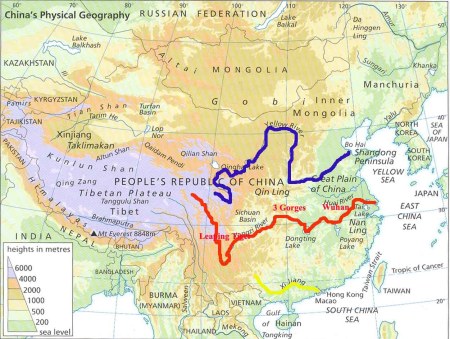
Tibet has an area of about 1.3 million square kilometers (about 5 million square miles) and it is estimated that there are less than 3 million people living in Tibet. China, on the other hand, serves 1.3 billion people, so who benefits the most from water that starts its journey in Tibet?

Rajendra K. Pachauri, chairman of the Intergovernmental Panel on Climate Change and winner of the 2007 Nobel Peace Prize, said, “At least 500 million people in Asia and 250 million people in China are at risk from declining glacial flows on the Tibetan Plateau.” Source: Circle of Blue Waternews

If Tibet’s water were in the hands of anyone else like a free Tibet that might favor other nations over China, China’s future would be dim at best and dire in a worst-case scenario. As it is, China is one of the earth’s driest areas and the challenge to supply 1.3 billion people with water is a daunting task. In fact, China is in a race with disaster and the finish line will be reached in a few decades.

In 1999, Wen Jiabao, a deputy prime minister, warned of looming water shortages. When he became prime minister, he promised to provide clean water for the people. Today, water and waste pollution is the single most serious issue facing China.

However, China has a large and cumbersome bureaucracy.  Different ministries compete with each other meaning little cooperation, which has led to a growing crisis that must be dealt with for China to avoid the suffering, chaos and anarchy that plagued the nation between 1835 and 1950. See China, The Roots of Madness

While replacing thousands of older, coal-burning power plants with cleaner technologies, building more hydroelectric dams, and constructing nuclear reactors, China is also adding desalinations plants to ease the growing water crises. In 2005, a desalination facility south of Shanghai started producing about 375,000 gallons of fresh water an hour, with a goal to build more plants and produce 250 million gallons of water per day by 2010. Source: Environmental News Network

In fact, to achieve this, China contracted with IDE Technologies in Kadima, Israel to build four new desalination units and the first will go on line near Beijing in 2010. These plants are designed to provide desalinated seawater for a power plant’s steam boilers as well as drinking water for local residents. Source: Water and Wastewater.com

According the Global Water Intelligence and the International Desalination Association, as of June 30, 2008, China was ranked 7th among the top ten desalination countries on the planet and that was before the IDE contract. Source: Water Webster

It doesn’t help China’s growing water shortage when mineral resources and a majority of its arable land exist where water is scarcest. Pollution and dealing with human waste are other challenges. Source: Mongabay.com

______________

Lloyd Lofthouse is the award-winning author of the concubine saga, My Splendid Concubine & Our Hart. When you love a Chinese woman, you marry her family and culture too. 

If you want to subscribe to iLook China, there is a “Subscribe” button at the top of the screen in the menu bar.