First Question [Lofthouse]: Since 1949, Taiwan and mainland China have followed significantly different paths. While Taiwan held onto the old culture, the mainland went through a painful metamorphosis to rise from the ashes of the Civil War (1926 – 1949) as if it were a phoenix to be reborn.
One example of these differences may be found in the written language. While Taiwan held onto the old style of writing Mandarin, which goes back thousands of years, Mao simplified the language and instead of writing vertically from bottom right in columns toward the top left, the written language on the mainland was simplified with fewer strokes and is written from the top in horizontal lines from left to right ending in the lower right corner as Western writing does.
In addition, Mao saw Confucianism as a weakness that led to China’s decline in the 19th century as the world’s wealthiest and most technologically advanced nation on the earth — a position it held for about two thousand years. To rid Communist China of this weakness, Mao declared war on Confucius.
However, piety, which is a result of Confucian ethics and morals since the Han Dynasty, remains strong in both cultures. Since you lived in Taiwan and taught ESL for ten years and then traveled as a tourist through mainland China, how would you describe the differences you observed between how piety is practiced in mainland China and Taiwan?
First, as the term pertains to Taiwan, there is no such thing as mainland China. There is China, and there is Taiwan. The word ‘mainland’ denotes a connection, but there isn’t one and never really has been. The Dutch, not the Chinese, were the first to establish controls over Taiwan. When the Dutch arrived, there were a few thousand Fujianese farming families living on the Western plains (they had fled China despite a Qing ban on emigration) and aboriginals living in the mountains. The Dutch were eventually sent packing by the Ming loyalist, Koxinga, who in turn was toppled by the Qing. The Qing asked the Dutch if they wanted Taiwan back. They didn’t, so, mainly to prevent the island from falling into other foreign hands, it was annexed in 1885. The Qing, remember, were Manchus, considered foreign rulers by the Han Chinese.
Even today, the Chinese commemorate their demise. The Manchus admitted they held no jurisdiction over half of Taiwan. The other half they ruled badly.
In 1895, Taiwan was ceded to Japan, and though the Japanese exploited it, living standards exceeded any province in China.
In Cairo, in 1943, Chiang Kai-shek argued that Taiwan had been stolen by the Japanese and ought to be returned.
Roosevelt, Churchill, and Stalin agreed, hence the mainland myth, perpetuated to this day by the Communists and the Nationalists. Approximately 90 percent of Taiwanese want nothing to do with China, and why would they?
In addition to retaining some of the finer aspects of traditional Chinese culture, such as complex characters, Taiwan has liberalized through democratization and represents a major step forward for Chinese civilization.
As for the Confucian concept of piety, it is a core cultural component, virtually identical in China, Taiwan, Hong Kong, Singapore, and Macau. This is unfortunate because Confucianism is dogma. “The plague of heterodox theories can be eliminated by fierce attack,” says the Analects of Confucius. Until people realize the Analects represents only stone-age logic and dictums posing as wisdom, they will remain slaves to tyranny and history.
However, if history decides who rules a territory, the US would not exist, and Hawaii’s native population would still rule an independent country instead of being the 50th state.
Taiwan’s fate was decided by Chiang Kai-shek (a Han Chinese) when he ordered KMT troops to slaughter Taiwanese natives. He ruled Taiwan as a dictator before and after he lost China’s Civil War.
Taiwan’s history has been irrevocably altered by Chiang Kai-shek, but its fate regarding China has not been decided.
Face is a puerile concept, a license to behave however one pleases.
Guanxi is important in all societies. It only seems more prevalent in China because people discuss it.
Confucianism, Legalism, and Taoism are enlightened philosophies to those who’ve never read them. The essence of Confucianism is obedience. Legalism is Machiavellian. “A weak people means a strong state…” says The Book of Lord Shang. The Tao Te Ching urges rulers to eradicate knowledge and desire. The strains of despotism in these native ideologies speak to communism’s appeal.
Nowhere in Jonathan Spence’s Mao does it say Mao’s Cultural Revolution had to do with waging war on Confucianism. Spence notes Mao “never wrote a single comprehensive analysis of what he intended to achieve by the Cultural Revolution, or… how he expected it to proceed.”
Lloyd Lofthouse is the award-winning author of The Concubine Saga. When you love a Chinese woman, you marry her family and culture too. This is the love story Sir Robert Hart did not want the world to discover.
Subscribe to “iLook China” Sign up for an E-mail Subscription at the top of this page.
Note from Blog’s host: In this discussion, Parfitt has agreed to ask me five questions and I will ask him five. After each answer, a response and then a final word will be allowed. Since each question, answer, response and final word may run 600 to a thousand words, this discussion of China and its culture will be a twelve-part series.
At times during this debate, the reader may sense that ‘Responses’ and ‘Final Words’ are clipped and often incomplete. That may be due to the fact that Parfitt and Lofthouse agreed to limit the number of words for each answer to 350 and 150 words for each ‘response’ in addition to another 150 for the ‘final word’.
In that case, readers may weigh in with comments that may request either Parfitt and/or Lofthouse to respond further. However, comments that insult and are deemed vulgar will not appear and will be “censored“.
Post 12 concludes this discussion with two 500 word ‘Closing Statements’. Each author selected the embedded videos that support his position/opinions.
Part 1 introduces the two authors showing the different paths each took to gain an understanding and education of China’s history, people and culture.
Troy lived and taught ESL in Seoul, South Korea for nearly two years and in Taipei, Taiwan for more than ten. It was in Taipei where Troy became interested in Sinology. He currently resides in Canada and is a writing consultant at a Canadian university.
____________________________________
Lloyd Lofthouse is the author of The Concubine Saga — In early 1999, he was introduced to China’s history and culture through the woman he would marry a few months later. That education has continued for more than a decade.
His wife was born in Shanghai and grew up during Mao’s Great Leap Forward and then the Cultural Revolution where she spent three years in a labor camp along with tens of millions of mainland Chinese youth to be educated in Mao’s attempt to erase the old culture and make China stronger to recover and survive the Western invasion of Asia. One of Mao’s first moves was to liberate women and elevate them to be equal to men when he famously announced that women held up half of the sky.
Since 1999, Lloyd has traveled extensively in mainland China with his wife as his tutor. In fact, he and his wife have a flat in one of the suburbs of Shanghai. He also spent about a decade learning about China through Robert Hart’s journals and letters (1835- 1911).
Hart is known as the godfather of China’s modernization. The Concubine Sage is the fictional story of Robert Hart’s early years in China and of his real-life love story with a Chinese woman, his concubine Ayaou. Lloyd’s reference library of China fills several shelves in his home office and he has written more than a half-million words about China for this Blog.
Lloyd Lofthouse is the award-winning author of The Concubine Saga. When you love a Chinese woman, you marry her family and culture too. This is the love story Sir Robert Hart did not want the world to discover.
Subscribe to “iLook China” Sign up for an E-mail Subscription at the top of this page.
My wife and daughter returned from China last summer with a crate of Chinese movies on DVDs—there wasn’t one American movie in the mix and many do not have English subtitles.
Therefore, it is strange that the one Chinese film that impressed me the most (so far) was one I discovered at a local Half Priced Books. The movie was Life Show (2002) adapted from a book by Chinese author Chi Li.
Since the late 1980s, Chi Li has been considered a pioneer of “new realism” and her work depicts ordinary life in China so critics have identified her work with the Western school of “existentialism”.
In fact, it was the “ordinary element” of her work that I saw in the film which captured my curiosity to learn more. Since I’ve traveled to China several times since 1999 and not with tour groups, I’ve visited streets similar to the ones that appear in the film. I’m sure most foreign visitors to China that visit on packaged tours do not see the ordinary side of China as I have.
My wife says Chi Li is one of her favorite Chinese authors. The first time I was introduced to Chi Li’s work was through Life Show, which tells the story of Lai Shuangyang, a restaurant owner played by Tao Hong. Shuangyang’s life is busy dealing with family and business but she is lonely until one of her long-time customers, played by Tao Zeru, shows a romantic interest in her.
Zeru plays a middle-aged businessman, and Shuangyang takes a risk and the two strike up a romance that ends when she discovers he is the developer behind the modernization of the area where she has her restaurant. He offers to take care of her but it is obvious that Shuangyang values her personal freedom and independence and in a fiery scene, she breaks up with him.
Lai Shuangyang’s life is filled with complications. Her younger brother Jiuju is a drug addict in jail/rehab. The woman that loves Jiuju is Mei, who works for Shuangyang in her restaurant. Mei attempts suicide because Jiuju is not interested in her, and then Shuangyang arranged a marriage for Mei to another man, who is mentally ill.
Her sister in law, Xiaojin, is trying to regain the Lai family’s home, which was given to a neighbor during the Cultural Revolution. In addition, Shuangyang is at risk of losing her restaurant due to a redevelopment project in Wuhan.
Chi Li, the author of Life Show, is one of China’s best-known writers and several of her novels have been translated into French by publisher Actes Sud.
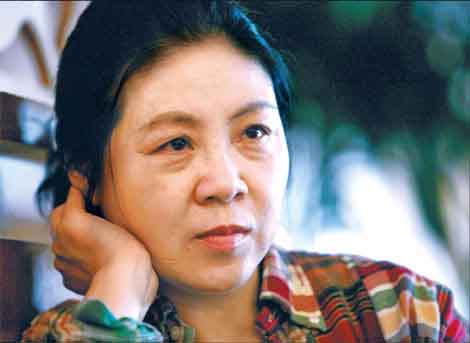
Chi Li was born 1957 in Wuhan, Hubei province, graduated from the Chinese Language Department of Wuhan University and then worked as an editor of a literary magazine called Fang Cao (Fragrant Grass).
Chi Li rarely travels and avoids “literary circles”. “If my unsociability is thought to be a flaw, I admit I’m a person with a flaw,” Chi has said.
Chi Li, Chinese author of "Life Show"
During the Cultural Revolution, like millions of other young Chinese, she was sent to the countryside to become an “educated youth”. Later she studied medicine and practiced for five years before becoming a teacher.
Today, she is a member of the National People’s Congress (NPC), which provides an opportunity to discuss politics with other representative of the NPC providing an understanding/education of China’s policies and political atmosphere.
Chi Li’s work relates to love, marriage, divorce and extramarital affairs of contemporary Chinese life, while her characters are imbued with common human traits such as ambition, deceit, jealousy, and sexual desire. Her work, Comes and Goes, was a story of extramarital affairs occurring in Wuhan and became a TV series of same name.
The city of Wuhan comes alive in her work—enough to be considered a character. Although many of her novels have been translated into French, there are no English translations yet, which is a shame.
Lloyd Lofthouse is the award-winning author of The Concubine Saga. When you love a Chinese woman, you marry her family and culture too. This is the love story Sir Robert Hart did not want the world to discover.
Subscribe to “iLook China” Sign up for an E-mail Subscription at the top of this page.
I have an “old” friend who often takes conservative theories, opinions and conjecture fueled by emotions, and believes in them as if God wrote them with His own hand.
In addition, many people believe any claim if it supports their own biased opinions and will attack anyone that disagrees with them no matter how valid the evidence presented. However, when it comes to China, that reaction is understandable due to Western democracies partnership with capitalism, which is the polar opposite of communism/socialism.
It makes sense that many in the West will bend over backwards (even fabricate evidence) to demonize anything from a rival seen as evil that was already demonized for decades during the West’s Cold War with global communism.
In other words, prejudice in the West of any country linked to socialism/communism is hard wired to be biased.
In this case, Mao has been tried and convicted in the court of public opinion of the crime of mass murder based on exaggerated theories and opinions supported by inflated evidence.
I wrote on this topic before in China’s Great Famine (1959-1961) Fact of Fiction. That doesn’t mean I was finished with it. If you shake a few trees, something falls out and you learn something new and compelling on a controversial topic, it’s time to return to the subject.
This time, I went looking for recent books about China and ran into several titles that perpetuated the myth that thirty to forty-five million (or more) people died during the Great Leap Forward (GLF) when in fact there may have been no massive loss of life due to the GLF — at least not in the numbers the mostly biased Western theorists and sources keep inflating higher in book after book, which is an example of the old saying that if you tell a lie enough it grows like cancer into a malignant, evil false truth.
droughts cause famines, people starve and die
In Hungry Ghosts: Mao’s Secret Famine (April 1998), Jasper Becker claimed, “Population statistics made public since 1979 reveal that at least 30 million people starved to death in the wake of Mao’s Great Leap Forward.”
However, in one sentence the US National Library of Medicine National Institutes of Health reveals that Becker’s claim is a fraud. “Though population, disease and mortality statistics of modern China are spotty and sometimes questionable, common consensus among the researchers is that since 1949 the public health situation in China has improved tremendously.”
Then in Catastrophe and Contention in Rural China (May 2005), Ralph A. Thaxton Jr. says, “This book documents how China’s rural people remember the great famine of Maoist rule, which proved to be the worst famine in modern world history.”
If we examine “modern world history”, Thaxton’s claim is easily dismissed.
From Griffith University, Australia, Poverty, by David C. Schak, Associate Professor
______________
Lloyd Lofthouse is the award-winning author of The Concubine Saga. When you love a Chinese woman, you marry her family and culture too. This is the love story Sir Robert Hart did not want the world to discover.
Subscribe to “iLook China” Sign up for an E-mail Subscription at the top of this page.
In addition, at Answers Yahoo.com, Genxi asked, “Why do Americans lack filial piety? At the international level, filial piety is very common… After all, parents definitely would care and protect their children unquestionably—ideal condition—, but why can’t adult Americans have filial piety toward their ageing parents in exchange?” (the few responses to this question are interesting)
However, anyone that believes Confucianism may define China might be surprised to discover that Legalism, Buddhism, Taoism, Islam, Christianity, etc have also influenced the foundation and moral structure of China’s culture. While China has always had a diversity of religious beliefs, filial piety has been common to almost all of them and it worked.
The result, for more than two-thousand years, China was the wealthiest and most powerful, technologically advanced nation on the planet until the 19th century.
As for the United States, back in January 2010, I read a post at Parent Base.com that said any damn fool can be a parent, and although I agree, I thought North America is not a comfortable place to be if you become a geezer.
Our daughter called me a geezer once, which means a man who is (usually) old and/or eccentric, when she was joking around during her early high school years. She was not raised to be a narcissistic self-esteem child but knowing many American children that were raised to have high self-esteem did rub off resulting in that rude comment.
Today, she attends Stanford and the degree of respect she demonstrates for older family members is reassuring. I hope the self-esteem residue wore off.
When I was a child, youngsters were to be seen and not heard, which means we treated our elders with respect, and surprise of surprises, I was born in America and I am a Caucasian of British/Irish ancestry. I’m not Asian or Chinese so I suspect piety was once widespread in American/Western culture but during the 20th century suffered a steep decline.
One exception would be the Amish community in the United States. The Amish are a stark contrast to the American concept of individualism—not only do the Amish encourage reciprocal family assistance but the entire Amish community is responsible for helping each other, including the elderly. According to Reuters, the US Amish population grew 86% to 231,000 in 2008 from 125,000 in 1992 and is set to double by 2026.
However, the Amish are not the norm. After the spread of television, the birth of Disneyland, fast food, MTV, the Internet and the iPod generation, a cancer called self-esteem spread through much of American culture. That self-esteem youth worshiping virus killed off much of the ‘respect’ for one’s elders among many of America’s youth.
In China, what America seems to have lost survives and is the norm. In addition, in Asian countries such as the Philippians, South Korea, Vietnam, Singapore, etc., piety is still strong and is learned in the family—not from a pulpit.
Collins English Dictionary (Harper Collins Publishing) says piety is a devotion and obedience to parents and superiors and says it (piety) is “now rare” (in the West).
In fact, a comment left by an “Aussie in China” on another post verifies that piety is still taught in most Chinese families since piety plays a significant role in the morality of China.
Aussie in China said, “from my experience here, I would argue strongly that there is a commendable level of morality among many of the young Chinese. The issues of morality are well drummed into them at school and at home.”
The decline of the “first of all virtues” in the West first appeared during the 1960s with the spread of the self-esteem movement among American parents. The history of this movement goes back to the late 19th century and by the 1960s, it permeated American culture in addition to many of its private and public schools.
The America of today is not the America prior to World War II, and the United States owes its greatness to that previous generation, which was not raised to have high self-esteem and spurn piety and family values.
One example of this moral decline in the US happened to me one night during the summer of 2008 when a pack of young boys taunted me as they raced in and out of our steep driveway on bicycles.
“Hey, old man,” one boy shouted, “you can’t stop us.”
I called the police and filed a report, and the next day walked the neighborhood door to door seeking support to stop the harassment that had gone on for two years—mostly during the summers when school was out and these children had nothing better to do but run wild without proper parental/adult supervision.
These boys wanted to race their bikes down our steep driveway for a cheap thrill, and I dared to tell them not to do it so they defied me as often as possible.
The reason why I didn’t want them playing in our driveway is because the United States has become a litigation nation and if one of those boys hurt himself on our property, the parents might take us to court and possibly destroy us financially—even take our home from us.
When I talked to the mother of one of these boys, she asked, “What was your reason for not letting them play on your driveway?”
Did I need a reason?
Since the episode with that gang of boys (I’m sure they all had a high sense of self-esteem), that mother who thought I needed a reason to keep them off our driveway, doesn’t talk to me or acknowledge that I am alive if we pass each other on the street.
After all, I ratted out her precious, perfect, wild child and called the police on his pack of young friends. In addition, one of the other boys argued with me the first time I politely asked them to go elsewhere for their thrills.
Of course, as a teacher for thirty years, I’ve heard American parents say, “kids will be kids” to explain this sort of behavior.
However, I do not accept that excuse for defiance, lack of respect, rudeness and unruly behavior. In fact, the way children act is often linked to how parents raise them and children raised by self-esteem obsessed parents are often the worst ones, while children raised to value piety, which means respect and obedience to parents and superiors/adults, are often the best.
In reading a post at Always on the Verge, I discovered a misguided individual that inadvertently advocates a world overrun by noisy children that do what they want whenever they want wherever they want.
The author of the post says, “I have always had issues with this saying (children should be seen and not heard). However, that Blogger called “Webbhouston” does not consider that being quiet around adults is also a sign of respect for those older people that go to work daily to feed the family and pay for a roof over their heads to avoid becoming homeless and hungry.
That, by itself, should be enough for children to learn to keep quiet around adults. Children are not an alien species. They are humans, but when they are born, they are wild animals that parents and adults, such as teachers, tame and train to fit into society.
A cartoon (used for educational purposes only) that dramatically illustrates the decline of piety and family values in America.
I searched for a Blog that talks about teachers being abused by students and found thousands that did nothing but bash teachers. Then I found Who’s to Blame … (a dim light in the wilderness of blame the teacher).
It seems that only a few people in the West care what happens to teachers (Finland may be the only country in the West where teachers are given the respect they deserve and Finland’s education system is one of the best in the world. In Fact, the World’s Happiness Index from Forbes.com places Finland second of 155 countries as the happiest place to live).
Then months after I first wrote this post, which appeared January 2010 as a nine part series, I launched Crazy Normal – the Classroom Expose, another Blog to help fill that lack of support for teachers in the US.
Then there was a second incident I experienced that further demonstrates the loss of piety and family values in American culture.
During the summer of 2007, we had just pulled into a motel parking lot in Southern California after driving several hundred miles. A teen with his girlfriend wanted to rent a room for an hour at the same motel. As we waited to check in, we heard the motel manager say, “No way!”
The boy turned to me, and asked, “Hey, old man, can you give us a ride to the next motel? They will not rent us a room here.”
I’m sure this adolescent was out for quick sex. He probably didn’t even know the girl’s name or care. Nevertheless, the lack of respect was obvious.
Today, it is as if adults are expected to be invisible and silent while youngsters get whatever they want such as a TV, Internet connection and video games in the child’s bedroom.
In most of North America, we have spawned more than one generation of narcissists with no respect for piety or understanding of what family values means and many are now giving birth to the next generation.
More than twenty-four hundred years ago, Confucius dedicated his life to the moral training of his culture. He lived during the Warring States period before China was unified. Living with all of that violence and death, he dreamed of a land where people could live happily and harmoniously together.
To learn more about Confucius and piety, check out this site at the Journal for International Relations. I’m not saying what Confucius taught was perfect but it has served China well for thousands of years and still plays a vital role in that complex culture.
Confucius said, “The reason why the gentleman teaches filial piety is not because it is to be seen in the home and everyday life. He teaches filial piety in order that man may respect all those who are fathers in the world.
“He teaches brotherliness in the younger brother, in order that man may respect all those who are elder brothers in the world. He teaches the duty of the subject, in order that man may respect all who are rulers.
“Those who love their parents dare not show hatred to others.” Confucius taught. “Those who respect their parents dare not show rudeness to others…”
While visiting China, I have never heard, “Hey, old man.”
However, there are always exceptions when it comes to piety. Even in China, there will be the occasional rude individual. The thing is, I haven’t seen or heard one yet, and I have visited China many times since 1999.
I did have a disrespectful, American born Asian student (once) during the thirty years I was a teacher.
I also had a small number of hard-working, respectful students from all ethnic groups—even those that were American born, but those types seem to be a dying breed.
My best students were usually immigrants that came to the United States after living in their birth country for several years where the word “self-esteem” was never heard and parents taught the value of piety instead.
In addition, I had one American born student enter high school as a freshman after being home taught by his Caucasian, conservative Christian parents. He was a great person—polite and he worked hard to further his education.
It was obvious that piety and/or family values had been instilled in this one individual by his parents, a daunting task in a country obsessed with stuffing a high sense of self-esteem in its youth.
______________
Lloyd Lofthouse is the award-winning author of The Concubine Saga. When you love a Chinese woman, you marry her family and culture too. This is the love story Sir Robert Hart did not want the world to discover.
Subscribe to “iLook China” Sign up for an E-mail Subscription at the top of this page.


 Posted by Lloyd Lofthouse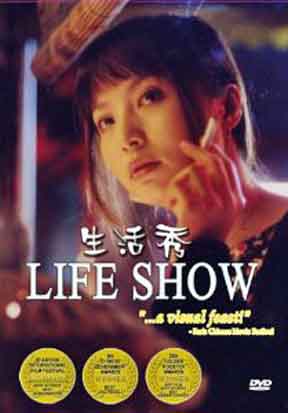

 iLook China