China’s Translation Sensation

March 19, 2012

On March 14, I published a post about Premier Wen Jiabao’s farewell speech to China’s National People’s Congress before he steps down later this year and retires from political office.

China is a land of many spoken languages and one written language. In fact, Chinese movies often have subtitles flowing across the bottom of the screen in Mandarin for the hundreds of millions of Chinese that do not speak Mandarin but only read it. To understand how complex this mix of languages is, Mandarin by itself has more than 50 dialects and there are 56 different minority languages.

I suggest you see Wikipedia’s list of Chinese dialects and languages for a better understanding of how complex China is and how amazing it is that this nation has been a unified country for more than two millennia.

After Wen Jiaboa’s speech, I read the media translations in English from several sources and had no idea that in his speech he quoted original poetry dating back to one of ancient China’s greatest and earliest recognized poets, Ch’u Yu (343 – 289 BC). Since Wen’s speech, the micro-Blog debate and criticism in China have been intense, which demonstrates that in China, expressing an opinion is not forbidden.

How would Americans react if an American President gave his State of the Union address laced with quotes from Latin or Old English?

In Latin, The Lord’s Prayer starts, “PATER noster, qui es in caelis, sanctificetur nomen tuum.” In Old English, it starts with, “Fæder ure þu þe eart on heofonum…”

In China, the response to Wen Jiabao’s use of an ancient and dead Chinese language mostly focused on the translator, Miss Zhang Lu (in Chinese the last name comes first, which emphasized the importance of the family over the individual and demonstrates a major difference between the West and Asia).  Zhang majored in international law and graduated from China’s Institute of Diplomacy. She then became a translator for top ranking Chinese Communist Party officials.

Zhang was praised by many for translating Wen Jiabao’s “I’d not regret dying nine times,” to “For the ideal that I hold dear to my heart, I’d not regret dying a thousand times.”

I printed 14 pages of comments from a Chinese language micro Blog that was part of the national debate, which started with comments by Chinese professors from different universities in China including Fudan University, Tsinghua University and Shanghai’s Foreign Language Institute correcting and offering suggestions for Miss Zhang’s translation.


Sexy Beijing: Lost in Translation

I’m going to focus on one example of one of the ancient Chinese poems Wen Jiabao quoted when he said, “知我罪我,其惟春秋”, which in proper English translates into “History will judge what I have done.”

Miss Zhang’s translation said, “There are people who will appreciate what I have done but there are also people who will criticize me. Ultimately, history will have the final say.”

One professor’s suggested translation said, “What I have done may be appreciated and criticized by the people, yet ultimately history will give me a fair assessment (or judgment).”

In addition, here are several typical comments from the same micro Blog:

Comment A

What’s wrong with Premier Wen acting like he was competing in a poetry contest? He ought to earn credit for doing a good job managing the country, not to impress with his skill of reciting ancient Chinese poetry.

Comment B

It goes to show how difficult it is to be a leader of Chinese today. Wen should not be criticized for incorporating in his speech a couple of lines from ancient poems. Americans didn’t criticize their President W. Bush for saying things that didn’t make sense or made the wrong sense. Instead, they thought him cool and a “man of his-true-self”.

Comment C

For Heaven’s sake Wen represents the face of China. Americans don’t have trouble with Obama’s talent in speaking beautifully. Instead of ridiculing, they appreciated him.

Comment D

Oh, come on, don’t be so naive. Every question at Wen’s last press conference was pre-selected. Premier Wen must have communicated with his translator prior to show-time. He would never risk the young translator’s misunderstanding or misinterpreting his use of ancient poems.

___________________________

In conclusion, the alleged reason Premier Wen Jiabao used passages from ancient Chinese poems may have been to not only demonstrate the beauty of the Chinese language and his knowledge of it, but to infer that China does not need to bend to the rest of the world and do things as a foreign leader might do but as a Chinese leader.

In fact, it is Chinese tradition for scholars and government officials in China to quote ancient poetry and literature in speeches. In addition, the beauty of language is valued highly in China. The use of spoken and written language to many Chinese is not just getting a meaning or emotion across, it is also considered a form of art.

Meanwhile, in the West/America, we read an English translation of his speech, which is a translation of a translation and walk away thinking we know what one of China’s leaders meant, which brings me to a final question.

What happens when there is a mistake in translation during sensitive political negotiations between countries such as China and America?

______________

Lloyd Lofthouse is the award-winning author of The Concubine Saga. When you love a Chinese woman, you marry her family and culture too. This is the love story Sir Robert Hart did not want the world to discover.

Subscribe to “iLook China”!
Sign up for an E-mail Subscription at the top of this page, or click on the “Following” tab in the WordPress toolbar at the top of the screen.

About iLook China


Amy Chua talks to China’s Tiger Women

March 13, 2012

Have you forgotten the infamous Tiger Mother? Last year, I wrote several posts that focused on her and even did battle on this Blog and on Amazon with what I considered obsessed, anal Americans that accused Chua of child abuse and other horrible acts predicting her two daughters would need therapy in the future.

Well, Amy Chua is back, because the paperback of her memoir, Battle Hymn of the Tiger Mother, was released recently.

In addition, she has interviewed four of China’s most successful women entrepreneurs for Newsweek’s March 12, 2012 edition, and the same piece appears on The Daily Beast.


The paperback for “Battle Hymn of the Tiger Mother” was released recently.

The four extraordinary Chinese tiger women Chua interviewed for Newsweek and The Daily Beast were Zhang Xin (a factory worker turned real estate billionaire), Zhang Lan (China’s premier celebrity restaurateur), Peggy Yu Yu (the founder of Dangdang, a leading online retailer in China) and Yang Lan (talk show host and co-owner of Sun Television Cybernetworks).

Although Amy Chua covers a number of topics in the Newsweek/Daily Beast piece, there is one theme these Chinese tiger women mention — children and education.

Amy Chua says, “Zhang Xin is a rags-to-riches tale right out of Dickens… At 14, she left for Hong Kong with her mother, and for five years she worked in a factory by day, attending school at night.”

Xin told Chua, “My mother drove me in school so hard.”

It would appear that having a real Chinese tiger mother paid off, since Forbes lists Zhang Xin as one of the 50 most powerful women in the world today.

“As a mother”, Amy Chua says, “Zhang remains more Chinese than Western. When her sons, now 11 and 13, get home from school, she makes them practice Chinese characters every day for two hours, rebuffing their pleas to go to friends’ houses or play soccer.”

Yang Lan tells Amy Chua, “The parent’s job is to help their children find their true passion … as long as they get a 90 or better (on school work), that’s all I ask.”

Yang says of the Chinese children known as little emperors, belonging to the billion spoiled brats of the one-child generation, that “These spoiled, children often study and drill from 7 a.m. to 10 a.m. every day.”

In addition, Zhang Lan revealed that she was “a hard-driving mother, regularly threatening and spanking her son when he didn’t make top grades.” Today, “he has repeatedly said how grateful he is to her.”

The kicker to me was what Peggy Yu Yu said to Chua. “Working women in China have advantages over their American counterparts … at least in business, women and men in China operate largely on a level playing field.

“Sixty years of communism, ” Yu said, “did one really good thing: bring true equality between the sexes.”

To read more of Amy Chua, the infamous Tiger Mother, see In Defense of Tiger Mothers Everywhere, Amy Chua Responds to Tiger Mother Critics, Tiger Parents Saving America One Child at a Time, Amy Chua’s Suicide Critics and my Review of “Battle Hymn of the Tiger Mother”

______________

Lloyd Lofthouse is the award-winning author of The Concubine Saga. When you love a Chinese woman, you marry her family and culture too. This is the love story Sir Robert Hart did not want the world to discover.

Subscribe to “iLook China”!
Sign up for an E-mail Subscription at the top of this page, or click on the “Following” tab in the WordPress toolbar at the top of the screen.

About iLook China


China’s Educated Women Work to Bring about Change from Within

March 12, 2012

“You must matter,” she tells the girls that are her students. “You must be independent.”

The teacher wants her students to know the alternatives so they have choices. She says, “You don’t change overnight. It takes time. The ideas have to sink in.” This also applies to a country where less than a century ago women were the property of men and their feet were broken as children and bound to restrict growth.

The students are schoolteachers from China’s rural areas. They have come to Beijing for workplace training and to learn more about themselves.

Moreover, this is happening in Communist China and most Western critics have no idea this is going on.

The rural teachers in this program study the Chinese Constitution to learn about their rights and responsibilities.

After all, men and women are equal under the law in China, but there is a long way to go to change the old habits and ways of thinking to achieve all that equality offers.

As in the US, women in China are not paid the same as men for the same jobs.

One of the schoolteachers from rural China said, “You come to believe that you are not as good as men. But I hope when I return to my town that I will have the strength to stand up for myself.”

In October 2011, Chen Zhili, vice-chairperson of the National Congress Standing Committee and president of the All-China Women’s Federation, joined representatives from eleven other Asian and African countries and regions at a conference in Seoul, South Korea.  In her speech at the conference, she “emphasized the four concepts of education as a fundamental right; of education as a means to achieving gender equality and empowering women; of the health and social benefits to be gained from investing in women and girls’ education; and of the responsibility all state governments and international society bear in promoting gender equality.” Source: Women of China

In addition, “Data from China’s National Bureau of Statistics shows that women in China ages 18 to 64 have had an average of 8.8 years of education compared to 9.1 years for men. The gender gap in average years of education has decreased from 1.5 years in 2000 to 0.3 years in 2010.” Source WIA Report – Tracking the Progress of Women in Academia


worth watching if you have the time – a PBS 2007 documentary running almost one hour

______________

Lloyd Lofthouse is the award-winning author of The Concubine Saga. When you love a Chinese woman, you marry her family and culture too. This is the love story Sir Robert Hart did not want the world to discover.

Subscribe to “iLook China”
Sign up for an E-mail Subscription at the top of this page.

Note: This revised and edited post first appeared November 8, 2010


Americans doing Business in China – Part 13/16

March 4, 2012

Note from Blog host — another example of East meets West through business and trade: Miller-McCune says, “Since the 1990’s dot-com boom, “tens of thousands of Ph.D.s, primarily from China, have arrived to staff American university laboratories, and the information industry has padded its ranks with temporary workers who come largely from India.”

However, The New York Times reports,, “No Chinese-born scientist has ever been awarded a Nobel Prize for research conducted in mainland China, although several have received one for work done in the West…” In addition, “Recently, though, China has begun to exert a reverse pull. In the past three years, renowned (Chinese) scientists…have begun to trickle back. And they are returning with a mission: to shake up China’s scientific culture of cronyism and mediocrity, often cited as its biggest impediment to scientific achievement… They are lured by their patriotism, their desire to serve as catalysts for change and their belief that the Chinese government will back them.”

_______________________

Guest Post by Bob Grant — publisher/editor for Speak Without Interruption, an international online magazine.

For various reasons, my business in China declined a little over two years ago, and I have not had occasion to visit there during that time period. A lot has happened—both within the U.S. and China—since my business went south.

I do miss China – its people – its culture – its smell. This might seem like an irrational statement since China is suppose to be one of the most polluted countries in the world, but it is not the smell of pollution that sticks in my memory.

Our China office was located in Guangdong Province, which is in the southern part of China near Hong Kong. Traveling around that province, I always remember the fresh scents of flowers, rain, trees, grass, and meals being prepared for daily consumption.

I tended to visit factories that were in outlying areas—their conference rooms, factories, reception rooms, and gardens all had a smell that I grew to welcome during each of my visits. As I made trips and visits to other parts of China, I felt they each had their own unique smells and aromas that I have not found any other place in the world that I have traveled.

I have written other posts regarding my feelings about the Chinese people—those have not changed. I am not certain that I will ever have occasion to visit China again but the smells and memories of that country and its people will remain with me forever.

Note from Blog host – If you plan to do business in China, I recommend visiting the China Law Blog first.

Continued March 5, 2012 in Americans doing Business in China – Part 14 (a guest post) or return to Part 12

______________

Lloyd Lofthouse is the award-winning author of The Concubine Saga. When you love a Chinese woman, you marry her family and culture too. This is the love story Sir Robert Hart did not want the world to discover.

Subscribe to “iLook China”
Sign up for an E-mail Subscription at the top of this page.

About iLook China

Note:  This guest post first appeared on April 27, 2010


Americans doing Business in China – Part 12/16

March 3, 2012

Note from Blog host — another example of East meets West through business and trade: China Tour Online.com says of Pizza Hut in Shanghai, “Good dining environment and palatable pizza with tasty side dishes. It is always crowded during dining time, you need to wait in line. The recommended food include pizza, roast chicken wing, clam soup and cakes.”

WeninChina.com says, “Pizza Hut entered (China) in 1990 and has steadily grown to 520 restaurants in 2011.”

_____________________

Guest Post by Bob Grant — publisher/editor for Speak Without Interruption, an international online magazine.

(Note: The photos included with this guest post are from my collection. Click on Originally Published to see more from Bob Grant.)

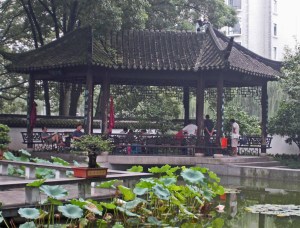
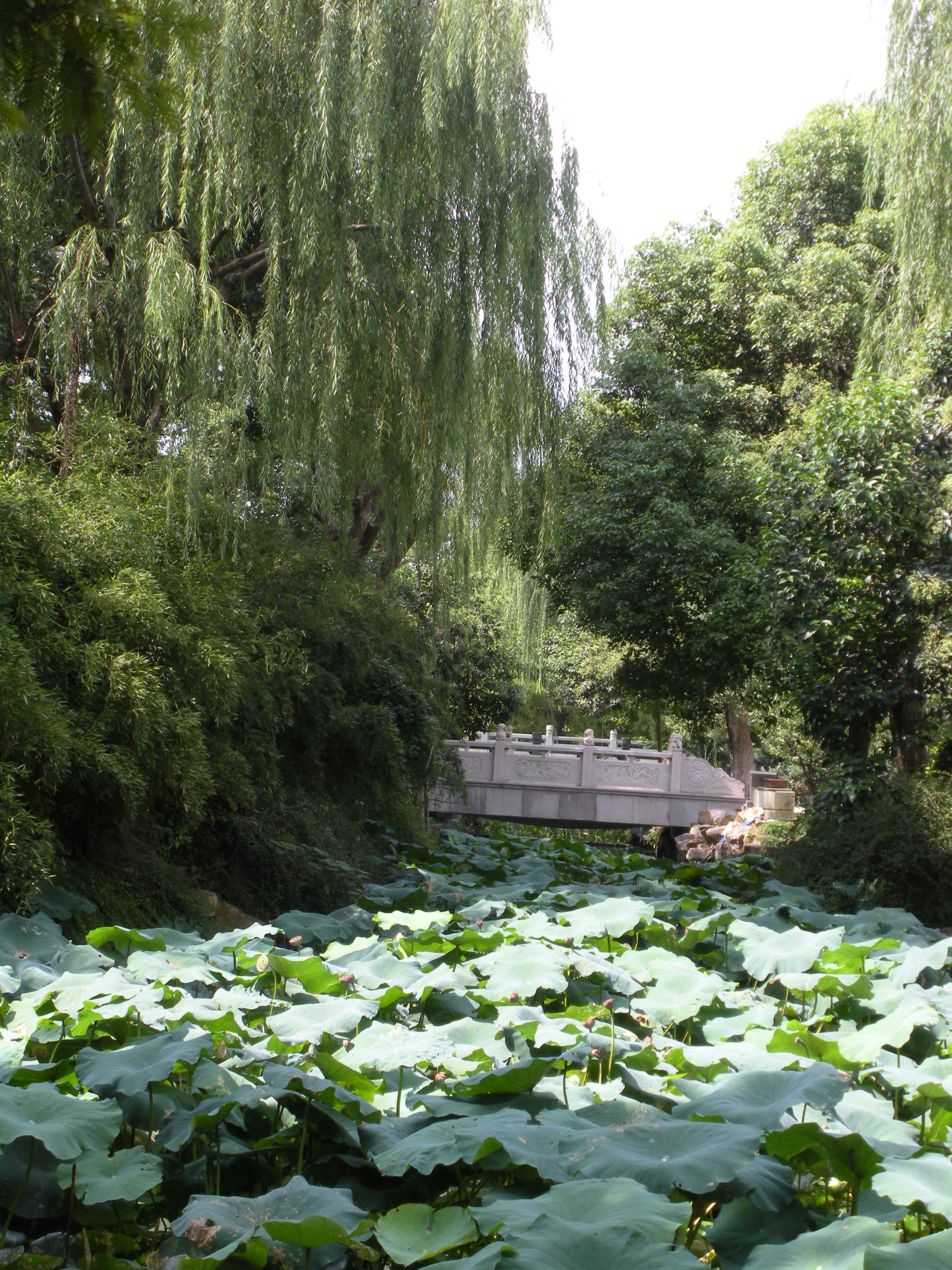
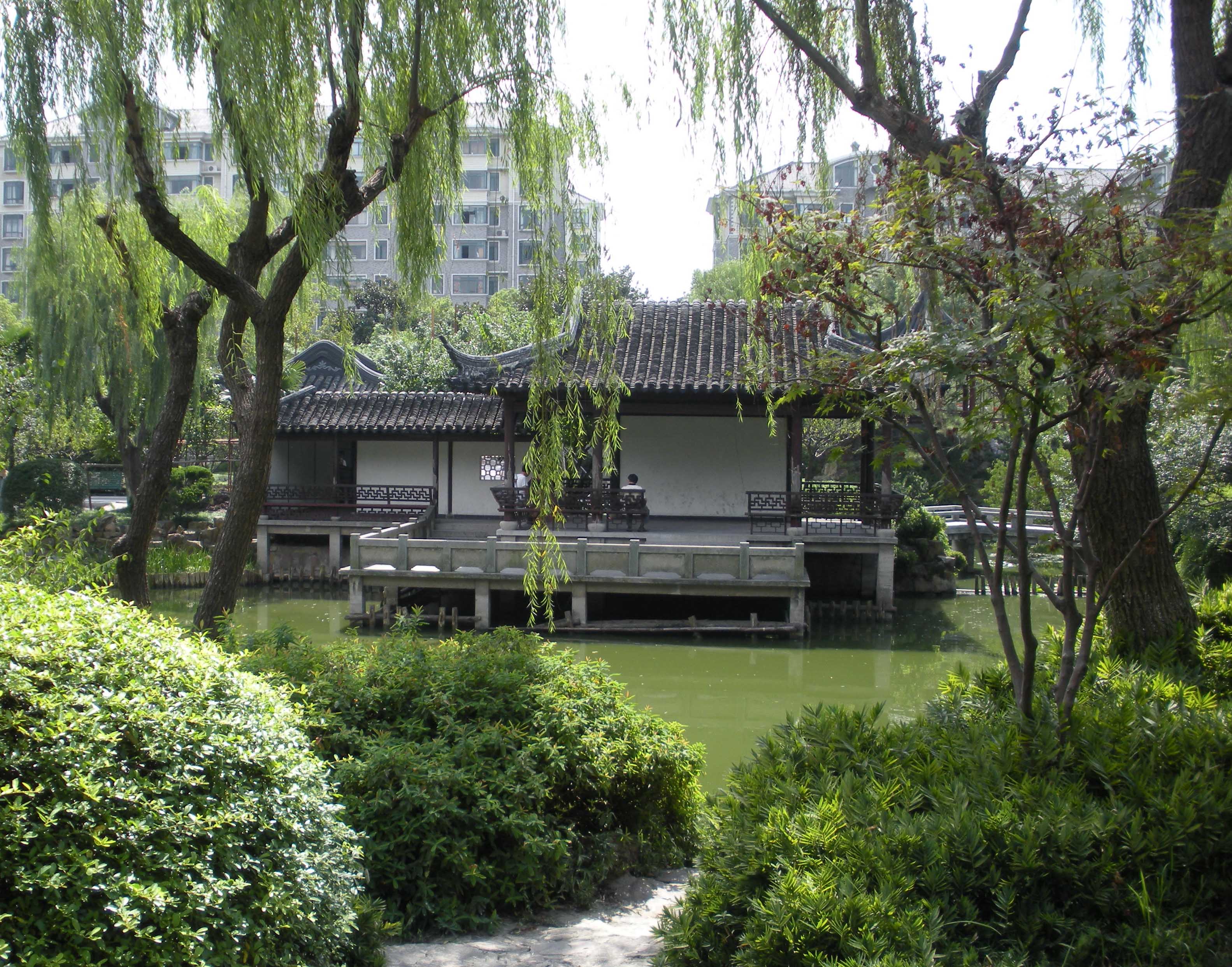
One of the aspects of my trips to China, that I truly enjoyed, was seeing all of the flowers, greenery, and gardens along the way. I wanted to specifically mention this fact, and state, the photos you might have seen of typical Chinese landscapes are true.

In fact, there were many more beautiful sights – of plants and flowers – than I had anticipated. I saw them in cities – in the country – in hotels – in restaurants – in offices – and other places too numerous to mention. Our office was in southern China – with a tropical climate – so there were flowers and greenery there any time of the year I visited.

As you go farther north, in China, there are the four seasons; however, even when it was too cold for outdoor plants there were many indoor ones wherever I went.

I do not enjoy planting or maintaining plants but I certainly like looking at them. The growing scenery I saw in China always gave me a feeling of tranquility.

I had once thought about buying a condo in Shenzhen so I could stay longer when I visited. One of the condos had a small patio (this was a multistoried condo building) and each patio came with a beautifully planted garden with flowers, plants, and trees. It was a place where I would have enjoyed going every evening and just sitting. It was covered so I could have enjoyed it in most types of weather.

Because I never stayed in the Western type hotels – rather staying where my Chinese associates stayed – I was treated to a unique insight on how some of the Chinese population lived.

Some of the hotels – where I stayed – were literally right next to apartment buildings. I could actually look out my window into those apartments.

I can’t say that I saw anything “personal” in nature but I did get to see how some Chinese decorated their apartments and balconies. I could also see the gardens many planted on the rooftops of their apartment buildings. Staying in those places certainly gave me even more appreciation of the Chinese people in that I saw a side of their lives that most “Westerners” would never see unless they stayed in places where I stayed.

I will always have fond memories of the many beautiful things I saw growing in China – it is a picture that will remain with me forever.

Note from Blog host – If you plan to do business in China, I recommend visiting the China Law Blog first.

Continued March 4, 2012 in Americans working in China – Part 13 (a guest post) or return to Part 11

______________

Lloyd Lofthouse is the award-winning author of The Concubine Saga. When you love a Chinese woman, you marry her family and culture too. This is the love story Sir Robert Hart did not want the world to discover.

Subscribe to “iLook China”
Sign up for an E-mail Subscription at the top of this page.

About iLook China

Note:  This guest post first appeared on March 17, 2010