“China is now the second-biggest box office territory for Hollywood films, eclipsing Japan,” says The Hollywood Reporter. Not only that, but Chinese production companies are releasing films for the home market.
In fact, a recent science fiction movie, Looper, became the first new Hollywood film to make more money in its opening weekend in China than in the US. Source: Guardian UK
It also appears that the Chinese government has done some forgiving. “Zhang Zhao fled China for the U.S. soon after the crushing of the 1989 student democracy movement. But Mr. Zhang returned to China in 1998, and now he’s the man with the money: As head of Enlight Pictures, a unit of Enlight Media and one of the new film companies aspiring to tell Chinese stories to a rapidly expanding domestic audience, he has plans for an initial slate of 40 movies, and no problem with financing.” Source: RealFilmCareer.com
A film produced by Huayi Brothers Media
Then there is Huayi Brothers Media, which the May issue of “The Hollywood Reporter” says raised 160 million in an IPO on the Zhenzhen stock exchange. The Huayi brothers have already released over 50 films, most of them huge box office hits in China. Source: CNN: Is This China’s Harvey Weinstein?
“Five years ago,” Wang Zhongjun said, “we hoped (the Hollywood studios) could bring us support and investments. Now we’re helping them,” reports The Hollywood Reporter, which predicts box office gross in China could exceed 10 billion yuan by the end of 2010.
Lloyd Lofthouse is the award-winning author of The Concubine Saga. When you love a Chinese woman, you marry her family and culture too. This is the love story Sir Robert Hart did not want the world to discover.
Subscribe to “iLook China”Sign up for an E-mail Subscription at the top of this page.
It is ironic that in the 1940s we were fighting with the Chinese against the Japanese. Then in 1950, China and the US fought against each other in North Korea and Chinese advisers were sent to assist North Vietnam to fight the US in the 1960s.
Then Nixon arrives in China in the 1970s and we were friends again.
In February 2010, I had an instant message chat with Ian Carter, an Australian expatriate living in Southeast China, and learned that during World War II in 1944 an American B-24 Liberator bomber vanished without a trace in Southeast China.
Fifty-two years later in 1996, farmers discovered the bomber’s wreckage and the remains of the ten-man crew on Mao’er Shan (Little Cat Mountain), Southern China’s highest peak. The name of the B-24 bomber was Tough Titi.
These Americans are considered heroes (click on this link for more about this story) to the Chinese, and the remains of the crew were returned to the United States for burial.
There’s a memorial stone near the crash site and Chinese tourists pay honor to these Americans by leaving flowers and other gifts.
To honor these heroes further, the Chinese recovered some of the bomber’s parts and used them as a centerpiece for a museum in Xing’an, about four hours from the crash site.
Lloyd Lofthouse is the award-winning author of The Concubine Saga. When you love a Chinese woman, you marry her family and culture too. This is the love story Sir Robert Hart did not want the world to discover.
Subscribe to “iLook China”!
Sign up for an E-mail Subscription at the top of this page, or click on the “Following” tab in the WordPress toolbar at the top of the screen.
What is better, universal health care as China offers its citizens or what Wal-Mart offers its associates/employees? You decide.
From Making Change at Walmart.org, we learn, “Wal-Mart’s health care plans fail to cover hundreds of thousands of associates. In 2009, Wal-Mart claimed that 52% of associates were covered under their healthcare plan. The company has refused to disclose coverage rates for its 1.4 million U.S. employees since then. [4]
“Wal-Mart stopped offering health insurance to part-time employees (working less than 24 hours per week) in 2012. [5]
Taxpayers are forced to provide healthcare for Walmart’s Associates. Hundreds of thousands of Associates and their family members qualify for publicly funded health insurance. [6] Indeed, according to data compiled by Good Jobs First, in 21 of 23 states which have disclosed information, Wal-Mart has the largest number of employees on the public rolls of any employer. [7]
In fall 2011, Wal-Mart made it even more difficult for associates to get quality health care for themselves and their families. Beginning with the 2012 enrollment period, Wal-Mart rolled back health care coverage for part part-time employees and raised premiums for full-time employees by as much as 63% for non-smokers and their families and as much as 162% for smokers with families. . For employees earning $8.81/hour working an average of 34 hours per week, some of Wal-Mart’s 2012 healthcare plans would cost between 77% and 104% of the employee’s annual gross income. [15]
In fact, there is no universal health care in the United States. What is known as Obamacare in the US is not a universal healthcare plan that is run by the government. It is a healthcare plan that just expands health care through private sector health insurance programs with the government subsidizing the costs of health-care premiums for Americans that do not earn enough money to pay for it so huge corporations such as Wal-Mart will allow the government to subsidize its private sector profits. In addition, if Mitt Romney is elected president and he follows through with his promise to get rid of Obamacare, America’s health care will return to where it was in 2007 and 2008:
The percentage of people without health insurance in 2008 was not statistically different from 2007 at 15.4 percent. The number of uninsured increased to 46.3 million in 2008, from 45.7 million in 2007.
The number of people with health insurance increased to 255.1 million in 2008—up from 253.4 million in 2007. The number of people covered by private health insurance decreased to 201.0 million in 2008—down from 202.0 million in 2007. The number of people covered by government health insurance increased to 87.4 million—up from 83.0 million in 2007
The percentage of people covered by private health insurance was 66.7 percent in 2008—down from 67.5 percent in 2007 (Figure 7). The percentage of people covered by employment-based health insurance decreased to 58.5 percent in 2008, from 59.3 percent in 2007. The number of people covered by employment-based health insurance decreased to 176.3 million in 2008, from 177.4 million in 2007. Source: Census.gov
Maybe now, a few of China’s critics may understand why the Chinese Communist Party and most of China’s people continue to resist becoming a democracy similar to America. Don’t get me wrong. I love my country and I am willing fight for her again(if it was a real threat and not one based on malarkey and lies as Vietnam and Iraq were)as I did in Vietnam in 1966 as a US Marine, but she has some serious problems that will be difficult to solve regardless of who is the next president of the United States. In fact, I think if Mitt Romney is elected, the problems will become worse.
Lloyd Lofthouse is the award-winning author of The Concubine Saga. When you love a Chinese woman, you marry her family and culture too. This is the love story Sir Robert Hart did not want the world to discover.
Subscribe to “iLook China”!
Sign up for an E-mail Subscription at the top of this page, or click on the “Following” tab in the WordPress toolbar at the top of the screen.
If you are interested in a real-life collision between the West and China early in the 19th century, then I highly recommend Sarah Rose’s nonfiction work. You will discover that the British Empire and its merchants were successful, because they were more ruthless and devious than anyone else on Earth.
At its greatest extent, the British Empire was known as the largest in history, and it covered more than thirteen-million square miles (20,921,472 square kilometers), which is about a quarter of the Earth’s total land area, and she controlled more than 500 million people—a quarter of the world’s population.
The English language, which the British Empire spread, is the second most-widely spoken language in the world today—in reality, the standard language of the world.
What financed the brutal expansion of this empire? According to For All the Tea in China, drugs paid for the empire. The British Empire was a thief and the largest drug cartel in human history.
Sarah Rose wrote a fascinating story of Robert Fortune (1812 – 1880) and one of, if not the largest, acts of corporate espionage and theft in history. This nonfiction book is about how the British stole tea plants and the method of producing tea from China and successfully transplanted this industry in India.
For example, if you drink Darjeeling Tea from India, you are drinking a product that was stolen from China by Robert Fortune in the early half of the 19th century.
But there is much more to this story than the theft of tea from the country that may have invented it almost five thousand years ago. In fact, China is considered to have the earliest records of tea drinking, with recorded tea use in its history dating back to the first millennium BCE.
However, first, I want to dispel a misconception I discovered from a two-star Amazon reader review that said, “I was a little skeptical about her comment in the notes ‘As this is a work of popular history, not a scholarly undertaking, I have avoided the use of footnotes and tried to steer clear of mentioning sources in the body of the text. Nevertheless, this is a work of nonfiction …’ “
That unfair review left off the rest of Sarah Rose’s quote that said, “Nevertheless, this is a work of nonfiction, and anything in quotes comes from a letter, memoir, newspaper or other contemporaneous sources.
“I have relied heavily on Robert Fortune’s four memoires (listed at the end of this post), his letters to the East India Company and other company documents housed in the British Library. Over five hundred books and documents were consulted in putting this project together.” (pg. 251, hardcover)
On page 227 of the hardcover, Rose wrote, “By the time the Chinese realized that Fortune had stolen an inestimable treasure from them, it was many years too late to remediate their loss. His theft helped spread tea to a wider world at lower prices.”
In addition, “Tea likewise revolutionized Britain’s capital and banking systems and influenced the rapid growth of trade networks in the Far East. It was instrumental in extending the reach of British colonialism as the empire expanded to include countries such as Burma, Ceylon, East Africa and others where tea could be grown …”
On page 178, we discover, “It was through drug-based commercial enterprises such as the tea and opium trade that Britain became the greatest of all hegemonic empires. The British campaign to sell opium in China was tremendously profitable. … Britain’s all-conquering naval fleet was able to be constantly improved with newly minted capital from the sugar, tea and opium trades. Without opium, the India trade would not have flourished and without India, Britain’s post-Napoleonic global ascendency could well have collapsed.”
However, these few quotes do not do justice to Robert Fortune’s adventure in China. He successfully passed himself off as a citizen of the Qing Empire dressed in mandarin robes. He even had a queue, a braid of hair worn hanging down behind the head, sewn to his scalp and had his head shaved to match the style of the time.
“He eventfully became proficient enough with speaking Mandarin that he was able to adopt the local dress and move among the populous largely unnoticed. By shaving his head and adopting a ponytail, this rather gruff Scotsman was able to effectively blend in. So well in fact, that he was able to enter the forbidden city of Souchow (now Wuhsien) unchallenged.” Source: Planet Explorers.com
Besides being nonfiction loaded with facts, this book was also an adventure and/or spy thriller based on a real person and his mission of intrigue—if caught, he would have been executed. To pull off the biggest heist of all time, Fortune traveled to areas of China that no foreigner had ever visited before, and his only companions were Chinese that he had bribed to work for him.
Today, tea is the most popular drink in the world in terms of consumption. Its consumption equals all other manufactured drinks in the world – including coffee, chocolate, soft drinks, and alcohol – put together. In fact, China is still the leading tea producer in the world: in 2010 China produced 1,467,467 tons (32.5%) compared to second place India at 991,180 tons (21.9%). Third place went to Kenya at 399,000 tons (8.83%).
In addition, consumption of tea in 2010 grew at a faster rate than global production. In the United States alone in 2011, the US tea industry gross revenue through all foodservice and retail outlets was greater than $27-billion (and twelve countries consumed more tea than the US). For a comparison, ticket sales for the US domestic movie market were only $10.28-billion in 2011.
Tea is more popular than Hollywood.
Robert Fortune’s memoirs:
1. Three Years’ Wandering in the Northern Provinces of China, A Visit to the Tea, Silk, and Cotton Countries, with an account of the Agriculture and Horticulture of the Chinese, New Plants, etc., London: John Murray (1847)
2. A Journey To The Tea Countries Of China; Including Sung-Lo And The Bohea Hills; With A Short Notice Of The East India Company’s Tea Plantations In The Himalaya Mountains. With Map And Illustrations, London: John Murray (1853)
3. Two visits to the tea countries of China and the British tea plantations in the Himalaya: with a narrative of adventures, and a full description of the culture of the tea plant, the agriculture, horticulture, and botany of China, London: John Murray (1853)
4. A Residence Among the Chinese; Inland, On the Coast and at Sea; being a Narrative of Scenes and Adventures During a Third Visit to China from 1853 to 1856, including Notices of Many Natural Productions and Works of Art, the Culture of Silk, &c, London: John Murray (1857)
5. Yedo and Peking; A Narrative of a Journey to the Capitals of Japan and China, with Notices of the Natural Productions, Agriculture, Horticulture and Trade of those Countries and Other Things Met with By the Way, London: John Murray (1863)
Lloyd Lofthouse is the award-winning author of The Concubine Saga. When you love a Chinese woman, you marry her family and culture too. This is the love story Sir Robert Hart did not want the world to discover.
Subscribe to “iLook China”!
Sign up for an E-mail Subscription at the top of this page, or click on the “Following” tab in the WordPress toolbar at the top of the screen.
The Tang Dynasty (618 to 907 AD) is regarded as one of the most prosperous times in China’s long history.
It was also the golden age of Chinese art and literature.
Crossing the Han River
Song Zhi-wen (656 – 712 AD)
No news, no letters – all winter, all spring — Beyond the mountains. With every homeward step more timid still I dare not even inquire of passerby.
Song Zhi-wen, the poet, was found guilty of accepting bribes and executed. He had good reason to fear returning home from exile.
In this video is a famous Tang poem.
The classical form of Chinese poetry developed in the late Han Dynasty (206 BC – 220 AD) and reached its peak during the Tang Dynasty.
Most Tang poems have four or eight lines, with five and seven Chinese characters in each line following certain rules.
Another example of Tang Dynasty poetry is Spring Perspective by Du Fu (712 – 770 AD).
When the post of prime minister was awarded to a cousin of the imperial concubine, there was the military rebellion of An Lu–shan in 755 AD.
The nation has fallen, the land endures Spring trees and grasses flourish in the town. Troubled by the times — flowers bring tears; Dreading parting — birds startle the soul.
With turmoil of battle three months on end, A letter from home is worth a fortune in gold. As it is, they can barely hold a pin.
This poem demonstrates what happens when the Chinese people get tired of nepotism and corruption, which should be heeded as a warning today to crack down on corruption in Communist China.
The next poem is one of many that Yuan Zhen (779 – 831 AD) wrote for his dead wife, who he married when he was poor. She did not live long enough to share his fame and fortune.
In former years, we chatted carelessly of death and what it means to die. Since then, it’s passed before my very eyes. I’ve given almost all your clothes away But cannot bear to move your sewing things. Remembering your past attachments, I’ve been kind to maids you loved. I’ve met your soul in dreams and ordered sutras sung. Certainly, I know this sorrow comes to all But to poor and lowly couples, everything life brings is sad.
Lloyd Lofthouse is the award-winning author of The Concubine Saga. When you love a Chinese woman, you marry her family and culture too. This is the love story Sir Robert Hart did not want the world to discover.
Subscribe to “iLook China”!
Sign up for an E-mail Subscription at the top of this page, or click on the “Following” tab in the WordPress toolbar at the top of the screen.
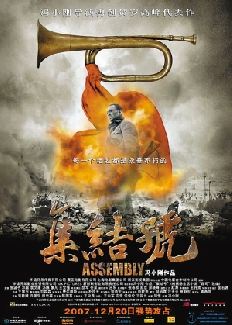 A film produced by Huayi Brothers Media


 Posted by Lloyd Lofthouse
  iLook China