China’s Stick People – the rural urban divide

December 25, 2012

I’m always looking for information about China, and I learned something new from The Economist’s May 6, 2010 issue. Click the link to read the entire piece or read this summary. I bought the magazine.

China has two classes—rural and urban.  The urban people have prospered for the last thirty years as China built a middle class.  Most rural Chinese have not been able to benefit from the booming economy and are getting restless.

Rural land outside China’s cities usually belongs to collectives. When Mao won China, the Communists divided the land among villages—not individuals. Individuals do not hold title to farmland and cannot sell land that no one owns.

China saw what was happening in India when farmers sold their plots to developers.  Rural people in India flocked to the cities and built sprawling slums. To avoid that, the Chinese government created a system to keep rural people on their farms.  Another motivation was fear of another famine like the one that struck China from 1959 to 1961 killing millions from starvation. If farmers left the fields for a better lifestyle in cities, that nightmare might return.

An experiment was tried in rural areas outside Chongqing to see if the land can be divided among individuals while increasing food production. Since the government still hasn’t figured out how to make the transition smoothly, don’t expect rural land reforms to happen quickly.

Read about China’s middle class expanding

______________

Lloyd Lofthouse is the award-winning author of The Concubine Saga. When you love a Chinese woman, you marry her family and culture too. This is the love story Sir Robert Hart did not want the world to discover.

Subscribe to “iLook China”!
Sign up for an E-mail Subscription at the top of this page, or click on the “Following” tab in the WordPress toolbar at the top of the screen.

About iLook China


Chinese Poetry during the Tang Dynasty

October 22, 2012

The Tang Dynasty (618 to 907 AD) is regarded as one of the most prosperous times in China’s long history.

It was also the golden age of Chinese art and literature.

Crossing the Han River
Song Zhi-wen (656 – 712 AD)

No news, no letters – all winter, all spring —
     Beyond the mountains.
With every homeward step more timid still
I dare not even inquire of passerby
.

Song Zhi-wen, the poet, was found guilty of accepting bribes and executed. He had good reason to fear returning home from exile.


In this video is a famous Tang poem.

The classical form of Chinese poetry developed in the late Han Dynasty (206 BC – 220 AD) and reached its peak during the Tang Dynasty.

Most Tang poems have four or eight lines, with five and seven Chinese characters in each line following certain rules.

Another example of Tang Dynasty poetry is Spring Perspective by Du Fu (712 – 770 AD).

When the post of prime minister was awarded to a cousin of the imperial concubine, there was the military rebellion of An Lu–shan in 755 AD.

The nation has fallen, the land endures
Spring trees and grasses flourish in the town.
Troubled by the times — flowers bring tears;
Dreading parting — birds startle the soul.

With turmoil of battle three months on end,
A letter from home is worth a fortune in gold.
As it is, they can barely hold a pin.

This poem demonstrates what happens when the Chinese people get tired of nepotism and corruption, which should be heeded as a warning today to crack down on corruption in Communist China.

The next poem is one of many that Yuan Zhen (779 – 831 AD) wrote for his dead wife, who he married when he was poor. She did not live long enough to share his fame and fortune.

In former years, we chatted carelessly of death and what it means
     to die.
Since then, it’s passed before my very eyes.
I’ve given almost all your clothes away
But cannot bear to move your sewing things.
Remembering your past attachments, I’ve been kind to maids you
     loved.
I’ve met your soul in dreams and ordered sutras sung.
Certainly, I know this sorrow comes to all
But to poor and lowly couples, everything life brings is sad.

See Mao Zedong, the Poet

______________

Lloyd Lofthouse is the award-winning author of The Concubine Saga. When you love a Chinese woman, you marry her family and culture too. This is the love story Sir Robert Hart did not want the world to discover.

Subscribe to “iLook China”!
Sign up for an E-mail Subscription at the top of this page, or click on the “Following” tab in the WordPress toolbar at the top of the screen.

About iLook China


TABOO IS THE NEW NORMAL

October 1, 2012

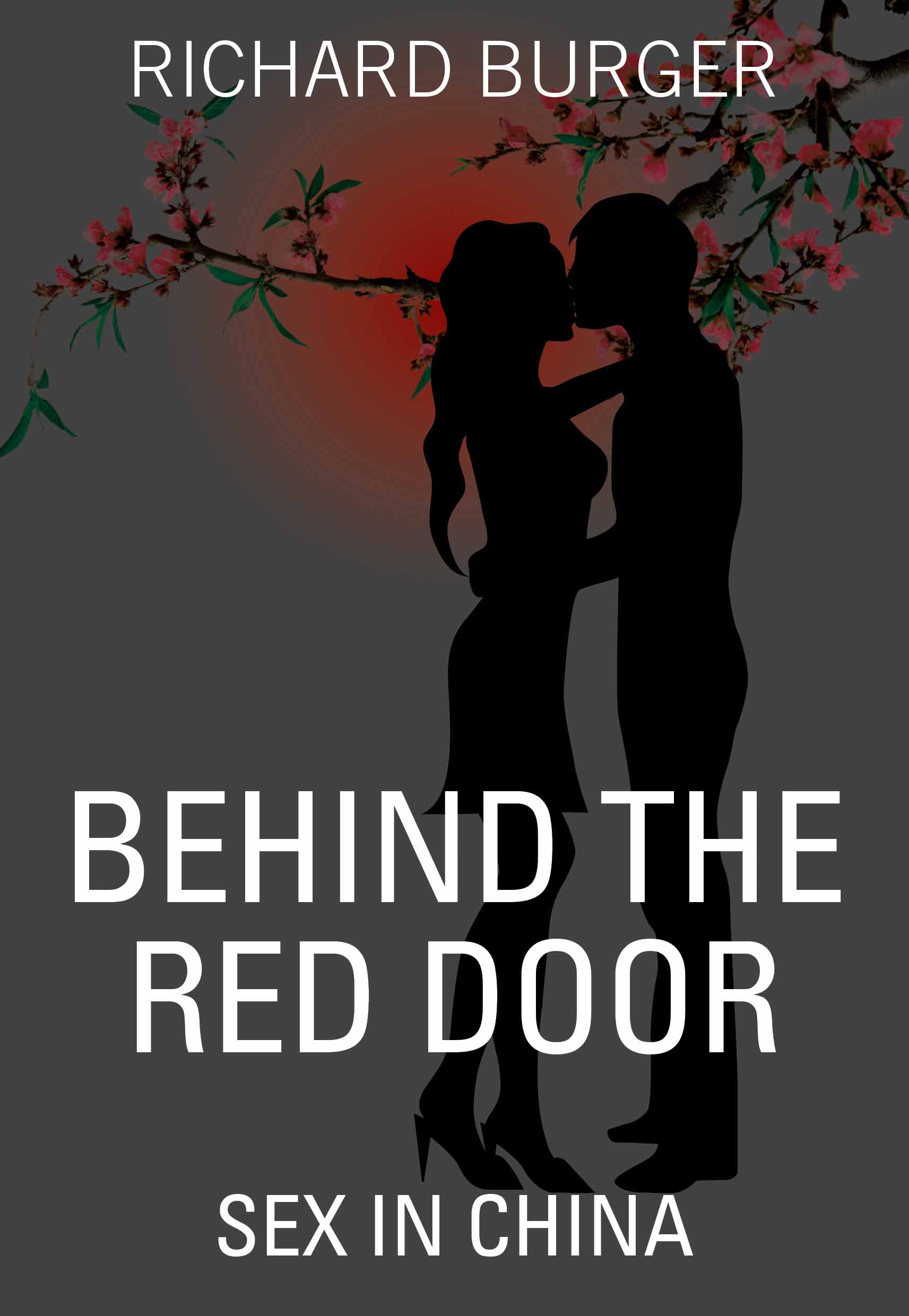
A review of “Behind the Red Door” by Richard Burger
Review by Tom Carter

Among the many misimpressions westerners tend to have of China, sex as some kind of taboo topic here seems to be the most common, if not clichéd.  Forgetting for a moment that, owing to a population of 1.3 billion, somebody must be doing it, what most of us don’t seem to know is that, at several points throughout the millennia, China has been a society of extreme sexual openness.

And now, according to author Richard Burger’s new book Behind the Red Door, the Chinese are once again on the verge of a sexual revolution.

Best known for his knives-out commentary on The Peking Duck, one of China’s longest-running expat blogs, Burger takes a similar approach to surveying the subject of sex among the Sinae, leaving no explicit ivory carving unexamined, no raunchy ancient poetry unrecited, and, ahem, no miniskirt unturned.

Opening (metaphorically and literally) with an introduction about hymen restoration surgery, Burger delves dàndàn-deep into the olden days of Daoism, those prurient practitioners of free love who encouraged multiple sex partners as the ultimate co-joining of Yin and Yang.  Promiscuity, along with prostitution, flourished during the Tang Dynasty – recognized as China’s cultural zenith – which Burger’s research surmises is no mere coincidence.
Enter the Yuan Dynasty, and its conservative customs of Confucianism, whereby sex became regarded only “for the purpose of producing heirs.”  As much as we love to hate him, Mao Zedong is credited as single-handedly wiping out all those nasty neo-Confucius doctrines, including eliminating foot binding, forbidding spousal abuse, allowing divorce, banning prostitution (except, of course, for Party parties), and encouraging women to work.  But in typical fashion, laws were taken too far; within 20 years, China under Mao became a wholly androgynous state.

We then transition from China’s red past into the pink-lit present, whence prostitution is just a karaoke bar away, yet possession of pornography is punishable by imprisonment – despite the fact that millions of single Chinese men (called bare branches) will never have wives or even girlfriends due to gross gender imbalance.

Burger laudably also tackles the sex trade from a female’s perspective, including an interview with a housewife-turned-hair-salon hostess who, ironically, finds greater success with foreigners than with her own sex-starved albeit ageist countrymen.

Western dating practices among hip, urban Chinese are duly contrasted with traditional courtship conventions, though, when it comes down to settling down, Burger points out that the Chinese are still generally resistant to the idea that marriage can be based on love.  This topic naturally segues into the all-but-acceptable custom of kept women (little third), as well as homowives, those tens of millions of straight women trapped in passionless unions with closeted gay men out of filial piety.

Behind the Red Door concludes by stressing that while the Chinese remain a sexually open society at heart, contradictive policies (enforced by dubious statistics) designed to discard human desire are written into law yet seldom enforced, simply because “sexual contentment is seen as an important pacifier to keep society stable and harmonious.”

____________________________

Travel Photographer Tom Carter traveled for 2 years across the 33 provinces of China to show the diversity of Chinese people in  China: Portrait of a People, the most comprehensive photography book on modern China published by a single author.

Also by Tom Carter Eating Smoke — a question and answer with author, Chris Thrall in addition to Harlequin Romance Invades China

If you want to subscribe to iLook China, there is a “Subscribe” button at the top of the screen in the menu bar.

Note: This guest post by Tom Carter first appeared in China in City Weekend Magazine. Reblogged with permission of Tom Carter. Behind the Red Door was published by Earnshaw Books


Confucian Harmony Today

September 11, 2012

In China, harmony plays an important role in everyday life. Cultural etiquette among Chinese revolves around harmony as Confucius taught. “Confucianism still plays an important role in Chinese society. It is a system of ethics and conduct, the obligations of people toward each other based on their relationships.” Source: Doing Business in China: Cultural Manners


The philosophy behind Feng Shui supports this concept since it is how to create harmony and balance in your living and working environment. Feng Shui came about when it was observed that people are affected by their surroundings with some places luckier, happier, healthier or more peaceful than others are.

Even the way the government in China does business is governed by the same concepts. As much as most Americans and Europeans seem incapable of understanding China, the Chinese often see foreigners as barbaric when they do not behave properly according to Chinese standards. Understanding is a two way street.

For example: Last weekend, I got up to wash dishes in the sink while my wife and daughter were still eating. My wife said when we have Chinese guests it is impolite to do that since it signals to the guests that it is time to leave. It is best to soak the dishes and leave them until the guests go.

Discover Honor Chinese Style.

______________

Lloyd Lofthouse is the award-winning author of The Concubine Saga. When you love a Chinese woman, you marry her family and culture too. This is the love story Sir Robert Hart did not want the world to discover.

Subscribe to “iLook China”!
Sign up for an E-mail Subscription at the top of this page, or click on the “Following” tab in the WordPress toolbar at the top of the screen.

About iLook China


Older than the New Testament

September 10, 2012

A conservative, born-again Christian friend once said that Communism was evil and that China needed a proper legal system. Since China already has a legal system, what did he mean? I’ve known this individual for decades, and I’m sure he meant that China should have a legal system like the one in America or the U.K. After all, he claims scripture guides his life and the Christian Bible has been around for centuries proving it comes from God. There is no other choice.

The problem with that logic is Confucius walked the earth long before Christ, and the New Testament didn’t exist for centuries after Christ was gone. What Confucius taught has been around longer.

What about China’s legal system?

The highest agency in China is the Supreme People’s Procuratorate. This agency is responsible for both prosecution and investigation in the People’s Republic of China. Similar institutions influence the office of the Procurator in the Socialist legal system. Its direct predecessor in China is the Supreme Court of the Republic of China, which in turn is descended from the Procuratorial Office of the late Qing Dynasty.

The Chinese legal system may have been broken during Mao’s Cultural Revolution but not any longer. It also appears that China’s legal system is an organic institution capable of change as seen in this piece from the Dui Hua Human Rights Journal.

Discover a Chinese Police Officer in Action

______________

Lloyd Lofthouse is the award-winning author of The Concubine Saga. When you love a Chinese woman, you marry her family and culture too. This is the love story Sir Robert Hart did not want the world to discover.

Subscribe to “iLook China”!
Sign up for an E-mail Subscription at the top of this page, or click on the “Following” tab in the WordPress toolbar at the top of the screen.

About iLook China