In October 1911, a revolution in China overthrew the Qing Dynasty and ended more than two-thousand years of imperial monarchy.
After the revolution, the Republic of China was founded but warlords still controlled much of China.
The leader of this revolution was Dr. Sun Yat-sen (1866-1925), and he served as the first president of the Republic of China.
The Chinese Communist Party persuaded Sun that if his Nationalist Party formed an alliance with the Communists, Sun would gain support from China’s peasants and industrial workers to help end the anarchy in China. Time Asia
But, by 1924, Sun Yat-sen’s health was not good. He was so sick he had to turn command of the Nationalist navy and army over to Hu Hanmin, who would later be a rival with Chiang Kai-shek for control of the Nationalists (Kuomintang) in the late 1920s.
The reason that Sun Yat-sen gave command of the navy and army to Hu Hanmin was because he wanted to go to the Baiyun Mountains of Guangzhou to recover from his illness.
However, Sun Yat-sen was invited to Beijing instead—the reason was to meet the warlord that controlled Beijing.
At the time, The Nationalists only held power in Southern China.
When he arrived by train, about 20-thousand people met him at the station.
The warlord had invited Sun Yat-sen to Beijing to talk about how to end the chaos and anarchy that still raged throughout much of China.
After arriving in Beijing, Sun Yat-sen saw a French doctor who gave him injections to help with his illness.
With his health getting worse, a nurse that worked at a German hospital was sent to his Beijing hotel to care for him.
His condition was so bad that at times he could not talk.
Since the Western medicine wasn’t improving his health, he was convinced by advisors to talk to an herbalist doctor, Ge Lianfu.
Sun Yat-sen told Ge Lianfu that he would give the Chinese medicine to the Western doctors to see if they could copy it.
Ge said he wasn’t sure if Chinese and Western medicine were interchangeable.
Since Sun was a trained Western doctor, he didn’t believe that Ge’s treatment was going to work. Ge Lianfu concluded that Sun had liver disease, but Sun didn’t trust the diagnosis.
While staying in the Beijing hotel, Sun was treated by doctors from the US, Germany, Russia and the Peking Union Medical College Hospital. However, the treatments didn’t help, and his condition worsened.
The western doctors concluded that he needed exploratory surgery. After they cut him open, they discovered liver disease as Ge Lianfu had diagnosed without surgery.
In fact, Sun was in the final stages of liver cancer. At the time, Western medicine had no treatment to deal with a disease that he must have had for years.
In 1916, Sun had often suffered from abdominal pain and the Western doctors treated him as if he had stomach trouble.
Later, it was discovered that the medical report of Sun’s condition was incomplete. Some of the samples and part of the report had been stolen and no one knows why.
During World War II, after the Japanese invaded China, Japanese troops occupied the hospital where Sun Yat-sen’s liver samples were kept.
Chinese representative requested the liver samples and the report be turned over to them.
Some of the liver samples were given to Dr. Tang Qiping, who worked at the Sino-Belgian Radium Institute in Shanghai.
Another man, Chu Minyi, forced Dr. Tang to give him those samples.
In 1946, Chu Minyi would go to prison as a traitor to China. He tried to use Sun Yat-sen’s liver samples to save himself. However, Chu was still executed by Chiang Kai-shek’s Nationalists.
Sun’s liver samples would be lost during the revolution between the Communists and Nationalists. Later, it would be discovered that the samples had been stolen again.
When the Nationalists launched their Northern Expedition to take China from the warlords, the warlord in Beijing, who met with Sun before his death, was their only ally.
When Sun died, his political advisor wrote, “If Dr. Sun Yat-sen had lived for a few years or even a few months longer, China’s situation would have changed completely.”
Soon after Sun’s death in 1925, the democratic government created by him after the 1911 revolution failed.
After a struggle, Chiang Kai-shek gained control of the Nationalists, and because he controlled the army. Chiang then gave orders to his troops to execute all the Communists starting the civil war that led to Mao’s famous Long March.
This film is in Mandarin with no English subtitles.
_______________
Lloyd Lofthouse is the award-winning author of My Splendid Concubine [3rd edition]. When you love a Chinese woman, you marry her family and culture too. This is the love story Sir Robert Hart did not want the world to discover.
Subscribe to “iLook China”!
Sign up for an E-mail Subscription at the top of this page, or click on the “Following” tab in the WordPress toolbar at the top of the screen.
I found this information from a 1967 documentary conceived and written by Theodore H. White to have half-truths about Imperial China. It is understandable that any American film from that era would be flawed since McCarthyism’s Red Scare took place in the US the decade before. Even today, Sinophobia infects almost half of America.
Author Theodore White lived in China for seven years and said that foreigners who lived in China during the crises often remembered it differently as if his opinions were correct and they were wrong.
The Roots of Madness unwittingly documents the lies and deceit that demonized the Empress Tsu Hsi when the narrator calls the empress evil. To discover the truth about the empress, I suggest reading Dragon Lady by Sterling Seagrave, who revealed the lies and deceit of Western journalists.
Nothing in China’s ancient culture could guide the Chinese to become part of the modern world.
Instead, China would experiment with different forms of government—a process that is still going on.
Although “China: The Roots of Madness” is a flawed production, there is enough accurate history to show why China is the way it is today.
British and American power controlled the wheels of industry in Shanghai, Nanking, Hankow and Chunking. In the steaming south, peasants, working like beasts, plant rice and speak languages most Chinese do not understand.
At the turn of the century, a three-year-old child was the emperor and the throne sat empty. On October 10, 1911, a riot took place that couldn’t be controlled.
Five weeks later, the Imperial government collapsed. The Qing Dynasty vanished and two-thousand years of Imperial tradition was gone.
The Chinese call this time the “Double Death”.
The British and Americans could not control what replaced the Qing Dynasty.
Students without weapons rioted in the streets.
Warlords that controlled armies divided China and the chaos and anarchy grew worse.
Life became so cheap, that death was like a bloody circus.
However, while the Chinese people suffered and starved, the foreigners live in luxury and controlled China’s industry while being protected by the Western military.
Chinese students demanded a revolt and Sun Yat-sen called on China to slay the dragon of Imperialism. He said China must start with nationalism, then democracy and finally socialism. The only country that offered to help was Soviet Russia.
Death claims Sun Yat-sen (1866 – 1925) after he has accepted support from Soviet Russia. Soon, General Chiang Kai-shek (1887 – 1975), with help from the Communists, consolidates power in southern China.
Chiang is known to Westerners as a fiery nationalist and revolutionary. He mobilizes an army under Sun Yat-sen’s flag and marches north with a few divisions.
Meanwhile, the warlords have gathered half-a-million troops to stop him. Outnumbered, Chiang sends an advance group of nationalists and communists to call the peasants and workers to join his army.
Among those peasants and workers is Mao Tsetung (1893 – 1976).
While moving north, Chiang’s army raids foreign concessions, burns foreign buildings and tears down foreign flags.
Leftist leaders of the Kuomintang distrust Chiang Kai-shek and some want to assassinate him but others disagree.
In Shanghai, Chiang Kai-shek, now a dictator, strikes first on April 12, 1927. His troops kill anyone suspected of being a Communist.
In December, there is a Communist uprising in Canton. A battle rages for two days between the Communists and Kuomintang ending in the executions of most Communists, but Mao escapes and goes into hiding.
Chiang Kai-shek’s army is not ready when Japan invades Manchuria. He doesn’t have tanks, the artillery is old and the Chinese are learning about airplanes.
Meanwhile, the Communists that Chiang thought he had destroyed are back. Mao knew the peasants lived in horrible poverty. He promised land reforms and by 1932 has millions of supporters.
The language in this documentary describing Mao is not flattering.
Yes, when Mao ruled China, he was a dictator but that ended in 1976 when he died. Since then, China has had several presidents that the 1982 Chinese Constitution allows to lead China for two five-year terms and there is an impeachment clause.
However, Chiang Kai-shek was also a dictator. The only difference between Mao and Chiang is that Chiang converted to Christianity in 1929, and the West called him the president of China—not a dictator. Chiang Kai-shek was never elected by the people of a democracy to rule China or Taiwan.
Instead, he ruled Taiwan under martial law until he died then his son became president without a popular vote by the people.
Instead of fighting Japan, Chiang’s army bombs villages that Mao controls killing tens of thousands of noncombatants. Mao takes his ninety thousand troops on the famous thousand-mile Long March.
A year later, only a few thousand remain. Mao calls for unity to fight Japan.
One of Chiang’s generals, Zhang Xueliang, forces the Nationalist dictator to sit down with the Communists where Chiang Kai-shek agrees to fight Japan. As soon as Chiang returns to his capital, he breaks the agreement and throws Zhang in prison.
Meanwhile, Mao’s troops in the hills of Yunnan grow their own food. His army, dressed in shabby clothing wearing straw sandals, doesn’t look like a fighting force. Mao says the people are the sea and guerrillas are like fish that swim in the sea. Within a year, Mao’s army grows to 200,000.
Chiang Kai-shek’s army loses battles and cities to the Japanese. To continue fighting, his government and army moves to the deep mountain city of Chongqing in Sichuan province.
In 1939, the Japanese start bombing Chongqing 24/7.
When asked about the Japanese threat, Chiang says that the Japanese are a disease of the skin, but the Communists are a disease of the heart.
Then on December 7, 1941, Japan bombs Pearl Harbor and America enters the war.
War supplies start to trickle to China through India and across the Himalayas to Chiang Kai-shek’s four-million-man army.
However, his government is corrupt, his troops are poorly fed and morale is low. In fact, the peasants do not trust Chiang’s
troops or him.
Chiang Kai-shek is accepted as an equal among the West’s leaders while Mao works to keep up the moral of his Communist troops through political training—something Western leaders don’t understand and criticize.
Theodore H. White tells of an incident with Chiang Kai-shek’s troops when a Nationalist officer lies to peasants saying he belongs to Mao’s Communist army. When White asks why lie, he is told the peasants would not help if they knew the truth.
In fact, regardless of the suffering from Mao’s Great Leap Forward and the Cultural Revolution, this loyalty never wavers.
Joseph Stilwell, the commanding US general in China, is not happy with Chiang since he is not fighting Japan.
Chiang says he needs his troops to fight the Communists.
In 1945, America invites representatives from Chiang’s government to take part in Japan’s surrender on the battleship Missouri but ignores the Communists under Mao.
An American ambassador urges Mao to join Chiang in a unified government. To bring this about, America offers Mao protection and there are face-to-face negotiations between Mao and Chiang.
During the negotiations, in secret, Chiang moves his troops to launch an assault on the Communists in Manchuria.
America urges Chiang to win the people by implementing Sun Yat-sen’s promised reforms.
Instead, Chiang’s war to destroy the Communists causes run-away inflation. Essential goods become too expensive. The people want peace, and Mao offers the peasants what they want—land.
In 1948, Mao attacks when his army leaves the caves and captures Manchuria
When Chiang Kai-shek’s northern army surrenders, modern American weapons and equipment falls to Mao’s troops.
Mao demands total surrender, but Chiang’s army boards ships for Taiwan taking China’s wealth and historical treasures.
In fear, western businessmen and missionaries flee China.
By 1967, when this documentary was produced, Mao had ruled China for 18 years and was still an inigma to most in the West. Nixon wouldn’t visit China for several more years.
Protected by America’s military and navy, Chiang was still in Taiwan serving as president for life (a dictator). He also had six-hundred thousand Kuomintang troops armed by the US, and the island people lived under martial law.
Theodore H. White says America does not understand Communist China. America could not predict the “Great Leap Forward” or the purges that followed.
White says the quality of life for the peasants had not improved (which is not true since the World Bank has reported that even under Mao the quality of life improved over what it had been), but they still had to work hard.
White’s documentary ends with words of fear for the world’s future because China has nuclear weapons.
There is no mention that America has enough nuclear weapons to destroy the earth a hundred times over and used two of them on Japan killing hundreds of thousands.
This revised post first appeared as an eight-part series starting June 8, 2010 at Roots of Madness – Part 1
______________
Lloyd Lofthouse is the award-winning author of the concubine saga, My Splendid Concubine & Our Hart. When you love a Chinese woman, you marry her family and culture too.
To subscribe to iLook China, look for the “Subscribe” button at the top of the screen in the menu bar, click on it then follow directions.
In 2008, I wrote a post about Tibet on another forum. Someone with a Tibetan sounding name left a comment in crude English calling me a “Communist rabbit”.
Name-calling seems to be popular these days. In America, people like Glenn Beck (FOX network), Rush Limbaugh (600 radio stations), Ann Coulter and the Tea Baggers have developed name-calling into an art form—not much substance but disguised racism, colorful and angry.
The Tibetan government in exile’s Prime Minister Samdhong Rinpoche was quoted in “Good” magazine’s May/June 2008 Issue that six-million Tibetan Buddhists still lived in Tibet. He also said that Tibet has never historically been part of China. That isn’t true. Tibet was ruled by three of China’s Imperial Dynasties.
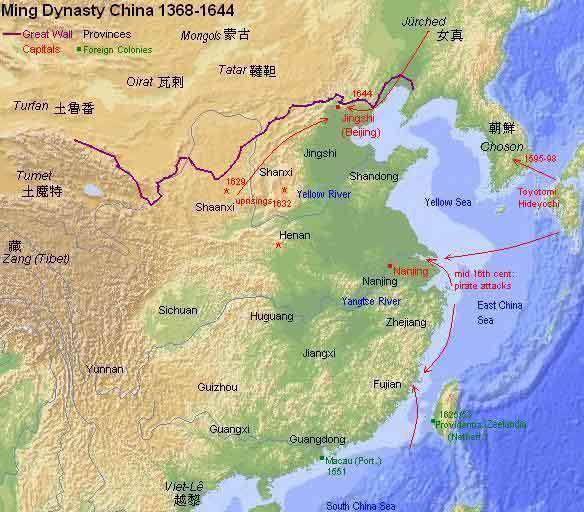
Tibet was first ruled by China during the Yuan Dynasty (1277-1367). Then, when the Ming Dynasty (1368-1643) reclaimed China, a Ming Imperial army was sent to Tibet to drive out the last of the Mongols–holdovers from the Yuan Dynasty. The Ming emperor ordered his army to stay.
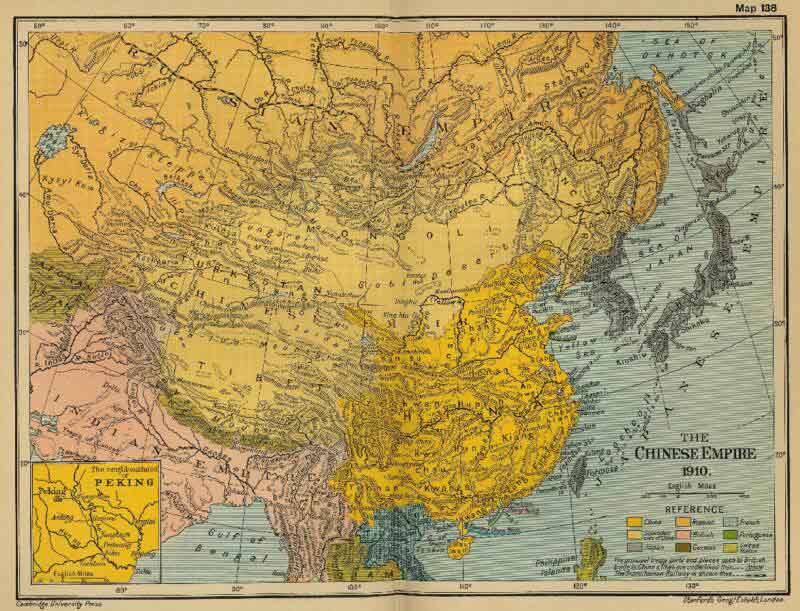
When the Ch’ing (Manchu) Dynasty (1644-1911) came to power, the Chinese empire expanded further and Tibet remained in China. Later, I’ll provide evidence from a 1912 National Geographic magazine as proof.
I previously quoted the Tibetan government in exile’s Prime Minister Samdhong Rinpoche claiming that six million Tibetan Buddhists still lived in Tibet.
China, on the other hand, reports that Tibet’s population was 2.84 million at the end of last year, 31,500 more than at the end of 2006. Among its permanent residents, more than 2.5 million, or 95.3 percent, were Tibetans. (Tibet’s population was 1.14 million in 1951.)
More evidence that is interesting comes from the CIA World Factbook. It seems that there are about 80,000 Tibetan refugees living outside Tibet/China. Wikipedia estimates about 5,000 to 9,000 live in the United States. The rest live closer to the Tibetan government in exile.
There were no Tibetans in America prior to the 1950s. Chinese first immigrated to America in the 18th century, and Chinese Americans make up the largest Asian population in America today—more than three million.
The most damaging evidence against Rinpoche’s claims come from the October 1912 issue of The National Geographic Magazine (I have a copy—it cost me $20 on e-bay). Since the earliest evidence of Communists in China was about 1920, and it wasn’t until 1949 that the Communists came to power under Mao, there is no way the Chinese doctor who wrote that 1912 piece could have lied for the Communists.
In the 1912 issue of The National Geographic Magazine on page 979, Dr. Shaoching H. Chuan wrote, “Tibet is governed by the Dalai Lama as politco-religous head and two “Ambans” as the political dictators. The Ambans are appointed by the Chinese Emperor every four years. All governmental affairs have to undergo examination by the two Ambans, and all government policy must be sanctioned by them before it can be put into operation. Literally, the Dalai Lama is under the authority of the two Ambans…” (Page 979)
From recent news, it appears that rough times may be ahead for the People’s Republic of China (PRC). In China sees US as hedge for Taiwan, Tibet (Asia Times) by Peter Lee, the author says, “After the Dalai Lama is gone, there is a strong possibility that motivated and organized pro-independence activists (militants) will be able to win power in the Tibetan government in exile.”
Militant Tibetan separatist groups have not been happy with the Dalai Lama’s call for autonomy talks with China instead of calling for a fight to gain independence. Tibetan militant groups want Tibet to break from China even if it means taking a violent path—one the Dalai Lama does not advocate.
What would Tibet be like if the separatists had their way and broke free from China?
Would they return to the system of landowners and serfs (slaves)?
Would the Tibetan Buddhists require that every family send at least one son to become a Buddhist monk as before?
Would mandatory schooling (as we have in the United States) be shut down so the literacy rate would plummet from the high 90% back to a single digit like it was prior to 1950?
Would the wealth and the land be returned to the one percent that had it all before Mao’s troops occupied Tibet?
Regardless of the evidence that proves the Tibetan government in exile is not telling the truth about Tibet being part of China for centuries before declaring independence in 1913 (when the Ch’ing Dynasty was collapsing and the British Empire urged Tibet to break free for political reasons), the Dalai Lama and his Prime Minister represents less than 100,000 Tibetans outside China.
If Rinpoche’s figure of six million is correct, that means the Tibetan government in exile represents about 1% of the Tibetan population. If China’s 2.5 million is correct, the percentage goes up to 3.2%. Not much of a base to wage a violent rebellion. There are more troops in the PRC’s army than the entire Tibetan population inside and outside of China.
I also wonder if that 1% in exile were the Tibetan landowners. Did they leave most of the serfs/slaves behind when they fled?
Maybe the Tibetan separatists/rebels (whatever term you like), with help from the CIA, should join the American Tea Bagger movement and gain the support from the likes of Ann Coulter, Glenn Beck and Rush Limbaugh.
They could sit around the campfire during protests and sing hymns about marching into battle to take back the wealth and return to the good-old-days, which would be the opposite of Robin Hood. In this case, the landowners that fled old Tibet (1% of Tibet’s population) would take back what they owned when they left and restore Tibet to the way it was.
In fact, The steady improvement of health care and living standards has raised the average life expectancy of Tibetans from 36 years in the old Tibet to the present 65 years.… It is recorded that during the 150 years before Tibet was (returned to China) there were four pandemic outbreaks of smallpox, one of which, in 1925, killed 7,000 people in the Lhasa area alone. Outbreaks of typhoid fever in 1934 and 1937 carried off some 5,000 people in Lhasa. Source: China-un.ch, which is supported by the facts in the 1912 piece published in the National Geographic Magazine.
Here is a suggested slogan for the Tibetan separatists (former landowners) living in India. “Freedom for landowners, illiteracy for serfs and life expectancy of 36 again!”
Lloyd Lofthouse is the award-winning author of My Splendid Concubine [3rd edition]. When you love a Chinese woman, you marry her family and culture too. This is the love story Sir Robert Hart did not want the world to discover.
Subscribe to “iLook China”! Sign up for an E-mail Subscription at the top of this page, or click on the “Following” tab in the WordPress toolbar at the top of the screen.
In America and the rest of the West, most people believe that Mao was a monster worse that Adolf Hitler or Stalin and is responsible for killing at least 30 to 60 million people during what is known as China’s Great Famine.
In fact, many Chinese also believe that millions died of starvation during The Great Famine (1958 – 1961) due to Mao’s demanding agricultural production goals during China’s Great Leap Forward.
Until recently, I also believed this without doubt since that is all I have ever heard.
The details that may have caused this famine are not common knowledge and it appears that no attempt by the Western media has been made to reveal them.
However, after discovering what happened in China and the world during Mao’s Great Leap Forward, what was once a certainty (at least to me) is now a mystery and possibly another hoax equal to the hoax that Tibet was never part of China before 1950 and there was a massacre in Tiananmen Square in 1989, which Wiki Leaks recently proved wrong.
No mention of drought, floods and severe weather that cut crop yields, and the number of deaths quoted in the video cannot be supported with evidence. In addition, evidence that does exist supports far fewer deaths.
Why Mao may have become scapegoat or victim of a hoax is worth examining.
The reason I say this is because in 1949 when Mao came to power, life expectancy in China was about 35, and then in 1960 life expectancy improved to about 60 or almost double what it had been in 1949, while the population of China increased by 19.5% with child mortality rates improving dramatically.
If Mao’s policies were responsible for these improvements in life expectancy and population growth, how could he also be the monster responsible for causing a famine that may have killed millions?
If a famine did occur, my research revealed that other factors may have contributed to the deaths and all but one of those factors did not deliberately cause people to die of starvation.
After learning of these other factors and completing the puzzle, it is obvious (at least to me) that Mao and the Communist Party did not order the deaths of 15 to 70 million people (the numbers quoted in the West vary widely because different people have made different claims without valid evidence to support those claims. There is evidence that supports the lower number.).
Before I started researching this post, I believed that Mao’s agricultural reform policies were mostly responsible for the famine, and then I learned that drought and severe weather also played a role in the famine.
The other factors that may have contributed to China’s so-called Great Famine will be listed in order of influence with the most damaging factor listed first and the least damaging last.
The first factors that may have contributed to the famine were droughts, floods and general bad weather.
In 1959 and 1960, the weather was less favorable, and the situation grew considerably worse, with many of China’s provinces experiencing severe famine.
Droughts, floods, and bad weather caught China completely by surprise, and in July 1959, the Yellow River flooded in East China and directly killed,either through starvation from crop failure or drowning, an estimated 2 million people.
In fact, droughts and famine are common in China. Between 108 BC and 1911 AD, there were no fewer than 1,828 major famines in China or one nearly every year in one or another province.
In the West, most if not all of what we hear about Mao is that he was a brutal monster responsible for the deaths of about 30 million people during the Great Leap Forward as if he pulled the trigger and ordered others to deliberately kill people by the millions as Hitler and Stalin did.
However, the facts do not support this claim.
The first time I heard that droughts and extremely bad weather also played a role in the so-called Great Famine was early July 2011 while I was researching another topic for this Blog and stumbled on that mostly unknown fact by accident.
Then I discovered another more insidious factor when I started working on this post, which may have contributed significantly to the early deaths of millions in China and no one in China was responsible for this one.
This factor was influenced by both American and Chinese paranoia generated by the Korean War (1950 – 1953), America’s involvement in Vietnam (1955 – 1975), McCarthyism‘s Red Scare (1947 – 1957) and the Cold Warwith Communist Russia (1945 – 1991).
The War in Korea (1950 – 1953), Vietnam (1955 – 1975), McCarthyism (1947 – 1957) and the Cold Warwith the USSR (1945 – 1991) set the stage for what may have contributed to mass deaths by starvation in China during the Great Leap Forward.
During the McCarthy era (1947 – 1957), thousands of Americans were accused of being Communists or communist sympathizers and became the subject of aggressive investigations and questioning before government or private-industry panels, committees and agencies.
In 1950, since China fought alongside North Korea against allied UN forces under the leadership of the US, the United States implemented a “complete embargo” that forbade all financial transaction with Communist China.
The US also convinced many of its allies to join this “complete embargo” to cut China off from the world.
After the Korean war, the United States did not lift this embargo for the next twenty years (1949-1969), with a goal to disrupt, destabilize, and weaken China’s communist government by causing the people to suffer and this “complete embargo” was one of the tools to achieve this.
The US embargo on China was a “complete embargo”, whch certainly must have contributed to the death toll of the Great Famine, a factor never mentioned before.
High American government sources have admitted that the objective of the economic warfare was aimed at causing a breakdown of Communist China. The idea was that problems in the Chinese economy would lead to loss of support from the people causing the collapse of the Communist Republic. Source: China for all.info and Asia for Educators – Columbia.edu
This embargo was lifted in 1969, when Richard Nixon was President. Source: Washington Post.com
However, while people were starving in China and US officials were waiting for Communist China to collapse, Washington D.C. had no idea how much suffering the Chinese people were capable of enduring and that even with the drought and famine, most Chinese were better off than they had been in centuries.
The evidence that the quality of life was improving was the fact that in 1949 when Mao came to power, life expectancy in China was 35, and by 1960 life expectancy had improved to age 60 or almost double what it had been in 1949, while the population of China increased by 19.5% with child mortality rates improving dramatically.
Field-studies in the 1930s revealed that in all parts of China, large numbers of landless laborers lived in tremendous poverty, and their situation had not changed since the sixteenth century. Source: China for all.info
If you want more evidence, I refer you to Pearl S. Buck’s “The Good Earth”.
We may never know how much of an impact America’s “economic warfare” against China crippled its ability to import food to feed its starving people in a time of drought and famine. In fact, this may have also influenced Mao’s decisions since he wanted the world to see China as strong and capable of feeding itself.
If anyone pulled a trigger on China’s people, it was not Mao. It was Washington D.C. fueled by fear of everything Communist caused by the Korean War, Vietnam, McCarthyism’s Red Scare and the Cold War with Communist Russia.
The last damaging factors that may have led to millions of deaths due to famine and starvation was the statistical lies of rural farmers and local party bosses reporting crop yields in rural China and Mao’s impossible goals to create a miracle in five years.
Mao’s five-year plan for the Great Leap Forward set quotas (goals) to develop agriculture and industry so China would catch up to America and the other Western nations that had invaded China during the 19th century (England, France, Japan, Germany, Russia, America, etc.)
Mao believed that both agriculture and industry had to grow to allow the other to thrive.
Industry could only prosper if the workers were well fed, while the agricultural workers needed industry to produce the modern tools needed for modernization.
For this to happen, rural China was reformed into a series of giant communes.
However, the droughts, floods and other severe weather arrived soon after this five-year plan was implemented and set the stage for a tragedy caused by nature and supported by American “economic warfare” in the form of a “complete embargo” of China.
Due to quotas set by Mao’s agricultural policies, no one wanted to be seen as a failure and/or unpatriotic so this generated boastful claims about output that were followed by more boastful claims of incredible crop yields.
Nobody – least of all the central government in Beijing – knew the real output figures and nobody was trying to find out. Instead, there was a sense of general euphoria in Beijing that China was succeeding.
While rural farmers and party posses lied about crop yields, China started exporting rice and wheat to other countries as a source of revenue, since Beijing believed there was a bumper crop. The result was that only urban areas suffered with reduced rations but with still enough food to survive.
However, the situation was different in the areas that lied the most and resulted in mass starvations largely confined to rural China, where, because of drastically inflated production statistics, very little grain was left for the peasants to eat.
Food shortages were bad throughout the country. However, the provinces, which had adopted Mao’s reforms with the most energy, zeal and the highest boasts, such as Anhui, Gansuand Henan, tended to suffer disproportionately.
Sichuan, one of China’s most populous provinces, known in China as “Heaven’s Granary” because of its fertility, is thought to have suffered the greatest absolute numbers of deaths from starvation due to the vigor with which provincial leader Li Jinquan undertook Mao’s reforms.
Once the central government in Beijing discovered the truth, the Chinese Communist Party acted quickly to correct the errors in national agricultural decision-making, to conserve food, and to save as many lives as possible implementing drastic measures to feed those in need and to restore agricultural productivity.
Grain exports were stopped, and imports from Canada and Australia (in spite of America’s complete embargo) helped to reduce the impact of the food shortages. Source: Library Index.com
The final question is: Would Mao’s Great Leap Forward have been more successful if there had been no drought, no floods and no “complete (U.S.) embargo” and the people had not lied about crop yields?
It is no secret that millions of rural people starved to death in China during the famine of 1959 – 1960, but it was a “great” tragedy caused by a complex series of circumstances and was not murder.
In addition, the actual number of deaths was significantly lower than what has been claimed in the West.
The CCP’s lofty goal was to prove to the world that the Party ruled China successfully by boosting crop yields and industrial output.
Another reason the CCP set such unrealistic goals for the five-year plan that contributed to the tragedy that was Great Leap Forward was because of Taiwan, which was recognized by the world as the official government of China and still held its seat in the United Nations.
It wouldn’t be until 1971 that the U.N. recognized the People’s Republic of China instead, and the United States wouldn’t switch diplomatic relations with China from Taipei to Beijing until 1979, finally recognizing the Communist Party as the legitimate ruler of China.
From Griffith University, Australia, Poverty, by David C. Schak, Associate Professor
______________
Lloyd Lofthouse is the award-winning author of The Concubine Saga. When you love a Chinese woman, you marry her family and culture too. This is the love story Sir Robert Hart did not want the world to discover.
To subscribe to “iLook China”, look for the “Subscribe” button at the top right of the screen.
I have an “old” friend who often takes conservative theories, opinions and conjecture fueled by emotions, and believes in them as if God wrote them with His own hand.
In addition, many people believe any claim if it supports their own biased opinions and will attack anyone that disagrees with them no matter how valid the evidence presented. However, when it comes to China, that reaction is understandable due to Western democracies partnership with capitalism, which is the polar opposite of communism/socialism.
It makes sense that many in the West will bend over backwards (even fabricate evidence) to demonize anything from a rival seen as evil that was already demonized for decades during the West’s Cold War with global communism. In addition, the West fought three wars with communism in Korea, Cuba and Vietnam. The first ended in a stalemate and the other two were lost.
In other words, prejudice in the West of any country linked to socialism/communism is hardwired to be biased.
In this case, Mao has been tried and convicted in the court of public opinion of the crime of mass murder based on exaggerated theories and opinions supported by inflated evidence.
I wrote on this topic before in China’s Great Famine (1959-1961) Fact of Fiction. That doesn’t mean I was finished with it. If you shake a few trees, something falls out and you learn something new and compelling on a controversial topic, it’s time to return to the subject.
This time, I went looking for recent books about China and ran into several titles that perpetuated the myth that thirty to forty-five million (or more) people died during the Great Leap Forward (GLF) when in fact there may have been no massive loss of life due to the GLF — at least not in the numbers the mostly biased Western theorists and sources keep inflating higher in book after book, which is an example of the old saying that if you tell a lie enough it grows like cancer into a malignant ruth.
droughts cause famines, people starve and die
In Hungry Ghosts: Mao’s Secret Famine (April 1998), Jasper Becker claimed, “Population statistics made public since 1979 reveal that at least 30 million people starved to death in the wake of Mao’s Great Leap Forward.”
However, in one sentence the US National Library of Medicine National Institutes of Health reveals that Becker’s claim is a fraud. “Though population, disease and mortality statistics of modern China are spotty and sometimes questionable, common consensus among the researchers is that since 1949 the public health situation in China has improved tremendously.”
Then in Catastrophe and Contention in Rural China (May 2005), Ralph A. Thaxton Jr. says, “This book documents how China’s rural people remember the great famine of Maoist rule, which proved to be the worst famine in modern world history.”
If we examine “modern world history”, Thaxton’s claim is easily dismissed.
To claim this famine on Mao’s watch was the worst in “modern world history” is false once we learn more of global famines and what “modern history” means.
In the West, “modern history” may describe the beginning of a new era, such as the European Renaissance (about 1420-1630).
The term “modern history” may also be marked by the beginning of the Industrial Revolution. If so, then “modern history” started between 1760 and 1830.
If we use 1760 as the beginning of “modern history”, then there are other famines that may claim the title of worst famine in “modern world history.” [Note: only famines with one million or more verified deaths will be listed here — there were many more than what’s on this page.]
In 1769 to 1773, there was the Bengal famine with 10 million deaths while India was part of the British Empire. To understand the British corruption that led to these deaths, I suggest reading Three Episodes in the Criminal History of the British Empire
In 1883-84, the Chalisa famine in India killed 11 million while India was still part of the British Empire.
Between 1810 and 1849, there were a series of four famines in China that took an estimated 45 million lives.
In 1845 – 1849, the Great Irish Famine killed more than one million people while Ireland was part of the British Empire.
Then in 1850 to 1873, because of the Taiping Rebellion in China, drought and famine caused the population of China to drop by over 60 million people. (Note: the Taipings were converted Christians influenced by Western religious beliefs and one goal of the rebellion was to convert China into a Christian nation.)
The Great Irish Famine manufactured by the economy of the British Empire
In 1866, the Orissa famine in India led to one million deaths from starvation, while India was still part of the British Empire.
Three years later in 1869, the Rajputana famine in India took another 1.5 million lives when India was part of the British Empire.
In Persia in 1870-71, famine took two million lives.
Between 1878 – 1880, there were famines in India, China, Brazil, Northern Africa and other countries. Thirteen million died in Northern China and more than five million in India, which was still part of the British Empire.
In 1921, famine in Russia took 5 million, while in 1937 another famine in China took the lives of another five million and then the Soviet famine of 1947 added one million more to the death toll.
The last major famine during British rule in India was the Bengal famine of 1943. It has been estimated that some three to five million people died. [Note: at this point, almost 60 million died of famines in the British Empire—You may want to read How the British Empire Starved Millions… to learn more.]
Then, when we look at the number of major famines that have hit China since 108 BC, there were 1,828 or one nearly every year in one province or another and the famines varied in severity (except for the last fifty years while China’s Communist Party has governed the nation).
Moreover, in 1958-61, not all of China suffered from the so-called great famine. The provinces that suffered were Shandong, Henan, Shanxi, Anhui, Jaingsu and Sichuan — six of the twenty-three provinces in China.
To blame the famine and all loss of life due to starvation on Mao and the Maoists during the Great Leap Forward (1958 -61) and claim it was murder is a false accusation and an injustice. Mao was not a saint, but he was not guilty of this.
Before I reveal new evidence to cast doubt on the claims of Mao’s Western critics, two more books blame Mao for the loss of life due to the famine.
In Mao’s Great Famine (September 2010), Frank Dikotter claimed, “that as many as 45 million Chinese died from starvation, execution, and maltreatment under forced labor.”
Then, in Eating Bitterness (February 2011), two editors that compiled this book claimed that some “30 million peasants died of starvation and exhaustion during the GLF”.
I find it interesting how two editors claim the loss life was from starvation and exhaustion while another author claimed it was from starvation, execution, maltreatment and forced labor with a difference of 15 million deaths, which is a huge disparity.
In addition, In Henry Kissinger’sOn China (pg 184), he says, “The Great Leap Forward’s production goals were exorbitant, and the prospect of dissent or failure so terrifying that local cadres took to falsifying their output figures and reporting inflated totals to Beijing.”
Kissinger says this led to the deaths of over twenty million people from starvation—twenty-five (25) million less than Dikotter’s inflated claim. Other’s have estimated the loss of life closer to 15 million and even as low as 3 million or less.
Famines throughout the Ages: 19th to 21st Century
It appears that as the false accusations and the fraud grows, so does the emotional language.
There is a name for books of this sort, and it is “Yellow Journalism” where writers take advantage of popular opinions and without valid evidence spread lies and exaggerations as if they were the truth. I’m sure those authors also laugh all the way to the bank.
Before I continue, I want to mention that in 1949, the average life expectancy in China was 36 and in 1960, it was 36.3 years of age, as you shall eventually see from a reliable source. It has been estimated that it took at least a decade for the Chinese Communist Party to establish a political/governmental infrastructure in all or most of China, which means goals to develop the country and improve health were not in full swing until about 1959. However, impelling evidence shows they were improving from the beginning.
As for how many starved, opinions abound and cover a wide spectrum and all the deaths above 20 million are easily challenged as two Amazon reviewers of Dikotter’s flawed and biased book demonstrate with impressive facts.
From these two Amazon reviewers, I learned something new.
Amazon reviewer W Y Lu of Hong Kong said, there is absolutely no evidence the atrocities Dikotter mentions were ordered from the top. In fact, quite the opposite – they were often uncovered, even by Dikotter’s own admission, by investigatory teams sent out by the central authorities (Note — and later by members of Mao’s personal bodyguard sent to verify the claims of starvation Mao was hearing from Party members, which he doubted at first, since “local cadres took to falsifying their output figures and reporting inflated totals to Beijing”.)
Lu says, the fact is, even using Dikotter’s figures (grossly inflated as they are), China’s mortality during the Great Leap Forward (GLF) was in fact slightly lower than that of India’s at the end of British rule – just 9 years earlier.
“The calculation is very simple,” Lu says. ‘Excess’ deaths are calculated by counting all the deaths that happen in one year, and subtracting them from a mortality the researcher assumes would have been the case had the GLF not happened. ”
Dikotter adopts a ‘normal’ crude mortality in China of 10 per 1000 people annually. He then counts deaths above this number as the excess deaths caused by Mao’s GLF.
facts about extreme poverty and hunger
Lu then points out that Dikotter also increased (inflated) the mortality numbers by 50% to allow for under-reporting (assuming there was any) and came up with an average annual mortality of around 27.3 per 1000 during the GLF.
However, Lu then says, “A crude mortality of 27.3 per 1000 in the late 50s & early 60s was in fact quite typical for developing countries. ”
Lu then points out that India and Indonesia’s mortality rates were 23 and 24 per 1000 respectively, and China’s mortality in 1949, just 8 years before the Great Leap Forward was 38 per 1000 (Source: China’s Changing Population by Judith Banister published by Stanford University Press).
In her well researched work, Banister mentions evidence that a famine did take place in China at this time due to reduced fertility rates but says the fertility rate rebounded at least one year earlier than would be expected on the basis of grain production statistics, which can only be explained if supply and distribution of food improved considerably during 1961 as the government imported grain (from Canada and Australia—both allies of the US that broke ranks with the complete American embargo of China) and tried to ensure minimum supplies in famine areas.
In addition, Banister’s data makes it clear that the death rates for China in the years 1958, 1959, and 1961 were certainly far below anything known in China previously and loss of life from famine took place only in 1960 and was dealt with in 1961 once Mao and Beijing recognized the truth.
To wrap up his rebuttal, Amazon reviewer W Y Lu of Hong Kong says, Dikotter gets his 45 million by (a) inflating mortality rates gleaned from the archives by 50%, and (b) assuming a ridiculously low ‘normal’ death rate (the same as developed countries in the West) – even though China throughout the 1950s was one of the most wretchedly poor countries on earth.
A second review by M Chen uses similar evidence to refute Dikotter’s bogus claims of what happened in China during the GLF as mass murder.
Chen says 10 per 1000 deaths annually was the mortality rate in the advanced industrialized West in 1960, while mortality rates for the other big Asian countries in 1960 for India was 24 per 1000, Indonesia 23 per 1000, and Pakistan 23 per 1000
Chen says, “Dikotter claimed the GLF started early 1958 and ended in late 1962.” However, Judith Banister proved that theory false showing that the famine ended as early as 1961, while other valid evidence proves the droughts and floods that caused the famine and loss of life didn’t hit until 1959.
If China lowered the mortality rate between 1949 and 1958 from 38 per 1000 to 10 per 1000, a miracle must have taken place because the mortality rate Dikotter claims as normal for China was lower than the UK (11.5 per 1000) and France (11.4 per 1000) in 1960.
In addition, World Life Expectancy.com shows that in 1960, life expectancy in China was 36.3 years while India was 42.3 and Indonesia 41.5, which supports the higher mortality rate in China that Lu and Chen defend.
World Life Expectancy.com (WLE) shows that in one decade between 1960 and 70 (Mao did not die until 1976), life expectancy in Indonesia was 47.9, India 49.3 and China 61.7.
Did you do the math and see the results of Mao’s policies regardless of the suffering during the GLF and the Cultural Revolution? From 1960 to 1970, China added 25.4 years to life expectancy while Indonesia only added 6.4 years (six “point” four in case you missed the dot) and India seven years.
Then by 1980, Indonesia was 54.8, India 55.7 and China 65.5.
In 1990, Indonesia was 61.7, India 59.7 and China 68.3.
In 2000, Indonesia was 67.5, India 62.5, and China 71.4
In 2010, Indonesia was 71.1, India 66.5 and China 74.5
NCBI.gov (the US National Institute of Health) says, “Since the establishment of a new social order in 1949, China’s attempts to feed and nurture its large population has been a topic of serious study in many disciplines… In 1949, the life expectancy in China was only 36 years. By the early 1980s, it increased to 68 years.”
Since the NCBI says life expectancy in 1949 was 36 years and in 1960, it was 36.3 years (according to WLE), it is safe to say that the mortality rate in China in 1960 was still closer to 38 per 1000 and not 10 per 1000 as Frank Dikotter, the author of “Mao’s Great Famine” claims.
This increase in life expectancy is attributed mostly to improved nutrition and lowering of mortality rates due to decreases in infectious diseases. In fact, during the most dramatic gains in life expectancy, Mao ruled China (1949 – 1976).
Overwhelming facts from reliable sources show that Mao’s policies increased life expectancy and decreased mortality rates during the era he ruled, which included the Great Leap Forward and the Cultural Revolution.
That does not mean suffering did not take place but it does prove that even during hard times, life expectancy in China (on average) improved dramatically while mortality rates dropped.
mentions the British caused famines in India/Ireland and who really managed the Great Leap Forward in China
In addition, this video makes a case that only three million may have died from the famine.
After reading Lu and Chen’s figures, which were supported by Judith Banister’s scholarly and well researched work, China’s Changing Population (Stanford University Press – 1987), along with facts from the WLE and NCBI.gov, I sat down with my wife, who as a child grew up in Shanghai during the GLF and experienced the Cultural Revolution first hand. She lived with hunger but only remembers hearing of a few people that died of starvation in rural China and never saw anyone starving to death in Shanghai.
When I asked my wife her opinion, she doubted if the number of people that died of starvation in China during the GLF were anywhere near the massive numbers Western authors such as Frank Dikotter claims.
My wife then mentioned a few memoirs (published in Mandarin) she had read of troops from Division A-341 of the People’s Liberation Army (PLA), which guarded Mao, the Forbidden City (where Mao lived) and Beijing during the GLF.
The memoirs of a number of Mao’s personal PLA bodyguards from Division A-341 revealed that when Party members told Mao that rural Chinese in a few provinces were starving due to droughts and low crop yields, Mao did not believe what he was told.
However, to verify these claims, Mao sent people he trusted [troops from PLA Division A-341 that came from rural China] to their villages to investigate the claims of famine.
one in eight children in the United States go to bed hungry daily
When Mao’s trusted bodyguards returned in late 1960 or early 1961 and reported that the claims were true, Mao acted swiftly, cancelled the GLF several years early sending the peasants back to their villages from the larger collectives, and directed the Party to seek help from other countries to feed the people.
As my wife said, (due to Piety—considered the First of all Virtues, which I wrote of here) the Party would never have ordered an end to the GLF without Mao’s permission. The orders had to come from Mao and according to the memoirs of his personal bodyguards, he was the one that made the decision to end the GLF, five-year plan early and have China ask for outside help, which started to arrive from Canada and Australia in 1961.
In fact, Roderick MacForquhar wrote in his book, The Origins of the Cultural Revolution, that in May 1961, China entered into long-term arrangements with Canada and Australia to insure grain supplies until production in China recovered in addition to imports of American grain laundered through France to avoid the complete American embargo.
MacFarquhar makes it clear that drought, typhoons, plant disease and other forms of natural disaster were the principal cause of the famine of 1960.
More than one book has examined this topic from a scholarly perspective (instead of inflammatory unsubstantiated claims), but Mao’s Western critics have mostly ignored this work.
In China: Land of Famine (published in 1926 by the American Geographical Society) by Walter H. Mallory , we have a book that casts doubt on the inflammatory claims, which have been popularized in the West about the post-1949 Mao era. Mallory offers another perspective for understanding what really may have happened during Mao’s GLF.
Then from Stanford University Press, in the Economic Cold War by Shu Guang Zhang (August 2002), “the author argues that while the immediate effects (of the complete American embargo of China) may be meager or nil, the indirect and long-term effects may be considerable; in the case he reexamines, the disastrous Great Leap Forward and Anti Rightist campaign (The Cultural Revolution) were in part prompted by the sanctions imposed by the United States and its allies.”
In other words, if the West had been supportive of China by ending its complete embargo after the Korean Conflict (1950-1953), these events may never have taken place.
Once all the facts are taken into consideration and weighed without bias and emotional baggage, there is only one conclusion to reach regarding the editors of “Eating Bitterness” and the authors of “Hungry Ghosts: Mao’s Secret Famine“, “Catastrophe and Contention in Rural China” and “Mao’s Great Famine“.
These books are frauds supporting a hoax.
It is also a fact that there are millions of people with closed minds that will refuse to accept this verdict that if Mao was guilty of anything, he was guilty of distrust and/or incompetence and not murder — at least not the deaths from the famine that took place during the GLF in the land of famines.
If you have watched the nine videos embedded with this series, ask yourself, who is guilty of murder by starvation today? That “old” friend of mine I mentioned earlier is against abortions and believes we should trust in God in all things, which is based on this “old” friend’s interpretation of the Bible.
World Hunger.org reports, “Poor nutrition plays a role in at least half of the 10.9 million child deaths each year, which is more than five million deaths.” This means every four years, the number of children that die from hunger in the world equals the number of people that died of famine and starvation in China during the GLF.
In fact, between 13 and 18 million men, women and children die of starvation each year, which is one person every three and a half seconds.
Nevertheless, World Hunger.org says, “The world produces enough food to feed everyone. World agriculture produces 17 percent more calories per person today than it did 30 years ago, despite a 70 percent population increase.”
Ask yourself, will God feed the thousands that starve in the world daily, while 75% of Americans are overweight and 25% are obese?
Meanwhile, a few well-fed authors are writing books that perpetuate a hoax about Mao, who has been dead for 35 years, so who will they blame next? Maybe they should look in a mirror.
From Griffith University, Australia, Poverty, by David C. Schak, Associate Professor
______________
Lloyd Lofthouse is the award-winning author of The Concubine Saga. When you love a Chinese woman, you marry her family and culture too. This is the love story Sir Robert Hart did not want the world to discover.
Subscribe to “iLook China” Sign up for an E-mail Subscription at the top of this page.


 Posted by Lloyd Lofthouse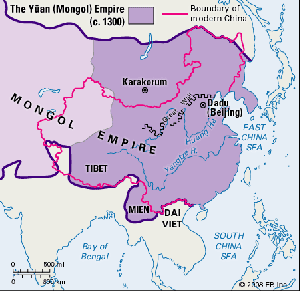
 iLook China