Organized religions and cults such as theFalun Gong have been in China for centuries, but have never played a major role in the culture until the 19th century when Christianity was forced on China.
C.M. Cipolla wrote in his book, Guns, Sails and Empires, “While Buddha came to China on white elephants, Christ was born on cannon balls” powered by opium.
The treaty that ended the opium wars included a clause that required China to allow Christian missionaries free access to all of China to convert the heathens.
Then the Taiping Rebellion led by Hong Xiuquan, God’s Chinese son and a Christian convert, was responsible for more than 20 million deaths. Hong claimed to be the younger brother of Jesus Christ. Millions believed him.
In the early months of 1900, thousands of Boxers, officially known as Fists of Righteous Harmony, roamed the countryside attacking Christian missions, slaughtering foreign missionaries and Chinese converts.
Confucius and possiblyLao-Tse have influenced the foundation of Chinese culture and morality the most. These two along with Buddha offer more of a blended influence on Chinese culture than Christianity or Islam.
Thanks to Confucius, China’s mainstream culture understands the importance of people within the family and society more so than many other countries and cultures.
This may explain why China is a powerhouse of industry today.
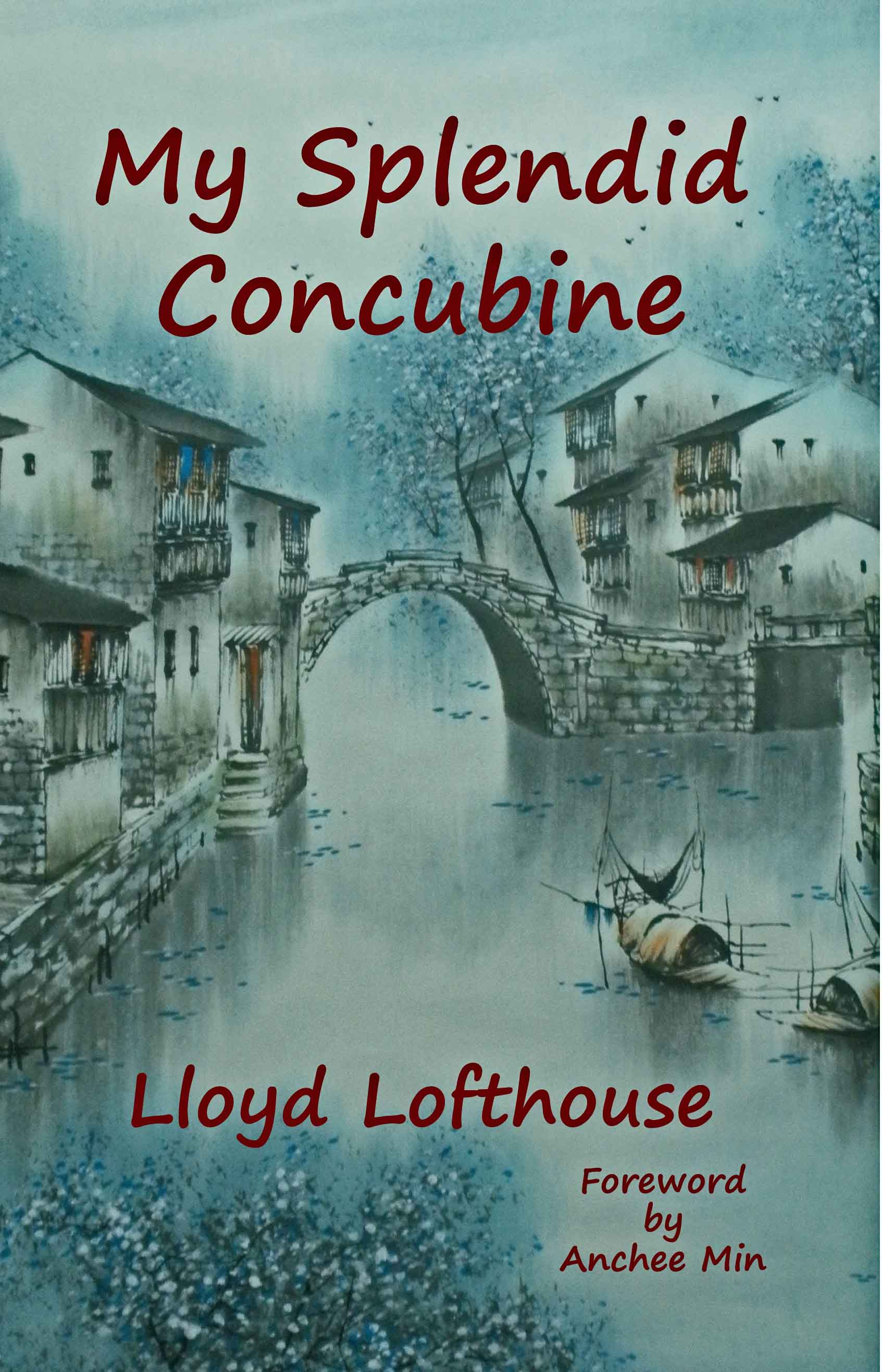
Lloyd Lofthouse is the award-winning author of the concubine saga, My Splendid Concubine & Our Hart. When you love a Chinese woman, you marry her family and culture too.
If you want to subscribe to iLook China, there is a “Subscribe” button at the top of the screen in the menu bar.
Note: This post first appeared on iLook China March 11, 2010 as post # 128. This revised version reappears as post # 1095.
I have a book on the elite troops of China’s Qing Dynasty, and used The Manchu Way for research (along with lots of other work) while writing My Splendid Concubine and Our Hart. I spent from 1999 to late 2007 researching, writing, revising, editing and rewriting the manuscript.
I wanted 19th century China to come alive and be another character in Hart’s Concubine Saga.
Mark C. Elliott wrote The Manchu Way.I was attending a NCIBA Trade Show in Oakland, California several years ago and met Elliott.When I expressed interest in the book due to my project, he gave me a copy.
History Today said of Elliott’s book, “This is a wide-ranging and innovative book. Furthermore, it is written in a lively, accessible style… Overall, it is undoubtedly a scholarly achievement of the highest order.”
I was fortunate to have this resource while writing of Robert Hart’s early years in China. In fact, Hart was the only foreigner the emperor trusted and Hart worked for Qing Dynasty for most of his life.
The Qianlong emperor (pronounced “chien-lung”) was the fourth monarch of the Qing dynasty (1644-1911) who reigned from 1736 to 1795.
The four-minute video starts by saying that during the reign of the Qianlong Emperor there were several rebellions in Sichuan province.
The Qing banner armies fought wars against the Uyghurs, Kazakhs, Kyrgyzs, Evenks and Mongols. Unsuccessful costly wars were also fought with Vietnam and Myanmar.
Although millions of square miles or kilometers were brought into the empire, the strain on China’s treasury and military due to casualties and deaths resulted in a military decline.
This decline contributed to China’s weakness a few decades later when the British Empire and France invaded China to force the Qing Dynasty to allow opium to be sold to the Chinese people and give missionaries total freedom to convert the population to Christianity, which caused more wars and tens of millions of deaths during the 19th century.
The Qing army was divided into eight banners. Each banner had its own color scheme, which was reflected in their clothing, armor and flags. There were eight Manchu banners, eight Mongolian banners and eventually eight Han Chinese banner armies for twenty-four armies. In 1648, there were between 1.3 and 2.44 million people in the Chinese, Manchu and Mongol Banner armies.By 1720, the numbers were estimated at between 2.6 and 4.9 million.
China has a history of maintaining large armies for more than two thousand years mostly for defense.
Lloyd Lofthouse is the award-winning author of the concubine saga, My Splendid Concubine & Our Hart. When you love a Chinese woman, you marry her family and culture too.
If you want to subscribe to iLook China, there is a “Subscribe” button at the top of the screen in the menu bar.
I’ve mentioned the Taiping Rebellion often. After writing more than a thousand posts and about four hundred thousand words, it’s difficult to recall all that I’ve said of the man that started this rebellion.
There is irony in Hong Xiuquan’s choice of naming his kingdom. During the years his Christian rebellion thrived, he ruled over a third of China and had an army of more than two million troops.
Since he was a converted Christian, Hong Xiuquan made overtures to the British and French asking for an alliance to help defeat the Godless Qing (Manchu) Dynasty. The British and French turned him down.
After all, profits often come before God. Christians may always ask for forgiveness later.
Xiuquan made his mistake by wanting to rid China of opium, which British merchants along with French, Germans, Americans, etc. wanted to keep selling to the Chinese.
The embedded video is about Hong Xiuquan. Hal Holbrook is the narrator and says, “While the seventh day Sabbath doctrine was gaining ground in America in the middle of the 19th century, the Taiping Revolution was sweeping across China…”
Hong Xiuquan was the ambitious son of a poor, peasant farmer.
However, he had a goal to become successful. After failing the Chinese civil service examinations several times, he met a Chinese Christian convert passing out pamphlets published by Protestant missionaries.
Hong put the pamphlets on a shelf and forgot them. After failing several more civil service exams, Hong suffered a breakdown and had strange dreams of an old man.
Holbrook says, “Traditional Chinese would not attach any importance to dreams unless or until there was some clear connection to real life.” At first, Hong did not see a connection.
Jonathan Spence, the author of God’s Chinese Son, which is about the Taiping Heavenly Kingdom of Hong Xiuquan explains that eventually the connection was made between the dreams and the Protestant pamphlets. The old man in Hong’s dreams had to be God.
After that, Hong Xiuquan believed the purpose of his life was to establish the Taiping Heavenly Kingdom of Great Peace. His religious zeal spread among the suffering peasants and inspired the greatest revolutionary movement of the 19th century.
The Qing Dynasty successfully asked the British and French for help, which allowed the Manchu to crush Hong’s Christian rebellion in 1864. In 19 years of rebellion, more than 20 million died.
Learn more of The Opium Wars (1839 – 1852) and (1856-1860)
______________
Lloyd Lofthouse is the award-winning author of the concubine saga, My Splendid Concubine & Our Hart. When you love a Chinese woman, you marry her family and culture too.
If you want to subscribe to iLook China, there is a “Subscribe” button at the top of the screen in the menu bar.
In 1999, I was introduced to two dead people. One was a white guy from Ireland that died a hundred years ago and the other was Ayaou, a Chinese woman that was a mystery since Robert Hart tried to erase her from his personal history.
I’m fortunate that Hart failed and traces of Ayaou survived.
Since I was a child of seven or eight, I’ve been writing stories. They were short with lots of bad drawings.
Soon after I was honorably discharged from the US Marine Corps in 1968, I took my first writing workshop at a community college. Then Ray Bradbury came to the campus to speak and although I never read his work, what he said inspired me to never stop writing.
Although I did receive a few encouraging rejections through the decades and was represented by two or three reputable agents before Amazon.com and eBooks were born, nothing I wrote was picked up by a traditional publisher.
Believing I wasn’t good enough, I decided to learn more of the writing craft by earning a BA in journalism. An MFA with a focus in twentieth century American literature came much later.
Between earning the two college degrees, I drove about 150 miles one day each week for seven years to attend a workshop out of UCLA’s writing extension program.
The teacher was a chain smoker with an explosive tempter but she was sharp and several of the writers in her workshop went on to publish their work. When she felt one of her students was ready, she went all out and even found an agent for the author. She found one for me, but that’s another story.
When I publishedMy Splendid Concubine in 2008, I held my breath wondering if anyone would read it and enjoy the lusty, violent story of Robert Hart and Ayaou in the middle of 19th century China immersed in the smoke of the Opium Wars and the oceans of blood of the Taiping Rebellion.
On May 12, 2009, an Amazon reader, an anonymous person in Hong Kong, posted a one-star review of My Splendid Concubine.
The anonymous reader wrote, “As a great fan of Robert Hart’s, I was very eager to get my hands on this book. And what a huge disappointment it proved to be, for many reasons…”
One of those reasons was a “g” missing from one of five “Tang Dynasties” in the novel.
This one-star review was of the first edition. By the time it appeared on Amazon, the second revised edition was out and some of the anonymous reader’s complaints had been corrected.
In three years, My Splendid Concubineearned three honorable mentions in city book festival literary contests then Our Hartearned another four honorable mentions and became a finalist for a national writing award.
About a year ago, the sequel, Our Hart, was submitted to the 18th Annual Writer’s Digest Self-Published Book Awards.
Recently, an envelope arrived from Writer’s Digest.
Jessica Strawser, the editor of Writer’s Digest, wrote that the competition was particularly fierce this year…
Our Hart didn’t win.
This is the book trailer I produced in 2008 of the first edition of My Splendid Concubine. My wife has been telling me I need a better one and to delete this version.
However, when you enter a book to this Writer’s Digest literary award, a judge writes a commentary of your work and ranks it for plot, grammar, character development, production quality and cover design, which helped dispel the criticism of that one-star review that discovered a missing “g” from one of five “Tang Dynasties” in My Splendid Concubine.
The Writer’s Digest judge, a professional in the publishing industry, awarded grammar a five with five being the highest score.
The judge wrote, “In Our Hart, Elegy for a Concubine, author Lloyd Lofthouse has penned an intriguing story set in an ancient Chinese dynasty. Political intrigue and matters of the heart are both fully explored. The book is meticulously researched and the author’s enthusiasm for his subject is evident.… The author has an ear for natural-sounding dialogue, making Our Hart an engaging read.… That said, readers who enjoy vicariously experiencing other times and cultures will find Our Hart a fascinating journey.”
______________
If you want to subscribe to iLook China, there is a “Subscribe” button at the top of the screen in the menu bar.
The Federal government has no business using taxpayer dollars to spread organized religion around the world.
Cobourg Atheist lists 25 countries with limited or no freedom of religion.
Cobourg says, “It’s fairly clear that Muslim countries are the most common offender – in fact I don’t think any Muslim country is missing from the list!”
Two of those 25 countries, China and India, have about a third of the world’s population. Islam holds another 1.6 billion bringing the total to more than half.
With Russia on the list, more than half the world’s population is being pressured by a very small minority in the US that has decided it knows what’s best for the globe.
It doesn’t help that almost 80% of the US population are Christians. That makes this issue appear suspicious.
However, it is only a small segment of those Christians that are responsible for what it happening and they are ignoring the history and cultures of the countries on Cobourg’s list.
Only in a nation with the “hidden” Soul of a Church could this happen.
What is happening in the US has happened before and is mentioned in the embedded video where you will discover that much of Islam was spread by war. Study the Timeline of Islam to see how many wars were fought that spread the Islamic religion.
It appears that the United States has decided to travel the same path.
Since 1998, the U.S. Department of State has had an Office of International Religious Freedom with the mission of promoting religious freedom as a core objective of U.S. foreign policy. This office releases a report each year on the global state of religious freedom with information on every country on the globe.
In 1998, the US passed legislation titled the International Religious Freedom Act of 1998 (H.R. 2431) and an amendment in 1999 (Public Law 106-55).
Nations so designated are subject to further actions by the United States including economic sanctions.
Could the clause “subject to further actions” have been the real reason behind the Bush administration manufacturing false evidence to launch a war in Iraq — not to build a democratic nation but to introduce a strong Christian influence in the Middle East?
In Part 3, we will see why it is illegal for the US government to use taxpayer money to support or otherwise involve itself in any religion.
Lloyd Lofthouse is the award-winning author of the concubine saga, My Splendid Concubine & Our Hart. When you love a Chinese woman, you marry her family and culture too.
If you want to subscribe to iLook China, there is a “Subscribe” button at the top of the screen in the menu bar.


 Posted by Lloyd Lofthouse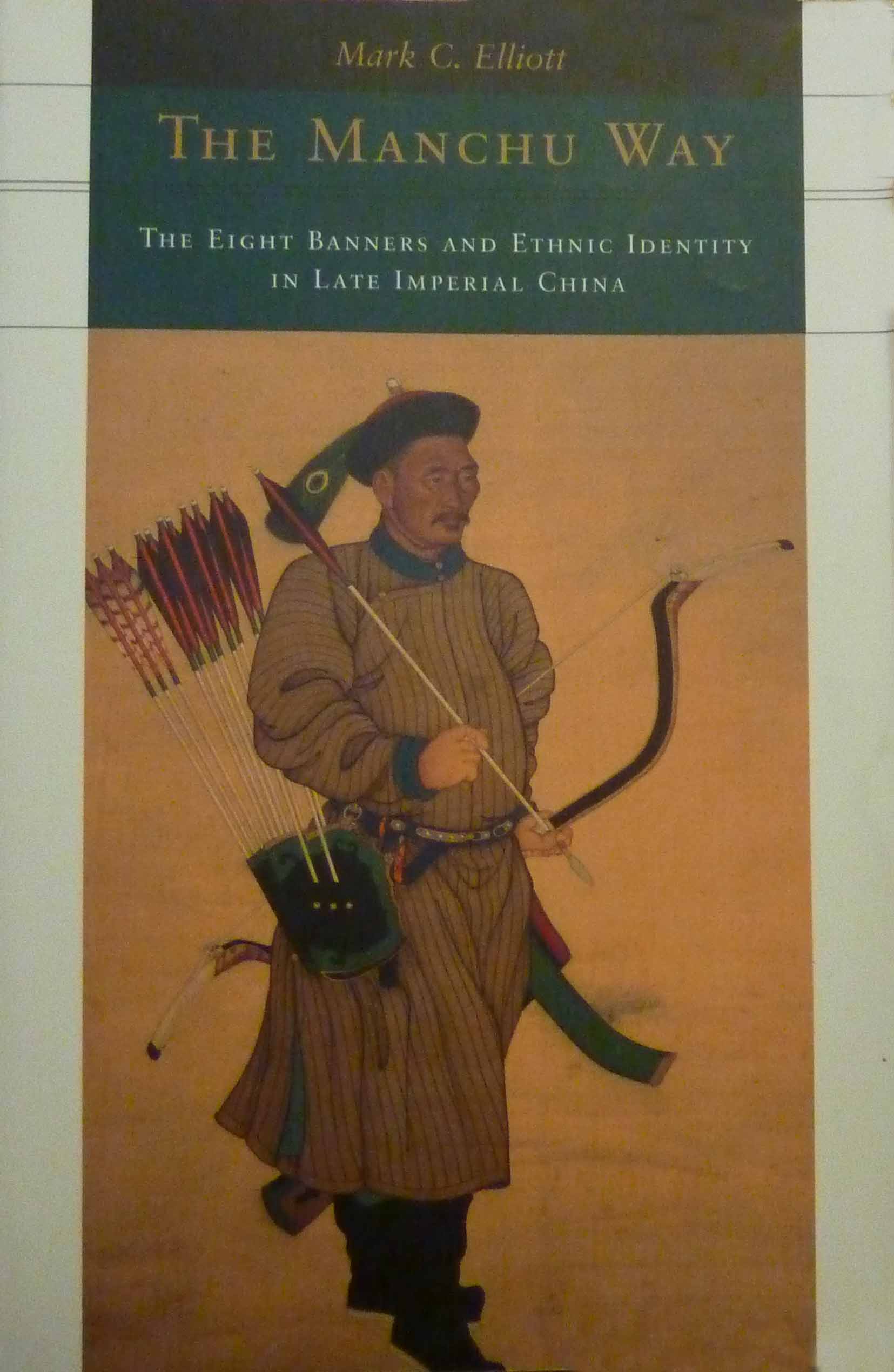
 iLook China