In Defense of Tiger Mothers Everywhere

January 13, 2011

Amy Chua, the author of the Wall Street Journal essay Why Chinese Mothers Are Superior recently released her memoir Battle Hymn of the Tiger Mother. Since publication, Chua has been under virtual attack by guilty parents and spoiled children around the globe.

Amy Chua claims Chinese mothers are superior, and any way you cut it, she is right.

The Chinese mother does make the difference in her child’s education and lifestyle choices, because she is willing to say “NO” and stick to that hated word.

I left a comment at Avitable.com and a few other Blogs and cited statistics in support of Tiger Mothers. The host said, “Did you know that 90% of people can make up statistics on the spot?”

Then Adam Health Avitable says, “I have a BA in East Asian Studies and a doctorate, so I’m not ignorant in any fashion.”

If you visit Adam’s Blog, you will soon discover that he also says he is a lawyer, a nude model, a humorist, a geek and is single.
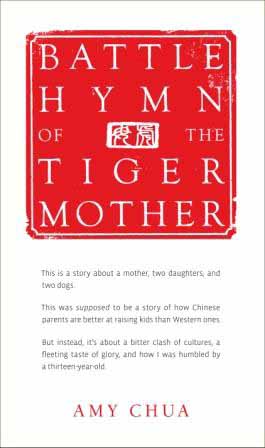

US Book Cover

Hey Adam Avitable, about a year ago, Business Insider.com published, “It’s Official, Asian-American Students Work Way Harder to Become More Educated Than Everyone Else” then went on to say Asian-American students take far more Advanced Placement (AP) classes during high school than most other Americans.

In fact, information gathered at City Data.com supports Amy Chua and Tiger Mothers.

I used the Academic Performance Index (API) in California to rank and compare four high schools. Although Chinese are the largest Asian minority in the US, they are not listed separately but are included with five other Asian groups, which are Chinese, Filipino, Asian Indian, Vietnamese and Koreans.

Today there are about 12 million Asians in the US.  As a group, Asian-Americans outperform all other racial groups.

At Rowland Unified School District’s Nogales High School, 76% of the student population is listed as Hispanic and 11% as Filipino.  The Filipino/Asian students averaged 790 on the API while the Hispanic students averaged 627.


Who is Adam Avitable?

At Oakland High School, three ethnic groups are listed. African Americans make up 26% of the student population with an API average of 517; Asians are 53% of students with an API of 667 and Hispanics are 16% of the student population with an API of 519.

At Los Lomas High School, 74% of the student population is white with an API average of 851 while the 11% Asian population averages 861.

At Gunn High School in Palo Alto, California, 53% of the students are white with an API average of 895.  Asians make up 32% of students and average 921 on the API.

From the Asian American Alliance, I learned that the Asian population in the US has the highest marriage rate among all other ethnic groups at 60.2% compared to the national average of 54.4%.

Education.com says that Asian American students generally fare better than other racial minority groups in respect to grade point averages, standardized test scores, or even numbers of high school, bachelor, and advanced degrees obtained compared to other racial minorities (NationalCenter for Education Statistics, 2003; U.S. Census Bureau, 2003).

Northeastern Illinois University (NEIU) says, “Contrary to popular belief, Asian-Americans very much experience racism in America, and are often lost in the “black and white” dichotomy that dominates racial issues in the U.S.  There is often resentment by both Caucasians and minority groups towards Asian-Americans because of their perceived “success” as minorities.”
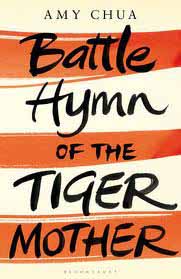

UK Book Cover

Could the virtual outcry against Amy Chua as a Tiger Mother be part of this resentment?

In addition, NEIU reports that statistics for Asian-American with HIV/AIDS shows that Asians have the lowest case rate in America with 4 per 100,000 compared to 58.2 per 100,000 for African-Americans, 10 per 100,000 for Hispanics and 6.2 per 100,000 for whites.

The U.S. National Library of Medicine/National Institutes of Health reported that Chinese have the lowest ATOD (alcohol, tobacco, and other drug use) rates in the United States.

Last, the teenage birth rate per 1,000 women 15 to 19 was three for South Korea, four in Japan and five for China — the lowest teen pregnancy rates in the world.

In the United States, that teenage birth rate was 53 per 1000 women 15 to 19.

The facts say Asian Tiger Mothers are better.

Discover more of Amy Chua on Superior Chinese Mothers

______________

Lloyd Lofthouse is the award-winning author of the concubine saga, My Splendid Concubine & Our Hart. When you love a Chinese woman, you marry her family and culture too.

If you want to subscribe to iLook China, there is a “Subscribe” button at the top of the screen in the menu bar.


Amy Chua on Superior Chinese Mothers

January 11, 2011

I’m sure that Amy Chua had no idea she was about to light a Baby Boomer fuse that would explode when she wrote her essay published in The Wall Street Journal about Why Chinese Mothers are Superior.

In 2000, Paul Begala, a political strategist for President Bill Clinton, wrote in Esquire, “The Baby Boomers are the most self-centered, self-seeking, self-interested, self-absorbed, self-indulgent, self aggrandizing generation in American history.”

Begala was right.

The Boomers also gave birth to the narcissistic, self-esteem generation.

Amy Chua’s memoir, Battle Hymn of the Tiger Mother went on sale today (January 11, 2011), and my wife and I went to the local Barnes and Noble and bought a copy.

Nancy (not her real name), who works for Barnes and Noble, told us of an experience she had substitute teaching in a girls P.E. Class. She said there were about 150 girls. Half were Asian and half were Caucasian.  When Nancy told them to sit and read or do what they wanted, the Asians took out books and studied. The Caucasians started to text, do makeup and gossip.

Studies show that the average American Boomer parent talks to his or her children less than five minutes a day and more than 80% never attend a parent-teacher conference. Boomer parents are so self-absorbed with other interests that TV, the Internet, video games and other teens raised many of their children.

However, when Chinese mothers come together, their conversations focus on their children and education, which explains why studies show Asian students have the lowest incidence of STDs, teen pregnancy, illegal drug use and the highest GPAs, graduation rates from high school and highest ratio of college attendance.

What do you think Boomer mothers talk about when they get together?

A close friend of mine, who isn’t Chinese, read Amy Chua’s essay and many of the comments attacking Chua for her tough stance as a mother. He said it is obvious that Chinese mothers love their children and American mothers don’t because love means sacrifice.

The vicious responses I have been reading on Blogs and in some book reviews are obviously a guilt reaction for not being good parents. The truth hurts.

Learn about Education Chinese Style

______________

Lloyd Lofthouse is the award-winning author of the concubine saga, My Splendid Concubine & Our Hart. When you love a Chinese woman, you marry her family and culture too.

If you want to subscribe to iLook China, there is a “Subscribe” button at the top of the screen in the menu bar.


Sex, Sex, Sex as Reported by “The China Law Blog”

January 3, 2011

The China Law Blog posted a piece in August 2009 that I became aware of recently titled “A Western Woman in China….Sex, Sex, Sex????!!!!

Dan of The China Law Blog mentions a post at Gina in Shanghai, another Blog. He summarizes Gina’s post with “Chinese view Western women to be like the women in “Sex in the city”.

Then he finishes his brief post with a question “How do you feel about attitudes toward sex in China?”

Actually, I don’t think I have an opinion on that topic.

After all, how others behave or think is not my problem to carry around like a burden, as Gina seems to be doing.


Does this episode of “Sexy Beijing” hosted by Sufei support the “Sex in the City” Stereotype Gina is talking about?

Then I clicked on the link that took me to Gina in Shanghai to read her longer post.

I discovered that Gina is from Palo Alto in the US, which isn’t far from where I live in the East Bay.

Reading her post, I sensed her frustration but also saw her inability to accept others for who they are and what they believe. From what I’ve learned, 85% of an individual’s personality is formed by the environment he or she grew up in and only 15% comes from genetics.

In fact, the multitude of environments in China are very different from the US, where most people grow up as if they live in a jar expecting the rest of the world outside the jar to learn how to act and think like them as if all Americans were the same–isn’t that a reverse stereotype?

In her conclusion, Gina wrote, “There are frustrations with the way we are treated differently, and that the way we look comes associated with really heavy assumptions about our personality, our behavior, our way of life, and even our country…”

When I finished reading Gina’s post, I thought how Americans do the same thing to the Chinese—stereotype them with heavy assumptions about their personalities, their behavior, their way of life and even their country.

Most of those assumptions are supported by American politicians and the Western media and of course maybe individuals such as Gina when she says, “At first, I found these statements funny, but this quickly became something that made me incredibly angry and defensive. As a woman who is quite proud of my independence and my personal choices, I hated being pigeonholed into this ‘morally degenerate’ category. But it seemed like a losing battle…”

That poses a question—is there a double standard when it comes to sex or is it because women and men are different genetically and they grow up in different individual environments?

Shatter your stereotype of China (if you have one) and learn about China’s Sexual Revolution

______________

Lloyd Lofthouse is the award-winning author of the concubine saga, My Splendid Concubine & Our Hart. When you love a Chinese woman, you marry her family and culture too.

If you want to subscribe to iLook China, there is a “Subscribe” button at the top of the screen in the menu bar.


The Last Empress Dowager

December 14, 2010

The Last Empress of China ruled the Qing Dynasty as a coregent after her husband, The Xianfeng Emperor died in 1861, and her son, The Tongzhi Emperor (1856 – 1875), was too young to rule China.

Technically, The Empress Dowanger Tzu Hsi (Cixi) wasn’t the last empress.

However, she was the last empress to rule China as a regent for her son then her nephew after her son died at 19.

Sterling Seagrave, the author of Dragon Lady, writes, “absurdly little was known about her life. The New York Times printed a long, error filled obituary calling her Tzu An, the title of her coregent who had died twenty-seven years earlier.”

Many current history texts have slandered the Dowager Empress Tzu Hsi (1835 – 1908) without much evidence as one of history’s most monstrous women—a ruthless Manchu concubine who seduced and murdered her way to the throne in 1861 to rule China through prevision, corruption and intrigue.

This is how many still think of Tzu Hsi.

She has been accused of murdering her son then years later her nephew, who died the day before she did.

Instead, her son may have died of syphilis because it was rumored he preferred prostitutes to his virgin concubines.

Some rumors claim that Tzu Hsi had her nephew poisoned, but Yuan Shikai may also have poisoned him. There is no evidence to support either theory.

How did the Tzu Hsi earn such a bad reputation? It seems that she earned this reputation similar to how today’s China has been smeared in the Western media.

To understand how this came about, I will make a comparison to Jayson Blair, a young reporter for the New York Times that wrote more than 600 articles for the newspaper. During his short career with the New York Times, Blair committed repeated “acts of journalistic fraud”, including stealing material from other papers and inventing quotes.

Blair’s fraud was revealed in 2003 while he still worked for the newspaper. Source: BBC News 

However, Jayson Blair was not the first reporter to commit “acts of journalistic fraud”.

Edmund Backhouse did the same writing about the Tzu Hsi at the beginning of the 20th century, and his lies and deceit wouldn’t be discovered until Sterling Seagrave was researching Dragon Lady decades later.

Backhouse’s journalistic fraud served as the foundation for most history texts that have slandered Tzu Hsi.

To do Tzu Hsi justice and to discover the truth, one should read Seagrave’s Dragon Lady, The Life and Legend of the Last Empress of China

To learn whom the real woman was we may want to consider what Robert Hart had to say about Hzu Hsi in his letters and journals.  Robert Hart arrived in China from Ireland in 1854. He returned to England in 1908.

For most of his stay in China, Hart was Inspector General of Chinese Maritime Customs and worked closely with the Imperial ministers and Manchu princes. Before returning to England, Hart met with the Dowager Empress in a private audience.

Hart referred to Tzu Hsi as “the Buddha” and later “the old Buddha” since she was a devout Buddhist and it is obvious that he thought of her with affection and admiration.

In fact, Hart, who is considered the Godfather of China’s modernization, at no time indicated in anything he wrote that Tzu Hsi was conspiratorial, sinister or manipulative. However, he did indicate that she was strong-willed and hot-tempered but she was clever and had ability.

Tzu Hsi died in 1908 a few weeks after Robert Hart left China. The Qing Dynasty collapsed in 1911.

Discover more of The Qing Dynasty (1644 – 1911)

______________

Lloyd Lofthouse is the award-winning author of the concubine saga, My Splendid Concubine & Our Hart. When you love a Chinese woman, you marry her family and culture too.

If you want to subscribe to iLook China, there is a “Subscribe” button at the top of the screen in the menu bar.


Modern Romance in China – Part 2/2

December 10, 2010

The segment of Al Jazeeera’s report on Maggie Gu’s “Romance Chinese Style” starts with the sound of violins at a wedding banquet.

The narrator says, “Chinese weddings today combine east and west both in customs and in costumes. However, the all-important wedding banquet must start before twelve to avoid bad luck.”

China’s open society is learning about love and romance.

However, it is also discovering the agony of divorce since in the last two decades the divorce rate in China has taken flight but is still far from the divorce rate in the US.

Divorce has become so common, that it led to a popular, award winning TV drama called called “Chinese-Style Divorce”, which is the story of a woman losing her husband due to jealousy. This program struck a chord with millions of Chinese viewers.

The producer/director of Chinese-Style Divorce went through a divorce the year before he started filming. Many in the production crew were also divorced.

China’s loss of love has also created opportunities in a new divorce industry leading to lawyers that specialize in divorce.

While Chinese laws have made divorce much easier, Chinese culture is still having a difficult time adjusting to the shock that comes with divorce.

Today, marriage in China is more than just sticking it out through hard times. These days young couples want harmony, happiness and romance, which means when marriage becomes torture there is no hesitation to divorce.

However, there are still differences between Chinese and US marriages. In China, many expect their new mate to show respect and support for parents. Chinese parents may also become involved in playing cupid for their children.

Return to Modern Romance in China – Part 1

______________

Lloyd Lofthouse is the award-winning author of the concubine saga, My Splendid Concubine & Our Hart. When you love a Chinese woman, you marry her family and culture too.

If you want to subscribe to iLook China, there is a “Subscribe” button at the top of the screen in the menu bar.