If you recall from Part 1, Hawaii was not a democracy modeled after today’s United States when Sun Yat-sen lived there from the ages of 13 to 17 [1879 – 1883].
In fact, when Sun Yat-sen lived in Hawaii, it was a kingdom ruled by a king and was a Constitutional Monarchy similar to but not the same as Great Britain at the same time.
It wouldn’t be until 1887, that the Hawaiian King Kalākaua was forced to sign the 1887 Constitution [after Sun Yat-senhad returned to China] of the Kingdom of Hawaii, which stripped him of any authority he had making him into a figurehead.
In addition, there was a property qualification in 1887’s Hawaiian Constitution for voting rights similar to what the Founding Fathers wrote into the US Constitution in 1776, and resident whites, who owned the property since Asians were not allowed to own property or could not afford to buy it, were the only ones allowed to vote.
Meanwhile, the American Chinese Exclusion Act of 1882 excluded skilled and unskilled Chinese from entering the United States for ten years under penalty of imprisonment and deportation. In the US at this time, many Chinese were relentlessly beaten just because of their race.
Therefore, when Sun Yat-sen lived in Hawaii as a Chinese teenager, it was not a republic or a democracy and he was a second-class person barred from entering the United States.
The structure of the political system in the United States was also dramatically different from the one America has today.
In 1790, the Constitution explicitly says that only “free white” immigrants could become naturalized citizens.
In 1848, Mexican-Americans were granted U.S. Citizenship but not voting rights.
In 1856, voting rights were expanded to all white men and not just property owners.
In 1868, four years after the end of the American Civil War, former slaves were granted citizenship, however only African-American men were allowed to be citizens and the right to vote was left up to each state.
In 1870, the 15th Amendment was passed saying the right to vote could not be denied by the federal or state governments based on race [this still did not include women], but some states restricted the right to vote based on voting taxes and literacy tests.
In 1876, the US Supreme Court ruled that Native Americans were not citizens and could not vote.
In 1882, the Chinese Exclusion Act barred people of Chinese ancestry from naturalizing to become U.S. citizens.
In 1920, the right to vote was extended to women when the 19th Amendment passed. Source: U.S. Voting Rights Timeline
What do you think Sun Yat-sen learned from these facts about a democracy?
Lloyd Lofthouse is the award-winning author of The Concubine Saga. When you love a Chinese woman, you marry her family and culture too. This is the love story Sir Robert Hart did not want the world to discover.
Subscribe to “iLook China” Sign up for an E-mail Subscription at the top of this page.
My wife and daughter returned from China last summer with a crate of Chinese movies on DVDs—there wasn’t one American movie in the mix and many do not have English subtitles.
Therefore, it is strange that the one Chinese film that impressed me the most (so far) was one I discovered at a local Half Priced Books. The movie was Life Show (2002) adapted from a book by Chinese author Chi Li.
Since the late 1980s, Chi Li has been considered a pioneer of “new realism” and her work depicts ordinary life in China so critics have identified her work with the Western school of “existentialism”.
In fact, it was the “ordinary element” of her work that I saw in the film which captured my curiosity to learn more. Since I’ve traveled to China several times since 1999 and not with tour groups, I’ve visited streets similar to the ones that appear in the film. I’m sure most foreign visitors to China that visit on packaged tours do not see the ordinary side of China as I have.
My wife says Chi Li is one of her favorite Chinese authors. The first time I was introduced to Chi Li’s work was through Life Show, which tells the story of Lai Shuangyang, a restaurant owner played by Tao Hong. Shuangyang’s life is busy dealing with family and business but she is lonely until one of her long-time customers, played by Tao Zeru, shows a romantic interest in her.
Zeru plays a middle-aged businessman, and Shuangyang takes a risk and the two strike up a romance that ends when she discovers he is the developer behind the modernization of the area where she has her restaurant. He offers to take care of her but it is obvious that Shuangyang values her personal freedom and independence and in a fiery scene, she breaks up with him.
Lai Shuangyang’s life is filled with complications. Her younger brother Jiuju is a drug addict in jail/rehab. The woman that loves Jiuju is Mei, who works for Shuangyang in her restaurant. Mei attempts suicide because Jiuju is not interested in her, and then Shuangyang arranged a marriage for Mei to another man, who is mentally ill.
Her sister in law, Xiaojin, is trying to regain the Lai family’s home, which was given to a neighbor during the Cultural Revolution. In addition, Shuangyang is at risk of losing her restaurant due to a redevelopment project in Wuhan.
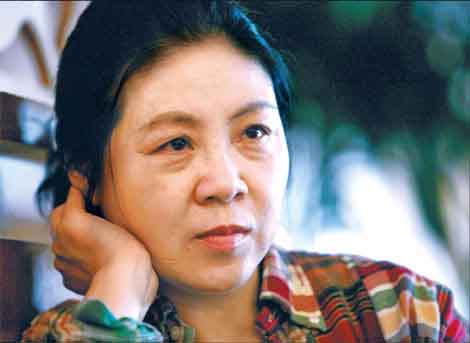
Chi Li, the author of Life Show, is one of China’s best-known writers and several of her novels have been translated into French by publisher Actes Sud.
Chi Li was born 1957 in Wuhan, Hubei province, graduated from the Chinese Language Department of Wuhan University and then worked as an editor of a literary magazine called Fang Cao (Fragrant Grass).
Chi Li rarely travels and avoids “literary circles”. “If my unsociability is thought to be a flaw, I admit I’m a person with a flaw,” Chi has said.
Chi Li, Chinese author of "Life Show"
During the Cultural Revolution, like millions of other young Chinese, she was sent to the countryside to become an “educated youth”. Later she studied medicine and practiced for five years before becoming a teacher.
Today, she is a member of the National People’s Congress (NPC), which provides an opportunity to discuss politics with other representative of the NPC providing an understanding/education of China’s policies and political atmosphere.
Chi Li’s work relates to love, marriage, divorce and extramarital affairs of contemporary Chinese life, while her characters are imbued with common human traits such as ambition, deceit, jealousy, and sexual desire. Her work, Comes and Goes, was a story of extramarital affairs occurring in Wuhan and became a TV series of same name.
The city of Wuhan comes alive in her work—enough to be considered a character. Although many of her novels have been translated into French, there are no English translations yet, which is a shame.
Lloyd Lofthouse is the award-winning author of The Concubine Saga. When you love a Chinese woman, you marry her family and culture too. This is the love story Sir Robert Hart did not want the world to discover.
Subscribe to “iLook China” Sign up for an E-mail Subscription at the top of this page.
Pub Med Central provides a better history of the one-child policy.
“In 1979, the one-child family policy was developed and implemented in response to concerns about the social and economic consequences of continued rapid population growth,” Pub Med said, and, “implementation was more successful in urban areas than rural areas.”
Pub Med says, “It was hoped that third and higher order births could be eliminated and that about 30% of couples might agree to forgo a second child… In some of the largest and most advanced cities like Shanghai, sizeable proportions of couples already chose to have only one child (regardless of the law).
“As a result, it was not long before 90 percent of couples in urban areas were (easily) persuaded to restrict their families to a single child.”
However, Pub Med says, in rural areas of China the opposite happened, and 90 percent of women with one child went on to have a second (regardless of the law) and there wasn’t much the Communist Party could do to stop them.
AP’s Louise Watt writes, “Under China’s one-child policy in place for the last three decades to control population growth, couples can be penalized for having more than one child. In Beijing, the penalty is a one-off fee 3-10 times the city’s average income, a maximum of 250,000 yuan ($40,000).”
Watt also tells us that among the 20,000 Chinese with at least 100 million yuan ($15 million) 27 percent have already left China and 47 percent are considering it, and they want to leave so they can have more children on the cheap and buy land that does not belong to the government.
These wealthy Chinese Louise Watt writes of may be surprised to discover that if the U.S. wants to build a school, park, freeway or shopping center, and your house is in the way, it will be bought and bulldozed.
The law for this is called Eminent Doman and 60 Minutes at CBS Newsreported on possible abuses of this in the United States in February 2009. Rebecca Leung of CBS News wrote, “But did you know the government can also seize your land for private use if they can prove that doing it will serve what’s called ‘the public good’?”
In addition, it would be interesting to discover if some or all of the wealthy Chinese claiming to have left China to have more children and buy a home left for other reasons they are not talking of.
In The Danger of False Truths, I mentioned that thousands of corrupt Chinese officials stole more than $120-billion U.S. and fled overseas—and the U.S. was a top destination.
If so, the real reason many of these “wealthy” Chinese left China may have been to avoid going to prison or being executed.
In addition to Eminent Domain, if an American cannot pay the annual property tax or income tax in the United States, the house will be lost to the government. I estimate that the property tax I paid since I first owned a home in 1973 would have paid the penalty for a dozen extra children in China.
In fact, due to property tax, no one really owns their homes in America and everyone is just a tenant, and the U.S. Government is the landlord. In China, they call it like it is, while in the US, most people believe in fairy tales.
And if you were worth $15 million dollars and wanted a second or third child, $40,000 a child would not dent that fortune. In addition, in China when someone buys a house for that 70-year lease, the property tax is paid only once at the time of the purchase and currently there is no law that says you have to pay any property tax again unless it is an investment property.
When these rich Chinese arrive in the US and buy a million dollar house, they will be paying property tax annually. Taxes on land and the buildings on it are the biggest source of revenue for local governments.
In California, for example, property tax for a million dollar house costs about $10,000 a year, and forty years of property tax would cost about a half million dollars, which is much more than $40,000 for the second child and another $40,000 for the third child.
Maybe Louisa Watt should have also mentioned that U.S. citizenship is for sale for foreign millionaires and the details may be found at All Voices.com, and most Americans could not afford this legal bribe (sorry, I meant deal).
In fact, there’s a lot about China’s one-child policy that Louise Watt isn’t revealing, and what she writes may have to do with America’s busy-body, do as I say morality, which interferes as often as possible in the domestic philosophies and affairs of other countries—something China does not do.
For decades, China’s one-child policy has been criticized in America and/or the West mostly by evangelical, fundamentalist Christians that represent one of American’s squeaky wheels with a political agenda to force their beliefs on others.
However, what these critics do not know may shock them, but I doubt if it will deter their misguided zeal.
In the September/October 2011 issue of Foreign Policy magazine, Phillip Longman wrote The World Will Be More Crowded With Old People, and said, “Another related megatrend is the rapid change in the size, structure, and nature of the family. In many countries such as Germany, Japan, Russia, and South Korea, the one-child family is now becoming the norm (without a law)… Today about one in five people in advanced Western countries, including the United States, remains childless.”
AP’s Louise Watt also doesn’t tell us the one-child policy does not apply to the hundred million people in China that belong to one of the fifty-six minorities or many of the Han Chinese living in rural China where most Chinese don’t pay property tax, rent or a mortgage payment since the land is owned collectively and may not be sold.
Since minorities in China are a small segment of the population, China’s government practices flexibility with the minority birth rate in order to keep minorities an important part of China’s culture.
For example, Tibetans may not live the feudal, nomadic lifestyle with the 35-year lifespan they once had under the Dalai Lama (the average lifespan in Tibet today is more than 60 without the Dalai Lama), which they had before Mao sent the People’s Liberation Army (PLA) into Tibet in 1950.
Isn’t it horrible how the Tibetans were forced to give up that shorter average lifespan and feudal servitude?
However, as a minority, Tibetans may have as many children as they want and the penalty Louise Watt writes of does not exist for them.
We often hear of the Uighur Muslims since this minority has an Islamic separatist movement in the northwest near Afghanistan where the US is fighting a war against a similar insurgency, but the Uighurs are a minority so the one-child policy also does not apply them, and they are not the only Muslims in China.
The Hui are unique among the fifty-six officially recognized minorities of China in that Islam is their only unifying identity. They do not have a unique language as the other minorities do and often intermarry with Han Chinese.
In fact, many live outside the Hui autonomous region. Since the Hui are considered a minority, the one-child policy also does not apply to them.
The Chinese government says if it weren’t for the one-child policy, there would be another four-hundred million mouths to feed and provide shelter for. Instead of 1.3 billion people in China, there would be almost 2 billion—more than six times the population of the US, and China cannot grow crops on about 90% of its land.
Chinese law allows married couples in Shanghai that are both the only child of their parents to have two children even if they are Han Chinese.
To make sure these married couples are aware of this exception, China provides support from government run family planning centers that check on women’s health and inform them of their rights and responsibilities to have more than one child.
The Shanghai government encourages married couples eligible to have more than one child to do so, which, in Shanghai, means most married couples.
The Shanghai Family Planning Commission first promoted this policy in 2009. The reason for this campaign lies in Shanghai’s population demographics.
Because of the one-child policy, Shanghai has been particularly hard hit by an age disparity, and 22 percent of the citizens of Shanghai are over sixty and these numbers are expected to grow.
Xu Xihua, the director of Shanghai’s Aging Development Center says that by adjusting the one-child policy in Shanghai, this disparity in ages can be partially reduced and giving couples an opportunity to have two children is part of the plan.
However, the central government stresses it is not abandoning its family planning policies or its control over the number of births. Fear of overpopulation and potential famines remains high in a country that has a history of droughts, floods and famines, which is something the U.S. has not yet experienced in its brief history.
France 24 International Newsalso reported how one Chinese couple wanted to have more than one child and the couple took advantage of loopholes in the one-child policy to have three.
The mother’s first child was a boy, and she was desperate to have a girl.
Since fines are less for a second child if delivered in a remote rural province, the couple moved south.
However, the mother discovered she was pregnant again soon after the birth of the second child, which was a girl, and the doctor told her that because of health reasons she couldn’t have an abortion.
And recently, authorities in China’s most populous province have asked Beijing to ease the one-child policy.
In addition,wealthy Chinese businessmen, television and movie stars often avoid the one-child policy since they have money to pay the fine Louise Watt writes of in her AP piece, and ten percent of rich Chinese have an average of three children and this practice is spreading among the upper-middle class. Since they stay in China, these wealthy Chinese avoid paying annual property tax in America.
Peng Xizhe, dean of social development and public policy at Fudan University, says “In the Maoist era everyone was controlled by his work unit. It’s over now. Many workers are independent. It becomes more and more difficult for the government to pressure people to having only one child.”
In fact, according to some experts, China will adopt a two-child policy in several years.
However, unexpected problems besides an aging population may have developed from the one-child policy, which is explained by a NPR All Things Considered report by Louisa Lim’s Lightning Divorces Strike China’s ME Generation.
Lim says Beijing has the highest divorce rate in China with 39 percent of all marriages ending in a split.
One Beijing woman, Cheng, tells Lim of her six-month marriage that ended as fast as it started. Cheng blamed the divorce on belonging to the generation of spoiled singletons (one-child), known as the post-1980’s generation.
Dr. Perry, a professor of economics and finance in the US, agrees that the upsurge in China’s divorce rate is because of the selfish and narcissistic generation of spoiled one-child children in China (have you already forgotten that many of these urban parents decided to have only one child before or in spite of the law).
But hold on, there may be another explanation why Beijing’s divorce rate is soaring. Eight years ago, a married couple needed permission from their work unit to divorce. Today, couples have the freedom to divorce in China without asking.
Although it may be difficult to link China’s changing divorce rate to the one-child policy, there is another outcome that cannot be denied.
China may have cut off a foot to save its stomach from starvation.
Studies predict that China will soon be short 24 million wives. It doesn’t matter that it is illegal in China to take a test for non-medical reasons that determines the sex of the fetus.
Since China’s culture traditionally prefers boys to girls, many parents go to underground private clinics to find out what the sex of the fetus is. If it is a girl, many terminate the pregnany with an illegal abortion.
The results is a growing shortage of women leading to illegal forced marriages and prostitution (sex slaves), which is a challenge for the police and courts to deal with.
After you learn more of the details of China’s one-child policy, you discover that it was a law without many teeth and didn’t deserve the criticism it received, which leads to the conclusion that the American and/or West’s reaction is due mostly to racist Sinophobia.
______________
Lloyd Lofthouse is the award-winning author of The Concubine Saga. When you love a Chinese woman, you marry her family and culture too. This is the love story Sir Robert Hart did not want the world to discover.
To subscribe to “iLook China”, look for the “Subscribe” button at the top of the screen in the menu bar, click on it then follow directions.
After writing the post about Detective Dee, I decided to combine the four-part series of Emperor Wu Zetian (624 – 705 AD), who was the only woman in China’s history to be an emperor.
Her rise and reign has been criticized harshly by Confucian historians but after the 1950s has been viewed in a better light.
Emperor Zetian ranks alongside Cleopatra—the last Pharaoh of Egypt, Eleanor of Aquitaine, Queen Isabella of Spain, Queen Elizabeth I of England, Catherine the Great and Queen Victoria.
However, In 637 AD at fourteen, Zetian did not have the official status of a court concubine. She was a serving girl in the Imperial palace.
The second and third emperors of the Tang Dynasty were her husbands and seventeen of the emperors that ruled after her second husband died were her children and their children. Empress Zetian gave birth to four sons and two daughters.
After her first husband Emperor Taizong died, she became a nun in Ganye (Buddhist) Temple where she stayed for several years before being chosen at the age of twenty-seven to be a low ranking wife of Emperor Gaozong, the second Tang emperor’s son.
Historical records say Zetian was a stunning beauty and that because of this Emperor Gaozong was attracted to her, but some scholars say it was her intelligence that won him over.
One year after being married to Gaozong, Zetian outperformed the other wives and concubines to become the Empress.
After becoming Empress, she advised Gaozong on many political issues, which benefited the empire. Eventually, she earned the title of “Queen of Heaven”.
When Emperor Gaozong became seriously ill, he named Zetian to deal with the affairs of state in his name. He died in 683 AD, and Zetian’s third son Lixian became emperor.
However, a month later, Zetian, as the Empress Dowager, removed Lixian from power. Then she turned to her fourth son, but at first, he refused and then eventually accepted the title and became known as Emperor Tang Ruizong.
Zetian believed her sons were weak, so she continued to control the affairs of state as the Dowager Empress.
After Gaozong’s death, she funded the carving of the 17 meter high (almost 56 feet) Lu Shena Buddha, the largest rock carved Buddha in the Longmen Grotto.
It is believed that the Buddha’s face is modeled after Zetian, since she funded the project.
Although there are rumors and gossip that Zetian had many lovers, it is obvious from her age when Emperor Gaozong died that the stories are exaggerations encouraged by her political enemies and the imaginations of future scholars of history texts and authors of fiction, such as the Detective Dee movie.
Mandarin
After eight years of ruling the empire without officially being the Emperor, Zetian made a shocking decision. In 690 AD, she changed the Tang Dynasty into the Zhou Dynasty and declared herself an Emperor when she was age sixty-seven.
While Zetian ruled the Tang Dynasty, the economy, culture, social and political affairs prospered. She was also a talented military leader who reformed the army. After the reforms, without leaving her palace, she managed military conflicts with rival states and defeated them.
Under her leadership, the empire expanded and grew stronger.
Near her death in 704 AD, Zetian returned the throne to her third son Lixian, who became Emperor again.
Some scholars claim that she became a Buddhist for political reasons, but she had many Buddhist temples built and sculptures of Buddha made, and these projects were expensive.
However, as far as affairs of state were concerned, she did not allow her Buddhist beliefs to influence her decisions. For example, she promoted officials that earned the right through merit. There is no evidence of favoritism. In fact, officials convicted of failing in their duties to the people were punished and often beheaded.
Mandarin
She also did not rule as a tyrant. Before making decisions, she listened to all opinions on an issue. Today, historians study her ruling style, and the evidence says her political decisions were wise ones.
During the fifty years that Zetian ruled the Tang Dynasty as Dowager Empress and then as an Emperor, China’s borders expanded north, south and west and she did not lose any of the territory gained.
She understood that with the people’s support, political stability was guaranteed. When there were tragedies such as floods, the dynasty quickly offered relief so recovery was swift.
Although imperial family members of the Tang Dynasty staged revolutions, most of the rebellions were suppressed in a few months.
While Zetian ruled China, the role of women in society changed drastically and due to her, feminism existed in China more than 1,300 years ago. Women didn’t have to worry about the clothing they wore. They were free to explore the arts such as writing poetry. Women rode horses, played Chinese chess, wrote and played music and practiced archery as men did.
Even after Zetian was forced to retire at age eighty, there were officials that called for her return. The historical records show that the Tang emperors that followed her were not as wise or trusting as she was.
There is a collection of fifty-eight of Zetian’s poems. Most of her poetry was written for temple ceremonies and some for travel.
She also wrote many books and collected art. For example, Zetian edited the Book of Agriculture, which influenced agricultural development during the Tang Dynasty.
In fact, there is evidence that Zetian respected decisive men such as her Prime Minister De Renji (represented by the fictional Detective Dee in the recent epic Chinese movie), and she often talked about Li Shimin, her first husband, with respect.
After her death in 705 AD, her third son, Lixian, was removed as emperor due to a plot.
In 710 AD, Zetian’s grandson, Li Longji, defeated a rebellion that intended to take over the dynasty and returned his father to the throne. Eventually, Longji would become Emperor Tang Xuanzong, and under his rule the Dynasty prospered again.
However, when Yuanzong grew old, he neglected his duties and spent too much time with his favorite concubine. During those years, the officials became corrupt and this led to the Shi Rebellion, which his son, the next emperor, suppressed.
After that, the eunuchs gained too much power, and the next fourteen emperors from 756 to 907 AD were weak leading to the eventual collapse of the Tang Dynasty.
The historical evidence says Emperor Wu Zetian, as an ancient feminist, should have earned praise since she did a better job as Emperor than most of the men that ruled the Tang Dynasty (618 – 907 AD) did.
_______________
Lloyd Lofthouse is the award-winning author of My Splendid Concubine [3rd edition]. When you love a Chinese woman, you marry her family and culture too. This is the lusty love story Sir Robert Hart did not want the world to discover.
Subscribe to “iLook China”!
Sign up for an E-mail Subscription at the top of this page, or click on the “Following” tab in the WordPress toolbar at the top of the screen.
The first time I learned of the Emperor Wu Zetian, who was a woman, was when I wrote a four part series of her starting with Wu Zetian, China’s Female Emperor – Part 1, October 9, 2010.
In fact, while researching Emperor Wu, I learned that under her rule, the economy, culture, social and political affairs prospered. She was also a talented military leader who reformed the army. After the reforms, without leaving her palace, she managed victorious military conflicts with rival states.
If you decide to see the movie, you will discover that the film depicts her as a brutal, scheming tyrant. Historically, China’s historians often demonize powerful women. In reality, the facts say that she was no worse than most male emperors were and was more talented, open-minded in addition to being an early feminist.
The last time I attended the Los Angeles Times Festival of Books at UCLA, I had an opportunity to talk to a film agent that said Hollywood wasn’t making epic blockbusters anymore because they cost too much.
Consider that the 2004 Alexander the Great cost $155 million to produce and the gross box office was about $164 million and in 2007, Pirates of the Caribbean: At World’s End cost $300 million to produce.
The film was based on the Chinese folk hero Di Renjie, popularized in the West by a series of detective novels written by Robert Van Gulik (1910 – 1967), who called him “Judge Dee“.
When I went to see the film, I discovered that it was an action mystery of epic proportions with classic palace intrigue that rivaled a Hollywood epic, which today would cost twenty times the estimated budget I mentioned earlier.
Tsui Hark Director of “Detective Dee” interviewed by Film Steve 3
I enjoyed the film and walked away thinking that anyone interested in a glimpse of how powerful China was thirteen hundred years ago, this lavish spectacle provides a hint of that former time.
The mystery that Dee solves is the spontaneous combustion of two high-ranking court officials that exploded in flame when exposed to sunlight. Do not expect the ending to be the stereotypical Western conclusion.
These ‘murders’ take place before the coronation of Wu Zetian as China’s first female emperor. Detective Dee, the films hero, is based on a real person but there is a lot of fiction and fantasy mixed into this epic film.
The real Detective Dee was originally Duke Wenhui of Liang, an official of the Tang Dynasty and of Emperor Wu Zetian’s Zhou Dynasty. He was one of the most celebrated officials of Wu Zetian’s reign.
Lloyd Lofthouse is the award-winning author of The Concubine Saga. When you love a Chinese woman, you marry her family and culture too. This is the love story Sir Robert Hart did not want the world to discover.
To subscribe to “iLook China”, sign up for an E-mail Subscription at the top right-hand side of this page and then follow directions.


 Posted by Lloyd Lofthouse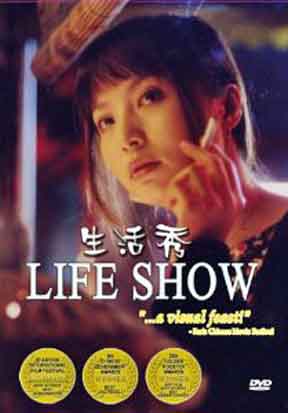

 iLook China