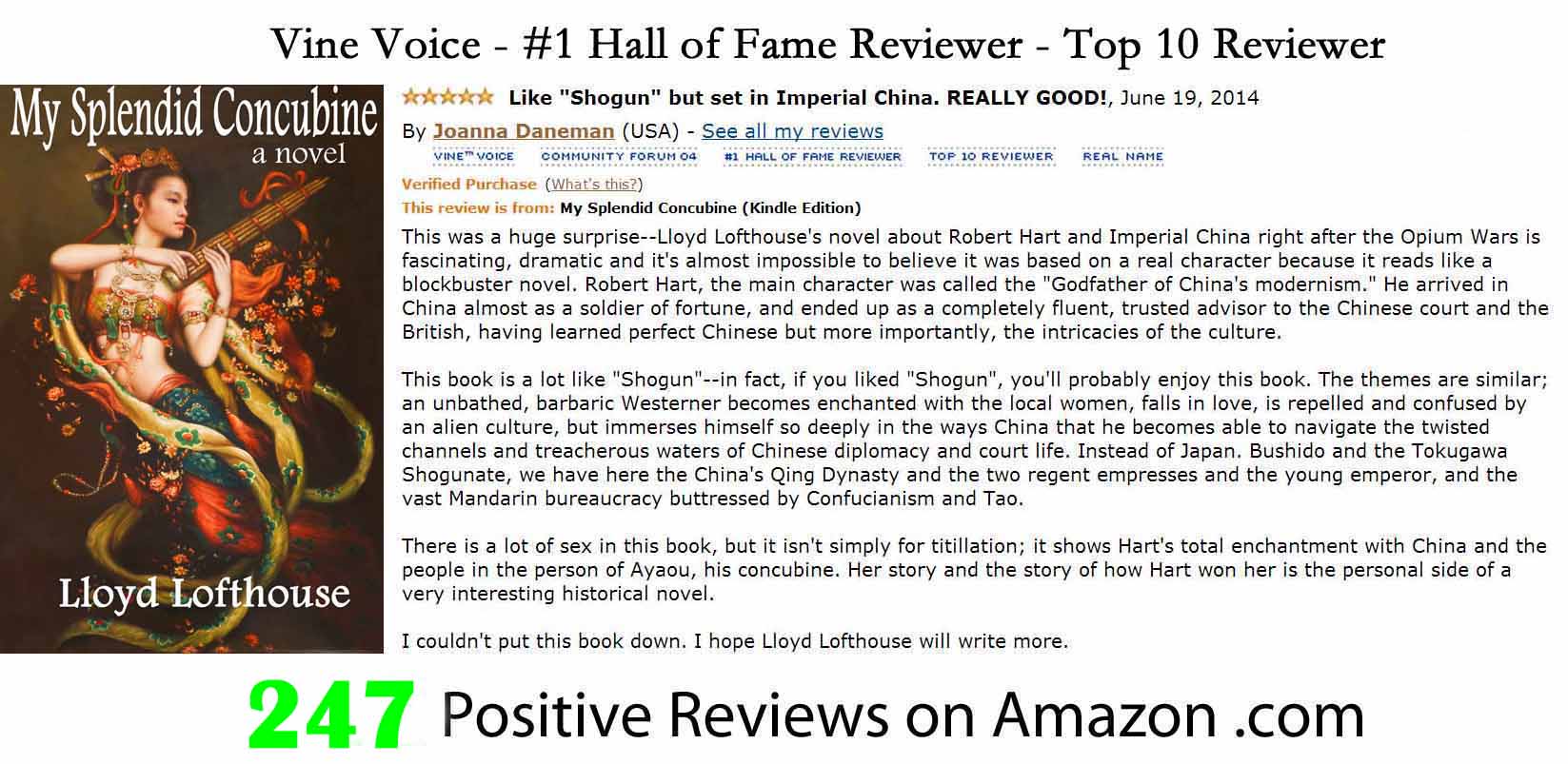
The Art and Poetry of the Tang Dynasty

March 28, 2018

Stone Telling.com tells us, “Of the approximately 2,200 Tang poets, many were women, including China’s only female emperor, Empress Wu Zetian, but the works of female poets overall were not popular until the mid-to-late Tang Period (mid-700s A.D. to 907 A.D.), several generations after Empress Wu’s reign. At this time, women enjoyed more freedom than women of the following dynasties, especially those who were educated and of the upper class.”

One of Wu Zetian’s poems was about an imperial visit to a park.

Tomorrow morning I will make an outing to Shanglin Park,
With urgent haste I inform the spring:
Flowers must open their petals overnight,
Don’t wait for the morning wind to blow!

Song Zhi-wen, another Tang Dynasty poet, was found guilty of accepting bribes. In one of his poems he revealed that he had good reason to fear returning home from exile because when he did, he was executed.

Crossing the Han River
Song Zhi-wen (656 – 712 A.D.)

No news, no letters – all winter, all spring —
Beyond the mountains.
With every homeward step more timid still
I dare not even inquire of passerby.

Another example of Tang Dynasty poetry is The View in Spring by Du Fu (712 – 770 A.D.).

A kingdom smashed, its hills and rivers still here,
Spring in the city, plants and trees grow deep.
Moved by the moment, flowers splash with tears,
Alarmed at parting, birds startle the heart.
War’s beacon fires have gone on three months,
Letters from home are worth thousands in gold.
Fingers run through white hair until it thins,
Cap-pins will almost no longer hold.

(Owen, Stephen, trans. An Anthology of Chinese Literature: Beginnings to 1911. New York: W. W. Norton & Co., 1996, p. 420. )

The next poem is one of many that Yuan Zhen (779 – 831 A.D.) wrote for his dead wife, who he married when he was poor. She did not live long enough to share his fame and fortune.

In former years, we chatted carelessly of death and what it means
to die.
Since then, it’s passed before my very eyes.
I’ve given almost all your clothes away
But cannot bear to move your sewing things.
Remembering your past attachments, I’ve been kind to maids you
loved.
I’ve met your soul in dreams and ordered sutras sung.
Certainly, I know this sorrow comes to all
But to poor and lowly couples, everything life brings is sad.

The art of the Tang Dynasty (618-907 CE) explored new possibilities in materials and styles. For instance, Tang Tri-colored Pottery thrived in the Tang Dynasty over 1300 years ago. Its glaze mainly features the three colors of yellow, green and white, but “tri-color” does not only refer to these three colors but many others.

Lloyd Lofthouse is the award-winning author of My Splendid Concubine, Crazy is Normal, Running with the Enemy, and The Redemption of Don Juan Casanova.
Where to Buy

Subscribe to my newsletter to hear about new releases and get a free copy of my award-winning, historical fiction short story “A Night at the Well of Purity”.

About iLook China


China’s Feminist Emperor Wu Zetian

March 27, 2018

Emperor Wu Zetian (624 – 705 AD) of the Tang Dynasty (618 – 907 AD) ranks alongside Cleopatra—the last Pharaoh of Egypt, Eleanor of Aquitaine, Queen Isabella of Spain, Queen Elizabeth I of England, Catherine the Great, and the British Empire’s Queen Victoria.

We Zetian was the only woman in China’s history to become an emperor, and her rise to power and reign as an emperor has been unjustly and harshly criticized by Confucian historians. She is one of the most remarkable women in Chinese and world history.

The second and third emperors of the Tang Dynasty were her husbands and seventeen of the emperors that ruled after her second husband died were her children and their children.

Historical records claim Zetian was a stunning beauty and that because of this Emperor Gaozong was attracted to her, but some modern scholars think it was her intelligence that won him over.

The evidence speaks for itself. While she ruled the Tang Dynasty, the economy, culture, social and political affairs prospered. She was also a talented military leader who reformed the army. After the reforms, without leaving her palace, she managed military conflicts with rival states and defeated them, and under her leadership, the empire expanded and grew stronger. She promoted officials that earned the right through merit. There is no evidence of favoritism. In fact, officials convicted of failing in their duties to the people were punished and often beheaded.

Zetian clearly respected decisive men such as her Prime Minister De Renji, and she often talked about Li Shimin, her first husband, with respect.

She also did not rule as a tyrant. Before making decisions, she listened to all opinions on an issue. Modern historians have studied her ruling style, and the evidence reveals that her political decisions were wise ones.

During the fifty years that Zetian ruled the Tang Dynasty as Dowager Empress and then as an Emperor, China’s borders expanded north, south, and west, and she did not lose any of the territory gained.

She also wrote many books and collected art. In addition, she edited the Book of Agriculture that  influenced agricultural development during the Tang Dynasty.

The historical evidence also reveals that as an ancient feminist, she should have earned praise since she did a better job as Emperor than most of the men that ruled China during the Tang Dynasty.

It also helped that the Tang Dynasty was a time of relative freedom for women. Women did not bind their feet or lead submissive lives. Binding feet did not start until the Sung Dynasty (960 – 1279 AD).

Lloyd Lofthouse is the award-winning author of My Splendid Concubine, Crazy is Normal, Running with the Enemy, and The Redemption of Don Juan Casanova.

Where to Buy

Subscribe to my newsletter to hear about new releases and get a free copy of my award-winning, historical fiction short story “A Night at the Well of Purity”.

About iLook China


The Tang Dynasty: Part 3 of 3

March 23, 2018

The Tang Dynasty did not discriminate against ethnic groups.  All were treated the same, and people from minority groups held positions of great importance. In fact, members of minorities became prime ministers, generals, and members of the imperial garrison.

And the mothers of several Tang emperors were not from the Han majority.

Tang Emperor Taizong handled relationships with ethnic minorities skillfully. One motto of his was, “In the past, Chinese emperors emphasized the Han people at the expense of minority groups, but I believe they are all from one family so they support me.”

The ethnic minorities in northwest China revered Emperor Taizong and called him Tian Kehan. Kehan means “emperor” and Tian Kehan means “the son of Heaven“.

In October 1970, archeologists discovered more than a thousand Tang artifacts. One was a silver kettle featuring dancing horses with cups in their mouths, which matched the historical record for Emperor Taizong’s seventieth birthday.

Poetry flourished. Although the Tang Dynasty lasted less than 300 years, more than 50,000 poems had been produced. All of them have been published today in one collection of Tang poetry.

Then there were the developments and inventions. Total History reports, “One of the authors of medicine in the Tang period identified that people who suffer from Diabetes had excessive sugar levels in the urine. … the use of gun powder in weapons … the first gas cylinders to hold gas, made of bamboo … air conditioning to cool rooms in the imperial palace … the invention of porcelain.” This is just a sample.

Return to Part 2 or start with Part 1

Lloyd Lofthouse is the award-winning author of My Splendid Concubine, Crazy is Normal, Running with the Enemy, and The Redemption of Don Juan Casanova.

Where to Buy

Subscribe to my newsletter to hear about new releases and get a free copy of my award-winning, historical fiction short story “A Night at the Well of Purity”.

About iLook China


The Tang Dynasty: Part 2 of 3

March 22, 2018

The Tang Dynasty demonstrated respect for all foreign religions, and it was during this time, Christianity was introduced to China.

The first Imperial family of the Tang Dynasty was a military family in Northwest China for generations and they made Taoism the national religion.

After the first Tang emperor, Taoism was removed as the national religion and all religions were treated equal, and this benefitted Buddhism.

In 1987, archeologists discovered an underground temple/palace below the Famen Temple that had been built and sealed during the Tang Dynasty and found a solid-gold pagoda and inside was a finger bone of the founder of Buddhism, Sakyamuni.

The seventeen-hundred year-old Famen Temple was built during the Eastern Han Dynasty. To date, this is the largest underground Buddhist temple found in China.

Although China is known as the home of tea, it wasn’t until the Tang Dynasty that drinking tea became part of the culture when the Chinese also invented noodles.

A popular past time for both men and women during the Tang Dynasty was playing polo, which had been introduced from Persia.

Art, music and dance flourished in the Tang capital.  The political flexibility of the Tang Dynasty promoted social tolerance leading to stability.

Continued in Part 3 on March 23, 2018, or return/start with Part 1

Lloyd Lofthouse is the award-winning author of My Splendid Concubine, Crazy is Normal, Running with the Enemy, and The Redemption of Don Juan Casanova.

Where to Buy

Subscribe to my newsletter to hear about new releases and get a free copy of my award-winning, historical fiction short story “A Night at the Well of Purity”.

About iLook China


The Tang Dynasty: Part 1 of 3

March 21, 2018

When a Chinese dynasty ended, there was usually chaos, war, and anarchy among rival factions.

For instance, after the collapse of China’s last Dynasty, the Qing in 1911, chaos, anarchy, warlords, rebellion and World War II tore at the fabric of China until 1949 when the Chinese Communists under Mao won the long Civil War.

After the Han Dynasty collapsed, a long period of instability followed until the Sui Dynasty that survived for 38 years when the last emperor of the Sui yielded the throne to Emperor Gaozu of the Tang Dynasty.

The early Tang emperors built an empire that pushed China’s boundaries to their farthest existence and a culture whose achievements would profoundly influence all Asia. This resulted in a thriving economy with complex international ties creating one of the richest, strongest and most sophisticated states in world history.

During the Sui (589-617) and Tang Dynasties, China went through a period of cultural and spiritual development.

The country’s ethnic groups along with Confucianism, Buddhism and Taoism coexisted peacefully with foreign religions such as Islam.

Literature and the arts developed more than before. According to Tang Dynasty records, contact was maintained with more than 300 countries and regions across the known world, so the Silk Road was also known as the Envoy Road.

People from countries such as Japan, Korea, and India as well as Tehran came to China.

Many foreigners had positions in the central government of the Tang Dynasty, and they served both as civil officials and military officers.

Continued in Part 2 on March 22, 2018

Lloyd Lofthouse is the award-winning author of My Splendid Concubine, Crazy is Normal, Running with the Enemy, and The Redemption of Don Juan Casanova.

Where to Buy

Subscribe to my newsletter to hear about new releases and get a free copy of my award-winning, historical fiction short story “A Night at the Well of Purity”.

About iLook China