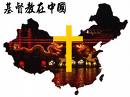
Lin Yutang Explains Christianity in China

April 27, 2010

“For most Chinese the end of life lies not in life after death, for the idea that we live in order to die, as taught by Christianity, is incomprehensible, nor in Nirvana, for that is too metaphysical, not in the satisfaction of accomplishment, for that is too vainglorious, nor yet in progress for progress’ sake, for that is meaningless. The true end, the Chinese have decided in a singularly clear manner, lies in the enjoyment of a simple life, especially the family life, and in harmonious social relationships.

“The Chinese are a nation of individualists. They are family-minded, not social-minded… It is curious that the word ‘society’ does not exist as an idea in Chinese thought. In the Confucian social and political philosophy we see a direct transition from family, ‘chia’, to the state, ‘kuo’, as successive stages of human organization …

Lin Yutang

“The Chinese, therefore, make rather poor Christian converts, and if they are to be converted they should all become Quakers, for that is the only sort of Christianity that the Chinese can understand. Christianity as a way of life can impress the Chinese, but Christian creeds and dogmas will be crushed, not by a superior Confucian logic but by ordinary Confucian common sense. Buddhism itself, when absorbed by the educated Chinese, became nothing but a system of mental hygiene, which is the essence of Sung philosophy.” Source: My Country and My People, Lin Yutang. Halcyon House, New York. 1938. Pgs 94; 101; 103; 172, and 108)

Learn about Superior versus Civilized

______________

Lloyd Lofthouse is the award-winning author of the concubine saga, My Splendid Concubine & Our Hart. When you love a Chinese woman, you marry her family and culture too. 

If you want to subscribe to iLook China, there is a “Subscribe” button at the top of the screen in the menu bar. 


Popularity is a Fad

April 26, 2010

 My wife and daughter returned from China before the 2008 opening ceremony for the Beijing Olympics and said Christianity is popular in China. They said that wearing the cross was the stylish thing to do.

2008 Beijing Olympic's Closing Ceremony - the Human Pillar

I find it disturbing when religion is the stylish thing to do. That’s sort of like wearing clothing that is the latest fad and fads change often. If people are in a religion because it is stylish, what will those people believe next?

Once I started to understand the Confucian foundation of Chinese culture, I found it difficult to blame China’s Communist Party for how organized religions are treated in China. If an Emperor ruled China today instead of the Communist Party, would things be the same or worse? After all, Emperors and popular peasant rebellions are responsible for slaughtering or throwing foreigners and their religions out of China more than once before communism was a concept.

See “Chinese Facehttp://wp.me/pN4pY-7V


Taking the Spiritual for Granted

April 26, 2010

Most people that live in Western democracies grew up fearing and hating the word “Communist: during the Cold War. The media brainwashing that went on for decades to paint the word “communism’ as evil did a great job.

Christianity in China

A conservative, Republican, born-again Christian, evangelical friend of mine that has never visited China was proud to E-mail me and say that Christianity is the fastest growing religion in China. He also told me that ‘communism’ was evil.

Taking one word and using that word as a definition for evil is wrong. Mao did evil deeds during the twenty-seven years he ruled as China’s modern emperor. Stalin and Hitler also were responsible for horrible atrocities. Words are not evil. Using a word to describe evil is dangerous. It leads to stereotyping. If what my friend said was true, than my mother-in-law, the closet Christian, would be evil since she lived in a communist country.

See “An American Shadow Over the Philippineshttp://wp.me/pN4pY-6Z


Christianity in China

April 26, 2010

My wife’s mother was a Chinese Christian convert. It was not safe to belong to a religion during Mao’s Cultural Revolution. To survive, she became a closet Christian. She prayed at night but never let her children know that she was a Christian.

She told her husband that having children was for God. Whatever her religious beliefs were, she kept to herself. Since she had a statue of the Virgin Mary and held it when she prayed, it should be safe to say that Catholicism influenced any form of Christianity she believed in.

I understand Catholicism. When I was a child, I was baptized a Catholic and my family went to mass each Sunday. I also attended a Catholic elementary school for a few years.

I write about what I know, and I know only a little about other cultures outside the United States.

However, I do know something about China. After all, my wife is Chinese. I have been to China a dozen times since 1999, and we have a flat in Shanghai.

After nine years of researching China, I published my first novel, which takes place in 19th century China. For the last ten years, I have immersed myself in discovering China and have learned that there is more to discover. I have barely scratched the surface.

See When in Rome, Do as the Romans

______________

Lloyd Lofthouse is the award-winning author of the concubine saga, My Splendid Concubine & Our Hart. When you love a Chinese woman, you marry her family and culture too. 

If you want to subscribe to iLook China, there is a “Subscribe” button at the top of the screen in the menu bar. 


Beware “Promises” of Salvation

April 25, 2010

Here are a few excerpts from a review written by Joseph Khan on Falun Gong and the Future of China by David Ownby (291 pp. Oxford University Press) 

“…Like the Communist Party, Falun Gong shrouds its inner workings in secrecy and communicates through propaganda….” 

“…Since the emergence of the White Lotus Society in the 13th century, ordinary Chinese, particularly women and the poor, have found solace in sectarian movements whose features have remained consistent, Ownby argues. He calls the sects ‘redemptive societies’. They are organized around charismatic leaders who preach that salvation can be attained through cultivation of body and mind.

 “The republican (now in Taiwan) and Communist governments of the 20th century inherited this antireligious bias. Both permitted five religions — Buddhism, Islam, Taoism, Catholicism and Protestantism — provided that they submitted to strict state supervision….” 

“…Li (Hongzhi) founded Falun Gong…  He claimed that people who followed his cultivation formula acquired a ‘third eye’ that allowed them to peer into other dimensions and escape the molecular world….”

See “Wearing China’s Shoeshttp://wp.me/pN4pY-1p