God, Ancient Astronauts and China’s Yellow Emperor

May 29, 2010

“And Moses brought forth the people out of the camp to meet with God; and they stood at the nether part of the mount. And Mount Sinai was altogether on a smoke, because the Lord descended upon it in fire: and the smoke thereof ascended as the smoke of a furnace, and the whole mount quaked greatly.”  Exodus 19:17, 18

No one knows for certain where the Yellow Emperor came from.… He was known as the Yellow Emperor in honor for his contributions to agriculture and the Chinese calendar. In addition to farming, his wife, Lei Zu, is credited for developing the idea of growing silkworms and creating silk.  The Yellow Emperor is also noted as the creator of Chinese medicine, and the origins of Taoism and Confucianism trace their roots back to this mythical Emperor, who may have lived 4000 years ago.

Then one day, a yellow dragon descended from the sky to take the Yellow Emperor back to heaven…. Myth says, he ruled for a hundred years before leaving.  Source: The Yellow Emperor

Is the Old Testament’s description in Exodus a space ship descending to Mount Sinai, and is the Yellow Emperor returning to heaven a myth or reality? In addition, consider that the Biblical Adam and the Yellow Emperor were both on the earth about 4,000 years ago.

Discover ShangDi – China’s God of Creation

_______________

Lloyd Lofthouse is the award-winning author of My Splendid Concubine [3rd edition]. When you love a Chinese woman, you marry her family and culture too. This is the love story Sir Robert Hart did not want the world to discover.

His third book is Crazy is Normal, a classroom exposé, a memoir. “Lofthouse presents us with grungy classrooms, kids who don’t want to be in school, and the consequences of growing up in a hardscrabble world. While some parents support his efforts, many sabotage them—and isolated administrators make the work of Lofthouse and his peers even more difficult.” – Bruce Reeves.

lloydlofthouse_crazyisnormal_web2_5

Subscribe to “iLook China”!
Sign up for an E-mail Subscription at the top of this page, or click on the “Following” tab in the WordPress toolbar at the top of the screen.

About iLook China

China’s Holistic Historical Timeline


The Xia — China’s Oldest Known Dynasty

May 29, 2010

At one time, the Xia Dynasty (2205 – 1783 BC) was a myth as the Yellow Emperor still  is. Then in 1959 AD, scientists excavated the city “Yanshi”, which contained large palaces, making some archaeologists think that Yanshi was the capital of the Xia Dynasty. Source: Hanna Shakeri

Chinese archaeologists recently found a large-scale building foundation in the Erlitou Ruins of Yanshi in Henan Province, which belongs to the later period of Xia Dynasty. The discovery, the first of its kind “causes great concern because it was founded at the key moment when the Xia Dynasty was replaced by the Shang Dynasty (1783 BC – 1123 BC),” said Dr. Xu Hong, head of the Erlitou Archaeological Team under the Chinese Academy of Social Sciences. “Was it built by people of the Xia or the Shang? Further excavation will help discover the final resolution….

Shang Dynasty map (The Xia Dynasty would have ruled over roughly the same territory)

“The discovery of the Yin Ruins astounded the world in the 20th century,” Dr. Xu Hong said. “We believe the Erlitou Ruins will lead the study of Chinese ancient civilization to a new stage in the 21st century.” Source: China.org

Who knows? Maybe archaeologists will discover that the myth of the Yellow Emperor, who tradition says ruled China from 2697 – 2597 BC, is true.

Discover Qin Shi Huangdi, the Emperor who made China

_______________

Lloyd Lofthouse is the award-winning author of My Splendid Concubine [3rd edition]. When you love a Chinese woman, you marry her family and culture too. This is the love story Sir Robert Hart did not want the world to discover.

Subscribe to “iLook China”!
Sign up for an E-mail Subscription at the top of this page, or click on the “Following” tab in the WordPress toolbar at the top of the screen.

About iLook China


China and North Korea

May 27, 2010

Due to the latest tension between North and South Korea over the sinking of a South Korean navy ship by North Korea, China has been asked to step in and help. However, China’s response has been for the “relevant parties” to “calmly and properly handle the issue and avoid escalation of tension.” Source: Politics News

If China is reluctant to be sucked into the latest North Korean conflict, what could be causing this response? One reason might be that China has a history with Korea going back to the Tang Dynasty in 688 AD, when there was an alliance with Silla, a Korean state.

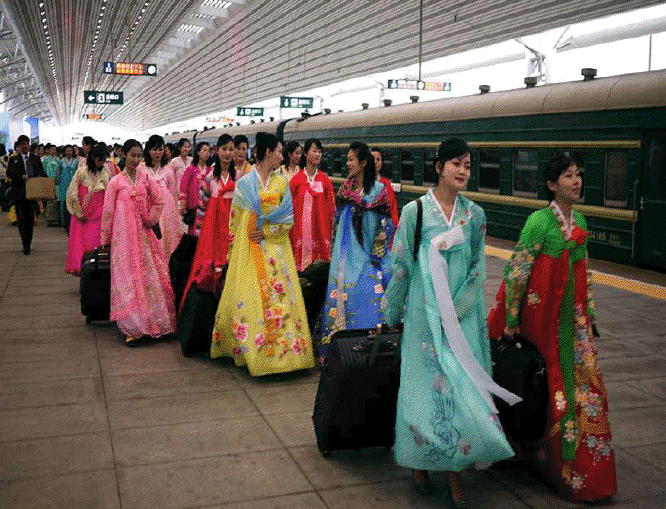
North Korean National Musical Troupe currently visiting China performing “Dream of Red Mansion” (adapted from Chinese classic novel).

Then it could be because Chinese culture, written language and political institutions have had an influence in Korea since the 4th century and in the 14th century, Korea came under the influence  of Confucian thought influenced by Buddhism and Daoism (Taoism).

China’s reluctance to put public pressure on Pyongyang to step off the warhorse might be because the Chinese feel it would be like pressuring a family member. A 1,700-year old relationship might have more weight than the one China has with America that isn’t even forty yet. However, measuring that weight may also depend on the trillion or more China has invested in America.

Punish North Korea or Not?

_______________

Lloyd Lofthouse is the award-winning author of My Splendid Concubine [3rd edition]. When you love a Chinese woman, you marry her family and culture too. This is the love story Sir Robert Hart did not want the world to discover.

His third book is Crazy is Normal, a classroom exposé, a memoir. “Lofthouse presents us with grungy classrooms, kids who don’t want to be in school, and the consequences of growing up in a hardscrabble world. While some parents support his efforts, many sabotage them—and isolated administrators make the work of Lofthouse and his peers even more difficult.” – Bruce Reeves.

lloydlofthouse_crazyisnormal_web2_5

Subscribe to “iLook China”!
Sign up for an E-mail Subscription at the top of this page, or click on the “Following” tab in the WordPress toolbar at the top of the screen.

About iLook China

China’s Holistic Historical Timeline


China’s god Culture Gone

May 27, 2010

For millennia, China’s emperors were considered the Sons of Heaven and worshiped as such.  When referred to as the Son of Heaven, a title that predates the Qin unification (221-207 BC), the emperor was recognized as the ruler of “all under heaven”. 

After Imperial China ended, Sun Yat-sen established a brief Chinese republic soon brought to an end by competing warlords, who plunged China into anarchy and violence. It wouldn’t be until 1928 that Chiang Kai-shek would become the victor and dictator of China and reestablish some order.

Mao won China in 1949 and stayed in power until his death in 1976. Mao has been called the modern emperor since he lived in the Forbidden City and ruled for twenty-seven years.  After Mao’s death, Deng Xiaoping and his supporters decided they didn’t want to have another god-like figure ruling China, and the Communist Party added amendments to the Chinese constitution creating term limits and an age limit. 

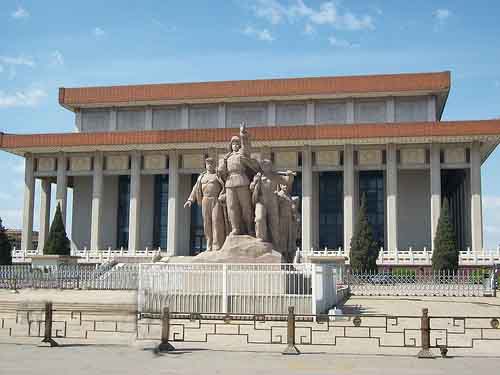
Mao's Tomb

Mao is still revered in China.  His tomb was built in Tiananmen square and his body is preserved beneath the tomb in refrigeration.  Visitors may pay a small fee to visit the tomb and possibly see China’s modern emperor on display behind bulletproof glass with attending guards.

Learn more about China’s Modern Dynasty

____________________________

Lloyd Lofthouse is the author of the award winning novels My Splendid Concubine and Our Hart. He also Blogs at The Soulful Veteran and Crazy Normal.

Sign up for an RSS Feed for iLook China


Buddhism in China

May 24, 2010

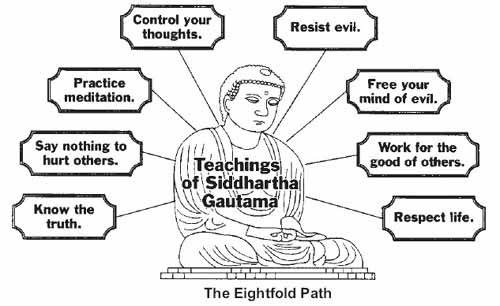
During the Han Dynasty in the first century B.C., trade with Central Asia introduced Buddhism to China.  Over the centuries, interest in Buddhism grew.  However, due to Confucianism and Taoism, the Chinese adapted Buddhist scripture to fit the Chinese culture creating the Mahayana sect, which spread to Korea and Japan.

Like most major religions, there are subdivisions within Buddhism but most may be classified into three. This is why Southeast Asian Buddhists differ from the Chinese.  The Theravada  form of Buddhism is found in Southeast Asia in countries like Burma, Thailand, Cambodia and Laos.

Tibetan Buddhism incorporates other beliefs, and there are four principal schools or types of Tibetan Buddhism. The Dalai Lama is the spiritual leader of one of the four, the Yellow Hat sect.

Buddhism in China reached its high point during the Tang Dynasty, 618 to 907. However, in 845 AD, the Tang emperor suppressed Buddhism and destroyed thousands of monasteries, temples and shrines.

Soon after Mao and the Communists won China, Buddhism flourished for a time but was repressed during the Cultural Revolution along with all other religions. Many monasteries and Buddhist texts were destroyed. After Mao, many of the major monasteries were rebuilt. Today, Buddhists represent the largest religious group in China between 100 to 200 million. Source: PEW Forum

Discover The First of all Virtues

_______________

Lloyd Lofthouse is the award-winning author of My Splendid Concubine [3rd edition]. When you love a Chinese woman, you marry her family and culture too. This is the love story Sir Robert Hart did not want the world to discover.

His third book is Crazy is Normal, a classroom exposé, a memoir. “Lofthouse presents us with grungy classrooms, kids who don’t want to be in school, and the consequences of growing up in a hardscrabble world. While some parents support his efforts, many sabotage them—and isolated administrators make the work of Lofthouse and his peers even more difficult.” – Bruce Reeves.

lloydlofthouse_crazyisnormal_web2_5

Subscribe to “iLook China”!
Sign up for an E-mail Subscription at the top of this page, or click on the “Following” tab in the WordPress toolbar at the top of the screen.

About iLook China

China’s Holistic Historical Timeline