Dragon Boat Festival

June 1, 2010

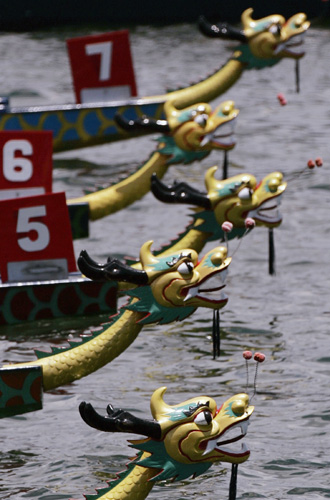
When I was at the 6th Annual Asian Heritage Street Celebration in San Francisco on May 15, I learned that Dragon Boat races take place in San Francisco Bay.  I stopped at the Dragon Boat booth and was told there would be more than a hundred boats competing in the 15th Dragon Boat Festival from Treasure Island in San Francisco on September 25-16, 2010.

In China, The Dragon Boat Festival is held on the fifth day of the fifth moon. History/myth tells us that the festival celebrates and honors Ch’u Yuan, who drowned himself in the Mi Lo River during the fourth century BC during the Chou Dynasty to protest government corruption.  There is some controversy over the real reason but this one is the most popular.

It is said that people rushed onto the river in boats to find Ch’u Yuan’s body but failed.  Today, the festival is a day where boat races are held throughout the Chinese-speaking world wherever significant numbers of Chinese live.

Read more about Chinese dragons

_____________________

Lloyd Lofthouse is the author of the award winning novels My Splendid Concubine and Our Hart. He also Blogs at The Soulful Veteran and Crazy Normal.

Sign up for an RSS Feed for iLook China


2-28 Massacre in Taiwan

June 1, 2010

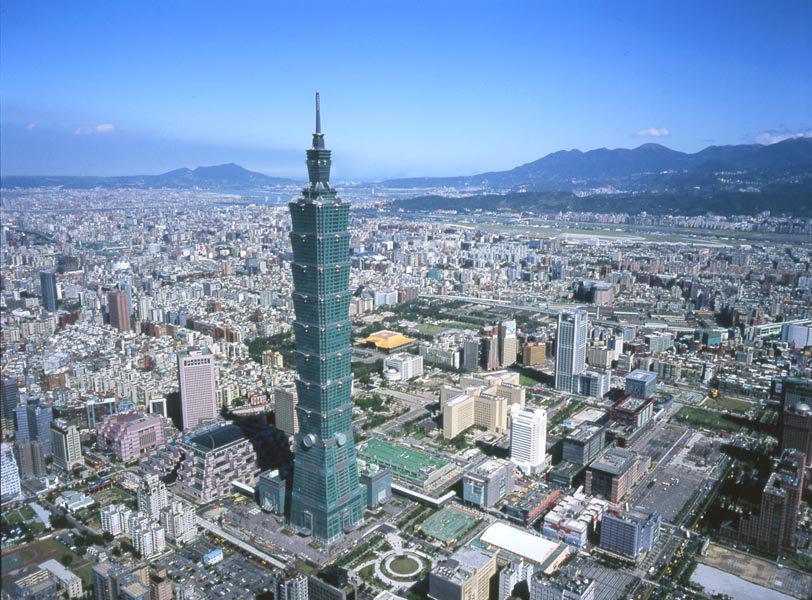
By accident, I stumbled on a Blog about the “2-28 Massacre” in Taiwan in 1947 when Kuomintang soldiers under orders from Cheng Kai-shek, an American ally, slaughtered about 30,000 Taiwanese citizens. It was the first time I’d heard of this incident. Source Blog: Patrick Cowsill

Taipei, Taiwan

When I typed into Google “Tiananmen Square protest”, 1 million 260 thousand (1,260,000) hits came back condemning the 1989 Massacre in Tiananmen Square. “Several hundred civilians have been shot dead by the Chinese army during a bloody military operation to crush a democratic protest in Peking’s (Beijing) Tiananmen Square. Source: BBC

Then I typed a similar question about the massacre in Taiwan by an American ally and 21,200 hits came back.

Here’s what the BBC had to say about the Taiwan incident, “The event was an uprising sparked by the beating of a female vendor by authorities for selling untaxed cigarettes. Between 18,000 and 28,000 people are said to have been killed in riots and a subsequent crackdown.” Source: BBC

Compare the language.  When it was about the Communists, it was a “bloody military operation to crush a democratic protest” but when the killings were committed by an American ally, it was “an uprising…sparked by the beating of a female vendor by authorities….”

Of course, we will always remember the man standing in front of the tanks in Tiananmen Square. Have you forgotten what happened in Taiwan yet?

______________________________

Lloyd Lofthouse is the award-winning author of My Splendid Concubine [3rd edition]. When you love a Chinese woman, you marry her family and culture too. This is the lusty love story Sir Robert Hart did not want the world to discover.

IMAGE with Blurbs and Awards to use on Twitter

Where to Buy

Subscribe to “iLook China”!
Sign up for an E-mail Subscription at the top of this page, or click on the “Following” tab in the WordPress toolbar at the top of the screen.

About iLook China

China’s Holistic Historical Timeline


Politically Correct Outside Tibet but Historically Wrong

May 31, 2010

In the “Contra Costa Times” this morning, I read Tibetan leaders seek East Bay help by Doug  Oakley, a politically correct news piece that’s partially accurate because Oakley only shares part of the history between China and Tibet—the part that favors Tibet’s so-called government in exile, which represents about 1% of all Tibetans—the rest still live in China.

Oakley writes that, “Tibet was invaded by the Chinese army in 1950. After the Tibetan army was defeated, both sides signed a 17-point agreement in 1951 recognizing China’s sovereignty over Tibet.” These facts are correct, but they do not tell the whole story.

Tibet, China

Any historian who checks primary sources that exist outside of Communist China will discover that Tibet was ruled by three Chinese dynasties: The Yuan, Ming and Qing Dynasties from 1277 – 1911.  Even after Sun Yat-Sen’s so-called Republic replaced the Qing Dynasty in 1911, Tibet was considered part of China.

Primary sources like the October 1912 issue of The National Geographic Magazine and more than fifty letters written by Sir Robert Hart during the 19th century support the fact that Tibet was part of China for more than six centuries prior to 1913 when the British Empire convinced Tibet to break free for political reasons.

The so-called Tibetan government in exile says they are seeking autonomy within China. In fact, China does offer a form of autonomy to the 56 minorities that live in China, but this isn’t the level of autonomy that the Dalai Lama demands, which is a return to the old Tibetan ways described in that 1912 issue of National Geographic, which is unacceptable to China.

Discover more about today’s Tibet by reading Chinese Gold from Dead Tibetan Caterpillars, Buddhism in China, The Tea Horse Road, Water – Two Countries Tell a Tale and About Tibet.

_____________________

Lloyd Lofthouse is the author of the award winning novels My Splendid Concubine and Our Hart. He also Blogs at The Soulful Veteran and Crazy Normal.

Sign up for an RSS Feed for iLook China


When Islamic Fundamentalists become Activists

May 31, 2010

I’ve never seen the Western Media mention that Xinjiang is in Central Asia when reporting violence in that region of China.

Why are Islamic fundamentalists in Pakistan, Afghanistan and Tajikistan called terrorists and militants, but Islamic fundamentalists in China’s Xingjian province, just across the border from the Afghan war and the fighting in Pakistan, are referred to as activists in the Western media?

The Uighur people are Islamic and native to Xinjiang province in China. They are also culturally tied to Central Asia. Rebiya Kadeer, an “Uighur activist”, lives in exile in Washington D.C.   The walls of her small office are covered with photographs of meetings with former President G.W. Bush and Laura Bush.

I have never seen any mention of the fact that China has a history going back hundreds of years when the Ch’ing Dynasty (the Manchu) put down several rebellions by Islamic Uighur rebels in Xinjiang province. I wonder if Rebiya Kadeer is aware of this history.

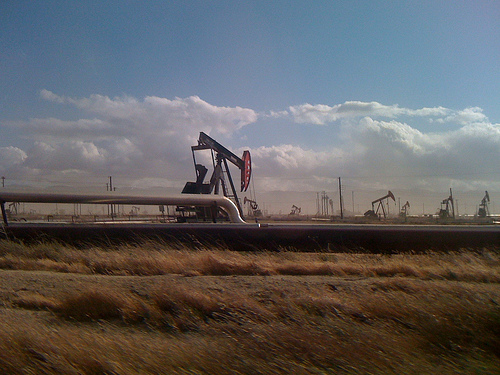
In fact, with an estimated 74 billion barrels of oil in Xingjian province (three times the proven reserves in the US), China isn’t going anywhere for some time.

See China’s Oil Hunger Grows

_________________________

Lloyd Lofthouse is the author of the award winning novels My Splendid Concubine and Our Hart. He also Blogs at The Soulful Veteran and Crazy Normal.

Sign up for an RSS Feed for iLook China


The Chinese Work Ethic

May 30, 2010

At the turn of the century, Jack London visited China (1904-05) and saw how hard the Chinese worked. He surmised that Westerners, living in ignorant bliss, had no understanding of Asian cultures and were far too confident of their superiority to realize that their days of world power were severely numbered. He urged that Westerners make concerted efforts to meet with Japanese and Chinese to understand each other better as equals. Source: History News Network

Jack London with his wife

In fact, I’ve met highly educated Chinese who came to the US and couldn’t get jobs in their field of study. Did they give up and lay around complaining how unfair life was?  No. They became handy men or worked in construction for far less than what a Latino, illegal immigrant worker earns. These same Chinese, with strong family values, also save money to send their children to college.

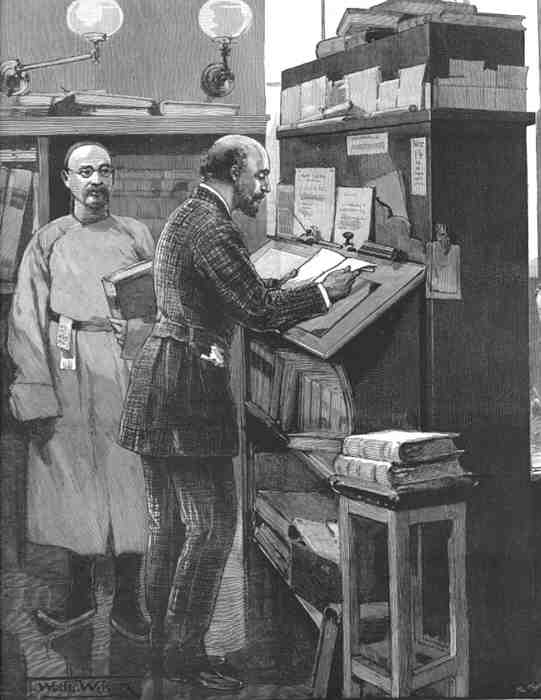
Sir Robert Hart, who lived and worked in China (1854 – 1908) and is considered the Godfather of China’s modernization said the same thing Jack London would say decades later. In the 1880s, he predicted that within a century China would be a super power again.

Sir Robert Hart in China

The Chinese work ethic is also reflected in Article 42 of the PRC’s Constitution.

“Citizens of the People’s Republic of China have the right as well as the duty to work. Using various channels, the state creates conditions for employment, strengthens labour protection, improves working conditions and, on the basis of expanded production, increases remuneration for work and social benefits. Work is the glorious duty of every able-bodied citizen. All working people in state enterprises and in urban and rural economic collectives should perform their tasks with an attitude consonant with their status as masters of the country. The state promotes socialist labour emulation, and commends and rewards model and advanced workers. The state encourages citizens to take part in voluntary labour. The state provides necessary vocational training to citizens before they are employed.”

Who built the Great Wall of China?
Who built China’s Grand Canal?
Who built the first emperor’s tomb and all those Terra Cotta Warriors?
Who took a country in 1950 that produced 0.005 kilowatts of electricity and built more than a hundred modern cities in less than three decades with plans to build 400 more—something historians say has never happened in the recorded history of humanity?
Whom has the only viable space program left on the earth with plans to go to the moon and beyond?
Who built America’s Western Railroads during the 19th century?

To learn more see All About Balance

______________

Lloyd Lofthouse is the award-winning author of the concubine saga, My Splendid Concubine & Our Hart. When you love a Chinese woman, you marry her family and culture too. 

If you want to subscribe to iLook China, there is a “Subscribe” button at the top of the screen in the menu bar.