An Attitude Shift in China

June 7, 2010

During Mao’s Cultural Revolution, Pearl S. Buck, who wrote The Good Earth and was awarded the Nobel Prize for Literature, the first American woman to win it, and the Pulitzer Prize, was denounced in 1972 as an “American cultural imperialist” by the Communists in China and was not allowed to visit China with Richard Nixon.

Pearl S. Buck

I recently read in Xinhua, the official voice of China’s government, that “A few months ago, the American novelist who spent most of the first 42 years of her life in China, from 1892 to 1934, putting her heartfelt and acute understanding of Chinese grassroots people in her Pulitzer Prize-winning novel, The Good Earth (1931), was voted one of the top “friends of China” in an international event hosted by the Chinese government.”

In February 2009, city officials in Zhenjiang, Jiangsu Province in China opened the Pearl S. Buck Museum and Philanthropy Pavilion adjacent to her historic home. The museum and pavilion were divided into three sections: one devoted to her humanitarian works, another to her life and achievements, and the last, to her writings.

See International Women’s Day

_____________________

Lloyd Lofthouse is the author of the award winning novels My Splendid Concubine and Our Hart. He also Blogs at The Soulful Veteran and Crazy Normal.

Sign up for an RSS Feed for iLook China


Propaganda Masquerading as a Movie Review

June 7, 2010

I found another example of media propaganda in a movie review. In June 1989, the Tiananmen Square incident took place in China and “hundreds” of demonstrators died in what started as peaceful demonstrations “demanding” changes in China.

A few months later, a New York Times review made comparisons between the first emperor and China’s modern government. “The depiction of Qin’s bonfire and of his soldiers pushing his flailing enemies (they weren’t the emperor’s enemies) into a ditch caused the American Museum of Natural History to cancel its planned opening of ”The First Emperor of China” last July, when the news was still full of the Chinese Government’s violent suppression of student protests.… This re-enactment of the faraway Qin’s often despotic and often enlightened rule becomes more believable and complex in view of the parallels with recent events.”

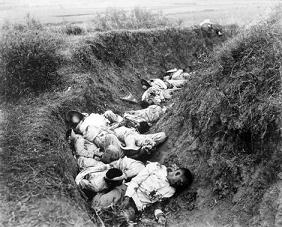
The New York Times made a comparison with an event that took place more than two millennia ago but made no mention of the 2/28 Massacre in Taiwan by a US ally where almost thirty thousand noncombatants were killed by Kuomintang troops. There was also no mention of the almost 70,000 U.S. troops in the Philippians, who slaughtered hundreds of thousands of Filipino freedom fighters and non-combatants between 1898 and World War II.

Filipinos killed by US troops before World War II

The New York Times does not review every movie or documentary produced so it is questionable why they would review this lackluster 38-minute documentary about China’s first emperor. Was there another motive behind this review—to remind Americans of the Tiananmen Square incident? After all, let’s not forget anything bad that Communist China does while forgetting worse historical sins committed by American troops and its allies.

See What is the Truth about Tiananmen Square?

_____________________

Lloyd Lofthouse is the author of the award winning novels My Splendid Concubine and Our Hart. He also Blogs at The Soulful Veteran and Crazy Normal.

Sign up for an RSS Feed for iLook China


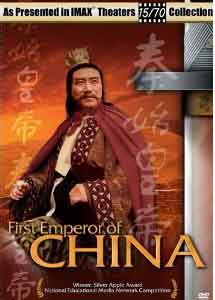
“First Emperor of China” Movie Review

June 7, 2010

Released in 1989 and narrated by Christopher Plummer, this version of the First Emperor of China is about half the length of the nine-part series, The First Emperor: The Man Who Made China (link to part 1), about Qin Shi Huangdi on YouTube.


This documentary was first seen on an IMAX screen, and it covers a few of the known facts about the first emperor’s life.  There is the attempted coup by a prime minister; the assassin with a poison knife; the conquest of six Chinese nations to unify China (too brief on detail); adopting one written language, which resulting in book burning and burying hundreds of scholars alive who disagreed with him; completing the Great Wall of China, and the creation of the Terra Cotta army that would guard his tomb.

Then there is emperor’s quest to live forever by consuming a form of liquid mercury, which shortened his life by decades—an example of how power corrupts absolutely making a man believe he was as powerful as a god.

This link will take you to the New York Times review, which said it was a painless history lesson full of vibrant period details but lacking human drama.

_____________________

Lloyd Lofthouse is the author of the award winning novels My Splendid Concubine and Our Hart. He also Blogs at The Soulful Veteran and Crazy Normal.

Sign up for an RSS Feed for iLook China


The Festival of the Hungry Ghost

June 5, 2010

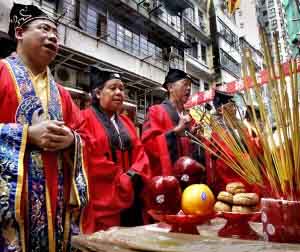
Although this festival is not celebrated in mainland China as it once was, the Festival of the Hungry Ghost was a time when ghosts that cannot rest were appeased so they would not turn from wondering ghosts to malevolent demons.  By remembering dead family members and paying tribute to them, it is believed that they will not intrude on daily life or cause misfortunes or bad luck.

One legend says that Mu Lian told his mother he wanted to be a Buddhist monk and left home.  Years later, he returned to discover that she had died. He knew that his mother had done bad things in his life and was probably in hell.  Since his mother had no one to feed her, she had to be hungry so he offered food to her hungry ghost but the food didn’t reach her.

To solve the problem, Mu Lian was told by his Buddhist master to become a vegetarian and perform spiritual deeds. After following this advice, on the 15th day of the seventh lunar month, he saved his mother from hell and she was no longer a hungry ghost.

See Honoring the Dead

_____________________

Lloyd Lofthouse is the author of the award winning novels My Splendid Concubine and Our Hart. He also Blogs at The Soulful Veteran and Crazy Normal.

Sign up for an RSS Feed for iLook China


When the News becomes Propaganda

June 5, 2010

As a teen in China, my wife saw news film showing American solders using spoons to dig eyeballs out of Vietnamese children—blinding them. This is one example of how easy it is to use lies to demonize an enemy.

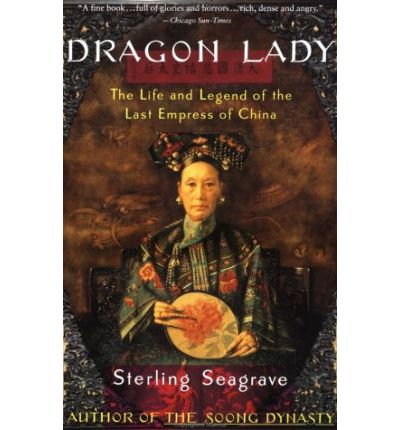
During the 19th century, to justify the Opium Wars and the brutal suppression of the Boxer Rebellion, the Western media demonized China and the Dowager Empress Tzu Hsi. Then, about a century later in “Dragon Lady”, Sterling Seagrave revealed that radicals and reformers who were in exile at the time spread lies saying the empress was an evil hag, and the Western media gobbled those lies up as if they were sweet chocolate.

In fact, a Western journalist, Dr. George Ernest Morrison was responsible for many of the slanders and half-truths about China that persist to this day.

In the June Smithsonian, one of those half- truths surfaced in 110 Years Ago, Sobby Boxers. The piece said the empress ordered the peasant’s known as the “Righteous and Harmonious Fists”, called Boxers by the Western Media, to kill all foreigners.

What it didn’t say was that the empress also told her military to make sure no foreigners died and water and food was carried to the legations through tunnels while the “Boxers” thought the empress was on their side.

The politics were complex. The Empress had nothing to do with the uprising. It was a popular peasant uprising against Christianity and the foreign powers. If she hadn’t supported the “Boxers”, the peasants might have turned on her.

Also see Media Slugfest Using Taiwan

_____________________

Lloyd Lofthouse is the author of the award winning novels My Splendid Concubine and Our Hart. He also Blogs at The Soulful Veteran and Crazy Normal.

Sign up for an RSS Feed for iLook China