Red Dawn Remake

June 9, 2010

Cinematical reports that a remake of “Red Dawn”, a 1984 move about the US being invaded by the Soviet Union, is scheduled to be out later this year.  However, since the evil Communist Soviet Empire does not exist anymore, the remake needed another bad guy to invade the US, so they made Communist China the villain.

This resulted in Chinese newspaper headlines saying the “U.S. Reshoots Cold War Move to Demonize China.”

Judging from at least one comment on Cinematical, I’d say the Chinese have a reason to be upset.  Some person (who can’t spell or punctuate) called “Buzz” said, “Guys china is not our friend or allie.  They are still very bad people (gov’t) who want to dominate the world. Let them grip and complain. Who cares? Their newspapers are full of anyi American propaganda so why should we care what they think.” 

If “Buzz” didn’t grow up in Kentucky or Tennessee, he must be a Tibetan or Uyghur refugee.

Here are a few reasons why the Chinese might be sensitive when demonized in the West.

1. The Opium Wars (1839 and 1860) invaded by France and England
2. Taiping Rebellion (1851 to 1864) led by a Christian convert
3. Burning of the Summer Palace (1860) by a Western allied force
4. Dungan Revolt 1862 (a Muslim rebellion)
5. Yangzhou riot 1868
6. Tianjin Massacre 1870
7. Panthay Rebellion 1856 to 1873 (another Muslim rebellion)
8. Sino-French War (1884 -1885)
9. Sino-Japanese War (1894 – 1895)
10. The Boxer Rebellion followed by a Western invasion
11. The collapse of the Qing Dynasty followed by forty years of civil war and anarchy as warlords fought for control of China and the West did nothing to intervene.
12. World War II (1937 – 1945) invaded by Japan
13. The Korean and Vietnam wars, which to the Chinese were seen as threats to China considering the century that came before those two conflicts. Mao said that Vietnam was the lips to China’s teeth. What happens to the teeth when the lips are gone?

How many times has China invaded America, England, France or Japan with a military force? Has a Chinese Buddhist or any Chinese raised in Confucian tradition started a rebellion anywhere in the world?

See Christianity and Islam in China

___________________

Lloyd Lofthouse is the author of the award winning novels My Splendid Concubine and Our Hart. He also Blogs at The Soulful Veteran and Crazy Normal.

Sign up for an RSS Feed for iLook China


China: The Roots of Madness – Part 2/8

June 9, 2010

In part 2, British and American power controlled the wheels of industry in Shanghai, Nanking, Hankow and Chunking.  In the steaming south, peasants, working like beasts, plant rice and speak languages most Chinese do not understand.

At the turn of the century, a three-year-old child was the emperor and the throne sat empty. On October 10, 1911, a riot took place that couldn’t be controlled. Five weeks later, the Imperial government collapsed. The Qing Dynasty vanished over night and two-thousand years of Imperial tradition was gone. The Chinese called this time “Double Death”.

The British and Americans could not control what replaced the Qing Dynasty. Students without weapons rioted in the streets. Warlords, who controlled armies, divided China and the chaos grew worse. Life became so cheap, that death was like a bloody circus. However, while the Chinese people suffered and starved, the foreigners live in luxury and controlled China’s industry while being protected by the Western military.

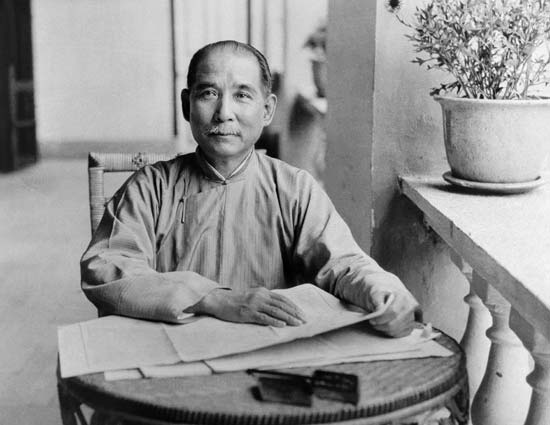
Sun Yat-sen

Chinese students demanded a revolt and Sun Yat-sen called on China to slay the dragon of Imperialism. He said China must start with nationalism, then democracy and finally socialism. The only country that offered help was Soviet Russia. This post was more accurate than Part 1.

Continued in Part 3, The Roots of Madness or return to Part 1, The Roots of Madness.

View as Single Page

Discover A Millennia of History at a Silk Road Oasis

_______________

Lloyd Lofthouse is the award-winning author of My Splendid Concubine [3rd edition]. When you love a Chinese woman, you marry her family and culture too. This is the love story Sir Robert Hart did not want the world to discover.

His latest novel is the multiple-award winning Running with the Enemy.

Subscribe to “iLook China”!
Sign up for an E-mail Subscription at the top of this page, or click on the “Following” tab in the WordPress toolbar at the top of the screen.

About iLook China


China: The Roots of Madness – Part 1/8

June 8, 2010

I found this information from a 1967 documentary conceived and written by Theodore H. White, to have half-truths about Imperial China.  It is understandable that any American film from that era would be flawed since McCarthyism’s Red Scare took place the decade before.

Author Theodore White lived in China for seven years and said that foreigners who lived in China during the crises often remembered it differently.

In Part I, The Roots of Madness unwittingly documents the lies and deceit that demonized the Empress Tsu Hsi when the narrator calls the empress evil. To discover the truth about the empress, I suggest reading Dragon Lady by Sterling Seagrave, who revealed the lies and deceit of Western journalists.

Nothing in China’s ancient culture could guide the Chinese to become part of the modern world. Instead, China would experiment with different forms of government—a process that is still going on.  Although “China: The Roots of Madness” is a flawed production, there’s enough accurate history to show why China is the way it is today.

Continued in Part 2, The Roots of Madness

If you are interested in more history about China, I suggest The First Emperor: The Man Who Made China

View as Single Page

______________

Lloyd Lofthouse is the award-winning author of the concubine saga, My Splendid Concubine & Our Hart. When you love a Chinese woman, you marry her family and culture too.

If you want to subscribe to iLook China, there is a “Subscribe” button at the top of the screen in the menu bar.


The Powerful Peony

June 8, 2010

Pearl S. Buck loved the peony and so did the Empress Dowager Tzu Hsi (1835 – 1908).  The Chinese Peony is the Paeonia lactiflora. Along with the plum blossom, the peony is a traditional floral symbol of Mongolia and China. The peony comes as a shrub and a tree. There is even an Ode to Peonies.

Red Peonies

The peony is also known as the “flower of riches and honor” and is used symbolically in Chinese art. In 1903, the Qing Dynasty made the peony the national flower. Today, there is no national flower in the PRC, which is still under considered, while Taiwan has named the plum blossom as the national flower for the so-called Republic of China.

The World Health Organization reports that the dried root of the Radix Paeonia (red peony) is used to treat dementia, headache, vertigo, spasms of the calf muscles, liver disease, and allergies and as an anticoagulant. (pg 198, World Health Organization)  These uses have been described in pharmacopoeias and in traditional systems of medicine.

Traditional Chinese medicine claims that drinking Bai Mudan (white peony tea) helps dispel heat within the body and enhances immune function while protecting the heart and blood vessels. Source: Chinese Food World

See the Shanghai Huxinting Teahouse

_____________________

Lloyd Lofthouse is the author of the award winning novels My Splendid Concubine and Our Hart. He also Blogs at The Soulful Veteran and Crazy Normal.

Sign up for an RSS Feed for iLook China


An Attitude Shift in China

June 7, 2010

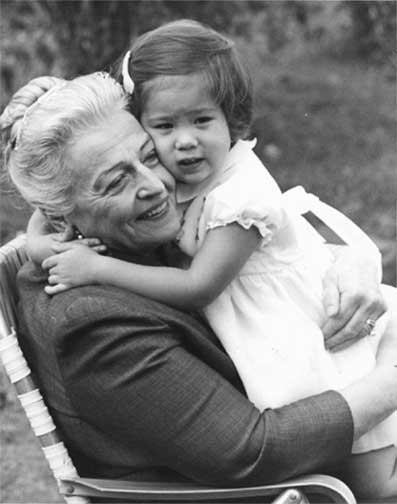
During Mao’s Cultural Revolution, Pearl S. Buck, who wrote The Good Earth and was awarded the Nobel Prize for Literature, the first American woman to win it, and the Pulitzer Prize, was denounced in 1972 as an “American cultural imperialist” by the Communists in China and was not allowed to visit China with Richard Nixon.

Pearl S. Buck

I recently read in Xinhua, the official voice of China’s government, that “A few months ago, the American novelist who spent most of the first 42 years of her life in China, from 1892 to 1934, putting her heartfelt and acute understanding of Chinese grassroots people in her Pulitzer Prize-winning novel, The Good Earth (1931), was voted one of the top “friends of China” in an international event hosted by the Chinese government.”

In February 2009, city officials in Zhenjiang, Jiangsu Province in China opened the Pearl S. Buck Museum and Philanthropy Pavilion adjacent to her historic home. The museum and pavilion were divided into three sections: one devoted to her humanitarian works, another to her life and achievements, and the last, to her writings.

See International Women’s Day

_____________________

Lloyd Lofthouse is the author of the award winning novels My Splendid Concubine and Our Hart. He also Blogs at The Soulful Veteran and Crazy Normal.

Sign up for an RSS Feed for iLook China