A Difference in Defensive Thinking

June 20, 2013

Teddy Roosevelt said, “Speak softly and carry a big stick.” Compare this to Sun Tzu, who wrote the Art of War. He said, “The supreme art of war is to subdue the enemy without fighting.”

I’m not sure that America speaks all that softly and that stick has been around the world more than once and has been costly.  I did a bit of virtual sleuthing and the military budgets approved by the Congress between 1946 to 2009 have cost the American tax-payer about 23 trillion dollars. These figures do not include the wars since World War II.

In today’s dollars, the Korean War cost more than $340 billion; the Vietnam War cost $740 Billion.

To date, the cost of war in Iraq has cost more than $810 billion and Afghanistan $629 billion.


To compare, the US military has more firepower.

China intervened in the Korean War and sent hundreds-of-thousands of troops. To understand why the Chinese got involved, Mao said,”Vietnam is the gums to our teeth. What happens when the gums are gone?”

Between 1965 and 1970, over 320,000 Chinese soldiers served in North Vietnam.

“Rather than worrying about this development, we should understand that Beijing’s maintenance of a large, modern military is driven by history.” Source: Huffington Post  “On 4 March 2010, Beijing announced China’s declared defense budget will only increase by 7.5% this year — the slowest rate in 20 years.”

In 2012, China defense spending increased by 11%—more than $100 Billion compared to $738 Billion for the US.

Discover When China’s generals laughed.

_______________

Lloyd Lofthouse is the award-winning author of My Splendid Concubine [3rd edition]. When you love a Chinese woman, you marry her family and culture too. This is the love story Sir Robert Hart did not want the world to discover.

His latest novel, Running with the Enemy, was awarded an honorable mention in general fiction at the 2013 San Francisco Book Festival.

Subscribe to “iLook China”!
Sign up for an E-mail Subscription at the top of this page, or click on the “Following” tab in the WordPress toolbar at the top of the screen.

About iLook China


The Voice of Shanghai Dies—Shocking Fans

June 6, 2013

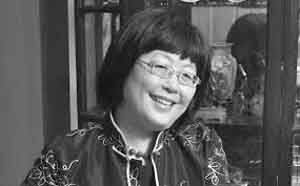
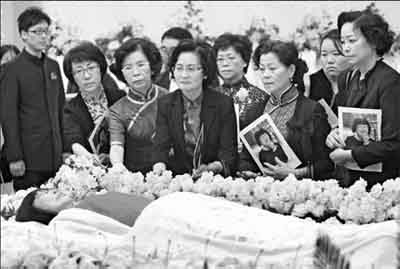
Cheng Naishan, a mainland Chinese author and writer known for her work about life in Shanghai, died recently of leukemia.

The Blue House, a novel that is also available in English, French and Spanish, is about the world of romance, business and family life in Shanghai during and after The Cultural Revolution.

Image of Cheng Naishan

Her work is known for the history, culture and legacy of Shanghai in the 1930s before World War II when the city was known as the “Paris of the Orient”.

Cheng was born in 1947 into a family of bankers. The family moved to Hong Kong in 1949, and returned to Shanghai—out of patriotism—in 1956. Her first story was published in a literary magazine in 1979 launching a literary career in China that spanned more than three decades.

“I know some people say I always write about the old Shanghai and try to keep the flavor of old Shanghai and that makes my writing look less modern,” she said in a 2012 interview with an official publication run by the government-backed Shanghai Federation of Literary and Art Circles. “I am not concerned about what those people say about me because in my heart the old Shanghai is just an endless story and I won’t stop writing about it.”

The editor of the Shanghai Dialect column for Xinmin Evening News, Lyu Zheng said, “She can write adeptly about the lower-class life experience of dumping the chamber pot, as well as upper-class social life between coffee cups.”

funeral of Cheng Naishan

Her husband, Yan Erchun, said, “Naishan has great love for the city of Shanghai, especially the district of Jing’an. She was born and raised here. There are endless stories she wanted to write about Shanghai.”

Cheng was diagnosed with leukemia in the winter of 2011, and she continued writing until near the end.

Discover Life is a Miracle, a movie review

_______________

Lloyd Lofthouse is the award-winning author of My Splendid Concubine [3rd edition]. When you love a Chinese woman, you marry her family and culture too. This is the love story Sir Robert Hart did not want the world to discover.

Subscribe to “iLook China”!

Sign up for an E-mail Subscription at the top of this page, or click on the “Following” tab in the WordPress toolbar at the top of the screen.

About iLook China


A short history of Taoism and its meaning: Part 2/2

May 14, 2013

The video’s narrator, Jean Delumeau (born 1923) is a professor of history at the College of France in Paris and is widely regarded as one of the leading historians of Christianity. Sin and Fear, one of his books, is a monument of flawless scholarship, says Wendy Doniger for the New York Times

Delumeau says that Taoism was a philosophy and a religion, which offered salvation for the individual and responded to the need for the immortality of its followers.

Confucianism, however, was somewhat abstract and didn’t offer a reward of immortality since ancient China did not have a concept of a spiritual soul that survives a physical death.

Taoism believed that the physical body only contains the personality. There were rules for food, hygiene, breathing techniques and different forms of gymnastics, which were designed to suppress the causes of death and allow each follower to create an immortal body to replace the mortal one.

After the mortal body died, the immortal body went elsewhere to live.

In ancient China, the pathway of sanctity preached by Taoism evolved in Chinese Yoga and was recognized some 500 years before the birth of Jesus Christ.

In the second century AD, Taoism became a true church venerating immortals as saints.

About 200 AD, a Taoist scholar taught that virtue, avoidance of sin, confessions of sins and good works were the most important aspects and took precedence over diet and hygiene.

One major difference from religions in the West is that Taoism does not have leaders on a national scale—like the Catholic Pope—and is more like a federation of linked communities.

In 110 BC, Emperor Wu of the Han Dynasty made Confucianism the state religion to strengthen and centralize his power.

Nevertheless, Taoism continued to be practiced as a parallel popular religion.

Religious Tolerance.org says there are about 225 million followers but the exact number is impossible to estimate since many Taoists also identify with other regions such as Buddhism and Confucianism.

Return to A short history of Taoism and its meaning: Part 1

_______________

Lloyd Lofthouse is the award-winning author of My Splendid Concubine [3rd edition]. When you love a Chinese woman, you marry her family and culture too. This is the love story Sir Robert Hart did not want the world to discover.

Subscribe to “iLook China”!
Sign up for an E-mail Subscription at the top of this page, or click on the “Following” tab in the WordPress toolbar at the top of the screen.

About iLook China


A short history of Taoism and its meaning: Part1/2

May 13, 2013

Jean Delumeau, that narrator of the video, is an honorary professor of the College de France. He says by the time Buddhism arrived in China in the first century AD, Confucianism and Taoism had been widespread for several centuries.

Taoism was the popular religion of China while Confucianism was the official state religion of the Han Dynasty. In fact, the bureaucracy practiced Confucianism at work and turned to Taoist spiritual practices after work.

Even though Taoism and Buddhism have fundamental differences, Taoism helped spread Buddhism. While Taoism seeks the salvation of the individual, Buddhism seeks an escape from the cycle of personal existence.

However, certain practices of Taoism and Buddhism are similar, which are meditation, fasting, and breathing techniques.

The word “Tao” means both the order and totality of the universe and the pathway or road that allows the individual to enter into the rhythm of the world through a negation of self.

Two opposing but complementary forces of reality are fused in the Tao — Yin, which is passive, cold and feminine and Yang, which is active, hot and masculine.

The moon and the sun are the manifestations of Yin and Yang and all change is a result of these two dynamic forces such as day and night, the seasons, and life and death.

These two principals alternate in the five phases of a cycle, which are represented by water, fire, wood, metal and earth, which serve to define the five cardinal points, which are north, south, east, west and the center.

A contemporary of Confucius, Lao Tzu’s teachings were compiled in the fifth century BC into a collection called the Tao Te Ching or Dao De Jing, which have had a great influence on Chinese thought and medicine.

One example says, “The wise man does not seek to be known as a wise man but of his own free will remains in obscurity. Those who seek much knowledge enrich themselves daily. Those who seek Tao become poorer each day. Eventually, they become so poor they are incapable of action. Without action, nothing can be achieved.”

Continued on May 14, 2013 in  A short history of Taoism and its meaning: Part 2

_______________

Lloyd Lofthouse is the award-winning author of My Splendid Concubine [3rd edition]. When you love a Chinese woman, you marry her family and culture too. This is the love story Sir Robert Hart did not want the world to discover.

Subscribe to “iLook China”!
Sign up for an E-mail Subscription at the top of this page, or click on the “Following” tab in the WordPress toolbar at the top of the screen.

About iLook China


Where Saving Money is a Virtue

May 7, 2013

Hung Huang, one of China’s four Opras, and the CEO of China Interactive Media Group, the host of TV talk show Crossing Over and one of the top-five most popular Bloggers in China wrote a post for the New York Times Economix Blog about why the Chinese save so much.

She thinks the Chinese save out of fear.

I don’t agree, because China is not unique when it comes to Asians saving money. Galbi Think.org says, “Savings rates for East Asian economies averaged about 35% of GDP.

For a comparison, the long term saving rate in the US is less than 7%.

Another study reported by All Business.com says, “The fact that the saving rate of rural households (in China) is considerably higher than that of urban households—even though their income levels are so much lower—is surprising.”

Not so surprising. I married into a Chinese family and I’ve come to believe the Chinese can out frugal anyone. The less earned, the more the Chinese save.  All it takes is saying no to buying frivolous junk and eating out when the money isn’t there.

In fact, I found the comments to Huang’s post to be more convincing.

Melvin Chin says, “Asians, including Chinese, Japanese, and Koreans, are predominantly brought up with the concepts of frugality and saving from very young. … Saving teaches them to be proud of what is accumulated, enjoy the fruits of abundance, and cherish the habit as a virtue.”

B. Ray says, “The strong family connection is the reason for Chinese to save. It is the same in Taiwan. Almost every elder person I know saves for their descendents.”

Fei says, “Simply look at the generations of Chinese who live in North American, you’ll find out that the majority of them still maintain a lifelong enthusiasm of saving … because saving is a habit that’s deeply rooted in the Chinese culture.”

If all Asian cultures are so good at saving money and are all collective cultures, what does that say about the West and North America’s individualistic cultures?


_______________

Lloyd Lofthouse is the award-winning author of My Splendid Concubine [3rd edition]. When you love a Chinese woman, you marry her family and culture too. This is the love story Sir Robert Hart did not want the world to discover.

Subscribe to “iLook China”!
Sign up for an E-mail Subscription at the top of this page, or click on the “Following” tab in the WordPress toolbar at the top of the screen.

About iLook China