If you haven’t heard of it, Sexy Beijing (produced by Goldmines Film and Video Production since 2006) is an Internet TV station run by an in-house production team.
Sexy Beijing says “Our shows have also aired on NBC in Los Angeles, Hunan TV, China Educational TV, and many other stations around China as well as conferences around the world.”
I dare all Westerners that believe the Chinese are depressed and heavily censored to watch Sexy Beijing regularly to learn the truth of China.
Any censorship that exists in the media in China focuses mostly on a few topics such as the Dalai Lama and Tibetan or Islamic separatists that are considered the same to China’s leaders as Islamic terrorists are to the United States government.
In this episode of Sexy Beijing, Su Fei, Anna Sophie Loewenberg, tries to please her mother and go find one of her own kind.
Sue Fei, the Jewish host of this segment, says, “Most people are surprised to find out just how multi-cultural Beijing is. And when it comes to a husband search, I could just as easily be bringing home an African or Muslim suitor to meet my Jewish mother as I could a Chinese one.”
Sue Fei then heads for the new Chabad Jewish community center in Beijing to find out what it would be like to become an Orthodox Jew.
______________________________
Lloyd Lofthouse is the award-winning author of My Splendid Concubine [3rd edition]. When you love a Chinese woman, you marry her family and culture too. This is the lusty love story Sir Robert Hart did not want the world to discover.
Subscribe to “iLook China”!
Sign up for an E-mail Subscription at the top of this page, or click on the “Following” tab in the WordPress toolbar at the top of the screen.
According to Forbes.com, Canada is the best country in the world to be a woman, and India is the worst. The U.S. was ranked #6 of the twenty countries surveyed. The members of the G20 are Argentina, Australia, Brazil, Canada, China, France, Germany, India, Indonesia, Italy, Japan, Republic of Korea, Mexico, Russia, Saudi Arabia, South Africa, Turkey, the United Kingdom, the United States and the European Union.
Starting with the I Ching, The Book of Changes, almost five thousand years ago, the central focus of Chinese philosophy has been how to live an ideal life and how best to organize society.
When the Communist Party of China gained power in 1949, previous schools of Chinese philosophy, except Legalism, were denounced as backward and purged during the Great Leap Forward and during the insanity of Mao’s Cultural Revolution.
Most Chinese think that true advancement and growth should only happen slowly, at a steady, measured pace, which means to grow but grow slow like an oak tree while following a well thought out plan to bring about change.
Even the United States doesn’t change that fast.
In fact, it took almost ninety years to free the slaves, and women first sought the right to vote in 1848 at the Seneca Falls Woman’s Rights Convention. Then seventy-two years later in 1920, American women finally earned the right to vote when the Nineteenth Amendment was adopted by Congress and was ratified by the states becoming a national law.
The last time women had relative freedom in China was in the seventh century during the Tang Dynasty when Emperor Wu Zetian, a woman, ruled the country.
Since 1982, when China ratified its Constitution, women in China have gained more freedom, power and rights than at any other time in China’s history including the Tang Dynasty when Wu Zetian ruled as the only female emperor in China’s history.
Anyone that does not consider this progress is stupid, blind and deaf.
Critics in the West have pointed out that under the Communists, no woman has ruled China, and I’d counter that no woman has ever ruled the United States—yet.
In 2013 Lin Yandong, a senior Party official responsible for winning over non-Communists, was elected Vice Primer of China, one of the country’s senor leaders. She’s now one of China’s four vice premiers making her not only the most powerful woman in China, but also one of the most powerful in the world. She is one of two women in China’s 25-member Politburo. The other woman is Sun Chunlan.
Chinese women’s participation in politics has grown since 1982. For instance, in 1952 only 12% of China’s National Congress (NPCC) was women. In 2014, of the 2,959 seats in the NPCC, more than 23% of the seats (699) were held by women compared to about 19% in the United States Congress. Out of 190 countries, China is ranked #58 versus the U.S. that’s ranked #76. – Women in national parliaments
“Chinese women leaders have much in common. They generally all have a good education background, being mainly science majors, and solid experience in government. They are of a caliber equal to that of their male counterparts,” an All-China Women’s Federation expert said. For the United States, I’m thinking of Sarah Palin—enough said.
If you hear anyone demanding faster change in China, be cautious. After all, China seems to be moving faster than the United States when it comes to women holding positions of power.
Why do so many of China’s critics in the West expect China to move faster than the United States?
______________________________
Lloyd Lofthouse is the award-winning author of My Splendid Concubine [3rd edition]. When you love a Chinese woman, you marry her family and culture too. This is the lusty love story Sir Robert Hart did not want the world to discover.
Subscribe to “iLook China”!
Sign up for an E-mail Subscription at the top of this page, or click on the “Following” tab in the WordPress toolbar at the top of the screen.
China has its own brands of domestic cars. For instance, the Chery, a government owned corporation, (the pinyin transcription of its Chinese name is Qirui).
China’s Automobile Dealer Association reported that there were 25 Chinese sedan brands available in January, but they expect that number to eventually reach five domestic brands, because of government restrictions and increased costs of licenses for gas and diesel vehicles, in addition to competition from foreign automakers. The fact that China eliminated the 10% vehicle tax on Chinese electric vehicles might have also played an important part. – Fortune.com
It doesn’t help that Chinese cities are seriously restricting the number of new license plates for gas and diesel to reduce traffic and pollution. And that might explain why “China is now one of the largest electric car markets in the world.” While sales of traditional gas/diesel powered cars are dropping, sales of electric cars “appear to have more than tripled as compared to the previous year …” – Clean Technica
“(China’s) Government data shows that local-brand passenger vehicles accounted for 38% of China’s domestic market in 2014, down from 46% in 2010. For sedans, local brands’ share fell to 22% from 31%.” – The Wall Street Journal “But during the last four months of 2014, China’s electric vehicle sales skyrocketed, In December alone, monthly sales of passenger and commercial electric vehicles hit 27,000. … If this growth continues, China may surpass the U.S. as the world’s largest market for electric vehicles in 2015.” – Fortune.com
Look out, Tesla, the Chinese are coming, and they are serious. If you don’t believe me, visit China and breathe the air in most if not all of its major cities. After you stop gasping and wheezing, you will then be a believer of why the Chinese are going to go electric in a big way.
______________________________
Lloyd Lofthouse is the award-winning author of My Splendid Concubine [3rd edition]. When you love a Chinese woman, you marry her family and culture too. This is the lusty love story Sir Robert Hart did not want the world to discover.
Subscribe to “iLook China”!
Sign up for an E-mail Subscription at the top of this page, or click on the “Following” tab in the WordPress toolbar at the top of the screen.
I walked to town recently to see the film of a book I read several years ago. The theater I saw it in was huge and there were only three of us there. Wolf Totem was in Mandarin with English subtitles. Fortunately for the audience, there isn’t much dialogue so there isn’t that much to read if you don’t speak the language but the story—through the panoramic visuals—had a powerful message about mankind meddling with nature. In China, this film has earned more than $110 million U.S. I couldn’t find out how much it has earned in the U.S. where I saw it.
Consider the fact that pollution is not exclusive to China, and the United States, for instance, has more than 1,300 superfund sites—Superfund sites are polluted locations requiring a long-term response to clean up hazardous material contaminations. – epa.gov
In addition, the book and the film also offer another way to learn about China, it’s people and their humanity.
Jiang Rong is the pen name for Lu Jiamin, the author, a Chinese citizen. Set during the Cultural Revolution, Wolf Totem describes the education of an intellectual living with nomadic herders in the grasslands of Inner Mongolia.
The publisher of Wolf Totem said the novel was an epic Chinese tale and that’s true. Wolf Totem taught me a lot about this almost extinct culture. I learned about the fascinating connection between wolves and Mongolians and why this connection may have been the reason why Genghis Khan was so successful in his conquests.
I recommend the film more than the novel to anyone who wants to learn about the life of the Mongols and another perspective of Mao’s Cultural Revolution. If you can’t see the film, then the book is worth reading too.
However, the theme that runs through the novel of maintaining a balance with nature is a bit overdone—I didn’t get this impression from the film. In the novel, I got the message the first time the characters talked about it but then the topic comes up repeatedly—a bit too much but an insignificant criticism of a book worth reading and a film that I think is even more powerful.
I won’t give away the ending, but don’t expect it to be happy. Most Chinese novels don’t end with happy endings. The ending for the film was different than the novel, and I actually liked it better—a powerful and breathtakingly beautiful film.
______________________________
Lloyd Lofthouse is the award-winning author of My Splendid Concubine [3rd edition]. When you love a Chinese woman, you marry her family and culture too. This is the lusty love story Sir Robert Hart did not want the world to discover.
Subscribe to “iLook China”!
Sign up for an E-mail Subscription at the top of this page, or click on the “Following” tab in the WordPress toolbar at the top of the screen.
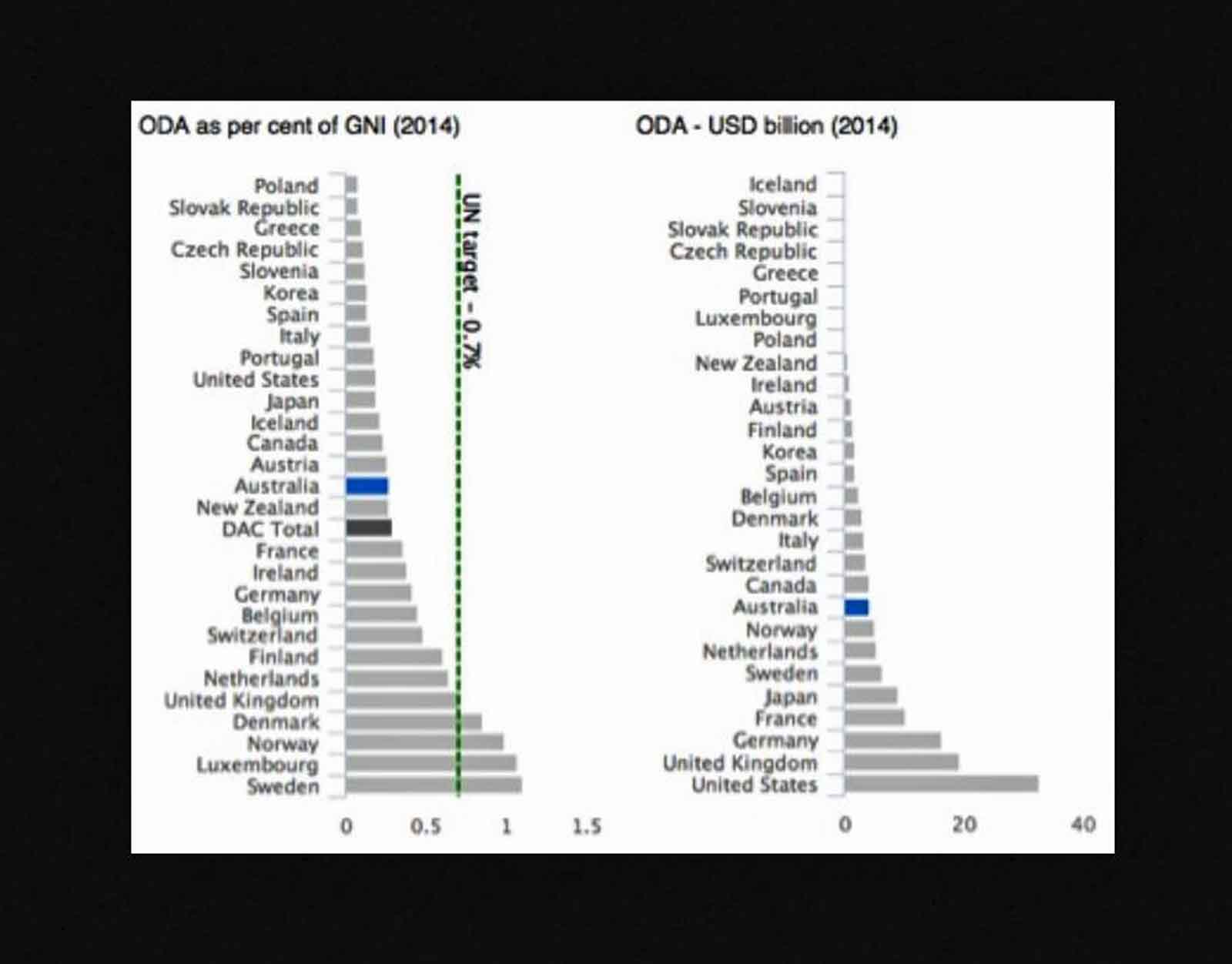
A post about “Foreign Aid for Development Assistance” from Global Issues reported that, “In 1970, some of the world’s richest countries agreed to give 0.7% of their gross national income (GNI) as official international development aid annually to countries that could use that money the most.
But since that agreement 45 years ago, despite billions of dollars given each year, rich nations have rarely met their actual promised targets. For example, the U.S. is often the largest donor in dollar terms, but ranks among the lowest when meeting the 0.7% agreed target—yes, that is less than 1%.
Curious, knowing that there is also hunger and poverty in United States, I went to Feeding America and learned that in 2008, 49.1 million Americans lived in food insecure households. Mississippi was the state with the highest percentage (17.4%) of food insecure households—and poverty is increasing in the U.S. while the wealthiest Americans keep getting richer at a faster pace.
With poverty that bad in the United States, why is America giving away so much money to other countries in foreign aid? Well, for one thing, the U.S. agreed to do it, and that means the country gave its word, and even though many Americans will probably grumble—especially members of the Tea Party, racists and Libertarians who probably don’t care of the U.S. breaks its promises again—they might also feel good that the U.S. isn’t keeping its word.
For instance, do you remember the 0.7% target that 29 of the wealthiest countries agreed to donate to the neediest countries? The U.S. donation is often if not always below that promised amount.
Way below!
In fact, only five of the 29 countries met their obligation in 2014: Sweden, Luxembourg, Norway, Denmark and the UK. Although the United States paid more due to the size of its Gross National Income (GNI), it was still ranked far below making the 0.7% target for donations and was #19 on the list right behind Japan with Sweden being #1.
You might also want to learn the United States has had impressive growth in its GNI from 2010 to 2014. The World Bank reports that GNI in the U.S. went from $48,950 in 2010 to $55,200 in 2014 for each person.
What about China’s GNI?
China also had growth in its GNI from $4,300 for each person in 2010 to $7,380 in 2014 — 7.48 times less than in the U.S.
This might help explain why, according to The World Bank, China has continued to receive this foreign aid: $1.771 billion in 2011, $1.293 billion in 2012, $1.648 billion in 2014 and $1.856 billion for 2015.
In addition, the World Bank said, “With a population of 1.3 billion, China recently became the second largest economy and is increasingly playing an important and influential role in the global economy. Yet China remains a developing country (its per capita income is still a fraction of that in advanced countries) and its market reforms are incomplete. Official data shows that about 98.99 million people still lived below the national poverty line of RMB 2,300 per year at the end of 2012. With the second largest number of poor in the world after India, poverty reduction remains a fundamental challenge.”
Now, stop a moment and scroll back up and look at that chart of the names of the countries that have been sending foreign aid to China and other developing countries.
Starting in 1839 with the first of the two Opium Wars, Britain and France forced opium on the Chinese, and Germany became involved later with the burning of the Summer Palace near Beijing.
Then Japan caused the horrors of World War II slaughtering about 30 million Chinese after invading China. If you want to discover who encouraged Japan to become aggressive in Southeast Asia, I suggest you read The China Mirage by James Bradley to learn who the two U.S. presidents were that were responsible for World War II in the Pacific. One of the two presidents even encouraged Japan to militarize and become a major military power in Asia.
Could this foreign aid to China from, for instance, the United States, Japan, Germany, France and Britain be a means of atonement for more than a century of sins against the Chinese—a way to deal with the cultural and historical guilt?
______________________________
Lloyd Lofthouse is the award-winning author of My Splendid Concubine [3rd edition]. When you love a Chinese woman, you marry her family and culture too. This is the lusty love story Sir Robert Hart did not want the world to discover.
Subscribe to “iLook China”!
Sign up for an E-mail Subscription at the top of this page, or click on the “Following” tab in the WordPress toolbar at the top of the screen.


 Posted by Lloyd Lofthouse
 iLook China