The Development of Food Safety in China versus the United States

January 7, 2015

A friend sent me a piece about tainted supplements in the United States, and one paragraph grabbed my attention.

The New York Times said, “In recent years, a vast majority of supplement suppliers have located overseas—principally in China. Nearly all of the vitamin C and many other supplements consumed in the United States are made from ingredients made in Chinese plants. Those plants are almost never inspected by the FDA because the agency is not required to do so, has little money to do so and does not view the plants as particularly risky.”

China has an agency that is similar to the U.S. Food and Drug Administration (FDA) called the China Food and Drug Administration (CFDA) founded in 2003 as part of an effort in China to improve food safety. Today, there are about ten government departments and ministries under the State Council responsible for food safety in China.

Although China’s CFDA is relatively new compared to America’s FDA (est. 1906), China appears to be taking food safety seriously compared to weaknesses discovered in America’s FDA.

Evidence that China is serious about food safety appeared on July 10, 2007, when Zheng Xiaoyu, the former head of the CFDA was executed by lethal injection for taking bribes from various firms in exchange for state licenses related to product safety. When has the United States sent a corrupt FDA or corporate official to prison let alone executed someone convicted of corruption?

Until the 1906 Food and Drug Act, America did not have an FDA (FDA Early History), and recently the Union of Concerned Scientists revealed that hundreds of agency scientists had been pressured to approve drugs despite reservations about safety.

For instance, WashingtonBlog.com reported that in the U.S. Giant Food Corporations Work Hand-In-Glove With Corrupt Government Agencies to Dish Up Cheap, Unhealthy Food. “Multinational food, drink and alcohol companies are using strategies similar to those employed by the tobacco industry to undermine public health policies, health experts said on Tuesday.”

Then there was the New Harvard Study that revealed how we cannot trust the FDA with public safety. The study points out how the FDA, which supposedly must be in charge of public health and safety, is nothing more than a puppet for giant pharmaceutical and drug companies.

 _______________

Lloyd Lofthouse is the award-winning author of My Splendid Concubine [3rd edition]. When you love a Chinese woman, you marry her family and culture too. This is the lusty love story Sir Robert Hart did not want the world to discover.

Honorable Mentions in General Fiction
2012 San Francisco Book Festival
2012 New York Book Festival
2012 London Book Festival
2009 Los Angeles Book Festival
2009 Hollywood Book Festival

Finalist in Fiction & Literature – Historical Fiction
The National “Best Books 2010” Awards
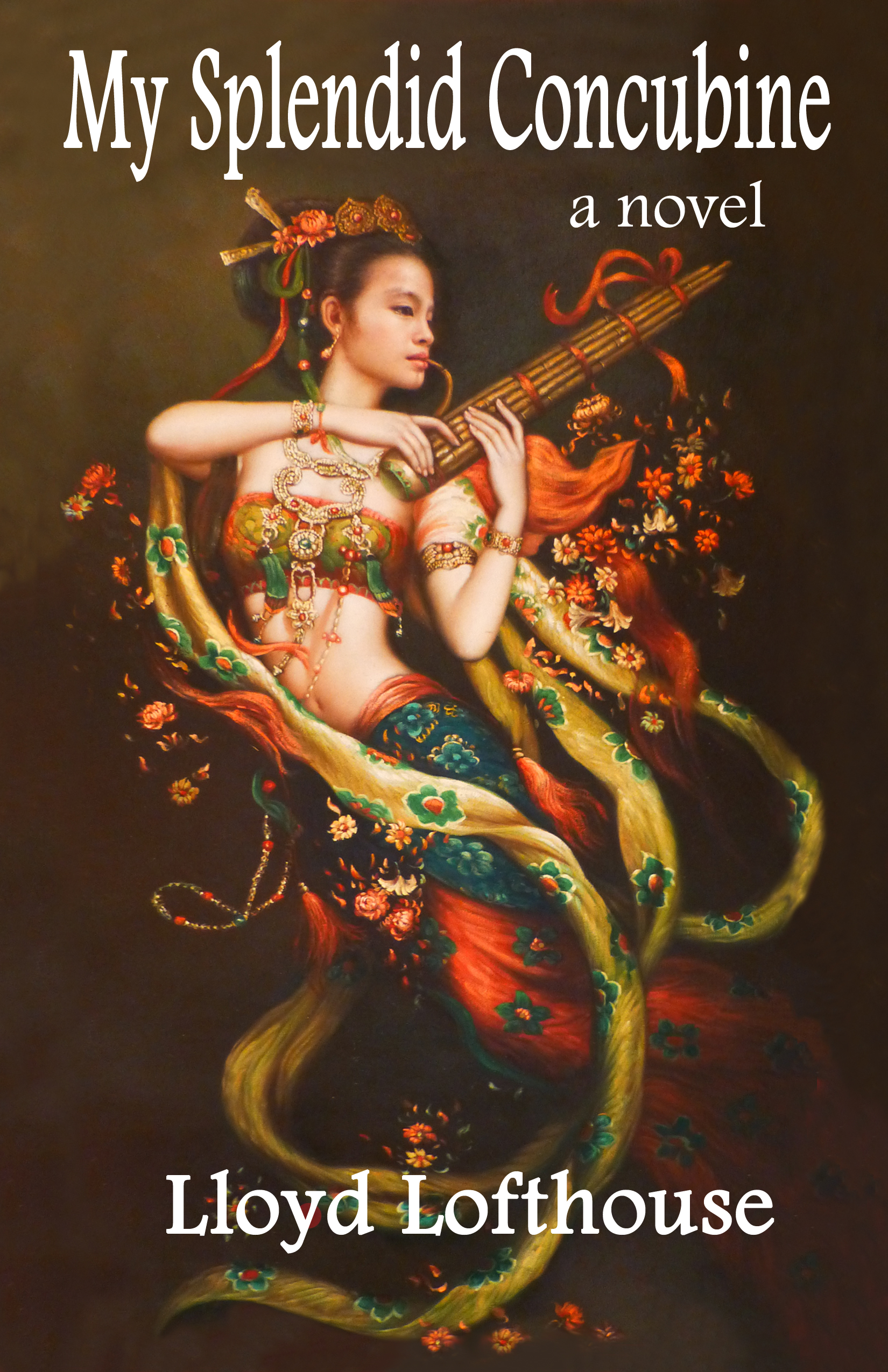
 E-book_cover_MSC_July_24_2013

Subscribe to “iLook China”!
Sign up for an E-mail Subscription at the top of this page, or click on the “Following” tab in the WordPress toolbar at the top of the screen.

About iLook China

China’s Holistic Historical Timeline


China Preserving its History

January 6, 2015

A few years ago, David Frum wrote on his blog (I think he deleted that post or closed his Blog since then) about China’s Early Empires referring to Belknap’s six-volume history of Imperial China. Frum said, “There is no Chinese equivalent of the Parthenon or the Roman Forum, no Pantheon or Coliseum. For all its overpowering continuity, China does not preserve physical remains of the past… He offhandedly mentioned at one point that there remained not a single surviving house or palace from Han China. There are not even ruins.”

David Frum—who was a speechwriter for President George W. Bush—was wrong.

I wrote a three-part series about the Han Dynasty (206 B.C. – 220 A.D.) tombs discovered in Xuzhou, which was the location of the capital of the Han Dynasty. The tombs, which have not been destroyed or looted, are now tourist attractions. A museum was built to house artifacts that were discovered. One tomb has a living room and a bedroom before the coffin chamber.  Since the tomb was built inside a hollowed-out rock mountain, it survived more than two millennia with evidence of how the Han Dynasty lived more than 2,000 years ago.

And I’ve toured the Ming tombs, and seen the graves of heroes from the Song Dynasty near the West Lake in Hangzhou, south of Shanghai.  Also, let’s not forget that the Grand Canal, which was started five centuries before the birth of Christ, is still in use today.

Then, if you visit Tibet, there’s the Potala Palace, which was first built in 637 AD and is still lived in. Although much of ancient China has vanished, there are still vestiges that equal or surpass what the Roman and Greek civilizations left behind.

Last but not least, there’s the Great Wall and China’s Terra-Cotta Warriors from the first emperor (260-210 BC). I wrote about Qin Shi Huangdi in this post: http://ilookchina.net/tag/the-first-emperor-of-china/

Though the beginning of the Great Wall of China can be traced to the third century B.C., many of the fortifications included in the wall date from hundreds of years earlier, when China was divided into a number of individual kingdoms during the so-called Warring States Period (Beginning between 481 – 403 BC) .

_______________

Lloyd Lofthouse is the award-winning author of My Splendid Concubine [3rd edition]. When you love a Chinese woman, you marry her family and culture too. This is the lusty love story Sir Robert Hart did not want the world to discover.

Honorable Mentions in General Fiction
2012 San Francisco Book Festival
2012 New York Book Festival
2012 London Book Festival
2009 Los Angeles Book Festival
2009 Hollywood Book Festival

Finalist in Fiction & Literature – Historical Fiction
The National “Best Books 2010” Awards

E-book_cover_MSC_July_24_2013

Subscribe to “iLook China”!
Sign up for an E-mail Subscription at the top of this page, or click on the “Following” tab in the WordPress toolbar at the top of the screen.

About iLook China

China’s Holistic Historical Timeline


China’s Annual Lunar New Year Migration

December 31, 2014

Imagine 220 million people on the move using the roads, rails and sky—all at the same time.

That’s what my family experienced in 2008 when we visited China during one of its national holidays, the Lunar New Year on February 7, the Year of the Rat. For 2015, the Year of the Goat lands on February 19.

In 2008, my sister and her youngest daughter went with us—and both are evangelical Christians who did not agree with China’s one-child policy. I heard this more than once but after they arrived in China and experienced that migration, they both stopped preaching about why the one-child policy was wrong.

At times, It was so crowded it felt as if we were swimming upriver through an ocean of people.

That’s when I decided that my next trip to China will not be during any of China’s national holidays—especially the Lunar New Year.

For readers who haven’t been to China, this may be your only chance to experience a taste of what it is like to live in a country with more than 1.3 billion people. By the way, 220 million people is equal to 70% of the population of the United States.

It’s possible that a passenger will have to stand for a trip of 16 to 48 hours to reach their destination.

For comparison, during the 35-day Thanksgiving to New Year holiday season in the United States, USA Today reports that Auto-club giant AAA projects that nearly 99 million Americans will travel more than 50 miles by car or air—less than half the number of people in China who travel during the Lunar New Year that’s celebrated for about 15 days.


2103 Lunar New Year in China

_______________

Lloyd Lofthouse is the award-winning author of My Splendid Concubine [3rd edition]. When you love a Chinese woman, you marry her family and culture too. This is the lusty love story Sir Robert Hart did not want the world to discover.

Honorable Mentions in General Fiction
2012 San Francisco Book Festival
2012 New York Book Festival
2012 London Book Festival
2009 Los Angeles Book Festival
2009 Hollywood Book Festival

Finalist in Fiction & Literature – Historical Fiction
The National “Best Books 2010” Awards

E-book_cover_MSC_July_24_2013

Subscribe to “iLook China”!
Sign up for an E-mail Subscription at the top of this page, or click on the “Following” tab in the WordPress toolbar at the top of the screen.

About iLook China

China’s Holistic Historical Timeline


Mao had his Little Red Book and Bill Gates has his Common Core

December 30, 2014

Lloyd Lofthouse's avatarCrazy Normal - the Classroom Exposé

For the second time in world history, the public schools of a country are under attack by powerful men. The first time a country waged war on its public schools was when Mao launched China’s Cultural Revolution (1966 – 1976).

How successful was Mao in destroying more than 2,000 years of public school tradition in
China? The answer may shock you. By the time Mao died in 1976, the literacy rate in China had plunged to 20%, and the poverty rate was 85%.

In the United States the biggest crime of the corporate education reformers is chasing profits and not dealing with the challenges of poverty. In fact, corporate education reform supported by billionaire oligarchs—for instance, Bill Gates, the Walton family, Eli Broad, and the Koch brothers—are doing nothing to deal with poverty. Instead they claim that if they get wealthier that will somehow magically solve poverty. When, at…

View original post 894 more words


Three Journeys to the West from China

December 30, 2014

No, this post is not about immigrants, tourists or Chinese armies invading America, because Chinese troops would have to swim the Pacific Ocean since China’s navy isn’t large enough to move a military force of that size.

For instance, China has one 26-year-old used, conventional aircraft carrier with 54 aircraft. The U.S. has twenty with three under construction with almost 100 aircraft on one carrier.

But this post is about China’s classic novel, “Journey to the West”, also known “The Monkey King”.

There are four novels that are considered Chinese classics—Romance of the Three Kingdoms, Dream of Red Chamber, Journey to the West and The Outlaws of the Marsh (some of these classics have been released with other titles), and there are three Chinese books titled “Journey to the West”.

One Journey to the West is nonfiction about K’iu Ch’ang Ch’un, who visited Genghis Khan in Persia between 1221 and 1224.

The second Journey to the West is another nonfiction account about Hsuan-Tsang (Xuanzang,  602  – 664 AD), a Buddhist monk who traveled to India to bring back Buddhist scriptures.

The third Journey to the West is the fictional romance that introduces the Monkey King and his friend the Pig. This Journey to the West is a classic Chinese mythological novel. It was written during the Ming Dynasty based on traditional folktales. Consisting of 100 chapters, this fantasy relates the adventures of a Tang Dynasty (618-907) priest Sanzang and his three disciples, Monkey, Pig and Friar Sand, as they travel west in search of Buddhist Sutra.

_______________

Lloyd Lofthouse is the award-winning author of My Splendid Concubine [3rd edition]. When you love a Chinese woman, you marry her family and culture too. This is the love story Sir Robert Hart did not want the world to discover.

Low-Res_E-book_cover_MSC_July_24_2013

Subscribe to “iLook China”!
Sign up for an E-mail Subscription at the top of this page, or click on the “Following” tab in the WordPress toolbar at the top of the screen.

About iLook China

China’s Holistic Historical Timeline