Facts Prove Foxconn a Better Place to Work and Live

July 6, 2010

The Huffington Post published another piece about Foxconn, a Taiwan based company, and mentioned, once again, the recent suicides among workers at their south China facility. The Post also reported that Foxconn might be planning to build a new factory in the city of Hebei in Henan province and hire another 300,000 workers. 

Since Foxconn already has about 800,000 workers in China, that would bring the total above a million. Does that mean more suicides are on the horizon? The answer may surprise you.

China already has one of the highest suicide rates in the world at 230 per million, while the global average is 100 per million. Source: Association for Asian Research
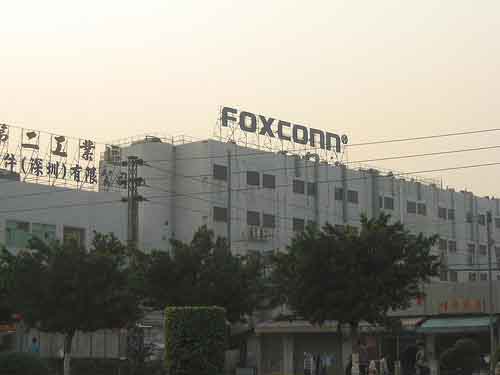
There were ten suicides at Foxconn in five months and several attempts were stopped proving that Foxconn has preventative measures in place. Since the suicide rate at Foxconn was 1.25 suicides per 100,000, the evidence suggests a much safer, healthier environment than outside Foxconn’s walls—including the US with 10.9 suicides per 100,000. Source: NIMH

In fact, I’m not alone in my opinion. Tom Foremski, writing for zdnet, says that the World Health Organization suicide figures for China show 18 male and 14.8 female suicides per 100,000.

The media is misrepresenting the facts about Foxconn.

Why?

A) Yellow Journalism
B)  It happened in China
C) Both A & B

See Roughed Up

_________________________

Lloyd Lofthouse is the award-winning author of the concubine saga, My Splendid Concubine & Our Hart. When you love a Chinese woman, you marry her family and culture too. 

Sign up for an RSS Feed for iLook China 


China’s Capitalist Revolution (Part 9 of 9)

July 6, 2010

Because of what happened in Tiananmen Square, foreign investors pulled out of China. Western businessmen fled. Foreign leaders and Deng’s Western friends criticized him.

The Maoists were back in power. Jiang Zemin said private companies had benefited from the reforms but in the turmoil, they supported the students against the government. We need to destroy them.

Deng Xiaoping was forced into retirement and his policies were reversed. Peasants were encouraged to reform collectives and private business was banned from competing with state enterprises.   The Maoists decided to clean house and close China’s doors to the West.

Desperate to save his reforms, at 87, Deng set out to save his reforms.  He went to Shanghai to encouraged supporters there to speak out.  When they did, the Maoists wanted to know who was criticizing them in the newspapers. Deng said he was responsible—don’t attack anyone but me.  Then Deng met with his old comrades in the People’s Liberation Army and the army announced they would protect Deng’s reforms and anyone who resisted would be dealt with.

Deng said, “Without reform and the Open Door policy, economic growth and improved living standards —any path for our country will be a dead end.” Deng’s call to arms worked.  In 1994, Jiang Zemin switched sides to support Deng. It was okay to get rich again.

Deng Xiaoping died in 1997. The country he inherited from Mao was the one of the world’s poorest. Today, it is one of the wealthiest.

Return to China’s Capitalist Revolution Part 8 or start with Part 1

_________________________

Lloyd Lofthouse is the award-winning author of The Concubine Saga. When you love a Chinese woman, you marry her family and culture too. This is the love story Sir Robert Hart did not want the world to discover.

To subscribe to “iLook China”, look for the “Subscribe” button at the top of the screen in the menu bar, click on it then follow directions.


China’s Capitalist Revolution (Part 8 of 9)

July 5, 2010

At Deng’s home, China’s leaders argued about what to do.  For a month, Deng resisted using force. He said, “Of course we want democracy, but we can’t do it in a hurry. If our one billion people jump into multi-party elections, we’d get chaos like the civil war we saw in the Cultural Revolution….”  Finally, Deng agreed to order martial law, but he wanted one more meeting with the student leaders.

The students were arrogant and demanded that the meeting be broadcast live so the nation could watch. One student leader said it wasn’t you who summoned us here. We summoned you. There was no way to bargain with them, and the students were disorganized.

The government’s negotiator said, “If you can’t control the situation and your comrades, then I won’t deal with you!”

The next day, the army was ordered into the city’s center, but demonstrators blocked roads and some army units joined the demonstrators.

One business leader warned the students not to push the party into a corner. Two weeks went by with the army and the demonstrators facing each other.

Finally, orders came to clear Tiananmen Square. Tens of thousands of soldiers moved on central Beijing.  Tanks rolled down streets.  There were announcements. “Stay in their homes. Democracy must come slowly step by step. You can’t grab it in the streets.”

The army closed in but the demonstrators were not afraid. Instead, they were angry. Then the army opened fire and the huge crowd turned and fled. Firebombs were tossed at military vehicles. Soldiers fired back. Demonstrators were shot and killed. Estimates of the dead ranged from 200 to 2,000.  It was a disaster for both sides.

Return to China’s Capitalist Revolution Part 7 or go to Part 9

_________________________

Lloyd Lofthouse is the award-winning author of The Concubine Saga. When you love a Chinese woman, you marry her family and culture too. This is the love story Sir Robert Hart did not want the world to discover.

To subscribe to “iLook China”, look for the “Subscribe” button at the top of the screen in the menu bar, click on it then follow directions.


China’s Capitalist Revolution (Part 7 of 9)

July 4, 2010

In the first three months of 1989, more than six-thousand corrupt officials were convicted. Many more were beyond the reach of investigators since some had the protection of high-ranking party officials in Beijing.

Then Deng’s right-hand man, who was very popular with the people, died from a heart attack. Without his voice to speak for the people, anger erupted over the corruption and rising prices. People flooded Tiananmen Square.

The protesters were not demanding Western style politics or an end to Communist Party rule as many in the West believe.  They wanted the government to listen to their opinions about   reforms and corruption.  The banners the protesters carried said, “We Support the Great Glorious Communist Party of China.”

However, inside the Great Hall of China, Deng was told the demonstrators wanted to overthrow the Communist Party.  Deng reacted with anger. He believed that Western style democracy would end China’s growth. He said, “We can’t have the separation of powers. We can’t copy the West.”

College students and workers came to Tiananmen Square to show support. Russia’s President Gorbachev arrived to see China’s progress.  The demonstrations were happening at the worst possible time. The protesters were an embarrassment.

As soon as Gorbachev left, Deng called a meeting to discuss what to do.  There were reports that people all over China were protesting.

Return to China’s Capitalist Revolution Part 6 or go to Part 8

_________________________

Lloyd Lofthouse is the award-winning author of The Concubine Saga. When you love a Chinese woman, you marry her family and culture too. This is the love story Sir Robert Hart did not want the world to discover.

To subscribe to “iLook China”, look for the “Subscribe” button at the top of the screen in the menu bar, click on it then follow directions.


China’s Capitalist Revolution (Part 6 of 9)

July 4, 2010

For those Red Hat capitalists who survived harassment from the hardliners, the rewards were huge—fortunes were made. Some Chinese were following Deng Xiaoping’s advice “To Get Rich Gloriously.”

However, there was an area of China’s industry that Deng couldn’t change—factory owned industries, which were outdated and inefficient. The state industries still placed politics over profit. In the average state-owned factory, 15 to 20% of the workers did nothing but read and shout slogans.

Deng decided to take state-owned industries from government management.  He said we are going to bring in experts to run our factories like they do in the West. In fact, Beijing was spending a quarter of its revenues supporting state-owned enterprises. The Chinese constitution guaranteed jobs and no one could be fired.

In 1986, Deng decided to allow unprofitable state-owned enterprises to close. Millions lost jobs. With people out of work, crime soared.  In 1989, Deng did away with price controls. There was a panic while workers in private industries were earning much more than people in state-owned industries.

Then bribery became a problem as those in charge at the local level started to accept bribes from foreign investors.

Return to China’s Capitalist Revolution Part 5 or go to Part 7

_________________________

Lloyd Lofthouse is the award-winning author of The Concubine Saga. When you love a Chinese woman, you marry her family and culture too. This is the love story Sir Robert Hart did not want the world to discover.

To subscribe to “iLook China”, look for the “Subscribe” button at the top of the screen in the menu bar, click on it then follow directions.