Different Cultures Different Laws

March 19, 2010

Language is a powerful tool. When abused by the media or “any” political agenda, the audience is misled and forms incorrect opinions. The Western media often judges actions in China based on Western law from a Judeo-Christian foundation.

Chinese law uses the Chinese Constitution as its basis—not the American Constitution.

China’s Legal System weighs the Law from different values

When the legal system in China arrests and finds political activists guilty, consider Article 28 from China’s Constitution. “The State maintains public order and suppresses treasonable and other counter-revolutionary activities; it penalizes acts that endanger public security and disrupt the socialist economy and other criminal activities, and punishes and reforms criminals”.

If you are not a Chinese citizen and you do not agree, don’t go to China. Understand that Chinese criminal law uses a mixture of Legalism, Confucius, Marxist, and a Leninist, Maoist philosophy as its guide in addition to being modeled on German Law.

Since 1979, China has educated its people about the law in the universities and other education institutions like the primary, middle and high schools. China has also publicized information about their legal system through the China Law Journal and many provincial and municipal journals, magazines, and newspapers. Public lectures are often organized in factories, mines, and rural communes in order to increase the people’s understanding of China’s Constitution and laws. Chinese citizens probably understand their country’s law better than most Americans do.

Discover Justice–a Matter of Opinion

______________

Lloyd Lofthouse is the award-winning author of The Concubine Saga. When you love a Chinese woman, you marry her family and culture too. This is the love story Sir Robert Hart did not want the world to discover.

Subscribe to “iLook China”!
Sign up for an E-mail Subscription at the top of this page, or click on the “Following” tab in the WordPress toolbar at the top of the screen.

About iLook China


Cracking a Tough Nut

March 19, 2010

Four hundred million is a tempting target. That’s how many people are on-line in China—a hundred million more than America’s population.

It looks like Google is pulling out of the Chinese market and its rival, Baidu (with 63% of the market), will win this round. But the fight isn’t over.  Microsoft may be the next contender to go toe to toe with Baidu. It has been reported that Microsoft’s search engine, Bing, which has less than 1 percent of the Chinese market, is moving quickly to use Google’s departure to its advantage.

Google’s reason for pulling out of China was a recent cyber attack. Well, why isn’t Baidu complaining? After all, a hacker group called the “Iranian Cyber Army” took over Baidu for four hours in January 2010. Baidu should claim Google was behind that attack.

See Google Recycled http://wp.me/pN4pY-2r


An Invasion of Fat

March 18, 2010

I remember one night when we ate in a Shanghai restaurant and at the next table, this overweight kid, maybe ten, said in a shrill voice, “I hate vegetables. Where’s the meat. I demand more meat.” Then he pounded the table with both fists while his face screwed up in a rage. His mother had an embarrassed look on her face but she didn’t say a word.

The Opium Wars in the 19th century that forced China to open its doors to foreign drug dealers (English, French, American, etc.) and Christian missionaries was nothing compared to the recent obesity invasion. In 2005, it was predicted that 200 million Chinese would be obese within 10 years.

McDonalds has more than 1,100 locations in China.
KFC has more than 2,900 in over 400 cities.
Pizza Hut has about 500.
Starbucks over a 1,000.

China’s bulging middle class has fallen in love with the Western fast food diet and couch potato lifestyle. Those hit worst with the expanding waistline are the pampered single-child generation. More than 11% are reportedly overweight and the number of obese children is rising at the rate of 8% a year. Much of the new fat is in wealthy urban centers such as Shanghai—where the obesity rate among primary school children hit 15.2% last year, according to the state media.

Read Doing Business in China

______________

Lloyd Lofthouse is the award-winning author of The Concubine Saga. When you love a Chinese woman, you marry her family and culture too. This is the love story Sir Robert Hart did not want the world to discover.

Subscribe to “iLook China”!
Sign up for an E-mail Subscription at the top of this page, or click on the “Following” tab in the WordPress toolbar at the top of the screen.

About iLook China


An Unhealthy War of Words

March 17, 2010

Both China and America face a crises in health care, because many in both countries cannot afford it.

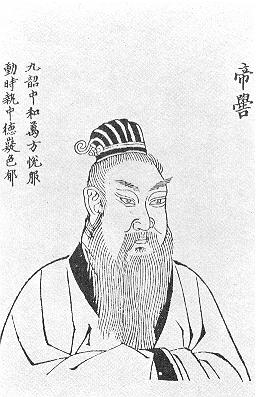
Emperor Wudi (Han Dynasty, 141 BCE) may have made the right choice. Wudi wanted to make sure that peasants could afford salt and iron so his government controlled the prices. The private sector that sold these commodities was upset, because they couldn’t amass the great fortunes they wanted.

Emperor Wudi - Han Dynasty

After Emperor Wudi’s death in 87 BCE, a great debate (similar to the debate over health care in America today) took place.  It was called the “Debate on Salt and Iron”.  It pitted the advocates of a strong central state against those favoring more autonomy for local elites—people who owned businesses in the private sector. In the end, the government program that controlled the prices of essential commodities was abolished.

The results—

1. The imperial court became more concerned with an extravagant social life and stopped doing their job running the country. Greed became rampant.

2. Powerful families manipulated the emperor and his ministers—like corporate and special-interest lobbyists in America today. For a few, fortunes grew while many peasants had to go without.

3. Revenues declined and military affairs were neglected.

4. The Han Dynasty collapsed.

Health is an essential commodity, and Bill Maher makes a good case for this in his piece at the Huffington Post.

To learn more, read “China’s Health Care During Mao’s Time” http://wp.me/pN4pY-br


China Bashing

March 16, 2010

Americans need their boogiemen. Many Americans blame teachers when kids don’t learn. Many also blame liberals when the economy or a war goes wrong. Kids blame mom and dad for things the kid did. After all, mom and dad raised the child. It seems rare when an American takes the blame for anything.

China bashing is still popular as US lawmakers attack China ahead of November elections. source  The big difference between now and then is China’s standing in the world. In the 19th century, China was weak. Today, China is strong.

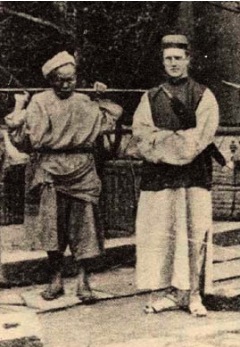
Dr. George Morrison (on the right)

Americans did not invent China bashing. That started in the 19th century. The man responsible was probably Dr. George Ernest Morrison, Peking correspondent for the London Times. He was the only full-time resident journalist in China’s Imperial capital, and his lies influenced the history of China for almost a century.

It is ironic that Sir Robert Hart, the main character in my novel, who was in Peking and witnessed Morrison’s conduct and read his inaccurate newspaper reports, saw him as lazy, self-indulgent, intolerant, racist and unprincipled.

Many of the London Times pieces Morrison wrote were littered with lies and deceit influencing people’s opinions toward China to this day.

To read another example of China Bashing, see No Political Machine

_______________

Lloyd Lofthouse is the award-winning author of the concubine saga, My Splendid Concubine & Our Hart. When you love a Chinese woman, you marry her family and culture too. 

Sign up for an RSS Feed for iLook China