Sun Tzu’s “The Art of War” – 4/10

August 20, 2010

Sun Tzu said, “Keep plans as dark as night.”

The NVA (North Vietnamese Army) and Vietcong did this by moving supplies and troops through miles of tunnels built in the 1950 and 60s.

Deception was also one of Sun Tzu’s rules.

To achieve deception, the NVA and Vietcong announced they would honor a cease-fire on January 31, 1968, the Tet New-Year Holiday.

Sun Tzu said, “In battle use a direct attack to engage and an indirect attack to win,” meaning to deceive your enemy so you can win your real objective.

To achieve this goal, the NVA launched a surprise attack on Khe Sanh, a remote US base, one week before the Tet Offensive.

The South Vietnamese and American military are surprised when the NVA launches the Tet Offensive.  At first, it looks like the Vietcong will win, but the NVA ignored one of Sun Tzu’s rules—moral influence.

Moral influence means a leader must have the people behind him to win.

During the early days of the Tet, the Vietcong rounded up and brutally assassinated several-thousand South Vietnamese government workers and killed many Catholic nuns losing the support of the people.

However, in America, watching the violence of the Tet Offensive on TV turned more Americans against the war.

Eight years later, in 1975, Saigon falls to the NVA and America loses the war even though the US had military superiority.

Go to Sun Tzu’s “The Art of War” – Part 5 or return Sun Tzu’s “The Art of War” (HQ) – Part 3

Lloyd Lofthouse is the award-winning author of My Splendid Concubine [3rd edition]. When you love a Chinese woman, you marry her family and culture too. This is the unique love story Sir Robert Hart did not want the world to discover.
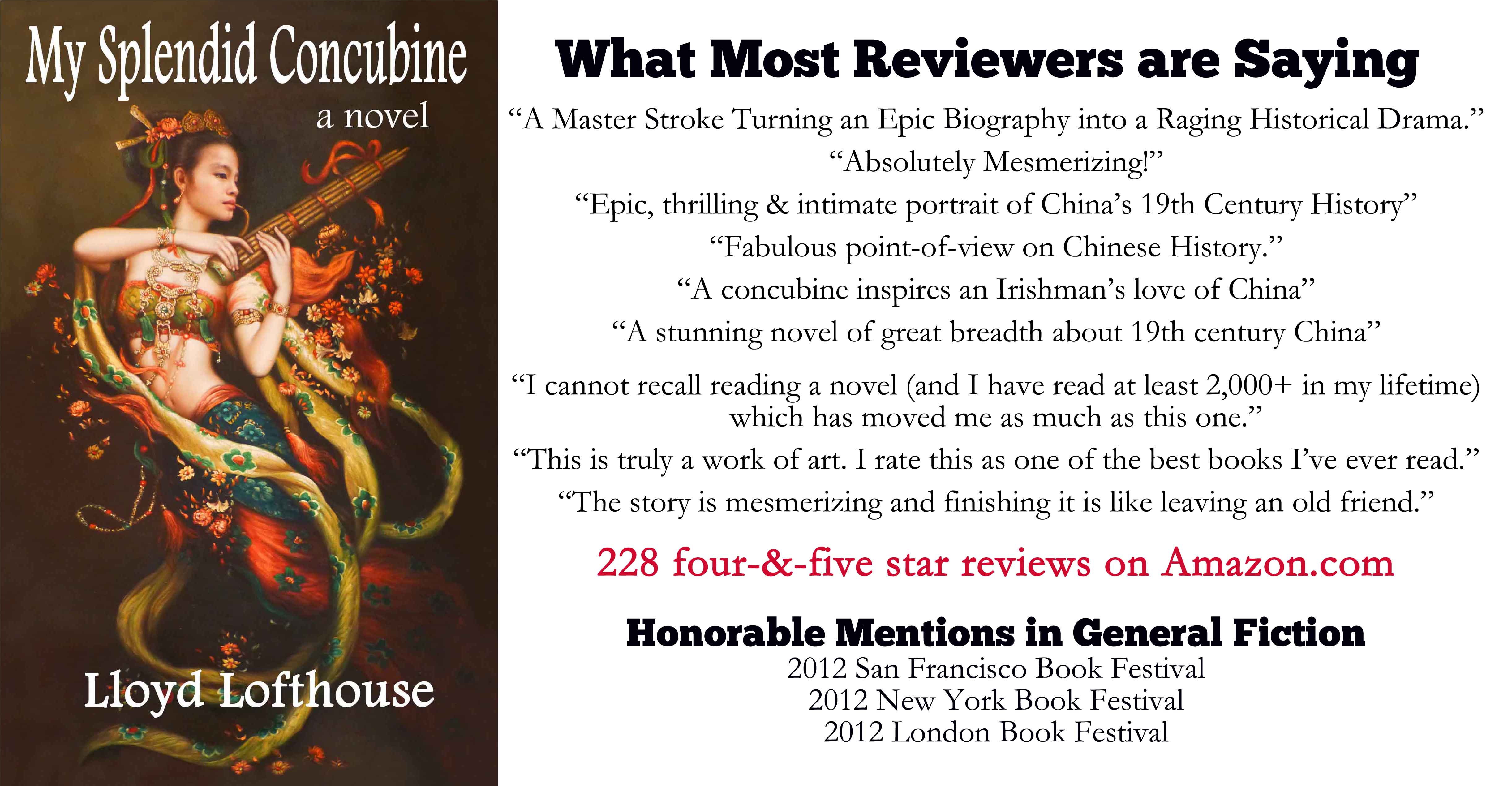
A1 on March 13 - 2016 Cover Image with BLurbs to promote novel

Where to Buy

Subscribe to “iLook China”!
Sign up for an E-mail Subscription at the top of this page, or click on the “Following” tab in the WordPress toolbar at the top of the screen.

About iLook China

China’s Holistic Historical Timeline


Sun Tzu’s “The Art of War” – 3/10

August 20, 2010

Sun Tzu liked the enemy to maneuver and respond to his moves. This way he was in charge of the battlefield.

A US report after the Vietnam War revealed that 80% of the time, it was the North Vietnamese and Vietcong who decided where and when to fight.

Sun Tzu said, “Once you know the enemy’s strengths and weaknesses, you can avoid the strengths and attack the weaknesses.” At the beginning of the war, almost 80% of Americans supported it.

As the Vietnam war continued with mounting US causalities, that support at home shifted against the war, which achieved another of Sun Tzu’s rules, “The skillful leader subdues enemy’s troops without any fighting. One does not win wars by winning battles.”

Although the North Vietnamese and Vietcong did not win battles, they won the war by turning the American people against it. To achieve this goal, the North Vietnamese commander was willing to lose ten men for every American killed.

In the end, the US lost 53 thousand troops and the North Vietnamese and Vietcong more than a million with several million more noncombatants killed as collateral damage to the American bombing.

Sun Tzu felt spies were important, and he devoted one chapter to spies.  He said, “Use your spies for every kind of business,” and the North Vietnamese and Vietcong followed that advice.

Sun Tzu said, “An accurate knowledge of the enemy is worth ten divisions.”

He also said, “Let your plans be as dark as night – then strike like a thunderbolt.”  The Tet Offensive in January of 1968 was that thunderbolt.

Go to Sun Tzu’s “The Art of War” – Part 4 or return to Sun Tzu’s “The Art of War” (HQ) – Part 2

Lloyd Lofthouse is the award-winning author of My Splendid Concubine [3rd edition]. When you love a Chinese woman, you marry her family and culture too. This is the unique love story Sir Robert Hart did not want the world to discover.

A1 on March 13 - 2016 Cover Image with BLurbs to promote novel

Where to Buy

Subscribe to “iLook China”!
Sign up for an E-mail Subscription at the top of this page, or click on the “Following” tab in the WordPress toolbar at the top of the screen.

About iLook China

China’s Holistic Historical Timeline


The Danger of Arrogance (5/5)

August 18, 2010

In the 18th century, China had no competition, and the Qianlong Emperor was not alone in his belief that China was too civilized and powerful to worry.

However, in less than a century, China would face defeat during the Opium Wars caused by England and France. The century that followed would devastate China until Deng Xiaoping’s rise to power after Mao died.

Other factors that weakened China during the 19th century, were the rebellions caused by converted Chinese Christians and Muslims that would cause more than 30 million deaths.  

Now that China has recovered its power, it would be interesting to see if the Chinese have learned from the Qing Dynasty’s mistakes.  America could also learn something from the British Empire’s arrogance and why the sun stopped shinning twenty-four hours a day on that empire.

I’m not going to hold my breath.

Return to the Danger of Arrogance – Part 4

_______________

Lloyd Lofthouse is the award-winning author of the concubine saga, My Splendid Concubine & Our Hart. When you love a Chinese woman, you marry her family and culture too. 

Sign up for an RSS Feed for iLook China


In the National Interest

August 17, 2010

It seems America might be helping Vietnam become a nuclear power.

The Hindu reports that China is protesting what might be an American “double standard”.  A leading Chinese strategic expert on nuclear policy and disarmament told The Hindu that any move to allow Vietnam, which neighbors China, to enrich its own uranium would be “double standards” on the part of the U.S.…

This latest hot-button issue took off soon after the Wall Street Journal reported that the US was talking with Vietnam about sharing nuclear fuel and technologies that would include Vietnam enriching its own fuel, which is used in nuclear weapons.

Why would the U.S. play this dangerous game?  The answer may be found from Margi Mason of the Associated Press.  She writes that the U.S. has a “national interest” in seeing the claims resolved in the South China Sea.

So, what is in the national interest of the US to help Vietnam?  The answer is oil and to keep our military close to China while gaining allies. 

The US population needs the gasoline and diesel made from oil to drive to work and shop. The huge oil companies need to sell that oil, gasoline and diesel so they can pay wages to their employees while making profits. America’s national interest is everything to do with jobs and the economy.

However, China is not happy because what the US is doing in Vietnam is not in China’s national interest.

Discover The Real Police State

_______________

Lloyd Lofthouse is the award-winning author of the concubine saga, My Splendid Concubine & Our Hart. When you love a Chinese woman, you marry her family and culture too. 

Sign up for an RSS Feed for iLook China


The Danger of Arrogance (4/5)

August 17, 2010

China’s 18th century arrogance is evident in the letter the Qianlong Emperor wrote to King George III.

Emperor Qianlong’s letter to King George III says, “As your Ambassador can see for himself, we possess all things. I see no value on objects strange or ingenious, and have no use for your country’s manufactures.…

“Hitherto, all European nations, including your own country’s barbarian merchants, have carried on their trade with our Celestial Empire at Canton. Such has been the procedure for many years, although our Celestial Empire possesses all things in prolific abundance and lacks no product within its own borders.

“There was therefore no need to import the manufactures of outside barbarians in exchange for our own produce. But as the tea, silk and porcelain which the Celestial Empire produces, are absolute necessities to European nations and to yourselves, we have permitted, as a signal mark of favour, that foreign hongs should be established at Canton, so that your wants might be supplied and your country thus participate in our beneficence.”

At the end of the letter, Emperor Qianlong warns King George III what will happen to any merchants who try to circumvent his laws and says, “Do not say that you were not warned in due time! Tremblingly obey and show no negligence! A special mandate!”

This exchange took place in 1793.  At that time, the Chinese didn’t need anything from any country.  In fact, for more than a thousand years, the Chinese had been more technologically advanced in printing, paper production, weaponry, etc than any country on the planet.

See Foreign Devils and Barbarians or return to the Danger of Arrogance – Part 3

_______________

Lloyd Lofthouse is the award-winning author of the concubine saga, My Splendid Concubine & Our Hart. When you love a Chinese woman, you marry her family and culture too. 

Sign up for an RSS Feed for iLook China