Earth to Earth, Dust to Dust, Ashes to Ashes

March 31, 2010

It may take more than a few decades to change China’s culture to value girls equal to boys. China’s government is working to make that happen—that journey started in 1949, when Mao said, “Women hold up half the sky.” It isn’t easy overcoming several thousand years of culture.

Faith’s journey started at the age of two from rural China where poverty and a life of hard labor can be crushing. To encourage poor parents, who want a boy instead of a girl, not to throw a female infant in the closest river, government run orphanages have a no-punishment policy toward parents that abandon girls. Orphanages are surrounded by a wall with a drawer in that wall where parents may leave the child. The parent rings a bell, then hurries away.

Michelle Dremmer traveled from Chicago to China  more than fifteen years ago to rescue one of those orphans. She fell in love with the two-year-old, who was past the desired age of many adoptive parents, and she gave Faith a life of “happiness, opportunity and love” that few orphans in China experience.

Faith Dremmer

Another journey of five-hundred miles started on bikes and ended in tragedy for Faith, who was 17. I first wrote about this in Saying Goodbye, soon after hearing about the accident that claimed Faith’s life. Two of the girls survived. One spent eleven hours in surgery.

The driver of the van, who hit the girls, was an 86-year-old man. He was not injured. A friend of the driver said he was a good Christian who never drank and was close to his family—three children, six grandchildren and several great-grandchildren. I cannot imagine the burden of guilt he will carry for what life he has left.

I cry easily watching movies. It doesn’t take much to turn on the tears. My wife and daughter know this and when one of those scenes appears on the screen, they always look.

Doesn’t make sense. I shouldn’t cry that easily. After all, I’m a former United States Marine. I fought in Vietnam and taught in tough, barrio schools for thirty years where you had to be “mean” (what I call tough love without physical violence) to survive. It embarrasses me when those tears appear in public against my will.

The tears let lose this morning when I was alone. I went on-line and read about Faith’s funeral in the Chicago Tribune. Nearly 1,300 mourners attended. Actually, I read six pieces that started with the accident and Faith’s death to the one where a photo with my  daughter and three of Faith’s friends were walking back into the temple with their arms around each other. They had just carried Faith’s coffin to the hearse.

In another Chicago Tribune piece, there’s a picture showing the four girls carrying the coffin from the temple. The pain is etched on their faces. Maybe I cry easily when others suffer because I saw so much brutality and death in the war, or it’s something in my DNA that I inherited from my mother. She was the weepy sort—not my father.

I’m looking at the “goodbye” photo in the Chicago Tribune as I write this. I see one girl’s head bent in agony.

Although I can’t see her face and eyes, my daughter is holding a tissue in one white gloved hand. I think she is crying.

Every since I drove my wife and daughter to the airport, I’ve been alone with my thoughts—my emotions.

I didn’t know Faith as well as my wife and daughter did. My wife was with Michelle when they went to China to get Faith. My daughter spent six early years of her life in the same house with Faith and Michelle. As children, they grew up closest friends. As teens, they were separated by more than two thousand miles.

I read some of Faith’s words in the Chicago Tribune and heard her voice. “You ask me who my mother is, and I say Michelle Dremmer. She is my mother and will always be.” And Michelle says, “I didn’t save Faith. She saved me.”

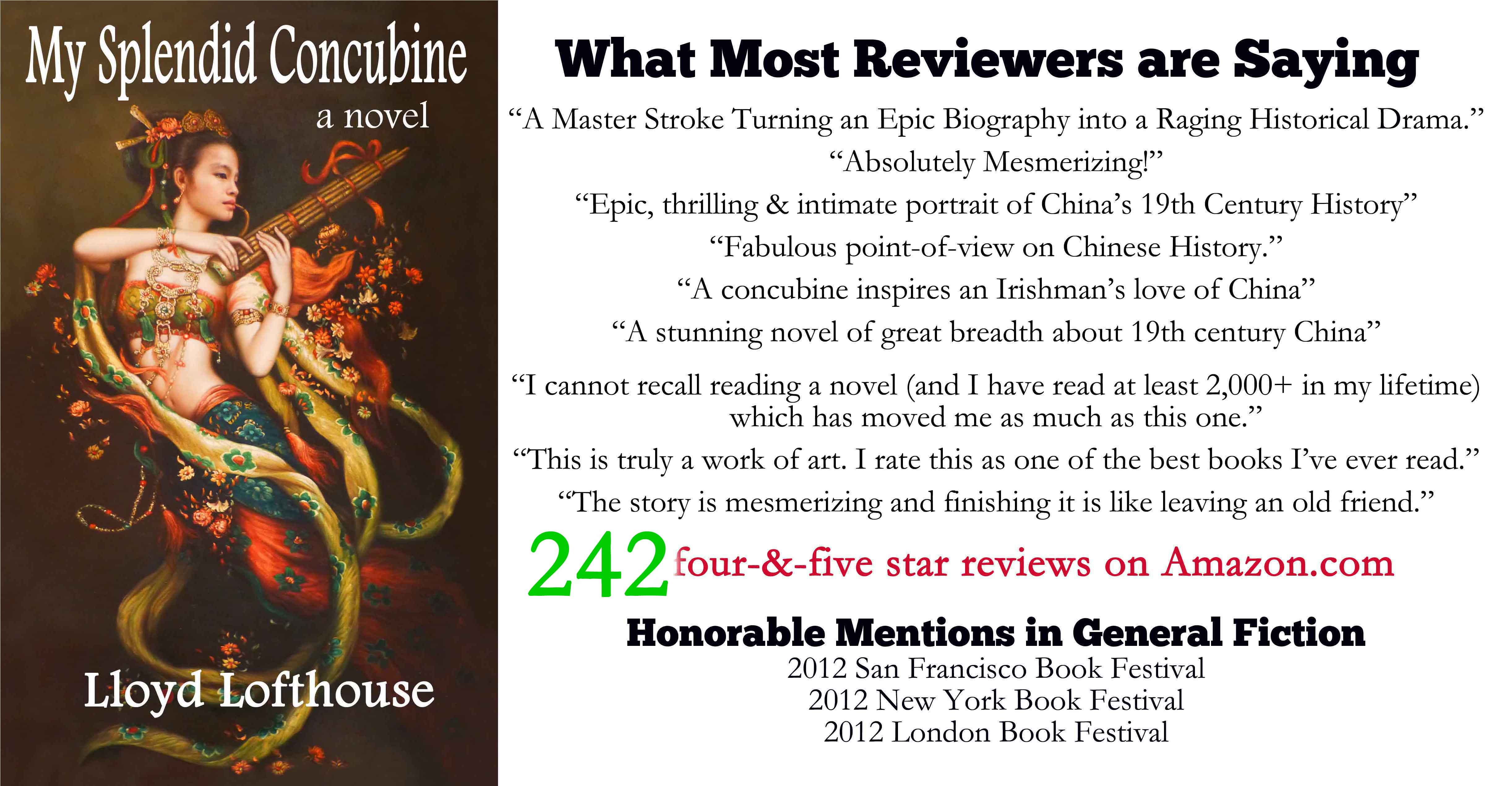
1a-242-what-most-reviewers-are-saying-jan-16-2017

Where to Buy

Subscribe to “iLook China”!
Sign up for an E-mail Subscription at the top of this page, or click on the “Following” tab in the WordPress toolbar at the top of the screen.

About iLook China

China’s Holistic Historical Timeline

Spring Festival – The Year of theTiger

March 31, 2010

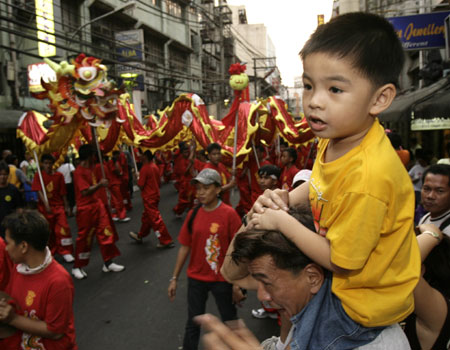
The Chinese New Year is important to most Chinese the world over. It is based on the lunar calendar and is known as the Spring Festival, which can be traced back more than 4,000 years, and it lasts for three days—the last day of the last lunar month and the first two days of the first lunar month. This year, the Spring Festival took place between February 14 to 16 (Gregorian Calendar).

During the Spring Festival, families paste scrolls on doors with the Chinese character ‘Fu’ (), meaning good fortune and happiness. There are firecrackers and fireworks. All family members gather to eat. It is traditional to eat certain foods like jiaozi, dumplings, fish, spring rolls, and sticky rice balls (tangyuan).

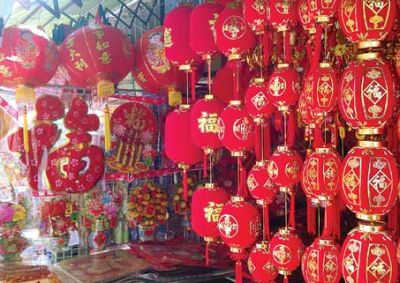
Spring Festival Lanterna

The Chinese lunar New Year is one of eight traditional festivals in addition to several government holidays. 2010 is the year of the tiger—known by its formal name of Geng Yin, year 4707 in the lunar Chinese calendar.

Discover Chinese Yu Opera

______________

Lloyd Lofthouse is the award-winning author of the concubine saga, My Splendid Concubine & Our Hart. When you love a Chinese woman, you marry her family and culture too.

If you want to subscribe to iLook China, there is a “Subscribe” button at the top of the screen in the menu bar.


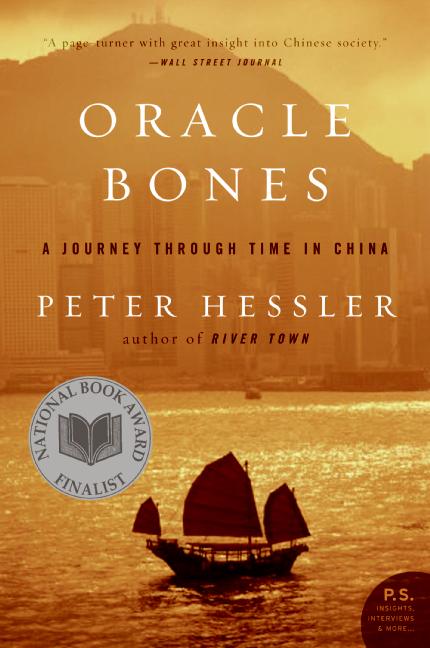
Peter Hessler, an expatriate, on China

March 30, 2010

Peter Hessler is a Beijing correspondent for the New Yorker. He has lived in China for fifteen years. After leaving the Peace Corps, Hessler freelanced for Atlantic Monthly and the New York Times before returning to China in 1999 as a Beijing-based freelance writer.

I agree with Hessler when he said in a CNNGo interview, “People in China are not forthcoming like Americans; they don’t like to tell you their personal story. It’s a type of modesty, I think, in a culture where people are not encouraged to see themselves as the center of the universe.”

I have an American born-again Christian friend who has bragged about Christianity being the fastest growing religion in China. I wonder what he’d say if he read what Hessler had to say here, “The Chinese relationship with religion is pragmatic and fluid; people often change their faith very quickly. And I don’t see them following religion to a degree where it’s clearly not in their self-interest….”

On happiness, Hessler says, “At this particular moment I think that Americans…might be less happy than Chinese people. The Chinese can roll with the punches…. Everybody in China has seen ups and downs; if they get laid off from the factory, they just go back to the village and play mah-jong….”

Discover The Influence of Confucius

______________

Lloyd Lofthouse is the award-winning author of the concubine saga, My Splendid Concubine & Our Hart. When you love a Chinese woman, you marry her family and culture too.

If you want to subscribe to iLook China, there is a “Subscribe” button at the top of the screen in the menu bar.


An Insider’s View from Speak Without Interruption

March 30, 2010

In this post, instead of hearing form an outsider who has visited China and studied the culture for a decade while writing two novels about Robert Hart, the Godfather of China’s modernization, let’s see what Will Liu writes about China, his home.

Lunar New Year in China

“This Chinese New Year Season, something did surprise me. As a rule, every year…, I must make the trip to the hometown of my wife, where her father still lives…. What astonished me is that I could not find anybody smoke in the bus! Just last year and before, that was what tortured me most. You cannot avoid smoke, no matter on a bus or in a cab.”

Liu write about the differences he sees between cities.

Then in Part II, Liu writes, “Now, more and more people, especially young people celebrate Christmas Day. Nevertheless, we still take the Chinese New Year as our major … holiday, which we call the Spring Festival. Like the Christmas Season, we have a long Chinese New Year Season, typically the government approves a legal vacation of 3 days from New Year’s Eve till January the 2nd according to the Chinese lunar calendar.”

See another point-of-view from and expatriate, Tom Carter’s Teaching English in the Middle Kingdom http://wp.me/pN4pY-is


Evil Tobacco in Big China

March 30, 2010

Cigarettes are evil.  The person smoking the cigarette may not be evil but the pain and suffering that cigarettes cause is. I watched a father-in-law, a neighbor, an aunt and my father die from the ravages from tobacco.  The last few years of my father’s life, he wore a breathing mask attached to a tank of oxygen.  His freedom was limited to the fifty-foot hose connected to that tank.

Smoking Kills

Margie Mason (Associated Press) wrote about smoking and listed some frightening statistics.

  • Thirty percent of the world’s smokers are in China.
  • In the next 15 years, an estimated 2 million will die from it.
  • The largest tobacco grower in the world is in China.
  • Heart disease, linked to smoking, is already killing a million a year.
  • China has more cases of diabetes than any country.

Dr. Judith Mackay said, “You have to price them (cigarettes) out of the hands and pockets and the mouths of children.”

Hong Kong may be showing the rest of the mainland how to cut back on tobacco use by putting high taxes on cigarettes as we have done in America. The Chinese government may be watching and hoping that this cycle of doom can be slowed.

Learn more from Smoking Gun

______________

Lloyd Lofthouse is the award-winning author of The Concubine Saga. When you love a Chinese woman, you marry her family and culture too. This is the love story Sir Robert Hart did not want the world to discover.

Subscribe to “iLook China”
Sign up for an E-mail Subscription at the top of this page.

About iLook China