Traditional Chinese Diet

April 11, 2010

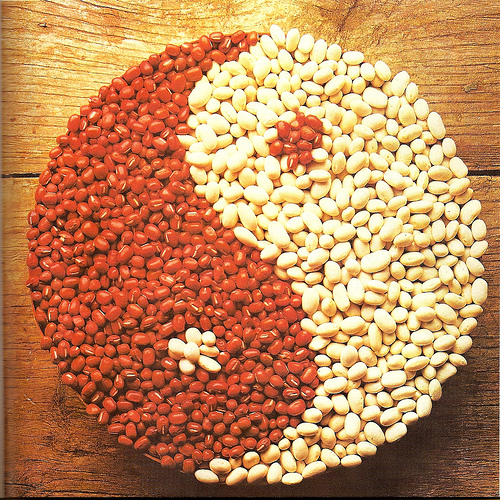
The concept of balance as taught by Confucius and Lao Tzu (Taoism) also plays an important role in diet. In China, yin foods are considered calming. It is believed that traditional Chinese foods come in three categories—yin, yang and neutral.

Yin foods should be eaten in summer and only in moderation in the winter as they are all very cooling. Yin foods are cool or cold in nature, clear away heat and eliminate toxins. Yang is the opposite of yin, and foods in this category are considered warm, dispel cold and treat symptoms from too much yin.

Some yin foods: Bananas, Clams, Crab, Grapefruit, Lettuce, Watercress, Watermelon, Apples, Cucumber, Pears, Mango, Spinach, Strawberries, Tomatoes

The yin and yang of food

Some yang foods: Cherries, Chicken, Dates, Ham, Leeks, Mutton, Peaches, Raspberries, Shrimps, Sunflower Seeds, Wine, Garlic, Ginger, Onion, Pepper

Some neutral foods: Beef, Beets, Carrots, Celery, Corn, Egg, Potatoes

The Chinese philosophy for eating is different from America and the West. Traditional Chinese medicine applies these philosophies to avoid or treat disease through diet. Once a Chinese doctor determines the nature of an imbalance, he or she aims to restore balance through acupuncture, herbs, and changes in diet or lifestyle. It is believed that as balance is restored in the body, so is health.

See “Health Care Without Drugs” http://wp.me/pN4pY-ey

Sign up for an RSS Feed for  iLook China

Lloyd Lofthouse is the author of the award winning My Splendid Concubine and writes The Soulful Veteran and Crazy Normal.


Yin Yang

April 11, 2010

Yin Yang is about balance.

In many ethical systems, the right path is the one that does not stray far from the middle. Aristotle preached that virtue was striking a balance between the vices of excess and of defect. A similar concept was presented by Plato, who was influenced by Pythagorean (570 -495 BC) ideas.

The concept of  balance is also an important aspect of  Confucianism since the philosophy of Yin Yang appeared about the same time as Confucius (551 – 479 BC), who wrote of a harmonious life that avoids excesses and deficiencies where wisdom was learned from both the old and the young, the high and the low.

Since Lao Tzu (the founder of Taoism and the concept of Yin and Yang) and Confucius lived about the same time, they may have met and shared thoughts.

The Doctrine of the Mean was a basis for civil service examinations in China from 1312 to 1905.

Confucius

The concept of Yin and Yang applies to many issues of life. In Taoism heaven is masculine and earth is feminine suggesting the dependence of the entire creation upon the Creator.

A whole series of possible interactions between the Yin and Yang in life is contained in the Chinese Book of Changes, the i Ching.

Discover Learning from China’s History

______________

Lloyd Lofthouse is the award-winning author of the concubine saga, My Splendid Concubine & Our Hart. When you love a Chinese woman, you marry her family and culture too.

If you want to subscribe to iLook China, there is a “Subscribe” button at the top of the screen in the menu bar 


Twin Disasters Shine a Light on Bias

April 10, 2010

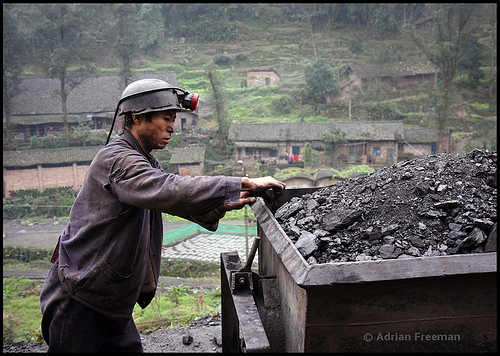
In China, a coalmine is flooded and traps more than a hundred. The Huffington Post reports this and says, “The real issue for the government (China’s) is to learn the lessons from this…The fundamental issue is, the miners should never have been put in this situation in the first place.”

In another piece, “A West Virginia coal mine explosion demands action”, Washington Post. “A huge explosion at the Upper Big Branch coalmine…claimed the lives of 25 miners.” This happened even after Congress passed the Mine Improvement and New Emergency Response act to make it safer.

After the US Congress passed this tougher law, the company that owned the West Virginia mine was cited with several safety violations prior to the explosion but was allowed to continue operating.

It seems the miners didn’t speak out for fear of losing their jobs. True Slant.com said, “Interesting how the West Virginia state police are necessary to allow the mining company CEO to speak now. He probably wouldn’t need them if the miners had been allowed to speak months ago.”

The US Bill of Rights protects freedom of speech but that freedom was written to protect US citizens from the government—not to protect people from corporations. The Huffington Post was right about one thing, “The miners should have never been put in this situation in the first place.”

See Human Rights the Chinese Way http://wp.me/pN4pY-m7

Sign up for an RSS Feed for  iLook China


The Yangqin

April 7, 2010

The yangqin, the Chinese Hammered Dulcimer, probably did not originate in China. It came from either Europe or Persia about five centuries ago and was adapted to fit Chinese music.

One theory says that the yangqin came to Chinese on the Silk Road. A second theory says it arrived in China with Portuguese traders in the 1500s.  A third theory says the instrument was developed in China without foreign influence from an ancient stringed instrument called a Zhu.

However, it is a young instrument by Chinese standards, and was first heard during the Ming Dynasty (1368 to 1644).  Later, it was commonly used in Chinese Operas. In Modern China, the yangqin is a major discipline in the College of Music.

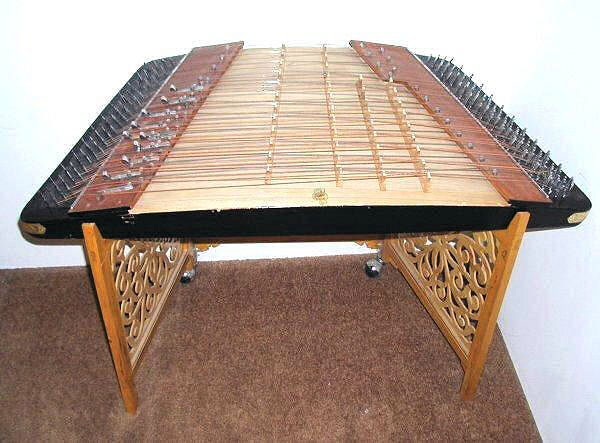
A Yangqin or Chinese Hammered Dulcimer

The yangqin has over 100 strings that are struck with thin bamboo sticks that have rubber tips on one end.  When struck with the rubber end, a soft sound is heard.  When the strings are struck with the other end of the stick, without the rubber tip, a crisper sound is heard.

Around the world, there are many versions of the hammered dulcimer all designed and played in a similar fashion, but each country has its own distinct sound influenced by culture.   

If you enjoyed learning about and listening to the yangqin, see The Pipa

_________________________

Lloyd Lofthouse is the award-winning author of the concubine saga, My Splendid Concubine & Our Hart. When you love a Chinese woman, you marry her family and culture too. 

Sign up for an RSS Feed for iLook China 


Dictatorship Defined

April 7, 2010

There is so much misleading information on the Internet and from the Western media regarding China that it boggles the mind. For example, China’s President is listed as a dictator but by definition, he cannot be a dictator.

Dictatorship: 1) government by a ruler who has complete power 2) a country that is ruled by one person who has complete power (source: Longman Advanced American Dictionary)

Chinese Constitution: Article 1

Article 1. The People’s Republic of China is a socialist state under the people’s democratic dictatorship led by the working class and based on the alliance of workers and peasants. The socialist system is the basic system of the People’s Republic of China. Sabotage of the socialist system by any organization or individual is prohibited. Source: Chinese Constitution

I asked my wife, “How can China use the term dictatorship in Article 1 if China isn’t ruled by a dictator?”

She replied, “In Chinese, ‘people’s democratic dictatorship‘ means the people have the power. It’s a translation error.”

I then Googled dictatorship and discovered Parade’s Annual list of…the World’s 10 Worst Dictators.

Parade’s definition of a dictator says, “A ‘dictator‘ is a head of state who exercises arbitrary authority over the lives of his citizens and who cannot be removed from power through legal means.” Hu Jintao, China’s president, was number six on Parade’s list, but the claims used to include Hu Jintao are wrong.

Presidents Hu Jintao and George Bush

For example, Parade claims that at least 400,000 residents of Beijing were forcibly evicted from their houses prior to the 2008 Olympics. That’s not true—the people sent from Beijing before the 2008 Olympics was transient labor and did not have residence cards and could not own property in Beijing. They were not legal residents and many transient laborers in China rent rooms shared with others in a communal environment crowded with bunk beds crammed in every possible space—like a military barracks. I know, because I’ve seen places like this in Shanghai. I also learned that the government paid for the transportation costs.

The reason Beijing sent those people away was because some were from Tibet and Xinjiang and may have been separatists, who might have staged protests to embarrass China—something the Chinese government avoids like the plague. The truth is, those people were sent home to their villages and were allowed to return to work after the Beijing Olympics. For them, it was like a vacation. Most also return to their villages during the Chinese New Year to be with their families because that’s where their homes are.

Since the Chinese Constitution rules China, Hu Jintao does not exercise arbitrary authority over the lives of his citizens. In fact, I doubt if he makes any legal decisions since the Chinese Constitution puts that power in the hands of China’s legal system. Discover more at China Law and Justice System

Parade is also wrong that China’s president cannot be removed from power through legal means.

Article 79 says, “The term of office of the President and Vice-President of the People’s Republic of China is the same as that of the National People’s Congress, and they shall serve no more than two consecutive terms.”

Article 59. The National People’s Congress is composed of deputies elected by the provinces, autonomous regions and municipalities directly under the Central Government, and by the armed forces.

Article 63. The National People’s Congress has the power to recall or remove from office the following persons:

(1) The President and the Vice-President of the People’s Republic of China;

(2) The Premier, Vice-Premiers, State Councillors, Ministers in charge of Ministries or Commissions and the Auditor-General and the Secretary-General of the State Council;

(3) The Chairman of the Central Military Commission and others on the commission;

(4) The President of the Supreme People’s Court; and

(5) The Procurator-General of the Supreme People’s Procuratorate.

Discover Stereotypes and/or The Failure of Multiculturalism in the United States

______________

Lloyd Lofthouse is the award-winning author of The Concubine Saga. When you love a Chinese woman, you marry her family and culture too. This is the love story Sir Robert Hart did not want the world to discover.

To subscribe to “iLook China”, look for the “Subscribe” button at the top of the screen in the menu bar, click on it then follow directions.