The Powerful Peony

June 8, 2010

Pearl S. Buck loved the peony and so did the Empress Dowager Tzu Hsi (1835 – 1908).  The Chinese Peony is the Paeonia lactiflora. Along with the plum blossom, the peony is a traditional floral symbol of Mongolia and China. The peony comes as a shrub and a tree. There is even an Ode to Peonies.

Red Peonies

The peony is also known as the “flower of riches and honor” and is used symbolically in Chinese art. In 1903, the Qing Dynasty made the peony the national flower. Today, there is no national flower in the PRC, which is still under considered, while Taiwan has named the plum blossom as the national flower for the so-called Republic of China.

The World Health Organization reports that the dried root of the Radix Paeonia (red peony) is used to treat dementia, headache, vertigo, spasms of the calf muscles, liver disease, and allergies and as an anticoagulant. (pg 198, World Health Organization)  These uses have been described in pharmacopoeias and in traditional systems of medicine.

Traditional Chinese medicine claims that drinking Bai Mudan (white peony tea) helps dispel heat within the body and enhances immune function while protecting the heart and blood vessels. Source: Chinese Food World

See the Shanghai Huxinting Teahouse

_____________________

Lloyd Lofthouse is the author of the award winning novels My Splendid Concubine and Our Hart. He also Blogs at The Soulful Veteran and Crazy Normal.

Sign up for an RSS Feed for iLook China


An Attitude Shift in China

June 7, 2010

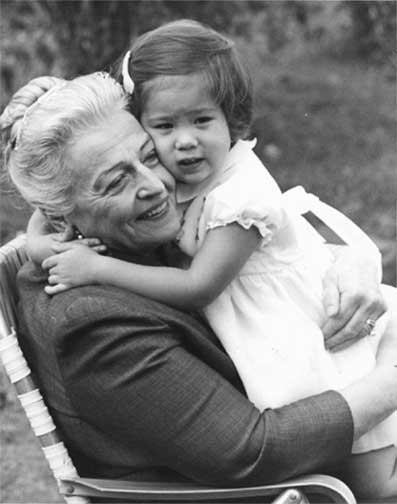
During Mao’s Cultural Revolution, Pearl S. Buck, who wrote The Good Earth and was awarded the Nobel Prize for Literature, the first American woman to win it, and the Pulitzer Prize, was denounced in 1972 as an “American cultural imperialist” by the Communists in China and was not allowed to visit China with Richard Nixon.

Pearl S. Buck

I recently read in Xinhua, the official voice of China’s government, that “A few months ago, the American novelist who spent most of the first 42 years of her life in China, from 1892 to 1934, putting her heartfelt and acute understanding of Chinese grassroots people in her Pulitzer Prize-winning novel, The Good Earth (1931), was voted one of the top “friends of China” in an international event hosted by the Chinese government.”

In February 2009, city officials in Zhenjiang, Jiangsu Province in China opened the Pearl S. Buck Museum and Philanthropy Pavilion adjacent to her historic home. The museum and pavilion were divided into three sections: one devoted to her humanitarian works, another to her life and achievements, and the last, to her writings.

See International Women’s Day

_____________________

Lloyd Lofthouse is the author of the award winning novels My Splendid Concubine and Our Hart. He also Blogs at The Soulful Veteran and Crazy Normal.

Sign up for an RSS Feed for iLook China


Propaganda Masquerading as a Movie Review

June 7, 2010

I found another example of media propaganda in a movie review. In June 1989, the Tiananmen Square incident took place in China and “hundreds” of demonstrators died in what started as peaceful demonstrations “demanding” changes in China.

A few months later, a New York Times review made comparisons between the first emperor and China’s modern government. “The depiction of Qin’s bonfire and of his soldiers pushing his flailing enemies (they weren’t the emperor’s enemies) into a ditch caused the American Museum of Natural History to cancel its planned opening of ”The First Emperor of China” last July, when the news was still full of the Chinese Government’s violent suppression of student protests.… This re-enactment of the faraway Qin’s often despotic and often enlightened rule becomes more believable and complex in view of the parallels with recent events.”

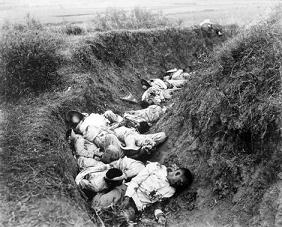
The New York Times made a comparison with an event that took place more than two millennia ago but made no mention of the 2/28 Massacre in Taiwan by a US ally where almost thirty thousand noncombatants were killed by Kuomintang troops. There was also no mention of the almost 70,000 U.S. troops in the Philippians, who slaughtered hundreds of thousands of Filipino freedom fighters and non-combatants between 1898 and World War II.

Filipinos killed by US troops before World War II

The New York Times does not review every movie or documentary produced so it is questionable why they would review this lackluster 38-minute documentary about China’s first emperor. Was there another motive behind this review—to remind Americans of the Tiananmen Square incident? After all, let’s not forget anything bad that Communist China does while forgetting worse historical sins committed by American troops and its allies.

See What is the Truth about Tiananmen Square?

_____________________

Lloyd Lofthouse is the author of the award winning novels My Splendid Concubine and Our Hart. He also Blogs at The Soulful Veteran and Crazy Normal.

Sign up for an RSS Feed for iLook China


“First Emperor of China” Movie Review

June 7, 2010

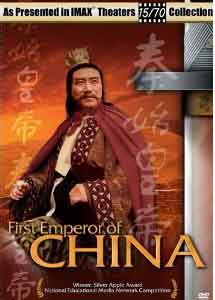
Released in 1989 and narrated by Christopher Plummer, this version of the First Emperor of China is about half the length of the nine-part series, The First Emperor: The Man Who Made China (link to part 1), about Qin Shi Huangdi on YouTube.


This documentary was first seen on an IMAX screen, and it covers a few of the known facts about the first emperor’s life.  There is the attempted coup by a prime minister; the assassin with a poison knife; the conquest of six Chinese nations to unify China (too brief on detail); adopting one written language, which resulting in book burning and burying hundreds of scholars alive who disagreed with him; completing the Great Wall of China, and the creation of the Terra Cotta army that would guard his tomb.

Then there is emperor’s quest to live forever by consuming a form of liquid mercury, which shortened his life by decades—an example of how power corrupts absolutely making a man believe he was as powerful as a god.

This link will take you to the New York Times review, which said it was a painless history lesson full of vibrant period details but lacking human drama.

_____________________

Lloyd Lofthouse is the author of the award winning novels My Splendid Concubine and Our Hart. He also Blogs at The Soulful Veteran and Crazy Normal.

Sign up for an RSS Feed for iLook China


Oil Greases a Shift in Global Power

June 6, 2010

Recently, I have written posts about China’s hunger for oil and energy. I also wrote a series about China’s need for electricity to build a middle class in rural China.

The DVB reported that the China National Petroleum Corporation has started building a trans-Burma crude oil pipeline to carry an estimated 240,000 barrels a day from Burma’s west coast to Kunming, the capital of China’s Southwestern Yunnan province.

China's Yunnan Province in green

While some may criticize China for working with a repressive government like Burma, it makes sense that China is doing this. After all, China has no choice but to do what it can to improve the lives of 750 million rural Chinese. To achieve this, they are working globally to provide China’s people with a higher standard of living while struggling to clean up an environment that is heavily polluted.

All one has to do is look at America’s history with dictators to see the dirty deeds that the US did in the national interest.  China has a “national interest” too and now they have the money to make things happen, as the US has for the last six decades.

_____________________

Lloyd Lofthouse is the author of the award winning novels My Splendid Concubine and Our Hart. He also Blogs at The Soulful Veteran and Crazy Normal.

Sign up for an RSS Feed for iLook China