China’s Goal to Clean Dirty Coal

June 15, 2010

Bill Chameides writes in the Huffington Post about China’s efforts to reduce greenhouse gasses by 40 to 45 percent by 2020.  His goes into detail how the Chinese plan to accomplish this.

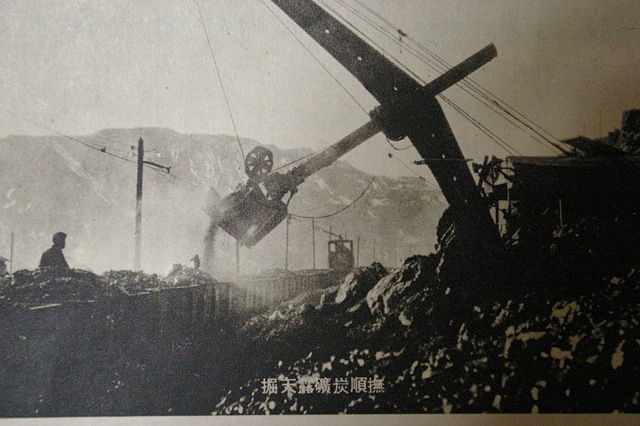
Since 70% of China’s electricity comes from thousands of coal burning power plants,  Chameides expresses doubts that China will be able to meet these lofty goals.  However, I disagree.  When you discover the downside of China’s coal burning power plants, it is obvious there is no choice but to clean up.

China’s one-party system has demonstrated the ability to get things done quickly and mistakes are made but so are course corrections.  I witnessed China’s ability to get things done in Shanghai. We were staying in what was once the French concession. The stately mansions that had housed wealthy French families and servants had been converted to communal multi-family homes still surrounded by tall walls.  When we went to sleep, the walls were there. In the morning, they were gone. 

An army of workers arrived at night, took down the walls and trucked out the debris without making enough noise to wake people.

Although I disagree with Chameides conclusion, his piece is worth reading.

See Electricity is the Key

_______________________

Lloyd Lofthouse is the author of the award winning My Splendid Concubine and writes The Soulful Veteran and Crazy Normal.

Sign up for an RSS Feed for iLook China


Middle Kingdom Wages Rising

June 14, 2010

William Pesek,  a Bloomberg columnist, writes a piece for the Jakarta Globe about Chinese workers demanding raises.  He mentions the walkout that shut down Honda’s Chinese production lines and the 24% pay raise to get people working again.

more money equals a better quality of life

A flock of suicides at Foxconn, a Taiwan owned company, also demonstrated Chinese worker unrest over low pay and long hours resulting in recent pay increases of 30% with promises of more to come. Since Foxconn turns out Apple, Dell and HP products, this could mean a  jump in high-tech prices around the globe and/or slimmer profits for Wall Street giants.

Pesek says, “Chinese workers demanding higher wages, as they should, must have the folks at Wal-Mart Stores quaking.  It’s hard to exaggerate the effect a big increase in Chinese pay would have on international profit margins and on inflation.”

What choice does China’s government have? Unrest crashed Imperial China in 1911 and changed the country again in 1949. Then after Mao’s death in 1976, China morphed into an open-market economy on steroids under Deng Xiaoping’s management. Recent news signals a possible change from an export-driven economy to one that sprouts from within.

See Deng Xiaoping’s 20/20 Vision or Why China is Studying Singapore

_______________________

Lloyd Lofthouse is the author of the award winning My Splendid Concubine and writes The Soulful Veteran and Crazy Normal.

Sign up for an RSS Feed for iLook China


China: The Roots of Madness – Parts 7 & 8 of 8

June 12, 2010

In Part 7, it is 1948 and Mao attacks. His army leaves the caves and captures Manchuria. When Chiang Kai-shek’s northern army surrenders, modern American weapons and equipment fall into Mao’s hands. Mao demands total surrender, but Chiang’s army boards ships for Taiwan taking China’s wealth and historical treasures. In fear, western businessmen and missionaries flee China.

By 1967, when this documentary was produced, Mao had ruled China for 18 years. Protected by America, Chiang was still in Taiwan serving as president for life. He also had six-hundred thousand Kuomintang troops, and the island people lived under martial law.

Theodore H. White says America does not understand Communist China. America could not predict the “Great Leap Forward” or the purges that followed. He says the quality of life for the peasants had not improved. They still worked like beasts as they always had.

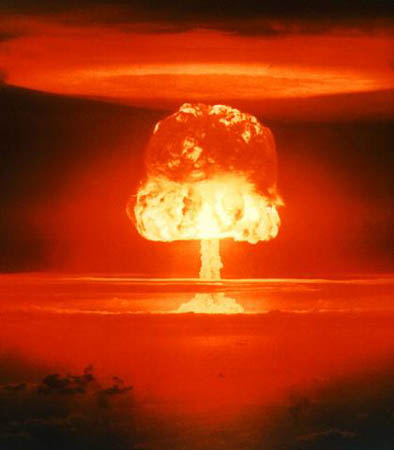
Part 7 ends with words of fear for the world’s future because China has nuclear weapons. There is no mention that America has enough nuclear weapons to destroy the earth a hundred times over. In Part 8, White concludes the documentary in about two minutes.

Return to Part 6, The Roots of Madness or start with The Roots of Madness-Part 1

View as Single Page

______________

Lloyd Lofthouse is the award-winning author of the concubine saga, My Splendid Concubine & Our Hart. When you love a Chinese woman, you marry her family and culture too.

If you want to subscribe to iLook China, there is a “Subscribe” button at the top of the screen in the menu bar.


No Talking About White Elephants

June 12, 2010

Most Chinese do not like anarchy and chaos. They also do not like talking about the “white elephant” in the room. After suffering for more than a century starting with the Opium Wars in 1839, life in China improved after Deng Xiaoping opened a global market economy in China.

Deng Xiaoping Billboard in China

With that in mind, it should not surprise that when Google was complaining about being hacked by China’s government and refusing to censor their search engine in China, many Chinese turned to Baidu, which operates China’s most popular Internet search engine.

Chinese officials defended the government’s censorship and denied being involved in the cyber-attacks against Google. In fact, most Chinese don’t care what happened to Google.

On February 10, 2010, Simple Thoughts reported that Baidu’s 4th quarter earnings jumped 48%.  Then on June 4, Investor’s Daily Edge reported that Baidu’s stock price was up over 200% in the last year.

It would seem that Google became the “white elephant” in the room—a big mistake in China.

_____________________

Lloyd Lofthouse is the author of the award winning novels My Splendid Concubine and Our Hart. He also Blogs at The Soulful Veteran and Crazy Normal.

Sign up for an RSS Feed for iLook China


China: The Roots of Madness – Part 6/8

June 11, 2010

In Part 6, Theodore H. White tells of an incident with Chiang Kai-shek’s troops when an officer tells peasants they were Mao’s men.  When White asks why lie, he’s told the peasants wouldn’t help if they knew the truth. In fact, regardless of the suffering from Mao’s Great Leap Forward and the Cultural Revolution, this loyalty never wavers.

Joseph Stilwell, the commanding US general in China, is not happy with Chiang since he is not fighting Japan. Chiang says he needs his troops to fight the Communists. In 1945, America invites representatives from Chiang’s government  to take part in Japan’s surrender on the battleship Missouri and ignores the Communists.

USS Missouri

An American ambassador urges Mao to join Chiang in a unified government. To bring this about, America offers Mao protection and there are face-to-face negotiations between Mao and Chiang.  Meanwhile, in secret, Chiang moves his troops to launch an assault in Manchuria.

America urges Chiang to win the people by implementing Sun Yat-sen’s promised reforms.  Instead, Chiang’s war causes run-away inflation. Essential good become too expensive. The people want peace, and Mao offers the peasants what they want—land.

Continued in Part 7 & 8, The Roots of Madness or return to Part 5, The Roots of Madness

View as Single Page

______________

Lloyd Lofthouse is the award-winning author of the concubine saga, My Splendid Concubine & Our Hart. When you love a Chinese woman, you marry her family and culture too.

If you want to subscribe to iLook China, there is a “Subscribe” button at the top of the screen in the menu bar.