Caressing Nature with Chinese Calligraphy

July 3, 2010

It would be difficult to talk about Chinese art without understanding Chinese calligraphy and its artistic inspiration. A painting has to convey an object, but a well-written character conveys only its beauty through line and structure.

In Shanghai, or Beijing, I’ve watched men with longed handled brushes, as seen in the first video, using water for ink and concrete for paper. With grace, they exhibit the skills of a Rembrandt breathing life to the characters.

Lin Yutang writes in My Country and My People that Western art is more sensual, more passionate, fuller of the artist’s ego, while the Chinese artist and art-lover contemplates a dragonfly, a frog, a grasshopper or a piece of jagged rock—more in harmony with nature.

Owing to the use of writing calligraphy with a brush, which is more subtle and more responsive than the pen, calligraphy as art is equal to Chinese painting. Through calligraphy, the scholar is trained to appreciate, as regards line, qualities like force, suppleness, reserved strength, exquisite tenderness, swiftness, neatness, massivness, ruggedness, and restraint or freedom.

Maybe this helps explain why the Chinese are not as warlike as Christian and Islamic cultures.

See Chinese Yu Opera with Mao Wei-tao

______________

Lloyd Lofthouse is the award-winning author of the concubine saga, My Splendid Concubine & Our Hart. When you love a Chinese woman, you marry her family and culture too.

If you want to subscribe to iLook China, there is a “Subscribe” button at the top of the screen in the menu bar.


China’s Capitalist Revolution (Part 5 of 9)

July 3, 2010

Deng had the support of the reformers he had appointed to key positions. A struggle between the hardliners and the reformers begins.  The hardliners are afraid the reforms will threaten communism.

While Deng’s supporters debate the hardliners, Deng visits the nations and leaders of the world.  In the US, while on 60 Minutes, he says, “To get rich is glorious…Wealth in a socialist society belongs to the people. That’s why our policy won’t lead to a situation where the rich get richer and the poor get poorer.”

During the Cultural Revolution, Deng Xiaoping was a victim. Mao sent the Red Guard to punish him for capitalist tendencies forcing Deng to work in a tractor factory on the production line. The Red Guard broke his son’s back, and he was permanently paralyzed. This caused Deng to realize that what Mao was doing was wrong.

Eight years into his leadership, Deng begins the next stage of his economic revolution by allowing Chinese entrepreneurs to start businesses. Red Hat capitalism was born. At first, only villagers were allowed to start enterprises. The hardliners were not happy. They wanted to end this, so the new Chinese capitalists were threatened.

Return to China’s Capitalist Revolution Part 4 or go to Part 6

_________________________

Lloyd Lofthouse is the award-winning author of The Concubine Saga. When you love a Chinese woman, you marry her family and culture too. This is the love story Sir Robert Hart did not want the world to discover.

To subscribe to “iLook China”, look for the “Subscribe” button at the top of the screen in the menu bar, click on it then follow directions.


Adoptions in China Changing

July 3, 2010

In Earth to Earth, Dust to Dust, Ashes to Ashes, I wrote about the tragic death of Faith Dremmer, who was adopted in China.  Her American mother’s journey to adopt her was one that many Americans have taken.

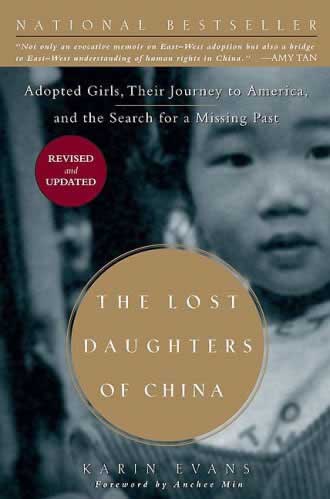
The Lost Daughters of China by Karin Evans is about those abandoned girls and their journey to America.

Now, McClathcy.com reports that China restricts foreign adoptions as demand grows at home.  One reason being that prosperous, middle-class Chinese families without children now want to adopt and can afford it.

Another reason is that there are not as many children being left at orphanages by poverty-stricken families, who cannot afford to feed another mouth. China’s prosperity allows families to earn enough money so they don’t have to make that difficult decision.

In fact, adoptions by American families are down 60% since 2005, according to the State Department.

______________

Lloyd Lofthouse is the award-winning author of the concubine saga, My Splendid Concubine & Our Hart. When you love a Chinese woman, you marry her family and culture too. 

If you want to subscribe to iLook China, there is a “Subscribe” button at the top of the screen in the menu bar.


China’s Capitalist Revolution (Part 4 of 9)

July 2, 2010

When the first US businessmen arrive in China, they complained. It took years to gain approval to open manufacturing plants in China. Then the trickle of investors turned into a flood as foreigners scrambled to cash in on a cheap and willing workforce.

The new industrial zones were sealed behind fences from the rest of China. The economies in the industrial zones doubled every three years. Wages were higher than the rest of China and people came looking for work. Investments poured in.

Deng’s popularity was at an all time high. He says, “We have given the highest priority to modernization. Our economy has grown more vigorously than ever.”

However, high ranking Maoists fear a capitalist country with a Communist flag. In 1983, the hardliners start a campaign against spiritual pollution—code for Western ideas.

The hardliners attack journalists who write for the People’s Daily. Top editors are fired for being corrupted by Western values.  The hardliners now control the media.  If you don’t follow the party line, your future becomes grim.

Next, the hardliners pressured the banks to stop lending money to the industrial zones.  Deng has to force the banks to loan the money.

Return to China’s Capitalist Revolution Part 3 or go to Part 5

_________________________

Lloyd Lofthouse is theaward-winning author of The Concubine Saga. When you love a Chinese woman, you marry her family and culture too.This is the love story Sir Robert Hart did not want the world to discover.

To subscribe to “iLook China”, look for the “Subscribe” button at the top of the screen in the menu bar, click on it then follow directions.


Masters at Global Bartering, The Dragon’s Gift

July 2, 2010

US businessmen and politicians could learn from China, who learned from Japan.  Instead of debt-ridden countries giving money away as the US does, America could be earning profits.

I read a fascinating piece in the Global Post by Stephanie Hanson that shows us China has elevated the art of barter to Ferengi levels. If you don’t know what I’m talking about, that’s okay.  I’ve been watching Star Trek, Deep Space 9, and the Ferengi are an alien race who has turned the art of business into a science with a rule book.

While the US gives hundreds of billions of dollars to poor countries as aid, China trades or barters loans with African nations and in return China builds that country’s infrastructure. To understand, Hanson recommends reading “The Dragon’s Gift: The Real Story of China in Africa“.

Hanson writes, “In the 1970s, Japan extended aid to China that helped the country build transportation and energy infrastructure. This aid was repaid in barrels of Chinese oil. Now, across the African continent, China is extending concessional loans to African governments for roads, power plants, factories and hydro projects, in many cases using the same kind of financing arrangements it learned about from Japan.”

See Doing Business in China

_________________________

Lloyd Lofthouse is the award winning author of the concubine saga, My Splendid Concubine & Our Hart. When you love a Chinese woman, you marry her family and culture too. 

Sign up for an RSS Feed for iLook China