Visiting Xian – a city with more than 3,100 years of history
April 17, 2012We are taking a quick trip to Xian (in pictures that is). Xian was China’s ancient capital for more than a thousand years before being moved to Beijing.

After landing in Xian in 2008, (our third visit to the city since 1999) we found a great driver. He was honest and knowledgeable. Here’s the cell phone number he had at the time (136-0916-251). If you visit Xian, I recommend you book him for the entire stay. He also introduced us to some experiences we’d never had on previous trips.

The Famous Terra Cotta warriors were created to guard China’s first emperor Qin Shi Huangdi (221-204 B.C.). Qin Shi Huangdi made Xian China’s first capital until Kublai Khan moved the capital to Beijing where he ruled his Khanbalik Empire, from 1264 to 1267.
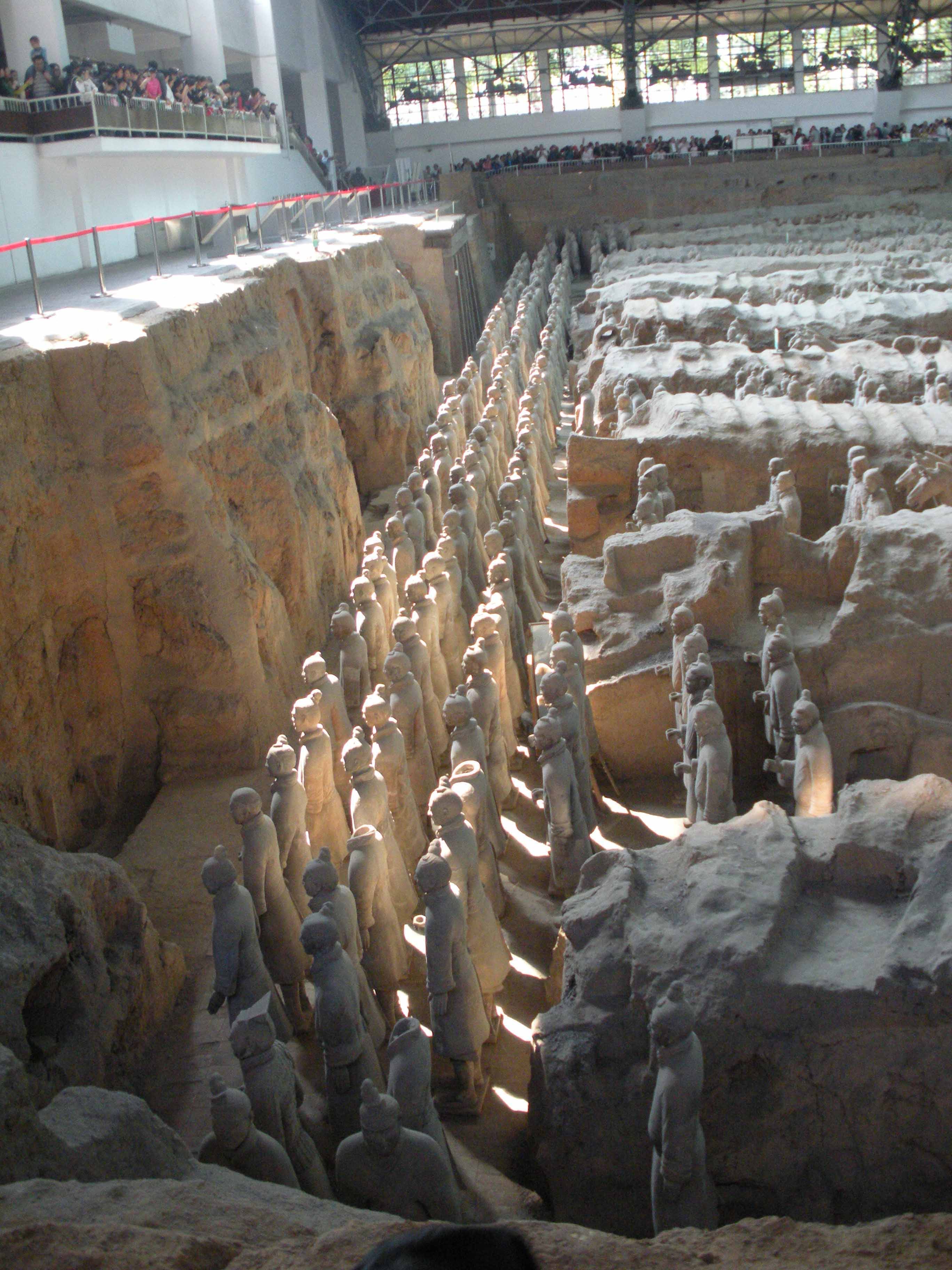
Xian was known as Chang’an before the Ming Dynasty and is one of the four great ancient capitals of China having held that distinction under several of the most important dynasties in China’s history. In fact, Xian was a cultural center more than a thousand years before Jesus Christ was born.
______________
Lloyd Lofthouse is the award-winning author of The Concubine Saga. When you love a Chinese woman, you marry her family and culture too. This is the love story Sir Robert Hart did not want the world to discover.
Subscribe to “iLook China”
Sign up for an E-mail Subscription at the top of this page.
Note: This revised post first appeared February 19, 2010
 1 Comment |
  China, Chinese history, history, tourism | Tagged: Beijing, China, Kublai Khan, Ming Dynasty, Qin Shi Huang, Terracotta Army, Xian, Xian China's ancient capital |
  Permalink
 Posted by Lloyd Lofthouse
The Power of e-bikes and Public Debate in China
April 16, 2012If you have been led to believe that the Chinese people do not have a voice in China, think again. It may not be a voice expressing political opinions, but it is a voice.
One example of the power of those voices happened December 2009 and had to do with electric bikes. When new regulations threatened to restrict the use of e-bikes and ban them from public roads, opposition from the e-bike industry and bike riders stopped the regulations in their tracks.
Tim Snaith said, “I’m not surprised that Chinese riders are up in arms. A huge amount of the population rely on electric bikes on a daily basis in a way that UK riders don’t.” Source: Bike Radar.com
Adrienne Mong of NBC News said, “The news triggered a heated debate that was played out all over the Chinese-language media and on the Internet. Eventually, the government backed down, and it’s been left up to industry groups to figure out new guidelines.” Source: Gr-r-r-r! Why I hate China’s e-bikes
When we visit China, we mostly walk (long distances), take taxis or use the subways, but I have admired the electric bikes that crowd China’s streets.
However, don’t count on us changing how we get around when in China, since many of the drivers in China drive crazy. The crowded urban streets behave more like an NFL game in the Super Bowl. I’ve often observed that red lights at intersection are ignored and crossing any street and sometimes even using sidewalks is risky and the only thing lower in the food chain than an electric bike are pedestrians risking lives as they cross streets even legally in a crosswalk.
That e-bike debate sounds similar to America where public debates often have an impact on government policy since the majority rules. Well, in theory the majority rules, since in America the majority is often ignored while we constantly hear from loud minorities such as the Tea Party or Occupy Movement, PETA, or the Million Woman March, which has only a few thousand members.
It also doesn’t help that about half of eligible voters in the U.S. seldom or never vote and the U.S. president is not elected by the popular vote but by a few hundred loyal party members (Republican and/or Democratic) in the Electoral College.
However, back in China, more than two years after the e-bike protest, Tea Leaf Nation reported on February 23, 2012 about a weibo Blog that was deleted by Sina Weibo, a popular Chinese microblogging platform, but what was deleted was soon restored thanks to widespread outrage and threats that the majority of Chinese would switch to Twitter and Facebook.
In addition, the Reuters Institute ran a piece about the power of the Chinese netizen and how microblogging is changing Chinese journalism. Zhou Kangliang, a Chinese journalist, concludes that “as Chinese online microblogging services grow and traditional journalism grows with them, it is learning from lessons and experience…”
In fact, The Washington Post reported, “In a country where most media are controlled by the state, information is heavily censored and free-flowing opinions are sharply constricted, Chinese have turned to a new platform to openly exchange unfettered news and views: microblogs, similar to Twitter.”
Xie Gengyun, a professor at Shanghai Jiaotong University, recently completed a report on microblogging and said weibo is the most popular choice for trustworthy information, ahead of newspapers, online forums and blogs.
______________
Lloyd Lofthouse is the award-winning author of The Concubine Saga. When you love a Chinese woman, you marry her family and culture too. This is the love story Sir Robert Hart did not want the world to discover.
Subscribe to “iLook China”
Sign up for an E-mail Subscription at the top of this page.
Note: This edited and revised post first appeared on April 29, 2010
6 Comments | China, Chinese Culture, Chinese middle class, Communism, cultural differences, environment, government, legal system, media, politics | Tagged: China, Chinese people, Electric bicycle, expression through microblogging in China, microblogging in China, NBC News, news through microblogging in China, protesting through microblogs in China, scandals reported by microblogs in China, Sina Weibo, the power of microblogging in China, Washington Post | Permalink
Posted by Lloyd Lofthouse
 iLook China