Rediscovering China

February 15, 2010

China has turned into a tourist destination—for the Chinese.

Before Nixon visited China, the country was surrounded by an invisible bamboo curtain. It’s citizens were not allowed to travel far—even from their homes. In September and October 2008, there were so many Chinese tourists, that we were the minority.
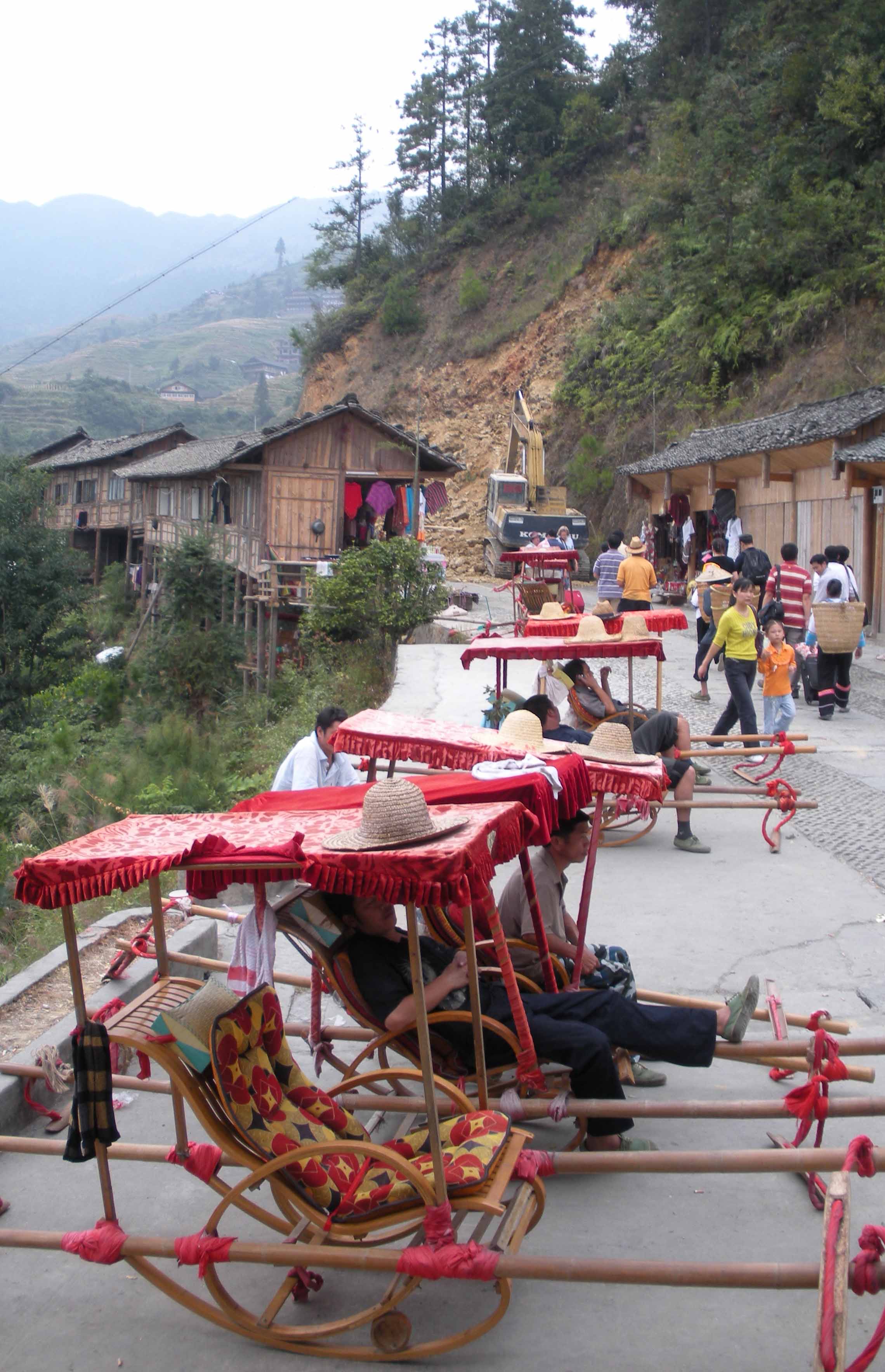
Sedan Chairs Waiting to Climb the Dragon's Back

The Dragon’s Back is in Southeast China near Vietnam. After our bus climbed a narrow, winding mountain road, we reached a parking lot. For a few yuan, we gained entry and men with iron legs were willing to carry us to the top in sedan chairs. We walked.

The construction of the Longi Rice Terraces started during the Yuan Dynasty (1271 – 1368). Today, many Zhuan and Yao ethnic people live simple lives that honor the laws of nature. China’s central government encourages that life.

A hundred feet further, vendor’s stalls lined both sides of the road. It was China’s market economy in action reminding me of Disneyland and the shops that sold trinkets no one needs.

Halfway to the top, we reached a village built on stilts clinging to the mountain. The steep slopes were terraced to grow rice. Since it was mid afternoon, we stopped to eat local rice cooked in sections of bamboo on a hot bed of coals.
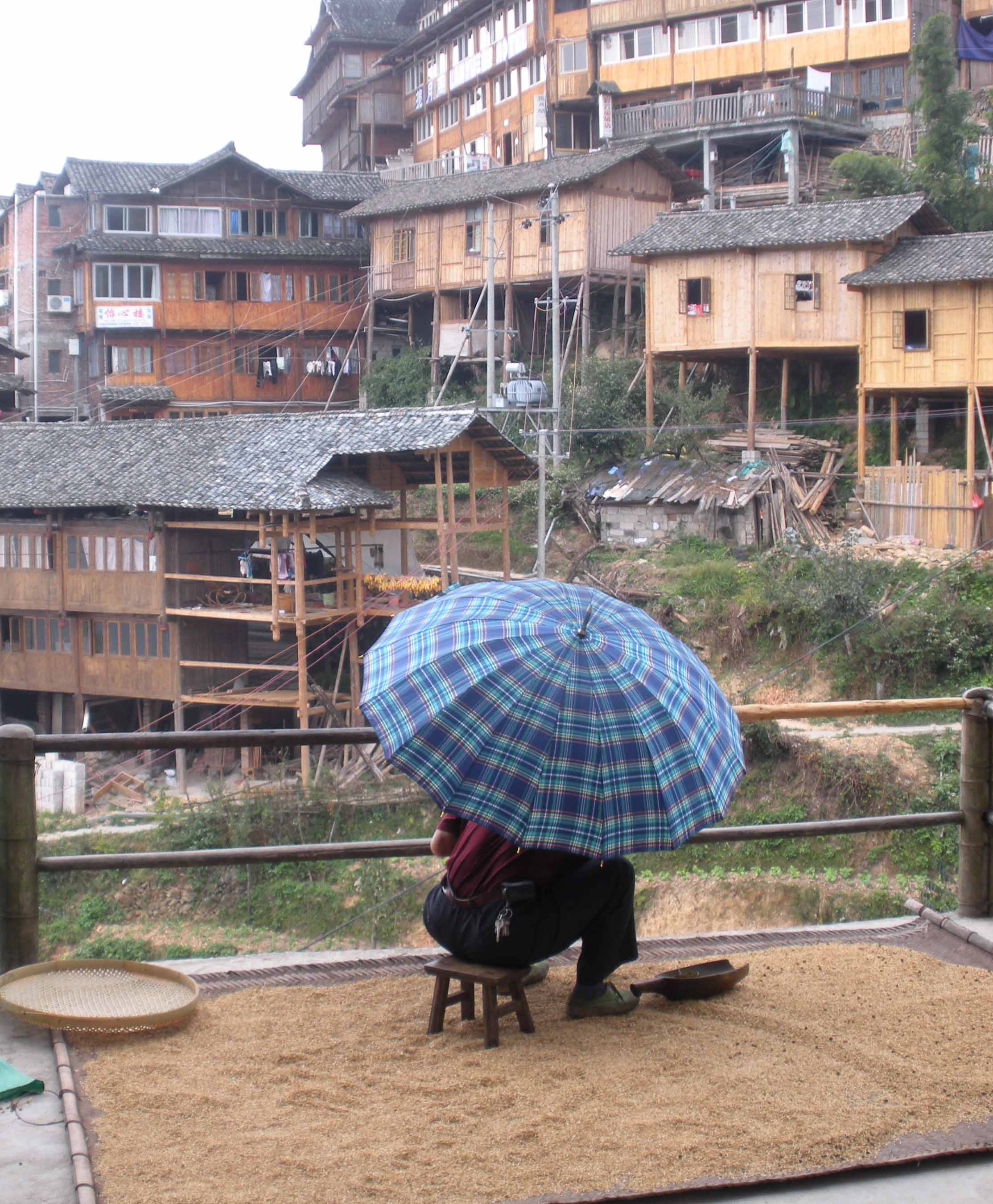
Cleaning Home Grown Rice Safe from the Sun

Mao’s Cultural Revolution ended decades in the past, and China is moving on while time seems to stand still on the Dragon’s Back.

See About iLook China

Lloyd Lofthouse is the author of the award winning novels My Splendid Concubine and Our Hart.


The Urban-Rural Divide

February 13, 2010

Photo courtesy of Bob Grant

This morning Bob Grant posted Contradiction of Times at Speak Without Interruption, an international online magazine. He shows visually and through words the discrepancy in lifestyles that he has witnessed between China’s cities and countryside. There is a reason for this discrepancy. After Mao died and China started down the road toward Social Capitalism, the central government decided to focus growth and modernization in the cities.

However, when Hu Jintao became president in 2002, he responded to the rising social tensions and China’s wealth gap by advocating a drive to build a “harmonious society”. He promised greater spending on health and education in rural areas where eight-hundred million Chinese live. Prior to that, most of China’s efforts at growth and modernization took place in the cities.  What we see in China’s cities today took place over a period of more than thirty years. It may take longer to improve the living standards of rural Chinese, but if the current government is going to survive, they have no choice.

Photo courtesy of Bob Grant

To learn more, I suggest you read this BBC piece about China’s Country Profile. Hu Jintao was reelected in 2008 for another five-year term. China has a two five-year term limit for public office.

Discover China’s Stick People

______________

Lloyd Lofthouse is the award-winning author of the concubine saga, My Splendid Concubine & Our Hart. When you love a Chinese woman, you marry her family and culture too.

If you want to subscribe to iLook China, there is a “Subscribe” button at the top of the screen in the menu bar.


Why Tibet?

February 8, 2010

A recent New York Times headline screamed, China Opposed to Obama-Dalai Lama Meeting. “China maintains that Tibet has been part of its territory for centuries, but many Tibetans say the region was functionally independent for much of its history.”

Since Tibetan separatists have claimed that China “never” ruled over Tibet prior to Mao’s reoccupation in 1950, every time the Dali Lama wins another award for humanitarianism or meets a world leader, it is a slap in the face for most Chinese—not just their government. The Chinese are proud of their history, and they don’t like foreigners believing lies about their country.

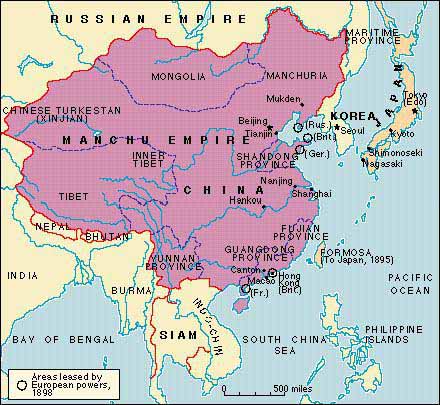
Tibet was first occupied by China during the Yuan Dynasty (1277-1367), and it was a Mongol emperor or king who made a Dalai Lama the spiritual leader for Tibet. Before that, the Tibetans were a warlike race and were a plague on a peaceful China. Warlike Tibetans, not exactly the image the Western media paints, raided China for centuries from their mountain fortresses.

When the Ming Dynasty drove the Mongols from China in 1368, the emperor sent an army to Tibet. For the next six hundred years, the Tibetans were never easy to rule. Sir Robert Hart, considered the godfather of China’s modernization, said the same thing. He wrote in 1888, “China will regard England as an ally and helper in reducing trouble-some tributaries (meaning Tibet) to a proper sense of position!”

______________

Lloyd Lofthouse is the award-winning author of The Concubine Saga. When you love a Chinese woman, you marry her family and culture too. This is the love story Sir Robert Hart did not want the world to discover.

Subscribe to “iLook China”!
Sign up for an E-mail Subscription at the top of this page, or click on the “Following” tab in the WordPress toolbar at the top of the screen.

About iLook China


Earthquakes, Spoiled Formula and Kidnappings – Part 2

February 3, 2010

Terrible things did happen under Stalin and Mao.  Tens of millions died due to the policies of these dictators.  However, that isn’t true today.

Most Chinese do not like to display their dirty laundry in public for the world to see.  I believe I talked about this on the The Dr. Pat Show, or one of the other radio talk shows I was a guest on in 2008.

The primary reason for the way the Chinese handle embarrassing situations like these is that most Chinese do not like to lose face. If one Chinese citizen does something wrong and gains the attention of the world’s media, most Chinese feel as if they are seen as guilty too. To learn more,  See what Lin Yutang wrote about face.

See Part 1

Further reading:
Time: http://news.yahoo.com/s/time/20100121/wl_time/08599195464400

 Associated Press: http://news.yahoo.com/s/ap/20100122/ap_on_hi_te/as_china_google

Lloyd Lofthouse is the author of the award winning My Splendid Concubine and writes The Soulful Veteran and Crazy Normal.


The First of all Virtues – Part 8/9

February 1, 2010

I am married to a Chinese woman who was born in Shanghia, China. She suffered with the rest of China during Mao’s Cultural Revolution.

She moved to the United States in the 1980s and is now a U.S. citizen. If you marry a Chinese woman, you marry her family. I know first-hand that filial piety is alive and well in China.

Contrary to popular Western opinions spread by the media, the Communists did not get rid of it. When I travel to China, my white hair is a ticket to respect that was earned over a long period.

In China, I don’t hear, “Hey, old man.”

If you are interested to see how Mao’s Cultural Revolution influenced people, this short video is a good example.

Go to The First of All Virtues Part 9 or return to Part 7

______________

Lloyd Lofthouse is the award-winning author of the concubine saga, My Splendid Concubine & Our Hart. When you love a Chinese woman, you marry her family and culture too. 

Subscribe to “iLook China”
Sign up for an E-mail Subscription at the top of this page.

About iLook China